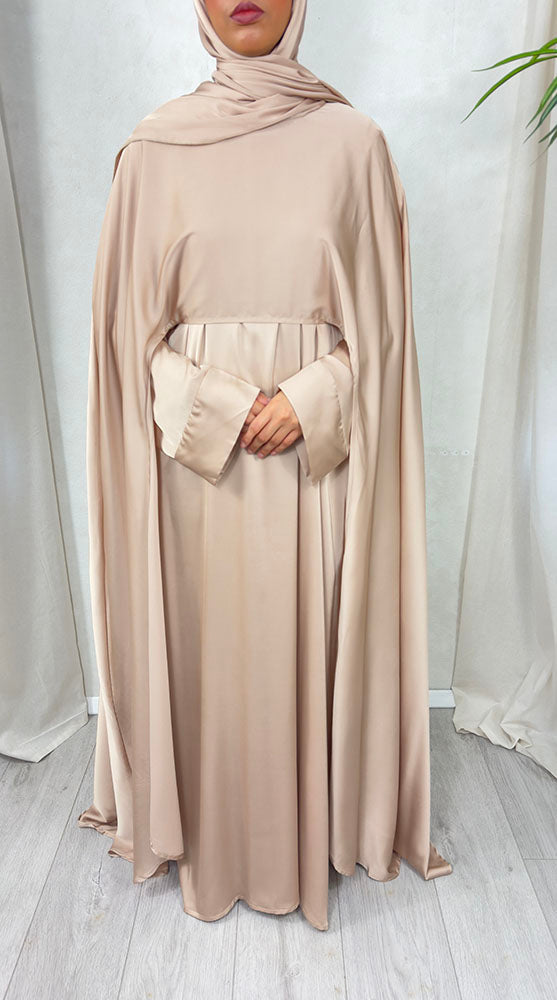
What Should You Check in a Burqa Coat Style Before Outerwear Weight, Sleeve Width and Layering Make Daily Wear Harder?
Bismillah, let’s begin gently. Have you ever searched for burqa coat style and felt that you were not only looking for clothing, but also looking for calm? Maybe you wanted something longer, looser and more covered. Maybe you wanted an outer layer you could put over everyday clothes before leaving the house. Maybe you wanted a piece that helped you feel more ready for the school run, the masjid, work, errands, family visits or the quiet moment when you are trying to dress in a way that feels closer to Allah.
A phrase like burqa coat style can mean different things to different sisters. For one woman, it may mean a coat inspired abaya. For another, it may mean a long modest outerwear layer. For another, it may be the closest search term she knows because she is new to modest fashion and still learning the names of garments such as abaya, jilbab, khimar, kimono abaya, prayer dress and overhead jilbab. If that is you, take a breath. You do not need to know every word before you begin. You do not need to build a perfect wardrobe overnight. You do not need to dress from panic, comparison or pressure.
At Amani’s, we speak to many sisters who want modest clothing to feel softer, clearer and more realistic. Some are reverts. Some are returning to modesty after years of feeling distant from it. Some grew up Muslim but are only now finding their own relationship with hijab and covered dressing. Some simply want a more practical way to feel covered without losing ease in daily life. This guide is written for all of them. It is not here to rush you. It is here to help you choose with purpose.
When you choose a modest outer layer with purpose, the question changes. Instead of asking, “Will people think I am modest enough?” you begin asking, “Does this help me feel covered, sincere and able to move through my real day?” Instead of buying whatever looks dramatic in a photo, you look at fabric, length, layering, sleeve width, opacity and comfort. Instead of letting pressure decide for you, you pause and choose something that supports your worship, routine and confidence.
This blog will walk through burqa coat style in a practical, emotional and faith aware way. We will look at what the term can mean, how to choose coverage without overwhelm, which fabrics and fits matter, how to shop online, what mistakes to avoid, how to style the piece for real life and how to keep your intention gentle. Along the way, we will link to helpful Amani’s collections such as open abayas, kimono abayas, two piece jilbabs and one piece prayer dresses so you can explore slowly and calmly.

What burqa coat style can mean when you slow down
Before you buy anything, it helps to understand what you are really searching for. The words burqa coat style are not always used in one fixed way online. In some places, people use them for a full coverage outer garment. In other places, they use them for a long coat shaped abaya, a kimono style abaya, a loose overcoat, a jilbab style layer or a modest jacket that gives more coverage than ordinary outerwear. Because search terms can be messy, a sister may type burqa coat style into Google when what she actually wants is comfort, coverage and clarity.
This is why slowing down matters. If you rush, you may buy something because the title sounds right, even if the garment does not fit your life. A coat style piece may look beautiful in a product photo but feel too narrow over your outfit. Another may look simple but become your most worn modest layer because it is loose, opaque, easy to fasten and not too heavy. The name matters, but the function matters more.
A good modest outer layer usually has several qualities. It gives enough coverage over the body. It does not cling in a way that makes you uncomfortable. It works with the clothes you already own. It is easy enough to put on when you are leaving quickly. It suits your height and does not drag dangerously. It feels appropriate for the places you actually go. It also leaves your heart a little calmer, because you know you chose it for a reason.
For some sisters, an open abaya can serve the same purpose as a coat style layer. It can be worn over a plain inner dress, a maxi dress, a skirt outfit or a simple trouser set, depending on your comfort and personal modesty goals. For others, a kimono abaya feels closer to the coat shape because it has a relaxed outerwear feeling while still keeping the softness of an abaya. Some sisters prefer a two piece jilbab because it removes the need to think about layering at all. Others prefer a prayer dress for home, salah and ease. The best choice is not the most dramatic one. The best choice is the one that helps you be consistent without feeling crushed by the process.
When you slow down, you also stop treating modest fashion like a test you must pass in front of everyone. Clothing is visible, but intention is private. A sister may be wearing a simple black layer while carrying a deep emotional journey inside. Another may choose a soft beige or mauve piece because she wants modesty to feel gentle rather than severe. Another may choose navy, grey or brown because those colours blend with her routine. None of these choices should be reduced to appearance alone. The heart behind the choice matters.
That is why this article uses burqa coat style as a starting point, not a narrow box. You may end up choosing an abaya. You may end up choosing a jilbab. You may end up choosing a khimar and skirt. You may simply learn what to avoid when shopping online. All of that is progress if it helps you move with more care, dignity and purpose.
Purpose, pressure and the private side of modest dressing
Many women do not speak openly about the pressure they feel around modest clothing. Some feel pressure from family. Some feel pressure from social media. Some feel pressure from strangers. Some feel pressure from their own thoughts, especially when they compare their beginning to another sister’s established routine. A sister may look at herself in the mirror and wonder whether she is doing enough, whether she looks too different, whether people will ask questions or whether she is ready for the commitment that a more covered garment seems to represent.
This is where purpose becomes important. Purpose is softer than pressure but stronger than impulse. Purpose says, “I am choosing this because it helps me move towards something meaningful.” Pressure says, “I must buy this now or I am failing.” Purpose gives you room to learn. Pressure makes every mistake feel like shame. Purpose helps you ask practical questions. Pressure makes you copy without thinking. Purpose is connected to Allah, dignity, comfort and consistency. Pressure is often connected to fear, comparison and exhaustion.
If you are choosing a burqa coat style because you feel pushed, pause. Ask what you are hoping this garment will solve. Do you need more coverage for outdoor errands? Do you need a piece that makes hijab outfits easier? Do you need something you can wear over work clothes? Do you need a garment that feels less fitted than your current coats? Do you need a confidence bridge while you are still learning? Once you name the need, the shopping becomes calmer.
There is also a private side to modest dressing that people do not always see. A sister may be trying to pray more consistently. She may be trying to attend the masjid again. She may be healing from a period where she felt disconnected from faith. She may be a revert who loves Islam deeply but still feels nervous about being visibly Muslim in public. She may be a mother who wants her daughters to see modesty as beautiful, not burdensome. She may be someone who has always dressed modestly but wants her clothing to feel more intentional rather than automatic.
In all of these situations, the garment is not just fabric. It is part of a conversation between the sister, her Lord, her daily life and her confidence. That does not mean the garment has to be expensive or complicated. Sometimes the most meaningful piece is the one you reach for again and again because it makes leaving the house easier. Sometimes it is the plain black layer that saves you on busy mornings. Sometimes it is the soft neutral abaya that helps you feel presentable without feeling exposed. Sometimes it is the jilbab you wear when you want fewer decisions and more coverage.
Choosing with purpose also protects you from chasing every new modest fashion trend. Trends can be helpful when they introduce you to new cuts, colours and fabrics, but they should not control your wardrobe. Your modesty journey is not a race to keep up with every style. It is a path of sincerity, practical wisdom and steady improvement. If a trend supports that, use it. If it makes you anxious, leave it.
Amani’s believes modest fashion should meet sisters with mercy. That means helping you understand what you are buying, not making you feel behind. It means offering garments that can support worship, family life, occasions and everyday routines. It also means reminding you that you are allowed to grow gradually. A better wardrobe is not always built by buying more. Sometimes it is built by choosing one piece more carefully.
How to choose coverage that supports your real life
The right burqa coat style should support the life you actually live, not only the life you imagine from a perfect product photo. This is one of the biggest differences between emotional shopping and wise shopping. Emotional shopping says, “This looks beautiful, so I need it.” Wise shopping says, “This looks beautiful, but will it help me on a normal Tuesday when I am tired, busy and trying to leave the house on time?”
Start with your routine. If you commute, you need a garment that lets you walk comfortably, sit on public transport and manage stairs without constantly adjusting. If you drive, you need enough movement around the arms and legs so the garment does not restrict you. If you have children, you may need sleeves that do not fall into everything and fabric that is not too delicate for daily handling. If you work in an office, you may want a cleaner outerwear shape that still feels modest. If you attend classes, study or volunteer, you may want something light enough to wear for longer periods.
Coverage is not only about length. Length matters, but so do width, fabric weight, sleeve design, closure, layering and movement. A garment can be long but still feel uncomfortable if it clings when you walk. It can be loose but too sheer in daylight. It can look covered from the front but open too much when the wind catches it. It can have beautiful sleeves that are difficult for wudu or everyday tasks. This is why you should think about coverage in motion, not only coverage in a still image.
When looking at a coat inspired abaya or outer layer, ask whether it closes fully or is designed to stay open. If it stays open, decide what you will wear underneath. An open abaya can be beautiful and practical, but it needs a suitable inner layer if you want secure coverage. A closed abaya may feel easier if you do not want to think about what is underneath. A jilbab may be best if your goal is immediate full coverage with fewer styling decisions. There is no single correct answer for every sister. The correct answer is the one that fits your needs and your level of comfort.
Height also matters. A taller sister may find standard lengths too short, especially if she wants ankle coverage. A petite sister may find long coats and abayas drag on the floor. Always check the garment length in inches and compare it with a piece you already own. Do not rely only on the model photo. Models vary in height, footwear and styling. A product that looks floor length on one person may sit mid calf on another. Measuring at home takes two minutes and can save disappointment.
Colour can support real life too. Black is practical, timeless and easy to repeat, but not every sister feels emotionally comfortable starting with black. Some feel softer in brown, beige, grey, navy, mauve or sage. Muted colours can help a new modest wardrobe feel less intimidating. If you want one versatile piece, choose a colour that works with your existing hijabs and shoes. If you already own many neutrals, one gentle colour may help your wardrobe feel more personal without becoming loud.
Finally, choose coverage that you can maintain. A garment that feels too difficult may stay in your wardrobe untouched. A garment that feels realistic can become part of your routine. The aim is not to buy the most extreme piece because you feel guilty. The aim is to choose something that helps you show up consistently with more calm, dignity and sincerity.

Fabric, fit and length details that matter more than the photo
Online shopping makes it easy to fall in love with a photo before checking the details. The image may show a graceful shape, a flowing sleeve or a beautiful colour, but the real experience depends on fabric, fit and length. If you want a burqa coat style that works beyond the picture, these details deserve your attention.
Fabric affects how the garment hangs, how warm it feels, how it moves and how much it shows underneath. A soft satin style fabric can feel elegant and occasion ready, but may not be the most practical for rough daily wear. A nida or neda type fabric often has a smoother, classic modest fashion feel and can work well for abayas. Chiffon layers can be graceful but usually need lining or an underlayer because chiffon can be sheer. Jersey can feel comfortable and easy, but if it is too clingy it may not give the structure some sisters want from outerwear. Cotton blends can feel breathable, but the exact weight and opacity matter.
Do not assume that thicker always means better. A very heavy garment may feel secure at first but become tiring during long days, travel or summer heat. A very thin garment may feel easy but fail the daylight test. The best fabric is the one that suits your climate, routine and comfort. For UK sisters, layering often matters because the weather changes quickly. A coat style abaya that works over a thin top in summer may also need to fit over a jumper in colder months. If it is cut too close, it loses practicality.
Fit should be generous enough for modest movement. Look at shoulder seams, arm width, body width and hip area. If the garment is described as oversized, check whether that is true across the whole body or only in one area. If it has buttons, zips or press studs, ask whether there may be pulling across the chest or hips. If it is an open design, think about whether the front panels stay in place or need a belt. Belts can look beautiful, but some sisters avoid them because they define the waist. If the belt is optional, that gives you more flexibility.
Sleeves are often overlooked. Wide sleeves can look graceful, but they may need care during cooking, cleaning, eating or wudu. Narrow sleeves can be practical, but if they are too fitted they may feel uncomfortable over layers. Elastic cuffs can be useful for daily wear. Cape sleeves can feel elegant for occasions but may not be ideal for every task. A true everyday garment should let you live, not only pose.
Length is one of the most important measurements. Check the stated length, then compare it with your height and your preferred footwear. If you are between lengths, think about where you will wear the garment. For prayer and more formal modest dressing, some sisters prefer longer lengths. For commuting or rainy weather, a slightly safer length may be better. If the garment is too long, you may trip, damage the hem or avoid wearing it. If it is too short, you may feel less covered than expected.
Opacity is another key detail. A garment can look opaque in studio lighting but appear different in daylight. Look for clear descriptions, customer photos where available and honest fabric notes. If you are unsure, plan your underlayer. A plain slip, inner dress or matching set can make many outer layers more wearable. This is why open abayas, kimono abayas and coat inspired pieces often work best when treated as part of an outfit rather than a single standalone solution.
When you prioritise fabric, fit and length, you move from emotional scrolling to confident shopping. You are no longer asking only, “Is it pretty?” You are asking, “Will this serve my modesty, my body and my routine?” That is a much stronger question.
Styling a burqa coat style for work, errands, worship and family
One of the reasons sisters search for burqa coat style is because they want one piece that can move between different parts of life. They may not want separate wardrobes for work, errands, worship and family gatherings. They want something that can be styled simply, repeatedly and respectfully. That is possible when you choose the base piece carefully.
For work, think clean and calm. A long coat style abaya in black, navy, taupe, grey or brown can sit beautifully over a plain dress, wide leg trousers or a simple skirt outfit. Pair it with a non slippery hijab that stays in place through the day. Avoid too many details if your work environment is busy or formal. The goal is to feel covered, neat and able to focus. If you are new to dressing more modestly at work, start with colours and shapes that feel close to your existing style, then slowly increase coverage as your confidence grows.
For errands, ease matters more than perfection. Choose shoes you can walk in. Choose a hijab style that does not require constant fixing. Choose an outer layer that closes enough for wind, bags and movement. A modest outfit for errands should not make every small task feel complicated. If you are doing school runs, grocery shopping or appointments, you may prefer a darker colour or a fabric that is easier to care for. This is where practical abayas and jilbabs become wardrobe heroes.
For worship, many sisters want clothing that helps them enter salah without feeling distracted. A coat style piece may work if it gives enough coverage and you pair it with a secure hijab or khimar. However, if your main need is prayer ease, a dedicated one piece prayer dress may be more practical at home. For the masjid, a two piece jilbab or a loose abaya with a khimar can feel very calming because it removes the worry of whether the outfit is enough. The best worship outfit is one that lets you focus more on prayer and less on adjusting fabric.
For family gatherings, you may want a little softness or beauty without losing modesty. A satin abaya, cape abaya, kimono abaya or gentle colour can help you feel dressed without feeling exposed. Think about the environment. A close family dinner may not need the same outfit as Eid, a nikah or a formal event. If you are around mixed company, you may prefer looser coverage. If it is women only, you may style differently depending on your comfort and values. Modesty is not only about one garment. It is about context, intention and boundaries.
Hijab pairing matters too. A structured coat style abaya may look balanced with a soft chiffon hijab. A casual outer layer may work beautifully with jersey. A fuller jilbab may already include enough coverage, so the hijab decision becomes simpler. Choose colours that calm the outfit. Beige with cream, black with grey, navy with soft blue, brown with taupe, mauve with dusty pink and sage with ivory can all feel gentle. You do not need loud contrast to look put together.
The secret is repeatability. A piece becomes valuable when you can wear it more than once in different ways. If you can style it for work with one hijab, errands with another, worship with a khimar and family with a softer scarf, it is probably a strong wardrobe choice. Modest fashion becomes less stressful when each garment has a role.

Shopping online without panic or disappointment
Online shopping can be a blessing when you know what to check. It gives sisters access to more styles, colours and sizes than they may find locally. It can also feel overwhelming, especially when every photo looks perfect and every product title uses similar words. If you are shopping for burqa coat style online, your job is to slow the process down enough to make a wise choice.
First, read the full product description. Do not rely only on the title. Look for fabric, length, fit, whether the garment is open or closed, what is included, whether the hijab is included and whether the piece is lined. If a listing does not explain these things clearly, be careful. A trustworthy modest fashion product should help you understand what you are buying.
Second, check measurements. This is especially important for abayas, jilbabs and coat style garments because length changes everything. Measure a garment you already like from shoulder to hem. Compare that number with the product length. If the product has size options, check whether they refer to height, body size or garment length. Some abayas are sold by length in inches, such as 52, 54, 56, 58 or 60. Some sets use S, M, L and XL but still include length guidance. Do not guess if the information is available.
Third, look at the photos with practical eyes. Are there pictures from more than one angle? Can you see how the garment falls at the side? Does it look loose when the model moves? Is it styled open even though you want closed coverage? Is the photo heavily edited? Does the colour look consistent? If there is only one unclear image, the risk is higher. Good images do not replace measurements, but they help you understand shape.
Fourth, check the return policy. Even careful shoppers sometimes need to exchange or return. Modest clothing can feel different on the body than expected, especially when you are learning what fit you prefer. Knowing the return window gives you peace before buying. It also shows that the shop has thought about customer care.
Fifth, compare value rather than only price. Cheap is not always bad, and expensive is not always good. Value means the garment gives you the right balance of fabric, finish, fit, usefulness and confidence for the price. A slightly higher priced piece that you wear weekly may be better value than a cheaper piece that stays in the wardrobe because it feels awkward. At the same time, a simple affordable abaya can be excellent if the fabric and fit are right.
Sixth, notice your emotional state. Are you buying because you feel calm and clear, or because you have been scrolling for an hour and now feel behind? Are you trying to copy someone else exactly? Are you worried that if you do not buy today you will never start? Pause. Make wudu if you can. Step away for a few minutes. Return with a checklist. You deserve to buy from steadiness, not stress.
At Amani’s, the aim is to make online modest fashion easier to understand. Collections are organised so you can explore by garment type, such as abayas, jilbabs, khimars, hijabs and prayer wear. This matters because a sister searching for one phrase may discover that another garment suits her better. A good shop should not trap you in one trend. It should help you find what actually serves you.
Mistakes to avoid when the price or trend feels tempting
There are a few common mistakes sisters make when buying modest outerwear online. The first is buying only because the price looks too good. Everyone loves a good deal, especially when building a wardrobe on a budget, but a very low price can sometimes hide poor fabric, unclear sizing or weak stitching. Before buying, ask what information is missing. If you cannot find the length, fabric, return policy or proper images, the risk may not be worth it.
The second mistake is buying only because a style is trending. Social media can make one garment feel like the answer to everything. Suddenly every sister seems to be wearing the same colour, sleeve shape or layering style. Trends can be inspiring, but they do not know your height, climate, job, school run, sensory needs, prayer routine or comfort level. A trend that looks beautiful on someone else may not be the garment you reach for in real life.
The third mistake is ignoring fabric care. Some pieces look stunning but need careful washing, steaming or storage. If you are already busy, delicate pieces may become stressful. There is nothing wrong with occasion wear, but know what you are buying. Everyday garments should be realistic to care for. If you want a piece you can wear often, choose fabric that suits your lifestyle.
The fourth mistake is forgetting the underlayer. Many coat style abayas and open abayas are designed to be layered. If you do not own a suitable inner dress, skirt or loose base outfit, you may receive the garment and feel disappointed. Before buying an open style, plan what will go underneath. If you want a complete outfit, look at abaya sets, jilbab sets or coordinated pieces instead.
The fifth mistake is choosing a size based only on hope. It is tempting to think, “It should be fine,” especially when you love the colour. But modest garments need enough space to move well. If you are between sizes, check the cut. If the garment is meant to be loose, do not size down so much that it loses its modest shape. If you are petite, do not ignore length. If you are tall, do not assume every abaya will give the coverage you want.
The sixth mistake is letting shame shop for you. Shame may say you need to buy the most covered option immediately or you are not sincere. But sincerity is not proven by panic. Sincerity can also look like learning, asking, measuring, choosing carefully and taking steps you can maintain. You can respect modesty deeply while still being honest about where you are in your journey.
A helpful way to avoid mistakes is to create a personal modest wardrobe rule. For example: “I only buy pieces that I can style at least three ways.” Or: “I only buy an open layer if I already own a suitable underlayer.” Or: “I check length before colour.” Simple rules protect you when emotions are high. They turn shopping into a calmer process and help you avoid regret.
A gentle guide for reverts and sisters starting again
If you are a revert, or if you are starting again with modest dressing, this part is especially for you. You may feel excited and nervous at the same time. You may love the idea of dressing more modestly, but still feel unsure about being seen. You may worry about family reactions, workplace comments or old friends noticing the change. You may also feel confused by the number of garment names. Abaya, jilbab, khimar, niqab, hijab, prayer dress, inner slip, kimono abaya, farasha abaya, closed abaya, open abaya: it can feel like a new language.
Please know that learning is part of the journey. You are not behind because you do not know everything. Many born Muslim sisters also spend years figuring out what modesty means in their own life. Some grew up with one style and later changed. Some wore hijab young but only later found confidence in abayas or jilbabs. Some have wardrobes full of clothes but still struggle to find outfits that feel both covered and comfortable. You are not alone.
A burqa coat style or coat inspired modest layer can be a gentle starting point because it may work over clothes you already own. You do not have to replace everything at once. You might begin with a long outer layer, a few reliable hijabs and one prayer dress. Then, as you learn, you can add an abaya, a jilbab or a khimar. This gradual approach can make modesty feel possible rather than overwhelming.
Start with your highest need. If you need something for salah, choose prayer wear first. If you need outdoor coverage, choose an outer layer or jilbab. If you need work outfits, choose pieces that meet your dress code while giving more coverage. If you need confidence, choose a colour and fabric that feel emotionally safe. Confidence does not mean seeking attention. It means feeling steady enough to keep going.
It can also help to practise wearing a new piece in lower pressure settings. Wear it at home. Wear it for a short errand. Wear it to a quiet class or a familiar masjid. Let your body get used to the fabric. Let your mind get used to seeing yourself in a new way. Sometimes the first outing feels huge, then the second feels easier, then the third becomes normal. Growth often becomes lighter through repetition.
Try not to compare your chapter one to another sister’s chapter ten. The sister who looks effortless may have spent years learning what works for her. She may have made mistakes, bought awkward pieces, felt nervous and adjusted slowly. You are seeing the result, not the full journey. Give yourself the mercy you would give another sister.
At Amani’s, we care deeply about reverts and sisters who are growing into modesty with tenderness. In Ramadan, Amani’s donates abayas to reverts as part of our wider intention to support sisters beginning or strengthening their journey. This is not only about clothing. It is about dignity, sisterhood and helping a woman feel welcomed rather than overwhelmed.
Care, storage and making the piece last
Once you choose a modest outer layer, caring for it well helps protect both your money and your wardrobe. Many sisters focus on buying but forget that care affects how long a garment remains beautiful, wearable and ready. A burqa coat style, abaya or jilbab that is cared for properly can become a reliable companion for many seasons.
Always begin with the care label if one is provided. Different fabrics need different treatment. Some pieces can be machine washed on a gentle cycle. Others need hand washing or delicate care. Satin style fabrics may need extra attention to avoid pulls or shine marks. Chiffon can snag easily. Jersey may stretch if hung badly while wet. Nida or neda style fabrics often hang beautifully, but still benefit from careful washing and drying.
Use mild detergent where possible and avoid harsh washing habits. Turn garments inside out before washing to protect the outer surface. Wash similar colours together. Do not overload the machine, because heavy twisting can affect shape. If the garment has embellishment, embroidery, beads or delicate stitching, use a laundry bag or hand wash. Occasion abayas deserve slower care because details can be damaged by rough handling.
Drying matters too. Some garments should not be tumble dried. Heat can shrink, weaken or change fabric. Hanging to dry is often safer, but be mindful of shoulder stretching on heavier pieces. Use a suitable hanger, and avoid leaving wet garments bunched up. If a piece creases easily, steam gently rather than using harsh direct heat. Always test carefully, especially on satin or delicate fabric.
Storage helps preserve shape and cleanliness. Hang long abayas and coat style pieces where they have enough space. If your wardrobe is cramped, sleeves and hems can crease badly. For special occasion pieces, consider garment bags. Keep daily pieces accessible so you actually wear them. A wardrobe that is too difficult to use can make modest dressing feel harder than it needs to be.
Repair small issues early. A loose button, small hem problem or tiny pulled thread can become worse if ignored. Keeping a basic sewing kit or knowing a local alterations service can extend the life of your garments. Modesty is not only about buying new. It is also about valuing what you own, avoiding waste and treating your clothing with gratitude.
Care also includes emotional care. Do not punish yourself if a garment was not perfect. Every purchase teaches you something. Maybe you learned that you prefer closed abayas. Maybe you learned that long sleeves need elastic. Maybe you learned that beige makes you feel calm or that black makes mornings easier. Let each lesson improve the next choice.
A calm three-minute checklist before you buy
Before you add a burqa coat style, coat inspired abaya or long modest outer layer to your basket, give yourself three quiet minutes. This small pause can protect you from buying out of emotion, comparison or panic. Ask yourself: where will I actually wear this piece? Will it help me on a normal weekday, or only in the perfect outfit picture? Can I move in it comfortably? Does the fabric look opaque enough for daylight? Are the sleeves practical for wudu, cooking, commuting or carrying children? Is the length suitable for my height, or will I need alterations before I can wear it confidently?
Then ask the softer question: am I choosing this because it supports the woman I am trying to become, or because I feel pressured to prove something today? That question matters. Modesty grows differently for every sister. Some women move quickly into fuller coverage. Others take smaller steps, learning fabrics, lengths, colours and layers slowly. A thoughtful purchase should make the next step feel steadier, not more frightening.
A good modest outer layer should pass three tests: it should cover well, feel realistic for your routine and leave your heart calmer after buying it. If one of those answers is missing, pause. You may need a different fabric, a different size, a different colour or even a different garment category. Sometimes an open abaya is the better choice. Sometimes a two piece jilbab gives the coverage you were searching for. Sometimes a simple prayer dress is the piece that brings ease back into your day. You are not failing by choosing slowly. You are honouring your intention.

Frequently asked questions
What is burqa coat style?
Burqa coat style is often used online to describe a long, loose and modest outerwear piece that gives more coverage than an ordinary coat. Depending on the shop, it may refer to a coat inspired abaya, kimono abaya, jilbab style layer or full coverage modest outer garment.
Is a burqa coat style the same as an abaya?
Not always. An abaya is usually a long modest dress or robe, while a coat style piece may be shaped more like outerwear or designed to layer over clothes. Some shops use the terms loosely, so always check the product photos, description, length and whether the garment is open or closed.
Can a new Muslim wear a burqa coat style while learning modesty?
Yes. Many reverts and sisters starting again choose outer layers because they can work over clothes they already own. The key is to choose something comfortable, loose, opaque and realistic for your routine, rather than feeling forced into a style before you feel steady.
How do I choose the right length?
Measure a garment you already like from shoulder to hem, then compare it with the product length. Think about your height, shoes and whether you want ankle coverage or a safer walking length. Do not rely only on model photos because height and styling can change how long the garment appears.
What fabric is best for everyday modest outerwear?
The best fabric depends on your routine and climate. For everyday wear, look for something opaque, comfortable, not too heavy and easy to care for. Nida or neda style fabrics, practical crepes, good quality cotton blends and some structured satin touch fabrics can work well depending on the design.
Can I style a burqa coat style for work?
Yes, if the cut and fabric suit your workplace. Choose calmer colours, clean layers and a secure hijab style. Make sure the garment lets you move, sit and work comfortably. A long open abaya, kimono abaya or modest coat inspired piece can look neat while still giving coverage.
What should I avoid when buying online?
Avoid listings with unclear sizing, copied looking photos, no fabric details, unrealistic prices and no return information. Also avoid buying only because a style is trending. A modest garment should suit your body, routine and intention, not only the photo.
Does modest clothing have to feel plain?
No. Modest clothing can be simple, soft, elegant and beautiful. The key is to choose beauty with intention, not attention seeking. Gentle colours, thoughtful fabrics and graceful shapes can all support modesty when chosen carefully.
People also ask
How do I know if a modest coat is actually modest enough?
Begin by checking coverage in movement, not only in a still photo. Look at length, sleeve coverage, fabric opacity, body looseness and whether it needs extra layers. If it feels covered when you walk, sit, reach and pray, it is more likely to support real modesty.
Is it better to buy an abaya, jilbab or coat style first?
It depends on your need. If you want a simple dress like garment, an abaya may suit you. If you want fuller ready made coverage, a jilbab may be easier. If you want outerwear over existing clothes, a coat style abaya or kimono abaya may be a gentle first step.
Why do I feel nervous wearing more modest clothing outside?
Nerves are normal, especially if people are used to seeing you dress differently. Modesty can feel public because clothing is visible, but your intention is private. Start with pieces that feel comfortable, wear them in lower pressure places first and give yourself time.
Can I wear colour and still dress modestly?
Yes, colour can be part of a modest wardrobe when chosen with care. Many sisters feel calm in soft neutrals, browns, mauves, sages, navy or muted tones. The question is whether the overall outfit remains dignified, covered and sincere.
How can I stop overthinking every modest fashion purchase?
Create a small checklist before shopping. Ask what the garment is for, whether it fits your routine, whether the fabric works, whether the size is clear and whether you are buying from purpose or panic. A checklist turns emotional scrolling into calmer decision making.
About Amani’s
At Amani’s, modest fashion is not treated as just clothing. It is part of a sister’s journey, her confidence, her worship, her identity and the way she moves through the world with dignity. We create and curate abayas, hijabs, jilbabs, khimars and prayer wear with Muslim women, reverts and growing families in mind.
Our own work is shaped by Islamic values, lived modest fashion experience and the belief that a sister should never be made to feel small for wanting guidance. We know that choosing an abaya, jilbab, hijab or prayer outfit can feel emotional, especially when faith, confidence and identity are all involved. That is why our writing tries to be practical, honest and gentle at the same time.
With love and du’a,
Amani’s
Words from sisters
“When I started dressing more modestly, I was nervous that everyone would notice the change before I felt ready to explain it. Choosing a longer outer layer helped me walk into the masjid with more calm. It felt like I had space to grow without being rushed.”
“For me, modest dressing had to work around real life. I needed something I could put over my outfit quickly for school runs, errands and appointments. A coat style abaya made me feel covered without making my morning harder.”
“I used to think modest meant I had to disappear into one colour forever. Soft neutrals and gentle tones helped me feel feminine, covered and still like myself. That made the journey feel less heavy.”
More than clothing
Amani’s was built with a purpose beyond fashion. Modest clothing can give a sister confidence, ease and dignity, but our work is also connected to giving, sisterhood and sadaqah jariyah.
In Ramadan, Amani’s donates abayas to reverts as part of our wider intention to support sisters who are beginning or strengthening their journey with modest dress. For us, this is about more than an outfit. It is about dignity, ummah, care and helping a sister feel welcomed rather than overwhelmed.
When a sister chooses Amani’s, we want her to feel part of something gentle, meaningful and rooted in togetherness.
Find your modest wardrobe with calm
What would change if you chose burqa coat style with purpose, not pressure? Maybe the first change would be the way you breathe while shopping. Instead of rushing, you would pause. Instead of asking what everyone else will think, you would ask what helps you feel covered, sincere and steady. Instead of buying only because a style is trending, you would choose because the garment serves your life.
The right modest outer layer can help you leave the house with more calm. It can help you protect your worship, your comfort and your dignity. It can support the school run, the commute, the masjid visit, the family gathering and the quiet moment when you decide that you are ready to take one more step. It will not make the whole journey perfect, but it can make the next step easier.
If you are ready to explore gently, begin with pieces that match your real routine. Look at open abayas if you want a graceful layer, kimono abayas if you like coat inspired modest styling, two piece jilbabs if you want fuller coverage, or one piece prayer dresses if your first priority is ease in salah. Choose slowly. Choose sincerely. Choose in a way that lets modesty feel like mercy, not pressure.