How Can You Wear an Open Abaya Modestly When Walking, Sitting and Wind Keep Testing What You Chose to Wear Underneath?
Bismillah. Let us begin with the honest question many sisters ask quietly.
An open abaya can look beautiful online. The front drapes softly. The sleeves move gently. The fabric flows over an inner dress. The outfit feels elegant, feminine and modest in the photo. But when a sister imagines wearing it herself, another question appears in her heart: "Will I feel uncovered?"
That question deserves respect. It is not overthinking. It is not insecurity. It is not being difficult. It is a real modest fashion question. An open abaya is not like a closed abaya where the main garment does most of the work. It depends on layers. It depends on the underdress. It depends on how the front falls when you walk. It depends on whether the hijab or khimar covers the chest. It depends on fabric, movement, wind, sitting, prayer and the confidence of the sister wearing it.
Some sisters love open abayas because they feel graceful and versatile. Others avoid them because they worry about gaps, shifting fabric, revealing underlayers or needing too much styling. Both feelings are valid. A garment can be beautiful and still need planning. A sister can love a style and still need help making it feel secure. Modesty should not rely on pretending everything is fine when the outfit makes you nervous.
This guide is written for the sister who wants to wear an open abaya with more confidence. Maybe you are a revert building your first modest wardrobe and open abayas feel confusing. Maybe you already wear abayas but avoid open styles because you do not know what to wear underneath. Maybe you bought one and never wore it because it felt too dressy, too loose or too uncertain. Maybe you want something soft for Eid, family gatherings, masjid visits or ordinary days but you do not want to lose the feeling of being covered.
We will talk gently and practically. We will look at underlayers, chest coverage, fabric, colour, length, prayer comfort, body confidence, styling formulas, mistakes to avoid and how to decide whether an open abaya truly belongs in your wardrobe. The goal is not to pressure you into wearing one. The goal is to help you choose and style with wisdom if you are drawn to it.
An open abaya can be modest, elegant and wearable. But it needs intention. When the layers are right, it can feel soft and secure. When the layers are wrong, it can feel stressful. Let us make the difference clear.
What makes an open abaya different from a closed abaya?
A closed abaya usually gives coverage from the garment itself. You put it on, fasten it if needed, add a hijab or khimar, and most of the outfit is complete. An open abaya works differently. It is often worn like a robe, kimono, coat or flowing outer layer over another modest outfit. This makes it versatile, but it also means the underlayer becomes essential.
The beauty of an open abaya is that it can create many looks. You can wear it over a slip dress, inner dress, skirt and top, wide-leg trousers, a modest co-ord or even a simple daily outfit if the layering is right. It can make a plain base look more graceful. It can soften the outfit. It can add colour, texture or occasion feeling without needing a fully decorated closed abaya.
But because the front is open, you cannot ignore what sits underneath. If the underlayer is too short, too tight, too light, too low at the neckline or too different in colour, the outfit may not feel modest. If the open abaya moves in wind, the underlayer may show more than expected. If the abaya has no closure, you may need to think about how it falls when walking, sitting or carrying a bag.
This does not make open abayas bad. It simply means they are more like a styling system than a single garment. A closed abaya is often a ready foundation. An open abaya is a layer that needs a foundation underneath it. Once you understand that, it becomes much easier.
Many sisters buy an open abaya because the outer piece looks beautiful, then forget to check whether they own the right inner layer. This is where disappointment starts. The abaya itself may be lovely, but without the correct base, the outfit feels incomplete. When shopping, always ask: what will I wear underneath this?
A good open abaya should make layering easier, not confusing. The product page should show how it is styled, whether an inner dress is included, what fabric it uses, and how much coverage the front gives. If the listing only shows one polished photo and no practical detail, slow down before buying.
The underlayer is not an afterthought
With an open abaya, the underlayer is not just something hidden underneath. It is part of the outfit. It carries modesty, comfort and confidence. If the underlayer is wrong, the whole look can feel wrong. If it is right, the open abaya suddenly feels calm, elegant and easy.
The safest underlayer is usually a full slip dress or inner dress that gives length, opacity and body coverage. It should not be too tight. It should not be too short. It should not cling in a way that makes you uncomfortable. It should sit high enough at the neckline or be paired with a hijab or khimar that covers the chest. If the open abaya moves, the inner layer should still protect your modesty.
Some sisters prefer a skirt and top underneath. This can work if both pieces are modest, comfortable and secure. The top should not ride up. The skirt should allow walking and sitting. The colours should work together. If the waistband or join line makes you uncomfortable, a full inner dress may feel easier.
Wide-leg trousers can also work under certain open abayas, especially for sisters who need practical movement. But the trousers should be loose enough for your modesty preference and long enough to feel complete. A long tunic or inner top may be needed if the open abaya shifts. Trousers can make the outfit practical, but they need thoughtful styling.

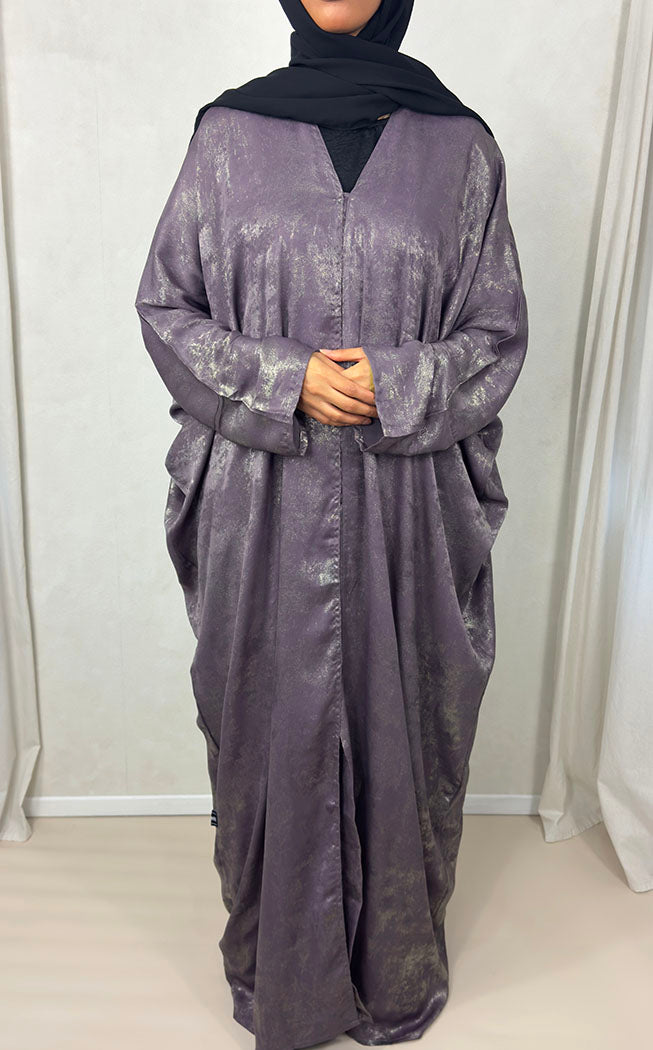
An open abaya with soft rose detail becomes much easier to wear when the inner layer is planned. The outer garment gives beauty and movement. The inner garment gives security. Together, they create the complete outfit. Without that partnership, the sister may feel like she is adjusting all day.
When choosing an underlayer, ask three questions. Does it cover enough if the abaya moves? Does it feel comfortable for the length of time I will wear it? Does it match the colour and feeling of the outer abaya? If the answer is yes, the outfit is already stronger.
Do not treat underlayers as boring. They are wardrobe heroes. A good neutral slip dress can unlock several open abayas. A comfortable long sleeve base can make a delicate abaya wearable. A modest co-ord can turn an open abaya into a daily outfit. Sometimes the best purchase is not another abaya, but the underlayer that helps you wear what you already own.
Chest coverage and hijab choice matter more with open styles
Open abayas often place more attention on the front of the body because the garment parts at the centre. This makes chest coverage especially important. A sister may feel fully comfortable in a closed abaya with a simple hijab, but need a longer scarf or khimar with an open style. That is normal. Different garments require different support.
If the inner dress has a high neckline and the open abaya sits neatly, a standard hijab may feel enough. If the neckline is lower, the fabric moves more, or you prefer extra coverage, a longer hijab or khimar can bring peace. The key is to test the outfit in movement. Turn your body, sit down, reach forward, and check how the scarf and abaya behave together.
A khimar can be especially helpful with open abayas because it covers the chest while letting the outer abaya drape underneath. This can make the outfit feel more secure for masjid visits, Islamic classes or days when you want fuller coverage. But choose the khimar carefully. If the open abaya already has wide sleeves or a lot of fabric, a very bulky khimar may feel heavy. A softer drape may work better.
Hijab fabric matters too. Chiffon can look elegant but may shift without pins or an undercap. Jersey can feel secure and comfortable. Woven or textured fabrics can add warmth and structure. The right scarf is not only about matching colour. It is about how it stays in place with the open abaya and whether it supports the coverage you want.
Many sisters make the mistake of styling an open abaya with the scarf that looks prettiest in a flat lay, then feel anxious when the outfit moves. Instead, choose the scarf that helps you feel steady. Beauty should not cost you peace. A neat, secure hijab that covers well is often more elegant than a delicate style you keep fixing.
Chest coverage is not about fear. It is about calm. When that area feels secure, your whole body relaxes. You can walk, greet people, pray and move without checking yourself constantly. That is the difference between wearing an open abaya with anxiety and wearing it with confidence.
How to choose fabric for an open abaya
Fabric changes everything in an open abaya. Because the garment is designed to move over another layer, the fabric needs to drape well without feeling uncontrolled. If it is too stiff, it may stand away from the body awkwardly. If it is too slippery, it may slide open more than you like. If it is too light, it may blow around in wind. If it is too heavy, it may pull on the shoulders and feel tiring.
For everyday open abayas, choose fabric that can handle movement and repeated wear. It should not crease the moment you sit down unless you do not mind that. It should not require delicate care beyond what your routine can manage. It should feel comfortable over your chosen underlayer. An everyday open abaya should not demand a full styling session every time.
For occasion open abayas, you may choose softer satin-touch fabrics, foil details, embroidery or special textures. These can be beautiful for Eid, weddings, dinners or family gatherings. But occasion still means real life. You may need to pray, eat, sit, walk and greet people. The fabric should support those moments too.

A soft rose satin foil open abaya can feel feminine and special, but the styling should stay calm. A plain inner dress, simple hijab and clean shoes may be enough. When the fabric has shine or detail, let it be the focus. Too many extra accessories can make the outfit feel busy and expensive to complete.
Opacity still matters, even though the abaya is open. The outer layer may not be the only source of coverage, but it still affects the modest feeling of the outfit. If the open abaya is sheer, the inner layer must do more work. That may be fine, but know it before buying. If you want the outer garment to provide more coverage, choose a fabric with more body.
Think about how the fabric behaves with bags. Some delicate fabrics catch on zips or chains. Some satin-touch materials show pulls easily. Some lightweight fabrics crease under shoulder bags. If you carry a bag often, test the outfit before wearing it for a long day.
The right fabric should make the open abaya feel like a blessing, not a project. It should move beautifully, layer comfortably and fit your life.
Colour planning makes open abayas much easier
Open abayas often involve at least two visible colours: the outer abaya and the inner layer. Add hijab, shoes and bag, and suddenly the outfit has many parts. This is why colour planning matters. Without a plan, you may buy a beautiful open abaya and then realise nothing in your wardrobe works with it.
Start with a colour family. If your wardrobe is mostly black, cream, taupe and brown, choose an open abaya that belongs to that family. If you wear navy, grey and white, stay near those tones. If you love soft rose, mauve and nude, build from there. A colour family helps the outfit feel intentional without needing constant new purchases.
For beginners, neutral open abayas are easier. Black, taupe, warm beige, dark brown, grey and navy can be styled with many underlayers. Soft rose, mauve, sage and cream can be beautiful, but they may need more careful matching. This does not mean you should avoid colour. It means you should choose colours you can actually wear.

A nude or warm neutral abaya can be very useful because it pairs with cream, taupe, chocolate, soft rose and beige. But if you choose a light colour, think about marks, underlayers and whether you feel comfortable wearing it often. A colour should support your confidence, not make you nervous.
Before buying an open abaya, imagine three complete outfits using items you already own. Which inner dress would you wear? Which hijab? Which shoes? Which bag? If you cannot create even one full outfit without buying more, the abaya may be less affordable than it seems. If you can create several, it may be a strong addition.
Colour planning is not about being fancy. It is about reducing stress. When your colours work together, you get dressed faster, buy less and repeat outfits with more confidence. A modest wardrobe does not need endless variety. It needs thoughtful connection.
Can you pray comfortably in an open abaya?
Many sisters want to know whether an open abaya is prayer friendly. The answer is yes, it can be, but only if the full outfit gives secure coverage in movement. Because an open abaya depends on layers, you must test the inner dress, hijab and outer abaya together before relying on it for salah outside the home.
Check the front first. When you raise your hands for prayer, does the open abaya shift? Does the inner layer stay covered? Does the hijab or khimar cover the chest? When you bow, does anything open more than expected? When you go into sujood, does the back remain covered? These are practical questions, not overthinking.
Sleeves matter too. Wide open sleeves can fall back when lifting hands or moving into sujood. Inner sleeves can help. Some sisters prefer cuffed sleeves for daily prayer comfort. If the open abaya has very wide sleeves, test how they behave. You should be able to focus on salah, not fabric.
Skirt or inner dress width matters as well. If the underdress is narrow, kneeling may feel restricted. If trousers are worn underneath, make sure they are loose and comfortable for prayer positions. A beautiful open abaya is not enough if the base layer prevents comfortable movement.
If you plan to wear open abayas to the masjid, Islamic classes or Eid salah, choose a secure combination. A long inner dress, khimar and open abaya can work beautifully. A loose co-ord with a long scarf can also work. The key is making sure everything stays in place without constant adjustment.
Prayer comfort is one of the most important tests for modest clothing. If the outfit helps you pray calmly, it becomes more than an outfit. It becomes part of your daily ease.
How open abayas work for different routines
An open abaya may be perfect for one sister’s routine and awkward for another’s. That does not mean the style is good or bad. It means clothing must be matched to life. Before buying, think about where you will actually wear it.
For everyday errands, choose an open abaya that does not need constant fixing. The fabric should not blow open too easily. The inner layer should be comfortable. The shoes should work with the length. A practical bag should not pull the front apart. If the outfit requires too much attention, it may not be the best daily choice.
For work or university, think about long wear. Will the inner layer feel comfortable after several hours? Will the sleeves get in the way when writing, typing or carrying books? Will the abaya look neat after sitting? A simple open abaya in a calm colour may work well if styled with a modest base.
For family gatherings, open abayas can feel beautiful because they give softness without needing tightness. A satin or foil detail style can look special over a plain inner dress. A gentle colour can feel feminine while still covered. This is where open abayas often shine.
For masjid visits, keep the outfit secure. A khimar or longer hijab can make the open front feel calmer. Avoid delicate styles that distract you during prayer. Choose something you can sit in, move in and feel comfortable wearing around other sisters.
For travel, choose carefully. Open abayas can be comfortable if the layers are practical, but long flowing fronts may catch or need adjusting. If you are moving through stations, airports or buses, choose manageable fabric and length. Comfort is part of modest wisdom.
Open abayas and body confidence
Open abayas can feel emotional for sisters who are conscious of their body shape. Because the outer layer moves, the underlayer matters. A sister may worry that the inner dress shows too much shape. Another may worry the open front creates lines she dislikes. Another may feel nervous about the outfit looking too dressy. These feelings should be met with gentleness.
Your body is not the problem. The garment needs to be chosen and styled properly for your body. If a tight inner dress makes you uncomfortable, choose a looser slip or a modest co-ord. If a lightweight fabric clings, choose a thicker base. If the open front makes you feel visible, add a khimar or choose an abaya with ties, buttons or more overlap. There are practical solutions.
Open abayas can actually be confidence-giving when the layers are right. The outer garment can create graceful movement over a simple base. It can soften the silhouette. It can allow you to wear a comfortable underlayer while still looking put together. It can help sisters who dislike one-piece garments because the outfit can be adjusted in parts.
But do not force yourself into a style that makes you anxious. If you prefer closed abayas, that is fine. If you want to try open abayas slowly, start with one neutral piece and a secure underlayer. Wear it at home first. Try it for a short outing. Confidence grows through experience.
For sisters whose bodies have changed, open abayas can be merciful if styled well. Pregnancy, postpartum, weight changes, illness, stress and age can all change what feels comfortable. A loose outer layer over a soft base can give room without losing polish. Choose kindness over criticism when dressing your body.
Mistakes to avoid with open abayas
The first mistake is buying the open abaya without planning the inner layer. This is the most common issue. The outer piece may be lovely, but if you do not own anything suitable underneath, you may not wear it. Always ask what complete outfit the abaya belongs to.
The second mistake is choosing a fabric that does not suit your routine. Delicate satin-style open abayas may be beautiful for occasions but stressful for school runs or daily errands. Lightweight fabrics may need layering. Heavy fabrics may feel tiring. Fabric should match use.
The third mistake is ignoring front movement. An open abaya may sit perfectly in a photo but move when you walk, sit or face wind. Check whether it has ties, buttons, overlap or enough fabric to stay comfortable. If not, plan the underlayer carefully.
The fourth mistake is styling with a scarf that does not support coverage. A short or slippery hijab may look nice, but if it leaves you anxious, it is not the best choice. A longer scarf or khimar may make the outfit feel calmer.
The fifth mistake is choosing a colour that needs too many new purchases. If the open abaya only works with an inner dress and hijab you do not own, the real cost is higher. Choose colours that connect with your wardrobe.
The sixth mistake is keeping an open abaya that you know you will not wear. If it can be returned, return it. If not, style it differently or gift it to someone it may suit. Do not let one wrong purchase make you feel that open abayas are not for you forever.
| Mistake | Why it causes stress | Better choice |
|---|---|---|
| No underlayer plan | The outfit feels incomplete | Choose a slip dress or modest base first |
| Wrong fabric | Too delicate, heavy or slippery | Match fabric to daily or occasion use |
| Short scarf | Chest coverage may feel uncertain | Use longer hijab or khimar if needed |
| Unmatched colour | Requires extra purchases | Stay within your wardrobe colour family |
| No movement test | Problems appear outside | Walk, sit and pray at home first |
A gentle note for revert sisters
If you are a revert sister, open abayas may feel both attractive and confusing. You might love how they look, but wonder what goes underneath, whether it is appropriate for the masjid, whether it will feel secure, or whether people will judge your styling. Please know that your questions are normal. Modest fashion has a learning curve, and you are allowed to learn without shame.
For your first open abaya, choose simple over complicated. A neutral colour, comfortable inner dress and longer hijab can make the style easier. Avoid starting with something that needs many layers, delicate care or exact styling unless you feel ready for that. Your first goal is not to impress. Your first goal is to feel covered and able to move.
Wear it at home first. Pray in it. Sit in it. Walk in it. Try different hijabs. Notice when you feel calm and when you feel unsure. This is not failure. This is how you learn what modest clothing works for you.
If you are attending the masjid, choose a secure outfit. A long inner dress and khimar with an open abaya can feel beautiful and covered. If you are nervous, choose a darker or calmer colour. You do not need to start with the most eye-catching style. A gentle beginning is still a beginning.
Remember that wearing an abaya does not mean you are claiming perfection. You are allowed to be learning. You are allowed to ask for help. You are allowed to take gradual steps. Allah knows the effort behind every sincere choice.
How to build a small open abaya wardrobe
You do not need many open abayas. In fact, open abayas are easiest when the supporting pieces are strong. Start with one open abaya that works with at least one underdress and two hijabs you already own. Wear it several times before buying another. Learn what you like. Do you prefer ties? Buttons? Soft fabric? More overlap? Dark colours? Lighter neutrals? Longer sleeves? This experience will guide better purchases.
A small open abaya wardrobe might include one neutral open abaya for everyday wear, one softer or special open abaya for occasions, one reliable inner dress, one darker inner layer, and a few hijabs or khimars that match both. This is enough to create multiple outfits without clutter.

A coordinated set can be helpful because the outfit has already been planned. If the inner layer, outer layer and scarf work together, you may save time and avoid buying extra pieces. But only choose a set if the pieces can be worn in your real life. A set is useful when it gives options, not when it sits untouched.
Think in formulas. Open abaya plus slip dress plus khimar. Open abaya plus wide-leg trousers plus long top. Open abaya plus inner dress plus chiffon hijab. Once you know your formula, getting dressed becomes easier. You can change colours without rebuilding the whole outfit.
Building slowly also protects your money. Open abayas can lead to extra purchases if you are not careful. A new outer layer may require a new inner dress, new hijab and new shoes. Before buying, check whether you already have the supporting pieces. If not, ask whether the total cost still makes sense.
Care, repeat wear and keeping open abayas beautiful
Open abayas often have flowing fronts, wide sleeves or delicate fabrics, so care matters. Good care helps the garment keep its shape and softness. It also makes repeat wear feel nicer. A wrinkled, pulled or poorly stored open abaya can look tired quickly, even if it was beautiful when new.
Always follow care guidance. If the fabric is delicate, wash gently or by hand if recommended. Avoid harsh heat unless the garment label allows it. Hang to dry when suitable. Steam lightly if needed. Keep zips, jewellery and rough bags away from delicate fabric to avoid snags.
Store open abayas where they can breathe. If you hang them, use a suitable hanger so the shoulders do not stretch. If folding, fold carefully along natural lines. Keep matching inner layers nearby if possible. When pieces are stored together, you are more likely to wear them.
Repeat wear is not a problem. A good open abaya can be styled many ways. Change the inner layer, scarf, shoes or bag. Wear it for family visits one day and a masjid class another day if the styling suits both. A garment earns its value when it serves more than one moment.
There is dignity in caring for clothing. It reduces waste, saves money and helps your wardrobe feel intentional. Modesty does not need constant newness. It can grow through thoughtful care.
Frequently asked questions about open abayas
Can an open abaya be modest?
Yes, an open abaya can be modest when it is layered properly. The inner dress or base outfit should provide secure coverage, and the hijab or khimar should support the chest and neckline if needed. The full outfit matters more than the outer abaya alone.
What should I wear under an open abaya?
You can wear a slip dress, inner dress, long sleeve base, skirt and top, wide-leg trousers or a modest co-ord. The best underlayer is opaque, comfortable, loose enough for your preference and long enough to maintain coverage when the abaya moves.
Is an open abaya good for everyday wear?
It can be, if the fabric is practical, the underlayer is comfortable and the front does not need constant adjusting. Simpler open abayas in calm colours are often easier for daily wear than delicate occasion styles.
Can I pray in an open abaya?
Yes, but test the full outfit first. Check the front, sleeves, inner layer and hijab during the movements of salah. If anything shifts or feels uncertain, use a longer hijab, khimar, inner sleeves or a more secure base layer.
How do I stop an open abaya from opening too much?
Choose an abaya with ties, buttons, overlap or a heavier drape if you want more control. You can also style it with a secure inner dress and khimar so that even if the front moves, you still feel covered.
Are open abayas better for occasions?
Many open abayas work beautifully for occasions because they layer well and create graceful movement. However, simple open abayas can also work for daily wear. Fabric, colour and practicality decide the purpose.
Which colour open abaya should I buy first?
Black, taupe, warm beige, navy, grey and brown are practical first choices because they match many inner layers and hijabs. Choose a colour that works with pieces you already own rather than one that requires a completely new outfit.
Do I need a matching inner dress?
You do not always need an exact match, but the inner dress should coordinate well and provide modest coverage. A neutral inner dress can work with several open abayas, making it a useful wardrobe piece.
Are open abayas suitable for new Muslims?
Yes, if styled simply and securely. A new Muslim sister may prefer a neutral open abaya with a comfortable inner dress and longer hijab or khimar. Starting with easy, secure layers can make the style feel less overwhelming.
People also ask
What is the difference between an open abaya and a kimono abaya?
The terms can overlap. A kimono abaya usually refers to an open robe-like abaya with wide sleeves or a kimono-inspired shape. An open abaya is a broader term for any abaya worn open over another layer. Always check the actual design.
Can I wear trousers under an open abaya?
Yes, loose wide-leg trousers can work under an open abaya, especially for practical routines. Pair them with a long modest top or tunic if needed, and make sure the full outfit gives the coverage you want when the abaya moves.
How do I make an open abaya look less dressy?
Choose a simple hijab, practical shoes and a plain inner layer. Avoid heavy accessories. A neutral open abaya with trainers or flats can feel relaxed and wearable for everyday errands.
Can I wear a khimar over an open abaya?
Yes. A khimar can add chest coverage and make an open abaya feel more secure. Choose a khimar that balances the abaya’s fabric and does not make the outfit too heavy for your routine.
Why does my open abaya feel incomplete?
It may need a better inner layer, more suitable hijab, matching shoes or a clearer colour plan. Open abayas depend on styling. If one support piece is missing, the whole outfit can feel unfinished.
Should I choose a closed abaya instead?
If you want easier daily coverage with fewer layers, a closed abaya may be better. If you enjoy layering and want versatility, an open abaya can be useful. The right choice depends on your routine, confidence and wardrobe.
Sisterhood reflections for sisters learning to layer
Many sisters love the idea of an open abaya but need time to feel confident in it. That is normal. Layering is a skill. It becomes easier when you stop trying to copy perfect photos and start building outfits around your real life.
“I thought open abayas were not for me until I bought one proper inner dress. Suddenly the whole outfit felt secure.”
“As a revert, I did not understand what to wear underneath. Once another sister explained layering, I felt much more confident.”
“The open abaya I wear most is not the fanciest one. It is the one that works with my khimar, my flats and my normal day.”
If you are still learning, be gentle with yourself. You are allowed to ask questions. You are allowed to try different layers. You are allowed to decide that some open abayas are not right for you. Modest fashion becomes easier when it is built with honesty rather than pressure.
About Amani's
At Amani's, modest fashion is not treated as just clothing. It is part of a sister's journey, her worship, her confidence and her everyday dignity. We create and curate abayas, hijabs, jilbabs, khimars, prayer wear and modest pieces for women who want coverage without losing softness, beauty or ease.
Our experience in modest fashion comes from listening to real sisters. We think about how clothing moves, how it feels during salah, how it supports reverts, how it works for busy routines and how it can help a woman feel gently put together without pressure.
If you are choosing your first open abaya, replacing a piece that never felt right, or learning how to layer modestly with more confidence, you are welcome here.
With love and du'a,
Amani's
More than clothing, a community intention
Amani's was built with a purpose beyond fashion. Modest clothing can help a sister feel covered and confident, but the work is also connected to sisterhood, sadaqah jariyah and caring for women who may be at the beginning of their modest dressing journey.
In Ramadan, Amani's donates abayas to reverts as part of our wider intention to support sisters who are beginning or strengthening their journey with modest dress. For us, this is not only about giving fabric. It is about dignity, welcome and reminding a sister that she is not alone.
When you choose Amani's, we want you to feel part of something gentle, sincere and rooted in care. Modest fashion should not make a sister feel pressured. It should help her feel supported.
Where to begin with your own open abaya
Begin with the layer underneath. Before buying another open abaya, ask whether you have a modest inner dress, slip, long top, trousers or co-ord that can support it. Then check the outer abaya for fabric, length, sleeve comfort, front movement and colour. The best open abaya is not only the prettiest one. It is the one that becomes wearable because the whole outfit works.
If you want to explore open and layered modest styles, browse the Amani's abaya collection. If you prefer fuller coverage, look through jilbabs and khimars. If salah comfort is your first need, begin with prayer dresses. If your open abaya needs better finishing pieces, choose hijabs that support your colour family and coverage needs.
You do not need to feel uncovered to wear something graceful. You do not need to choose between beauty and modesty. With the right layers, an open abaya can feel soft, secure and deeply wearable. Let your outfit support your body, your worship, your confidence and your real life.