How Can Handmade Cotton Hijabs Add a Personal Touch to Your Style?
A handmade cotton hijab can give an outfit a detail that feels particularly personal: a line of stitching you enjoy, an embroidered corner that appears in your favourite drape, or a hand-dyed colour arrangement that works beautifully beside a familiar abaya. The pleasure comes from understanding the piece and finding a way to wear it that lets its character show.
Begin with the scarf itself. Ask what was made by hand, examine the finished cloth and try the arrangement you normally wear. Then choose how the colour, edge or decoration will sit within a complete outfit. A carefully chosen piece can be expressive without needing an elaborate wrap or a collection of new accessories.
The following approach focuses on choosing and styling finished handmade cotton hijabs. It brings the maker's work, the scarf's practical qualities and your own preferences into the same decision, so the personal touch remains part of everyday dressing.
Decide what makes the scarf personal to you
Start with the detail that draws you to the piece. Perhaps it is a blue embroidered flower, the contrast between a cream ground and brown stitching, or the way a softly varied colour looks when folded. Name that detail before planning the outfit. It gives you a clear reason to choose this scarf rather than another similar colour.
A personal connection can also come from a conversation with the maker. You may enjoy learning why they chose a particular thread, how they arranged a border or which part of the work they find most satisfying. Keep that specific explanation with the scarf's information. It is a more useful memory than a broad description such as beautiful craftsmanship.
Think about where the scarf will enter your wardrobe. An interesting piece becomes easier to enjoy when you can picture it with clothes you already wear. Lay out one everyday combination and one slightly smarter version, then see whether the same handmade detail feels at home in both.
Ask which part of the work was done by hand
Use a direct, friendly question: “Could you tell me which stages you make by hand?” The answer might concern the cloth, its colour, the edge finish or the decoration added to it. Follow the explanation through to the finished scarf so you understand what you are looking at.
For example, a maker may buy woven cotton and hand embroider a small motif. Another may dye a piece of cotton cloth before finishing its edges. Someone else may concentrate on a carefully sewn border. Ask about the actual process used for the piece that interests you, including any stages completed elsewhere.
Look for the details the maker describes. If the interest is in an embroidered corner, examine that area and its reverse. If it is a hand-finished edge, run your fingers gently along the hem with permission and see how it folds. A photograph of the work in progress can add context when choosing online.
Keep the description precise when you share the scarf with someone else. Saying that the border was embroidered by its maker preserves the meaning of that work. You can appreciate one carefully completed stage without needing every part of the scarf to have been produced by the same person.
Get to know the actual cotton cloth
Check the fibre information and finished dimensions, together with the care instructions. If the scarf is a blend, note the stated composition. Feel the cloth where it will sit beside your face and look at the amount of fabric your normal wrap creates around the neck. Choose the particular scarf for the way you want to wear it.
Compare it with a cotton hijab you already enjoy. Does the new piece make a firmer fold, fall more softly or occupy more space when gathered? Try a familiar arrangement first. Changing the cloth and the wrapping method at the same time makes it harder to understand which detail is affecting the result.
Look at the scarf in daylight, both flat and folded in the number of layers you expect to wear. Include your usual undercap if you use one. Check the coverage and colour in that complete arrangement, especially where a dyed area or pale ground sits near the hairline or across the chest.
Inspect a finished piece with its design in mind
Lay the scarf flat and look at the complete shape before concentrating on decoration. Check the long edges, corners and stitching. If the design is intentionally irregular, ask the maker to explain that choice so you can distinguish the intended effect from a section that needs attention.
Examine raised details from the front and reverse. Feel whether an embroidered area or backing is comfortable in the position where you intend to wear it. A motif at a hanging end meets the body differently from the same motif folded beside the cheek. Let that intended placement guide your assessment.
Check for loose threads, gaps in an edge or an attachment that appears insecure. Ask about anything you cannot interpret before wearing or washing a new scarf. The conversation can be specific: point out the section and ask how it should be finished or how the maker expects it to behave in a wrap.
Place an embroidered motif where the wrap can reveal it
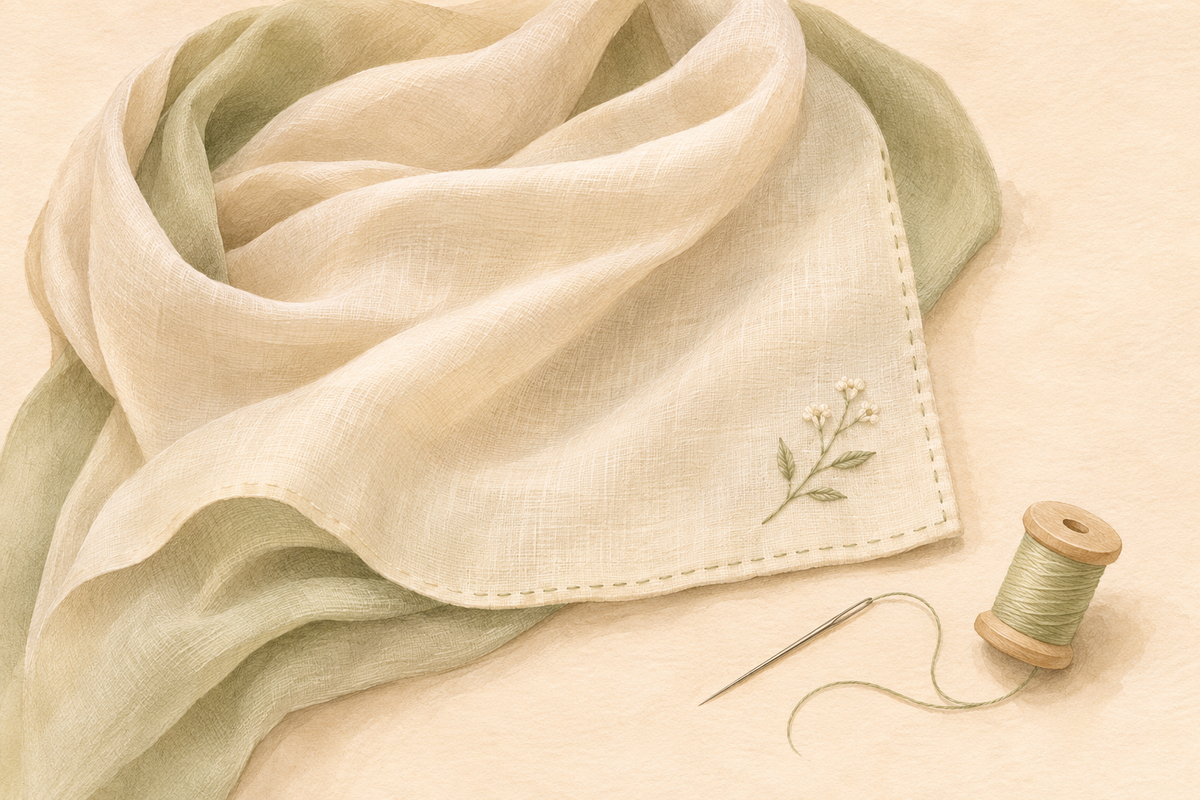
A scarf can look quite different when wrapped because much of the flat surface disappears into folds. Start by locating the motif and identifying the end or edge you want visible. Put the scarf on with that placement in mind, then build the rest of your familiar arrangement around it.
For an embroidered corner, try leaving that end slightly longer so it falls over the front or one shoulder, according to your preferred coverage. Check that the motif faces the way you want and remains visible when you move. If it turns inwards, change the starting position a little rather than repeatedly pulling the finished wrap.
If the decoration runs along one edge, compare two positions. One may show a narrow line near the outer drape; another may reveal more of the border across the chest. Choose the version that lets the detail sit comfortably. Keep dense stitching away from a fastening point if the extra layers make it awkward to secure.
Try the wrap with the actual neckline of the outfit. An embroidered end may disappear inside an open coat or compete with a highly decorated collar. A plain neckline can provide a clear place for the motif, while a slightly different drape can keep it visible beside a jacket.
Let hand-dyed colour guide the scarf arrangement
With a hand-dyed scarf, look at where the strongest and quietest colour areas sit. Fold it in your hands before putting it on and notice what appears along the front edge. A pale section near the face and a deeper end create a different arrangement from placing the darkest area at the forehead.
Try both with the same outfit. If the scarf has a soft change between cream and blue, you might use the cream near the face for one look and turn the scarf to show more blue for another. Keep the rest of the outfit unchanged while comparing so you can see what the colour placement contributes.
Where the pattern is more varied, choose a starting point that reveals a section you particularly like. You may prefer a quiet area around the face with more movement in the hanging end. Alternatively, a stronger patch of colour can become the main feature of an otherwise plain outfit.
When buying online, ask whether the photograph shows the exact scarf you would receive or an example of the design. Request a view of the complete piece as well as a close-up. If a particular arrangement of colour is what attracts you, seeing the whole scarf helps you judge how it could work in your preferred drape.
Appreciate a quiet edge as part of the style
A handmade scarf does not need visible embroidery or a dramatic dye effect to feel special. A neat edge, a restrained line of contrasting thread or well-considered corners can become the detail you enjoy each time you arrange it. Look at how the finish contributes to the shape around your face.
Try the edge in a single fold and in your usual doubled arrangement. Notice whether the layers sit smoothly and whether a corner becomes bulky where you normally fasten the scarf. If the edge has a decorative treatment, decide whether you want it visible or tucked within the drape.
A plain cotton hijab with a subtle border can sit comfortably beside patterned clothing. Repeat the border's colour in one small part of the outfit if you like, such as a bag or shoe. That creates a connection while allowing the scarf's main surface to remain quiet.
Outfit one: a small embroidered detail with a plain abaya
Imagine a cream cotton hijab with a small blue motif near one end. Try it with a navy abaya and a simple bag. The abaya gives the embroidery a colour connection, while the cream provides a clear background for the stitching. Arrange the scarf so the motif appears where you can enjoy it without compromising the coverage you want.
Keep the abaya's neckline and sleeves fairly quiet for the first version. This makes it easier to judge the scarf itself. If the abaya already has embroidery, compare the two designs together: their scale and placement may work well, or you may prefer to save that garment for a plainer scarf.
Choose shoes according to the plans for your day. Simple flats or loafers can give the outfit a composed finish; familiar trainers make it more relaxed. The embroidered motif can remain the same small point of interest in either version.
Before adding a brooch, look at the outfit from a little distance. If the motif already provides the detail you wanted, you may prefer the scarf without another feature. If you do use jewellery, compare it with the actual thread colours and position it where it will not catch the embroidery.
Outfit two: hand-dyed colour with familiar separates
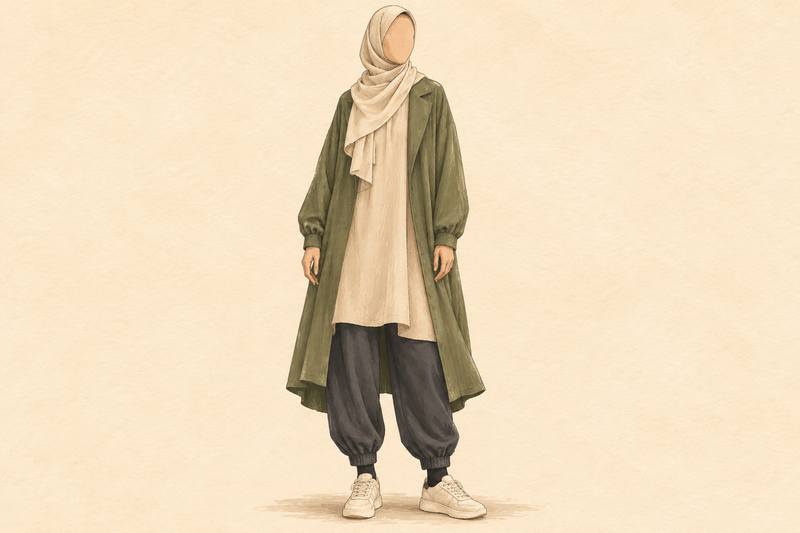
For a more relaxed combination, try a cotton scarf with warm cream and muted brown areas beside a cream long shirt and dark trousers or a skirt. Begin with the shirt and lower garment as a complete outfit, then add the scarf and decide which colour area you want most visible.
A brown section in the hanging end can connect with a bag or shoes you already own. If your accessories are black, let them relate to the darker lower garment instead. You can create a coherent outfit through two simple connections without matching every shade.
Check the shirt collar once the scarf is on. A small visible collar can add structure beside a softly varied dye effect. If the upper area feels crowded, arrange the scarf over the collar and keep the neckline simpler. Try that adjustment before replacing a piece you otherwise enjoy.
For another day, use the same scarf with a plain brown abaya or a long neutral cardigan over your base. Turning the scarf to reveal a different proportion of cream may be enough to change the effect. Keep a quick note of the arrangement you liked so you can reproduce it easily.
Outfit three: a restrained handmade detail for an occasion
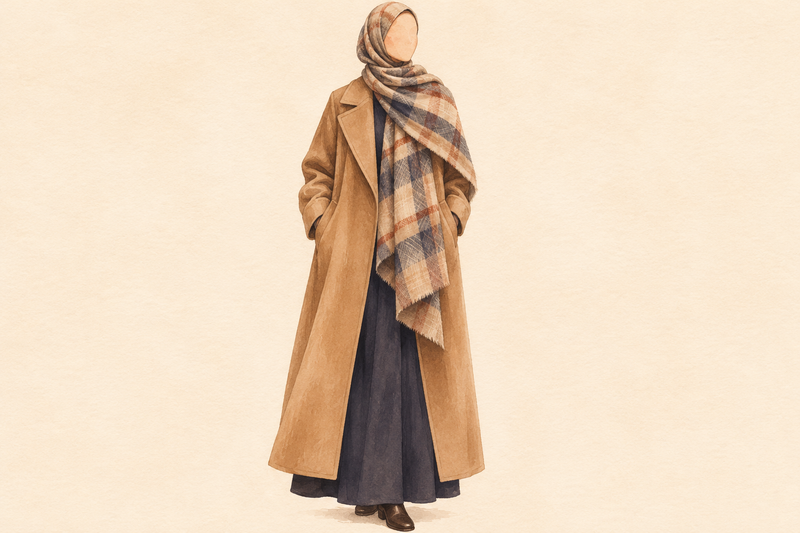
A cotton hijab can be part of an occasion outfit when its particular finish suits the clothes and setting. Consider a scarf with a fine tonal border beside a plain, well-fitting dress or abaya. Look at the actual materials together: you may enjoy the difference between the scarf's surface and a smoother garment beneath it.
Let one area provide the decorative focus. A border that falls neatly over the chest may work with quiet sleeves and a small bag. If the dress has an embellished neckline, try a plainer part of the scarf near it and leave the border visible further down.
Use a familiar wrap for the first fitting. The handmade detail can make the combination feel considered without requiring a more complicated arrangement. Put on the complete outfit, including any outer layer, and check whether the border stays where you intended when you sit and turn.
Choose accessories in relation to the decoration that is actually present. A small point of shine in a bag or jewellery may be enough beside fine stitching. If you prefer a more expressive look, add one piece at a time and keep the combination that lets you appreciate both the garment and the scarf.
Combine a handmade scarf with patterned clothing
Patterned clothes can work with a handmade cotton hijab when you choose a clear relationship between the details. Start with the garment and identify its background colour. A scarf in a related shade can provide a quieter area beside the print, while a small handworked edge gives you something interesting to notice close up.
For example, try a dark floral dress with a plain cotton scarf carrying a narrow cream border. If cream also appears in the dress, the border creates a small connection without repeating the entire floral pattern. Arrange it along the outer drape or near one hanging end, then compare a plain bag with a more decorative one. Keep the combination that lets you appreciate the dress and the scarf together.
With a striped shirt, consider the spacing of the stripes beside any scarf decoration. A tiny embroidered corner can remain a separate detail against a wider stripe. If the scarf has a large, colourful motif, try an open plain cardigan over the shirt so the stripe occupies a smaller area. Check the result with the cardigan in the position you will actually wear.
For two patterns, begin with one shared colour and let their scale differ. A small repeat in a blouse may sit comfortably beside larger areas of colour in a hand-dyed scarf. Put on the complete outfit, arrange the scarf and step back before deciding. You may enjoy a lively combination, or prefer to replace the blouse with a plain top on that occasion.
Keep the shoes and bag familiar during these comparisons. Changing only the relationship between the scarf and clothing makes it easier to see what you like. Once that part feels settled, choose whether an additional accessory improves the outfit or whether the handmade detail already gives it the finish you wanted.
Use folds to change the emphasis
Once you understand the scarf's main detail, experiment with the width of the front fold. A narrower fold may reveal more cloth; a deeper one may show a quieter section while bringing a border to the edge. Make a small change and check its effect on the amount of fabric available for the rest of the wrap.
Compare the scarf ends in front with one end arranged over a shoulder, using a method you already wear comfortably. Notice which arrangement displays the handwork most clearly and which fits the outfit's neckline. The best version is the one that combines your preferred coverage with a placement you can leave comfortably in place.
If a decorated end repeatedly twists, begin again with the scarf slightly repositioned. Check whether the motif's weight or an edge fold is influencing the fall. Give the detail a relaxed place in the drape instead of fastening it under tension to force it into view.
Choose brooches and fastenings around the handwork
Put on the scarf with the fastening method you usually use, then examine the contact points. Avoid pushing a pin through an embroidered motif simply because it lies at your familiar fastening spot. Reposition the scarf or choose another suitable point if that allows you to keep both the arrangement and the stitching comfortable.
For a decorative brooch, consider the weight as well as its appearance. Support it in a part of the outfit suited to the piece rather than making a light scarf carry a heavy ornament. Try the complete arrangement gently and check whether the fabric pulls or the brooch turns.
A plain scarf can give a favourite brooch more space to be seen. With an intricate handmade border, smaller jewellery or a quiet fastening may let the stitching remain the focus. Check rings, bracelets and bag hardware too, particularly when they meet the decorated edge as you adjust the scarf.
Make a conversation with the maker useful
If you meet a maker at a market, exhibition or studio, explain the kind of scarf you enjoy wearing. Mention the dimensions you find useful, the outfits you would pair it with and the particular detail that caught your eye. That gives the conversation a practical starting point while leaving room to learn about their work.
Ask to see the piece fully opened and to view the reverse of any decoration. If you would like to try it on, ask what is possible and follow the maker's handling arrangements. When choosing online, request the same useful views and retain the written description alongside the order information.
For an existing design, ask whether you are choosing that individual scarf or ordering another version. If it is another version, clarify which features will be the same and what you will be able to review. Keep the discussion focused on the scarf you expect to receive.
Confirm the practical details before deciding: the finished measurements, composition, care, total price, delivery arrangements and the seller's stated terms. These details help you choose a piece you can use and look after. They also keep the maker's explanation of the handwork connected to the actual item.
Keep cultural meaning attached to a clear explanation
If a motif, stitch or colour arrangement has a particular meaning for its maker, ask them to explain it in their own terms. Record the name accurately and retain any reference they provide. You can appreciate both the visual detail and the specific context they choose to share.
When a design interests you because it resembles a textile tradition, look for a clear account of how the maker relates to that tradition. Ask about the particular technique or influence rather than assigning a meaning from appearance alone. A carefully attributed explanation gives the piece a more substantial personal connection.
Share that connection accurately if someone asks about the scarf. You might explain that the maker chose the colours for a particular reason or embroidered a motif inspired by a named place. Keep your own response separate: perhaps the detail reminded you of a colour you love, which is why you chose to wear it.
Choose a handmade cotton hijab as a thoughtful gift
Start with the recipient's preferences. Think about the scarf shape, colours and coverage they already enjoy, or ask them if you can. A handmade piece is more useful when its personal detail fits the way the person dresses.
If you know they prefer plain scarves, consider a subtle edge or small motif rather than a heavily decorated design. If they enjoy colour, compare the handmade scarf with the shades they repeatedly wear. Keep any cultural or personal meaning specific and relevant to the recipient rather than assuming they will interpret it in the same way you do.
Include the maker's information and care instructions with the gift. A short note explaining why you chose that particular detail can add a personal connection of your own. Confirm any gift or exchange arrangements directly with the seller before ordering if those affect your decision.
Care for the whole finished scarf
Keep the maker's care instructions with the scarf's description. The cloth, dye, stitching and any attached detail all form part of the finished piece. Ask about care before buying, particularly if the scarf combines more than one material or you intend to wear it frequently.
Follow the instructions for that scarf when washing, drying or pressing. GINETEX's care-symbol guide explains how to read the permitted processes. Choose settings from the garment's care information rather than deciding from the word cotton alone.
Remove detachable accessories before cleaning where appropriate to their instructions. Inspect the scarf afterwards for a loose stitch, a lifting edge or a detail that needs attention. If you are unsure how to deal with it, ask the maker or a suitable textile repairer before pulling, trimming or applying heat.
Store the clean, fully dry scarf where it can lie or hang comfortably without a heavy object pressing on raised decoration. Keep sharp jewellery and exposed fastenings away from delicate work. A simple arrangement that lets you see and reach the scarf also makes it easier to include in your regular outfits.
Let the piece inspire a manageable next step
After wearing the scarf, note which arrangement made the detail most enjoyable. Record the outfit, the starting position of the motif or colour area and anything you would change. A quick photograph for your own reference can help you recreate a drape without making every morning an experiment.
If the making interests you, ask about a suitable class or a small beginner project. Our guide to sewing a simple rectangular hijab explains a measured first project. You can enjoy a maker's finished work while gradually learning more about the choices behind your own scarves.
A handmade cotton hijab adds a personal touch when its details become part of the way you dress. Understand the actual work, choose a cloth and size you enjoy, then give the colour, stitching or border a comfortable place in your outfit. The result can be a familiar scarf with a detail you continue to notice and appreciate.