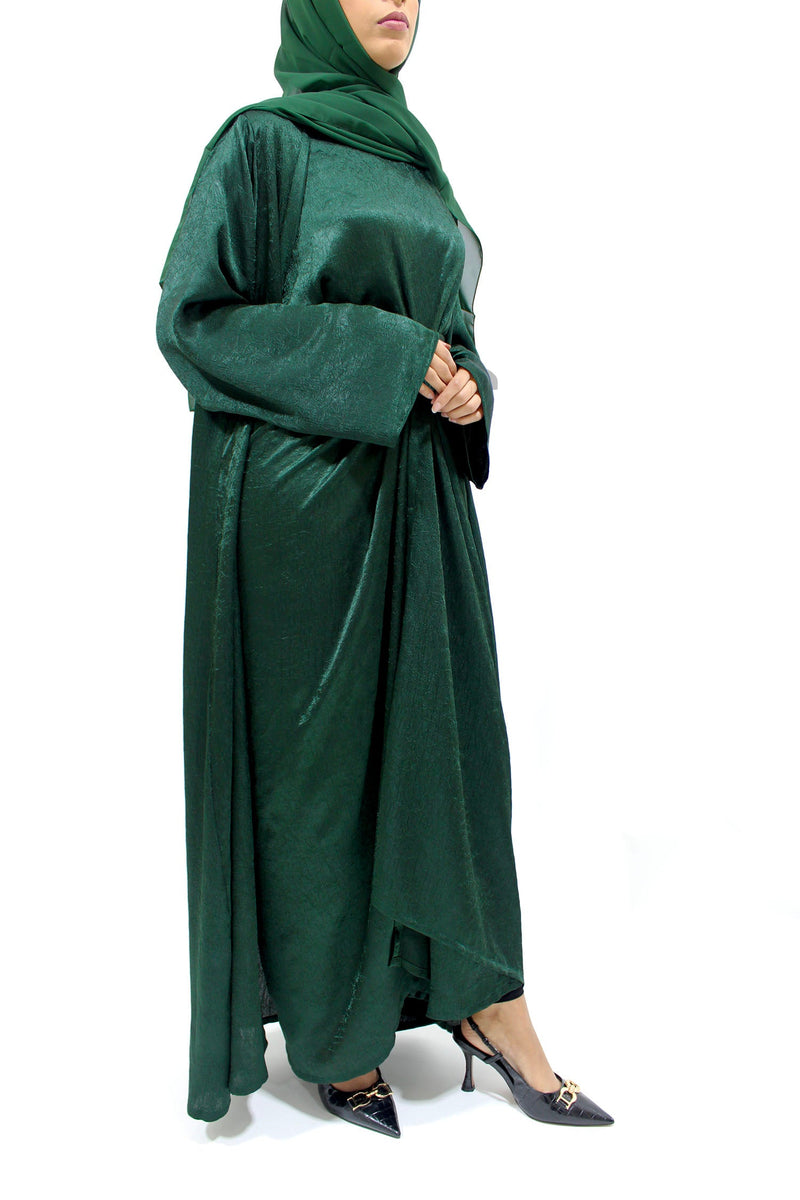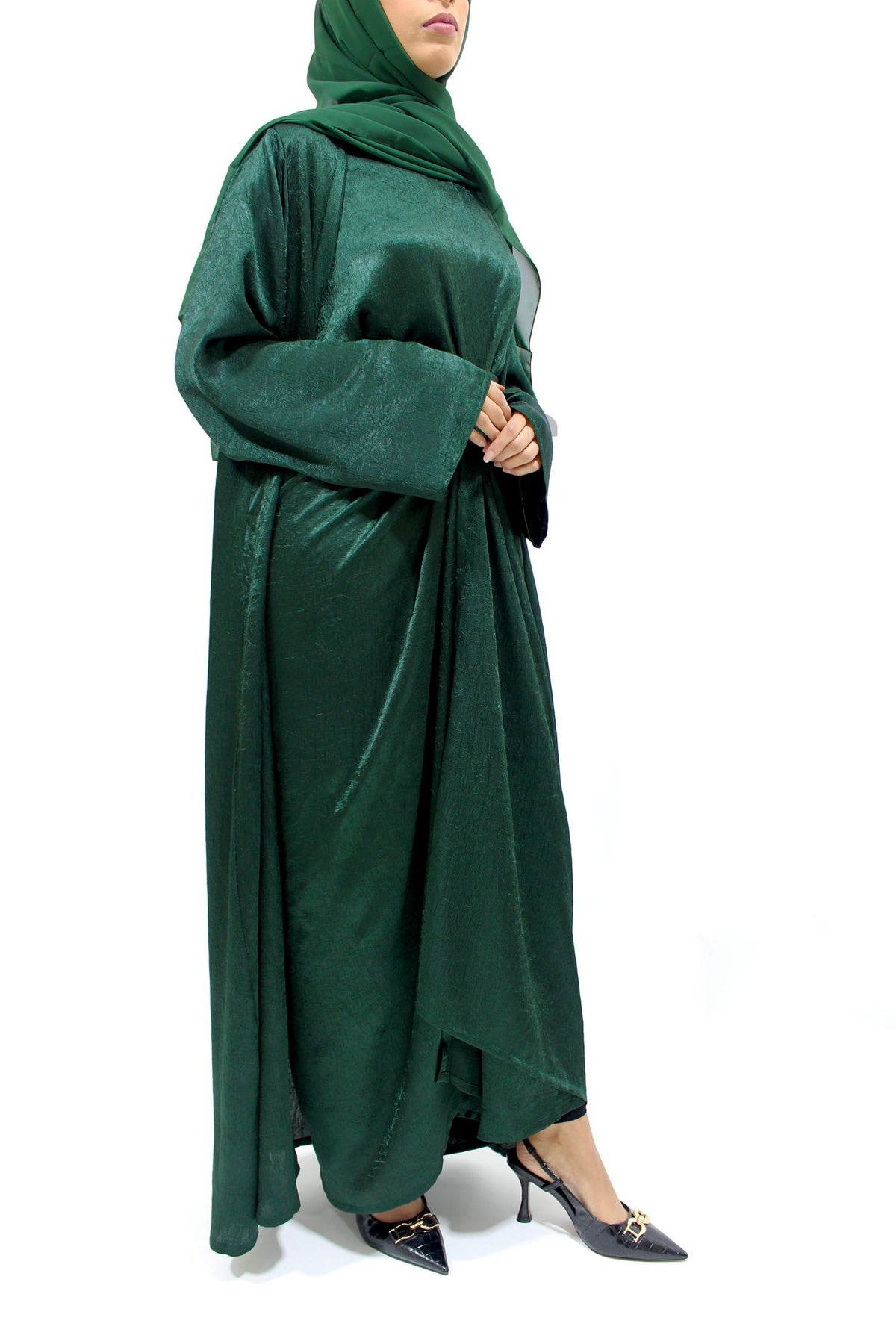
Putting together an open abaya outfit
Take the open abaya off for a moment and look at the outfit beneath it. Would you still be comfortable wearing that combination in the setting you are going to? That question is the most useful starting point for an open-front style, because the outer layer will move as you walk, sit and reach.
Once the inner outfit works on its own terms, the abaya can add shape, colour and movement without being asked to stay in a position it was never designed to hold. This makes styling easier and removes the need to keep pulling the front edges together throughout the day.
Decide how open the design is meant to be
Some open abayas are intended to remain unfastened. Others have a tie or a small number of closures that hold particular points while leaving the lower front open. Read the construction details rather than assuming that every style can be converted into a closed dress.
Try the intended fastening method and see what happens when you move. A single closure near the upper body does not necessarily control the whole front. A belt may change the silhouette without preventing the lower panels from separating.
Do not force the garment into a different role with an improvised pin that pulls the fabric. If you prefer a reliably closed front, another cut may suit that need better. The guide to abaya types can help distinguish those options.
Choose a complete inner outfit
An inner dress is one possibility, but separates can also work. The important point is that the neckline, sleeves, lower-body coverage and opacity meet your needs when the outer layer moves. Do not assess only the central strip visible in a standing photograph.
For a dress, check side seams, slits and the hem as well as the front. For a top and trousers or skirt, check the overlap when you sit or raise your arms. A short top that stays tucked only while standing may create a gap once you move.
Try the inner outfit in suitable brighter light. A dark colour or a smooth finish is not enough to establish opacity. If another layer is needed, include it in the comfort and temperature assessment before adding the abaya.
Match the movement of the two layers
The inner outfit should have enough ease to move without repeatedly catching the outer garment. A bulky seam, rough surface or full sleeve can alter how the abaya falls. Put the pieces on together and walk, sit and reach.
Stretch can be useful, but it is not a guarantee of comfort or the fit you prefer. An elastic waistband still needs to sit comfortably and remain stable. A stretchy inner dress may follow the body more closely than you want, even when it is easy to move in.
A smooth, simple inner shape is often an easy starting point because it lets you assess the outer cut clearly. That does not mean every open abaya needs a narrow inner silhouette. A fuller skirt or wider trouser can work when the proportions and movement have been tested together.
Give the hems a deliberate relationship
Put on the shoes intended for the outfit and compare the inner and outer lengths. They may finish close together or create a visible difference, but the result should look intentional from the sides and back as well as the front.
Watch what happens during a normal stride. One layer may catch on the other, or a shorter inner garment may reveal more than expected when the abaya opens. Check steps and sitting in a suitable space rather than relying on a carefully arranged mirror pose.
If alterations are needed, assess both garments before changing either. Shortening the inner dress may improve one visual line but reduce the coverage you wanted. A decorative outer border may limit how easily its length can be adjusted.
Start with one colour relationship
A coordinated inner and outer shade creates a quieter layered effect. The fabrics can differ in texture, allowing the edge of the abaya to remain visible without a strong colour change. Compare the actual materials because two similarly named colours may not sit as closely together as expected.
A contrasting inner outfit makes the open front more prominent. A light inner dress beneath a dark outer layer is one possibility; a deeper inner shade beneath a pale abaya creates another. Decide whether the contrast should be the main feature before adding a printed scarf or decorative bag.
For a patterned abaya, a plain inner outfit can give the print room to stand out. For a plain outer layer, a controlled print beneath can add interest. Check how much of the print appears as the front moves, because the result may be more active than it looked when standing still.
Arrange the hijab with both necklines visible
The scarf needs to work with the inner neckline and the outer front. A long drape can connect the layers, but it may also cover an embroidered border or gather where a tie sits. Try the arrangement with the abaya fastened or open exactly as you intend to wear it.
Turn your head and reach forward. Look for gaps at the sides or back of the inner neckline, and check whether the scarf catches on the outer collar. A coverage plan should not depend on one loose end remaining perfectly still.
Use the scarf colour to connect the outfit if that helps: a shade from the inner garment, a quieter version of the outer colour or a neutral that works with both. The hijab fabric guide offers more detail on choosing a manageable drape.
Use a belt only when you like the changed shape
A belt gathers fabric and changes how the front panels hang. Try the loose version first, then compare the belted arrangement if the garment is suited to it. You may prefer one for a particular occasion or decide that the uninterrupted fall is more comfortable.
Check the position while seated. A belt that looks well placed standing may push the inner layer into folds or pull the outer sleeves. Avoid tightening it simply to make the front stay closed when the design is not intended to do that.
Consider the belt’s surface and fastening. Rough edges can catch fine material, and a heavy buckle may distort a lightweight front. The belt should support the outfit, not become a repair for an unsuitable cut.
Three complete outfit approaches
For an everyday arrangement, try a plain inner dress, an open abaya in a related or contrasting neutral, a comfortable scarf and shoes suited to walking. Keep the bag practical. Check that the inner dress remains suitable when you take the abaya off indoors.
For a more casual separates outfit, use a top with enough coverage and trousers or a skirt that allow the movement you need. Assess the waist overlap and side view carefully. The outer layer can add length and shape, but it should not be the only thing preventing an unintended gap.
For a celebration, a coordinated inner and outer set can create a considered effect without excessive accessories. Add a scarf texture or a small decorative detail that works with the fabric. Sit and move in the full arrangement before deciding whether the more formal pieces are comfortable for the whole event.
Choose warm-weather layers by the complete result
Do not assume that several garments made from light-sounding fabrics will necessarily feel cool together. Consider thickness, lining, fit and the amount of cloth around the body. A sheer outer layer that needs a substantial inner outfit may not be the simplest choice for the conditions.
Try the combination for a realistic period in an appropriate setting. Notice where fabric collects around the neck, underarms and waist. Reducing unnecessary layers or choosing a different cut may be more useful than changing only the fibre name.
Keep the required coverage intact when simplifying. The aim is a workable complete outfit, not removing a layer that was doing an essential job and hoping the open front will remain still.
Build cooler-weather outfits from the inside out
A warmer inner layer may be useful, but check that its shoulders and sleeves fit comfortably beneath the abaya. A thick jumper can lift the outer garment or make its armholes feel restrictive even when both pieces fit individually.
Then try the weather coat over everything. The coat needs room for the combined layers, and its collar should not crowd the hijab. A narrow coat sleeve can be incompatible with a broad abaya sleeve regardless of colour coordination.
Plan what happens when you remove the outer coat. The open abaya and inner outfit should still work together, with no hidden reliance on the weather layer for coverage or shape.
Test bags and footwear in motion
A cross-body strap can draw one front panel across the body and leave the other hanging differently. A shoulder bag may gather fabric at the sleeve. Put the bag on with its usual contents and see whether the effect is comfortable and visually acceptable to you.
For shoes, focus on the route and hem relationship. Trainers, flats, boots or heels can each be considered according to the occasion, but none automatically makes an outfit successful. The garment needs to clear the ground and allow a normal stride with the pair you choose.
Check any change of footwear you plan later in the day. A long outer layer that works with one height may become awkward with another. It is better to know that before packing spare shoes.
Decide what the outfit should look like after you remove a layer
An open abaya is often part of a day that includes different rooms, temperatures and activities. Think through the moment when you might remove it, rather than planning only the fully layered photograph. Is the inner outfit something you are comfortable wearing in that setting? Are its sleeves, neckline and overall shape appropriate for your preferences without relying on the outer garment?
This does not mean every underdress has to become a standalone outfit. It means being clear about its job. A slip chosen solely to sit beneath an abaya may be ideal while the two remain together. For a day when you expect to take off the outer layer, a more complete dress or coordinated separates may be the easier starting point.
Try both versions before deciding. Put the outer abaya over a simple long-sleeved dress, then over a top and skirt that you already wear together. Check whether a waistband or shirt hem disrupts the outer drape. Look at the outfit with the fronts hanging naturally rather than held in a flattering position.
Finally, work out where the removed layer will go. A delicate, full-length abaya needs more consideration than an easily carried short jacket. A suitable place to hang it may make the plan straightforward; carrying it loosely through a crowded event may not. Good layering includes what happens to the layers when they are no longer being worn.
Keep care separate for separate pieces
An inner dress and an outer abaya may have different composition and care instructions even when sold as a set. Read both labels rather than washing them together by default. Decorative trims can also change the requirements of one piece.
Store the layers so they are easy to find together without forcing unsuitable storage on either garment. If one should be folded and the other hung, keep a simple outfit note rather than hanging both merely for convenience.
Open-abaya styling works best when each component has a clear job. The inner outfit provides its intended coverage and fit; the outer layer contributes the shape and movement you enjoy. Once those roles are secure, the accessories can remain as simple or expressive as you prefer.