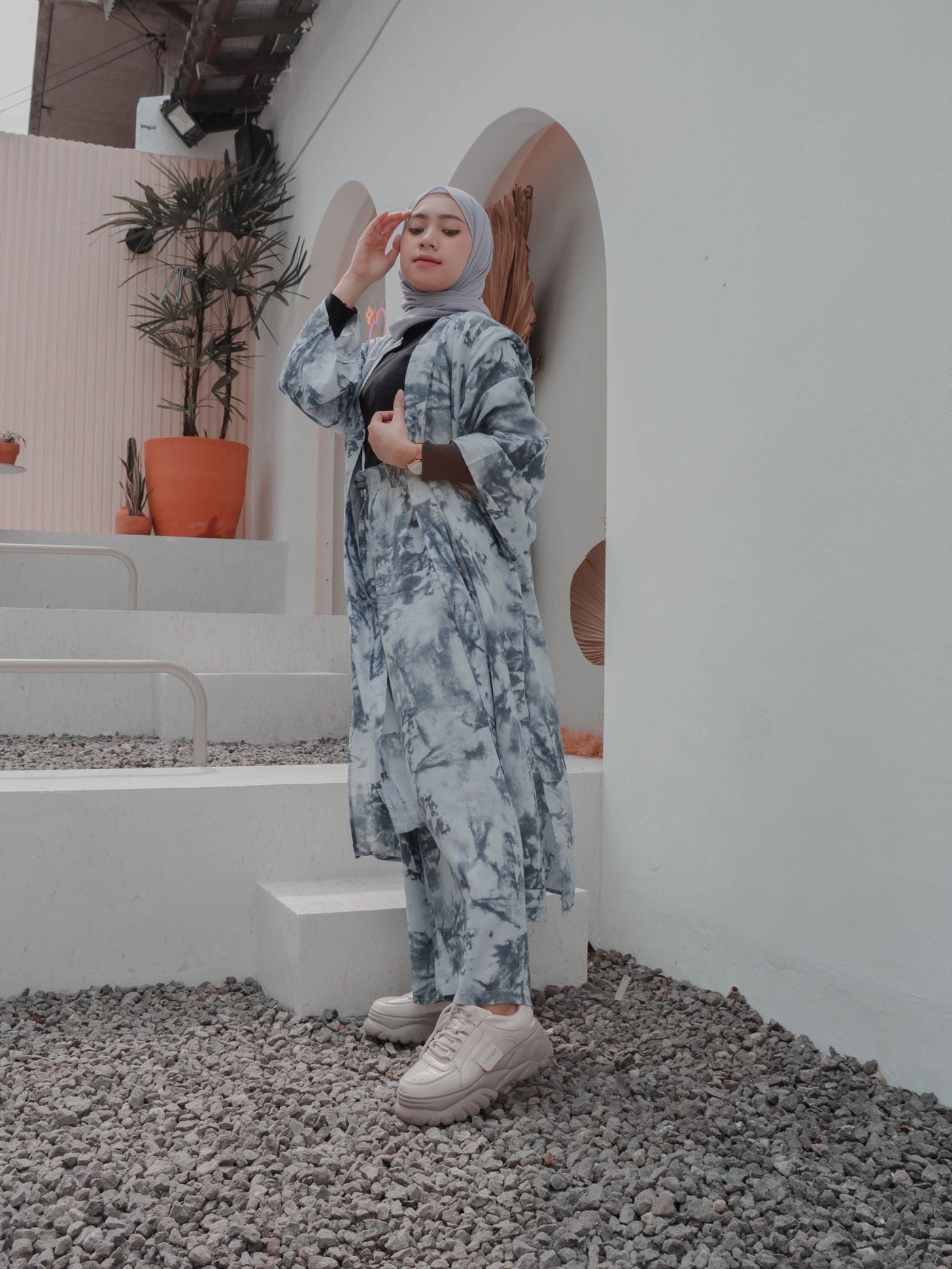
When Modest Clothes Are Your Size but Still Do Not Fit: A Muslimah’s Guide to Length, Proportion and Movement
Bismillah. The frustrating part of modest fashion sizing is that a label can be correct and the garment can still feel wrong for the life you need to live in it. A dress may be the number you usually choose but sit too close when you sit down. An abaya may have plenty of width but drag under your shoes. A blouse may close while standing and pull when you reach forward. A larger size may give room through one area and then make the shoulders, neckline or sleeves feel unstable.
That does not mean your body is difficult. It means clothing is not cut, measured or graded in one universal way. Size labels move between brands. Garment categories behave differently. Fabrics respond differently. Length depends on where the measurement starts and what footwear you will wear. A modest fit is not one fixed shape or one fixed number. It is the point where the garment, the measurements, the cut, the fabric, the layers underneath and your own coverage preference begin to agree.
This guide is for the woman who wants a practical method instead of vague advice to choose her usual size or simply size up. It explains how to separate body measurements from garment measurements, how to read a product chart, how to think about length, sleeves, shoulders, bust or chest room, waist and hip room, movement, layering, free-size garments, stretch, tailoring and online buying. For wider wardrobe context, the complete modest fashion guide can sit beside this article; here, the focus stays on sizing, length and fit.
The aim is calm, not control. A good size decision should not make a woman feel judged by a tape measure. It should give her enough evidence to choose the garment that works for her body, her day and her modesty standard without shame, panic or blind trust in a label.
The label can be right while the garment is wrong
A size label is only a shorthand. It cannot tell you how the shoulder is cut, where the waist seam sits, how much room the hips have, whether the fabric stretches, how the sleeve moves, or where the hem will fall with your shoes. That is why a garment can be labelled with a size you recognise and still fail the moment you sit, walk or layer it over something thicker.
This is especially true in modest fashion because coverage and movement matter together. A garment might fasten and still not give the ease you want. Another garment might be loose in the body but awkward at the neckline. A long dress might look covered in a mirror and still become difficult on stairs. The number on the tag does not answer those questions by itself.
The better starting point is not to ask what size you are forever. It is to ask what this particular garment needs to do, and what measurements show whether it can do it. Once that question becomes normal, sizing stops feeling like a verdict and starts becoming a practical check.
Start with the garment, not the size label
Before choosing a size, identify the garment type and the part of the garment that controls the fit. A closed dress, open abaya, skirt, blouse, tunic, trouser, coat and two-piece set do not ask for the same decision. A loose abaya may be governed by length, shoulder, sleeve and overall width. A skirt may depend more on waist, hip, length and walking room. A blouse may be decided by shoulders, chest room, neckline and sleeve movement.
The same woman may choose different labels in different garments because the cut has changed. A straight dress can need more hip room than a flared dress. A dropped-shoulder garment may not sit like a tailored blouse. A batwing sleeve may remove the usual shoulder rule but create a new sleeve and arm movement question. That does not make the size inconsistent in a personal way; it makes the garment design different.
Read the garment first, then the chart. Ask what part must fit well for the item to feel covered, comfortable and steady. That keeps the decision specific instead of making every purchase depend on one label.
Body measurements and garment measurements are not the same
A body measurement describes the wearer. A garment measurement describes the finished clothing. The difference between them is what creates room, drape and movement, but the amount that feels right is not universal. Two women with the same body measurement may prefer different silhouettes. Two garments with the same finished width may behave differently because one is rigid and the other has stretch.
When a chart gives body measurements, it is usually telling you which body range the garment was designed to fit. When a chart gives garment measurements, it is telling you the actual clothing dimensions. Those are different kinds of information. Confusing them can lead to a size that looks sensible on paper and feels wrong in real life.
The safest habit is to ask whether the chart describes the body or the garment. If the page does not make that clear, treat the information carefully. Do not invent the missing method. Use the wording, diagrams or product notes that are actually provided before comparing numbers.
Flat widths and full circumferences are easy to confuse
Some garment charts show a flat width, such as the measurement across the chest when the garment lies on a table. Other charts show a full circumference around the garment. Others give recommended body measurements. These are not interchangeable. A number that looks too small may be a flat width. A number that looks generous may be a circumference. The wording matters.
Do not automatically double a flat measurement unless the method truly requires it. A flat chest width can sometimes be understood as roughly half the garment around that point, but seams, folds, stretch and measuring method can affect the comparison. If the chart says chest circumference, it may already be the full around-body value. Doubling that would create a false reading.
This one distinction prevents many online mistakes. Before reacting emotionally to a number, check whether it is width, circumference, body range or finished garment size. A careful reading is more useful than rushing to a bigger label.
A size chart needs more than a glance
The instruction to check the size chart is only helpful if you know what to check. First, look for units. Inches and centimetres cannot be mixed casually. Then look for the measuring point. Is garment length taken from the high shoulder point, shoulder seam, back neckline, waist or another point? Is sleeve length taken from shoulder, underarm or neckline? Is hip measured at a stated point or simply listed without detail?
Next, decide which numbers actually control this garment. A wide loose abaya may not depend much on waist. A button-front top may depend heavily on chest room and button placement. A skirt may depend on waist, hip and walking width. A long dress may need length, shoulder, chest, hip and sleeve checks together. The chart is not decoration; it is a map of which questions matter.
If the chart is unclear, do not fill the gaps with assumptions. Use what is available, compare with a garment you already own, or choose a safer option. Guessing often costs more time than pausing.
Your own reliable garment is often the best comparison
One of the most practical checks is to measure a garment you already wear comfortably. Choose something similar in category and fit. If you are buying a loose dress, compare it with a loose dress rather than a fitted blouse. If you are buying an open abaya, compare it with an outer layer rather than a single-layer dress. The closer the comparison, the more useful the numbers become.
Lay the garment flat without stretching it. Depending on the item, you may compare chest width, shoulder width, sleeve length, garment length, hip width, hem width or waist position. Do not force every measurement onto every garment. Use the points that actually decide whether the piece works. Write the numbers down so you are not relying on memory while looking at a product page.
This method also protects your peace. Instead of asking whether your body has changed or whether the brand is wrong, you are comparing one real garment with another. The focus stays on evidence, not self-criticism.
Ease is useful, but it is not one fixed number
Ease is the room between the body and the garment, but there is no single amount that automatically creates a modest fit. Ease depends on the cut, fabric, garment type, layering, movement and personal preference. A straight woven dress may need a different kind of room from a flared jersey dress. An outer layer worn over clothing may need more allowance than a single dress worn on its own.
The mistake is turning ease into a universal formula. A fixed number can sound reassuring, but it ignores design. Too little room can create pulling, gapping or constant adjustment. Too much room can make shoulders unstable, sleeves awkward, neckline placement unreliable or length harder to manage. The working amount is the amount that allows the garment to move as intended while meeting your coverage preference.
Instead of looking for one magic number, read the garment. Ask where you need room, where the garment must stay secure, what you will wear underneath and how much movement your day requires.
Sizing up can solve one issue and create another
Sizing up is sometimes useful, but it is not a universal modesty solution. A larger size may give more room through the body, but it can also move the shoulder seam, open the neckline, lower the armhole, lengthen the sleeve, drop the waist placement or make the hem drag. If the original issue is the garment cut, a bigger size may only move the difficulty elsewhere.
This is why the question should be specific. Are you sizing up for chest room, hip room, layering, sleeve comfort or length? Which new areas will change if you do? A larger label may help one controlling point but weaken another. Sometimes the better answer is a different cut in the same label. Sometimes it is a garment with more natural width, a flared shape, a better shoulder, or a separate length option.
There is nothing wrong with choosing a larger size when it works. The danger is treating it as automatic. Modesty deserves a better method than hoping a bigger label will solve every construction issue.
Loose clothing still needs intentional fit
Loose does not mean careless. A modest garment can have generous ease and still be thoughtfully fitted at the neckline, shoulders, sleeve position, overall length and balance. A loose abaya that hangs well can feel calm and practical. A loose dress with the wrong shoulder or unstable neckline can feel harder to manage than a garment with a clearer structure.
Intentional looseness should look and feel designed. The fabric should have room to fall rather than twist. Sleeves should allow the arms to move. The neckline should stay where the wearer expects it to stay. The hem should not force constant lifting. The garment should not rely on the wearer adjusting it every few minutes to keep the shape working.
This distinction matters because modest fashion is sometimes unfairly described as shapeless when it is not. The aim is not to reject structure or praise looseness blindly. The aim is to choose a garment whose fit supports the wearer’s standard without making the day harder.
Oversized cuts need a different kind of judgement
Oversized does not automatically mean modest, and it does not automatically mean wrong. It means the garment has been designed with extra volume or dropped proportions. That extra room may feel comfortable and covered, but it can also create bulk, slipping shoulders, long sleeves, low armholes, a neckline that shifts, or a hem that becomes difficult under coats and shoes.
Judge oversized garments by their own design. A dropped shoulder may be intentional, so it should not be assessed like a tailored jacket. A batwing or butterfly cut may not need a traditional shoulder measurement, but it still needs sleeve, length and movement checks. An oversized top worn under an outer layer may bunch. An oversized dress may need careful footwear and coat planning.
The useful question is not whether oversized is good or bad. It is whether the volume lands where you want it, moves well, layers cleanly and gives the kind of coverage you were hoping for.
Shoulders control more than a tailored look
Shoulders matter even in loose clothing because they affect where the sleeve begins, how the neckline sits and how the whole garment balances. A shoulder that is too narrow can pull the sleeve and upper body. A shoulder that is too wide can make the neckline feel less secure or move the sleeve lower than intended. Neither issue is about the wearer’s worth. It is garment construction meeting a real body.
Some modest designs deliberately use dropped shoulders, wide sleeves or relaxed upper bodies. Those should be read as design choices, not instant errors. The question is whether the design still gives stable coverage and comfortable movement. Try lifting the arms, reaching forward and wearing the intended hijab or underlayer. The shoulder area often reveals fit issues before the mirror does.
If sizing up gives body room but makes the shoulders feel unstable, pause before accepting the trade. Another cut may serve you better than a larger label in the wrong shape.
Chest room is about the garment, not body blame
Chest room should be discussed as a garment-fit issue. The question is whether the clothing has enough room for the wearer’s body and preferred coverage while moving. Buttons should not pull. Fabric should not strain. A neckline should not shift because the garment is fighting for space. The answer may be a different size, a different cut, a different fabric or a garment that was designed with more ease in that area.
Avoid language that makes the body sound like the issue. The body is simply the body. The garment either accommodates it according to the wearer’s needs or it does not. This respectful framing matters because many women have been taught to treat fit frustration as personal failure when it is often a sizing, grading or design mismatch.
For button-front pieces, check the buttons while standing, sitting and reaching. For dresses and abayas, check whether the fabric lies smoothly without pulling into lines that make you uncomfortable. Make the decision from evidence, not embarrassment.
Waist and hip measurements matter differently by garment
Not every garment is controlled by the waist. A loose abaya may skim past the waist with little shaping. A tailored dress may have a waist seam that needs to sit in the correct place. A skirt may depend strongly on waist and hip measurement. A tunic may need enough hip room to fall straight without catching. The measurement that matters most changes with the garment.
Hip room deserves attention in straight-cut dresses, straight skirts, some abayas and longer tops because it affects how the fabric falls and how easily the wearer can sit or walk. A garment may be roomy at the bust and still catch lower down. That does not mean the body is wrong. It means the garment’s shape and the wearer’s proportions need to be compared honestly.
When you read a chart, ask which body points the garment touches or passes over closely. Those are the measurements to check first. The rest of the chart still helps, but not every number has equal power for every piece.
Length depends on where the measurement starts
Garment length sounds simple until two products use different starting points. One dress may be measured from the high shoulder point. Another may be measured from the back neckline. A skirt may be measured from the waist. A tunic may use the shoulder seam. If those methods are not compatible, two identical numbers can create different real lengths on the body.
This is why long does not automatically mean suitable. A garment may be long enough in the chart and still sit differently because of shoulder slope, bust or chest room, fabric weight, waist seam, footwear or posture. Another garment may look shorter in a number but fall better because the measuring point is different. The number needs context.
Before choosing length, look for the measuring method. If it is missing, compare with a similar garment you already own. Measure from the same starting point where possible. If you cannot match the method, leave room for uncertainty rather than treating the two numbers as equal.
Footwear changes what a long garment feels like
A dress or abaya does not meet the floor in isolation. It meets the floor with the footwear you actually wear. Flats, trainers, low heels and higher heels can all change how close the hem sits to the ground. A length that feels safe with a heeled sandal may drag with flats. A length that is comfortable with trainers may feel shorter with formal shoes.
Think about the day. Will you walk outside, climb stairs, carry bags, stand in a hall, move between home and car, or pray in the outfit? A hem that needs constant lifting may not give peace even if it looks elegant in a still photograph. Longer is not always better if it creates a trip risk, collects dirt or forces the wearer to manage the garment all day.
The right length is practical coverage for your use. It should honour your preference while allowing you to move without fear of stepping on the cloth or dragging it through the day.
Sleeves must be tested in real movement
Sleeves often look correct while the arms are resting. The real test begins when the wearer reaches forward, drives, lifts something, bends the elbow or raises the hands. A sleeve that reaches the wrist in a still mirror may ride up. A sleeve that is very long may cover the hand, dip into water, catch on bags or interfere with eating.
Look at shoulder placement, armhole depth, cuff width and fabric behaviour. A narrow sleeve in rigid fabric may restrict movement even if the length is right. A wide sleeve may feel covered at rest and then fall back when the arm lifts. A cuff may hold the sleeve steady, but if it is tight or decorated it may become uncomfortable over a long day.
Sleeve length is not a race to the longest possible option. It is the point where coverage, movement and daily practicality meet. Test the sleeve with the scarf, coat and layers you intend to wear.
Sitting, walking and reaching reveal the true fit
A garment can pass the standing mirror and fail real movement. Sitting can tighten fabric across the hips, thighs, waist or chest. Walking can reveal a narrow skirt, a slit that opens more than expected, fabric that clings, or a hem that catches underfoot. Reaching can move the neckline, sleeves, waist seam and front hem.
These checks are not dramatic. Sit for a minute, not just a second. Take a full stride. Walk up one step if you can. Reach forward as though taking something from a shelf. Put on your coat. Carry the bag you would actually use. The garment should not need constant negotiation to remain acceptable to you.
Movement is also where comfort fit and coverage preference separate. A garment may feel comfortable but reveal more outline or movement than you want. Another may give coverage but restrict the body. The best decision considers both without pretending they are the same.
Fabric behaviour changes how measurements feel
Measurements do not behave identically across fabrics. Knit constructions often have more give than woven fabrics, but the amount varies. Jersey may stretch, yet stretch, recovery, weight and cling differ between garments. Woven fabrics may feel more stable and may need more careful room because they do not always move with the body in the same way. None of this should become a promise about one fibre or one fabric name without product evidence.
Drape matters too. A fabric can have enough width but still fall close because it is fluid or heavy. Another fabric can have similar width and stand away from the body because it has more structure. Shine can make tension lines more visible. Thin fabric can reveal layers beneath. Lining can change how the outer fabric moves.
Use fabric information to ask better questions, not to invent exact behaviour. If stretch, lining, composition or care details are provided, read them. If they are not provided, do not assume them.
Layering changes the size decision
A garment worn over a thin base layer may not fit the same over knitwear, another dress, a blouse or winter clothing. Layers add thickness, shift friction and change how fabric falls. An open abaya worn as an outer layer may need room for the clothing beneath. A dress worn alone may not need the same allowance. A coat over a full skirt creates a different question from a cardigan over a straight tunic.
Think about the real outfit before choosing size. Will the garment be worn mostly in warm weather over light clothing, or in colder months over thicker layers? Will a blouse sit under a sleeveless dress? Will a cardigan sit under an abaya? Will a coat close over the sleeves? These are practical fit questions, not reasons to automatically choose a larger label.
Layering should be planned deliberately. Sometimes the answer is more room. Sometimes the answer is a smoother base layer. Sometimes the answer is a different outer garment that was designed to be worn over clothing.
Abayas, dresses and skirts do not use one rule
A broad modest fashion sizing guide should not collapse every garment into one rule. Abayas, dresses and skirts may all be long, but their fit logic differs. An abaya may be used as outer coverage and judged by overall ease, shoulder design, sleeve room, length and whether it layers well. A dress may have a bodice, waist seam, zip, lining, skirt cut or event fabric that makes fit more specific. A skirt may depend heavily on waist, hip, length, lining and walking room.
This boundary also prevents overlap with more specialised articles. Abaya length and abaya sizing can require deeper abaya-specific detail. Here, the wider lesson is how to decide which measurements matter for the garment in front of you. A long garment is not automatically the same sizing decision as every other long garment.
Name the category first, then judge it by its own construction. That small step prevents many mistakes.
Tops and tunics bring the neckline into the decision
For tops, blouses and tunics, the neckline often matters as much as width. A size that gives enough chest room but leaves the neckline too wide may not feel secure with the hijab style you use. A tunic that is long enough in front may lift when reaching if the shoulders or armholes do not sit well. A blouse that buttons neatly at rest may pull while sitting or leaning forward.
Check shoulder, chest, sleeve, neckline and garment length together. If the top is meant to be worn under an abaya or jacket, test the layers. A sleeve that feels fine alone may bunch under an outer layer. A neckline that is covered by a scarf may still need to remain stable when the scarf shifts.
Tunics also need hip and hem checks. A long top can catch if the lower width is too narrow, especially when sitting or walking. The garment should fall in a way that serves the outfit rather than needing constant correction.
Trousers and skirts need their own checks
If trousers form part of a modest outfit, waist, hip, rise, thigh room, leg width and length can all matter. A trouser may fit at the waist but feel restrictive when sitting. Another may have the leg width you like but the wrong rise for the top or tunic you plan to wear. Length depends on footwear and on whether the hem should sit above, at or near the shoe.
Skirts bring a different set of questions. Waist and hip room may control comfort, while lining, slit placement, fabric weight and hem width affect coverage and walking. A skirt can look long and covered in a standing mirror but restrict stride or open at a slit in movement. The wider outfit matters too: what top will sit over it, and how will layers behave when seated?
These examples do not turn this article into a trouser or skirt guide. They show the principle: each garment category has its own controlling points, so one sizing rule cannot serve the whole wardrobe.
Free Size still has measurements
Free Size and one-size wording should never be read as universal fit. A free-size garment still has actual width, length, sleeve dimensions, neckline shape, fabric behaviour and construction limits. It may work beautifully for some women and not at all for others. The label means the garment may not be offered in multiple size labels; it does not remove the need for measurement evidence.
With free-size clothing, look even more carefully at finished garment dimensions and photographs. Does the product page state length, width, sleeve length or model information? Does the fabric stretch or is it rigid? Is the garment meant to be oversized, batwing, open-front or elasticated? Which parts still need to fit your body and preference?
Do not let a simple label replace the work of checking. A free-size abaya, khimar, dress, top or outer layer can still be too long, too narrow, too wide, too short in the sleeve or unsuitable for the layers you want underneath.
Petite and tall needs are not size labels
Height affects length, but it does not decide overall size by itself. A shorter woman may still need more shoulder, chest or hip room. A taller woman may need extra garment length without needing additional width. Treating petite as automatically small in every dimension or tall as automatically a larger size creates poor fit decisions.
Separate length from width. If the body width measurements fit one size but the length is wrong, a different length option, tailoring or another garment may be wiser than moving to a different size label. Sizing up solely for length can move shoulders, sleeves, neckline and body room in ways that make the garment less stable. Sizing down solely because someone is shorter can make the garment restrictive where width is needed.
The same principle applies to proportions. Two women of the same height can need different sleeve lengths, shoulder widths, chest room or hip room. A good sizing method honours the real measurements rather than flattening every woman into a height category.
Changing bodies need gentler evidence
Bodies can change through life, health, age, pregnancy, nursing, stress, weight changes, surgery, medication, travel and ordinary seasons of living. A size guide should not treat those changes as failure. It should give a woman a calmer way to work with the body she has today. The garment needs to meet her current measurements and preferences, not an old label she feels pressured to keep.
For maternity or nursing-friendly clothing, do not rely on broad wording alone. Check which part of the garment allows room or access, whether the fabric and cut support movement, and whether the neckline, opening or layers remain secure for the wearer’s standard. Do not assume a garment works for pregnancy, nursing or changing proportions unless the product information supports it.
Gentle evidence is practical evidence. Measure what matters today. Compare with something that currently feels comfortable. Choose the garment that serves the present body without turning the decision into judgement.
Swim, sports and occasionwear need movement-first checks
Some modest categories are especially movement-sensitive. Modest swimwear, sportswear and occasionwear each ask different questions. Swim and sports pieces may need secure movement, layering, water or activity behaviour and enough room without becoming unsafe or restrictive. Formalwear may need sitting comfort, stair movement, sleeve stability, lining, embellishment and a hem that can survive a long day.
Do not judge these garments from a still image. A dress with beadwork may be harder to alter. A formal sleeve may be narrow at the cuff. A sports top may lift during activity. Swim fabric may sit differently when wet, but do not invent exact behaviour without product information. The responsible approach is to ask what movement the garment is meant to support and what evidence the product page gives.
Special-use clothing needs special checks, not dramatic rules. The aim is secure, respectful dressing that still allows the activity or occasion to happen.
Button-front garments need their own tension check
Buttons create a different fit test from a plain pullover or zip-back dress. A button-front blouse, shirt dress, tunic or abaya may look neat while standing and still pull between buttons when the wearer sits, breathes deeply, carries a bag or reaches forward. The issue is not the body. It is the relationship between chest room, button spacing, fabric tension and movement.
Check the garment from the side as well as the front. If the button line bends, strains or opens during ordinary movement, the size or cut may not serve the coverage you want. A larger label might help, but it might also move the shoulder, sleeve or neckline. Sometimes a style with more room through the chest, a different closure or a smoother layer underneath works better than simply changing the number.
Do not depend on a scarf, pin or outer layer to hide a fit issue that keeps pulling open. Those things can support an outfit, but the garment itself should be secure enough for the way you plan to wear it.
Linings, slips and inner layers can change the real fit
A dress or skirt may have a generous outer layer while the lining is narrower, shorter or less flexible. The wearer feels the lining as much as the outside fabric. If the lining pulls while sitting, restricts stride or rides upward, the garment may not work even if the visible layer looks flowing. Always check the inner construction where it is shown or described.
Separate slips and base layers also affect fit. A slip can improve opacity and comfort, but it adds another layer under the garment. A base dress beneath an open abaya may change sleeve, shoulder and body room. A thick underlayer can make a size feel smaller without any change in the main garment. The more layers involved, the more the full outfit should be tested together.
This is why opacity and fit should be judged as one complete outfit. A garment can be beautiful on its own and still need an underlayer; the underlayer then becomes part of the sizing decision rather than an afterthought.
When measurements are missing, uncertainty should stay visible
Sometimes a product page does not give enough measurement detail. It may show a size label, a few photographs and a short description, but not the finished garment width, sleeve length, garment length or fabric behaviour you need. In that situation, the honest answer is not to invent the missing values. The honest answer is to recognise the uncertainty before buying.
You can still use available clues. Look at the garment category, photographs, model notes if they are actually given, fabric description, closure, lining, and any customer comments that describe fit clearly. But those clues are weaker than a proper chart. If the decision depends on one missing measurement, the safest move may be to ask for more detail, compare with a more informative product, or choose a design where the missing point matters less.
A calm sizing method includes permission to stop. Not every item gives enough evidence to buy confidently, and leaving it behind can be the most sensible decision.
Care information matters, but do not invent shrinkage
Fit can change after washing, steaming, drying or storage, but that does not mean every fabric shrinks, stretches or grows in one predictable way. Fibre, weave or knit, finishing, lining, embellishment and care method all matter. Unless a product states a specific care point, avoid making promises about how the garment will behave after wear or cleaning.
Read the care label and product notes when they are available. A garment that needs delicate handling may still be worth buying for an occasion, while a daily piece may need easier care. Heavy embellishment, pleats, velvet, satin, lace or lined construction can influence how comfortable you feel maintaining the garment. Care is part of whether the size and fit remain useful beyond the first wear.
Do not buy a garment that only works if it never changes, never creases, never needs cleaning and never meets real life. The fit decision should include how the piece will be cared for, but without invented shrinkage rules or false certainty.
Photographs help, but they cannot replace movement
Product photographs are useful, but they are not the whole fit story. A pose can hide a narrow skirt, a sleeve that rides up, a neckline that shifts or a hem that drags. A photograph can show colour and shape, but it cannot fully show sitting comfort, stride length, fabric tension or what happens under a coat. Video helps when available, yet even video is still only one body wearing one size under one set of conditions.
Use images to collect evidence, not to surrender judgement. Look for front, back and side views. Notice whether the model is standing still, holding fabric away from the body or using a pose that hides the side seam. Check whether the scarf, belt, coat or hand placement is covering a part you need to evaluate. If the back or sleeves are never shown clearly, those areas remain uncertain.
A beautiful photograph can begin interest, but measurements and movement decide whether the garment deserves trust.
Returns and exchanges should be checked without assumptions
Sizing advice often tells people to order several sizes and send back the ones that do not work, but that is not always practical or appropriate. Return windows, costs, hygiene rules, sale conditions, stock levels and personal circumstances vary. Do not assume a policy that has not been read. Do not build your whole size decision on a return option unless you know the actual terms available to you.
If you are buying for a deadline, include delivery, trying-on time, possible exchange time and any alteration time in the plan. A garment that might work after several steps may not be the best choice for an event happening soon. If the item is final sale or hard to return, the measurement evidence needs to be stronger before purchase.
A careful return plan is not pessimistic. It is part of buying online responsibly. It helps you decide how much uncertainty you can accept before money, time and emotion are involved.
Respectful sizing language changes the whole experience
Sizing content should never turn labels into identity judgments. A person is not better because a smaller label fits, and she has not failed because a larger label works better. The clothing either serves her current body and preference or it does not. That language matters because many women carry old dressing-room experiences into every new purchase.
Use neutral words. Say the garment needs more chest room, the sleeve is too restrictive, the shoulder does not sit as designed, the hip area catches, or the hem is too long for the planned footwear. Do not say the woman needs fixing. Do not describe proportions as flaws. Do not make petite, tall, curvy, pregnant, nursing or plus-size bodies sound like problems that clothing must hide.
A good modest-fit guide should be technically useful and emotionally safe at the same time. Clear measurements help the purchase. Kind language protects the person making it.
Tailoring may help, but construction decides
Tailoring can be useful for hems, sleeves, waist adjustments or small refinements, but it is not a guarantee. Garment construction decides what can be changed safely. Beading, embroidery, lace borders, pleats, cuffs, linings, zips and special hems can all make alteration more complicated. Some garments can be shortened easily; others cannot without changing the whole finish.
Before buying with alteration in mind, ask which issue needs fixing and whether the garment is worth the extra step. A hem that is slightly long may be manageable if the construction is simple. A garment that needs shoulders, neckline, sleeve, waist and length repaired may be the wrong garment, even if the fabric is beautiful. Do not assume local price, timing or skill availability.
Alteration should refine a good decision, not rescue a poor one. If the garment already works in the key measurements and only needs a small length or sleeve change, tailoring may support it. If the whole fit depends on many changes, another piece may give more peace.
Buying online works better with a written checklist
Online buying becomes calmer when the decision is written down. Note your relevant body measurements, but also measure one or two garments that already work for you. Keep track of the garment category, preferred length, sleeve needs, shoulder comfort, layering plans and footwear. When you look at a product page, compare the evidence instead of reacting only to the photograph.
A useful checklist might include the chart type, units, measurement method, garment length, sleeve length, shoulder or dropped-shoulder design, chest room, hip room where relevant, fabric behaviour, lining, closure, slit or opening, layering needs, care information and return considerations. Do not invent a policy or assume that ordering several sizes is always practical. Read the actual terms available to you.
A written method also reduces emotional pressure. If the evidence is incomplete, you can name the uncertainty. If the garment does not match your needs, you can leave it without blaming your body.
If you are between sizes, choose by the controlling point
Being between labels does not automatically mean choosing the larger size. It depends on what controls the garment. If a straight dress is closest at the hips, hip room may decide. If a blouse pulls at the buttons, chest room and button placement may decide. If a skirt fits at the waist but restricts walking, hem width or slit placement may matter. If an abaya has plenty of width but the sleeve is short, a different length or design may be the answer rather than a larger body size.
Fabric also changes the decision. A rigid fabric may need more precise room. A stretch fabric may feel forgiving, but it can also cling in a way the wearer does not want. A lined garment may be limited by the lining rather than the outer fabric. Layers underneath may make the same label feel different.
When between sizes, do not ask only which number is bigger. Ask which measurement cannot fail, what the trade-offs are, and whether another cut would serve you better.
Internal fit words need careful reading
Fit words such as relaxed, regular, slim, oversized, loose and fitted describe garment design, not body identity. Relaxed usually suggests more room than a close cut, but it does not provide an exact measurement. Slim Fit describes the cut of the garment; it should not be treated as a label for the person who wears it. Oversized describes intentional volume; it still needs length, sleeve and neckline checks.
Do not let fit words replace measurements. A relaxed dress can still be too narrow for the preference you have. A regular-fit blouse can work if the measurements and movement suit you. A slim-cut garment may not meet your coverage preference, or it may work under a wider layer depending on the outfit. The wording gives direction, not proof.
A careful reader translates fit words into questions. Where is the extra room? Which part is close? Does the garment stretch? Does it layer? Does it move? That is how fit language becomes useful instead of vague.
A calm method matters more than one fixed answer
A repeatable method protects the reader from chasing one permanent size. Start with the garment category. Identify whether the chart gives body or garment measurements. Check units and measuring points. Compare with a garment you already own if possible. Decide which measurement controls this specific item. Think about fabric, cut, lining, layering, footwear and movement. Then choose the size that best serves your preferred coverage and practical use.
This method will not remove every uncertainty. Online clothing still involves variation, and product pages are not always as detailed as they should be. But it reduces the number of guesses. It also changes the emotional meaning of the decision. A garment not working is information about that garment, not a statement about the woman wearing it.
The more often you use the method, the easier it becomes. You start recognising which cuts suit your preferences, which measurements matter most and which labels cannot be trusted alone.
Where Amani’s fits into the practical check
When comparing current Amani’s styles, use the same evidence-based approach. Read the product page for the specific garment. Look for the measurements, size options, fabric notes, photos and any available fit information for that item. Do not assume every abaya, dress, khimar, jilbab, skirt, top or set follows one identical system simply because it belongs to the same store.
This matters because modest wardrobes are built from different garment types. A one-piece jilbab, a dress, an open abaya, a skirt set and a formal gown do not serve the same fit purpose. The better question is not whether one brand size will always repeat. It is whether the evidence on that product page agrees with your measurements, layers, preferred room, length needs and movement tests.
A helpful product page gives you clues. A helpful article teaches you how to use those clues. Together, they should make the decision calmer, not push you into buying because a label sounds familiar.
The final pause before choosing
Before committing to a size, pause and run through the garment in the order you will actually experience it. First, can it go over the body or layers comfortably? Next, does the neckline remain steady with the hijab style you want? Do shoulders and sleeves allow movement? Does the garment sit, walk and reach well? Does the length work with the shoes and the setting? Does the fabric behave in a way you can live with?
Then ask the gentler question: will this garment make the day easier or will it keep asking for attention? Some clothing looks attractive online but needs too many conditions to feel peaceful. Other pieces look simple yet become the ones you reach for because they agree with your body, your movement and your standards without drama.
A modest wardrobe is not built from labels alone. It is built from garments that answer real needs. If the evidence agrees, choose with calm. If it does not, leave the label behind and keep your peace.
The garment should let the day continue
The goal of sizing, length and fit is not to create anxiety around every centimetre. It is to help a woman choose clothing that lets her move through the day with steadiness. She should be able to sit without panic, walk without holding the hem every few steps, reach without losing sleeve coverage, layer without bunching, and wear the garment without feeling that her body has been judged by a label.
A working modest fit is personal and garment-specific. It may be loose and flowing. It may be structured and quiet. It may involve tailoring, a different length, another cut, a different fabric or a decision to leave a beautiful item behind. What matters is that the garment supports the wearer’s coverage preference and practical life at the same time.
When modest clothes are technically your size but still do not fit, the answer is not shame. The answer is better evidence, kinder language and a clearer method. A label can be useful, but it should never have the final word over your body, your movement or your peace.
Frequently asked questions about modest fashion sizing, length and fit
Should I size up for modest clothing?
Sometimes sizing up helps, but it is not an automatic rule. A larger size can add room through one area while making shoulders, neckline, sleeves or length harder to manage. Compare the actual garment measurements, cut, fabric and layers before deciding.
Are body measurements and garment measurements the same?
No. Body measurements describe the wearer, while garment measurements describe the finished clothing. The difference may create room or ease, but there is no single amount that works for every garment, body, fabric or modesty preference.
How do I measure a garment I already like?
Lay a similar garment flat without stretching it and compare the points that matter for the new item, such as chest width, shoulder width, sleeve length, garment length, hip width or hem width. Use similar garment categories where possible.
What does relaxed fit mean?
Relaxed fit generally suggests more room than a close cut, but the exact measurements vary by product. Treat the wording as a clue, then read the specific chart, fabric notes and garment construction before choosing a size.
Does Free Size mean universal fit?
No. Free Size still has actual width, length, sleeve dimensions, neckline shape and construction limits. It may suit many wearers, but it should still be checked against your measurements, preferred room and intended layers.
How do I choose abaya or dress length?
Check where the length is measured from, then compare it with a similar garment you own. Think about your height, footwear, preferred hem position, stairs, outdoor walking and whether the garment may drag or need constant lifting.
Does my height decide my clothing size?
Height can affect garment length, but it does not decide overall size by itself. Chest, waist, hip, shoulder, sleeve and proportion needs can differ between people of the same height, so length and width should be considered separately.
How do I know if a dress is too fitted for me?
Use movement rather than only a mirror. Sit, walk, reach and climb a step if possible. If the garment pulls, restricts movement, shifts coverage or creates more outline than you prefer, it may not meet your fit standard.
What should I do if I am between sizes?
Choose by the controlling point of that garment. For one item it may be chest room; for another it may be hips, shoulder, sleeve, waist, length or layering. Also check whether a different cut would solve the issue better.
Can I rely on UK, US or EU size conversions?
Only as approximate guidance unless the specific product or brand confirms the conversion. Size systems can vary, so product-level measurements are safer than assuming every regional label converts exactly.
How should sleeves fit in modest clothing?
Sleeves should be judged in movement. Check resting length, reaching, bending the elbow, driving, lifting and layering under outerwear. Very short sleeves may ride up; very long sleeves may interfere with daily tasks.
Can tailoring fix an overly long garment?
Sometimes, but not always. Simple hems may be easier than garments with beadwork, embroidery, lace borders, pleats, lining or special finishes. Tailoring is an option to investigate, not a guaranteed solution for every garment.