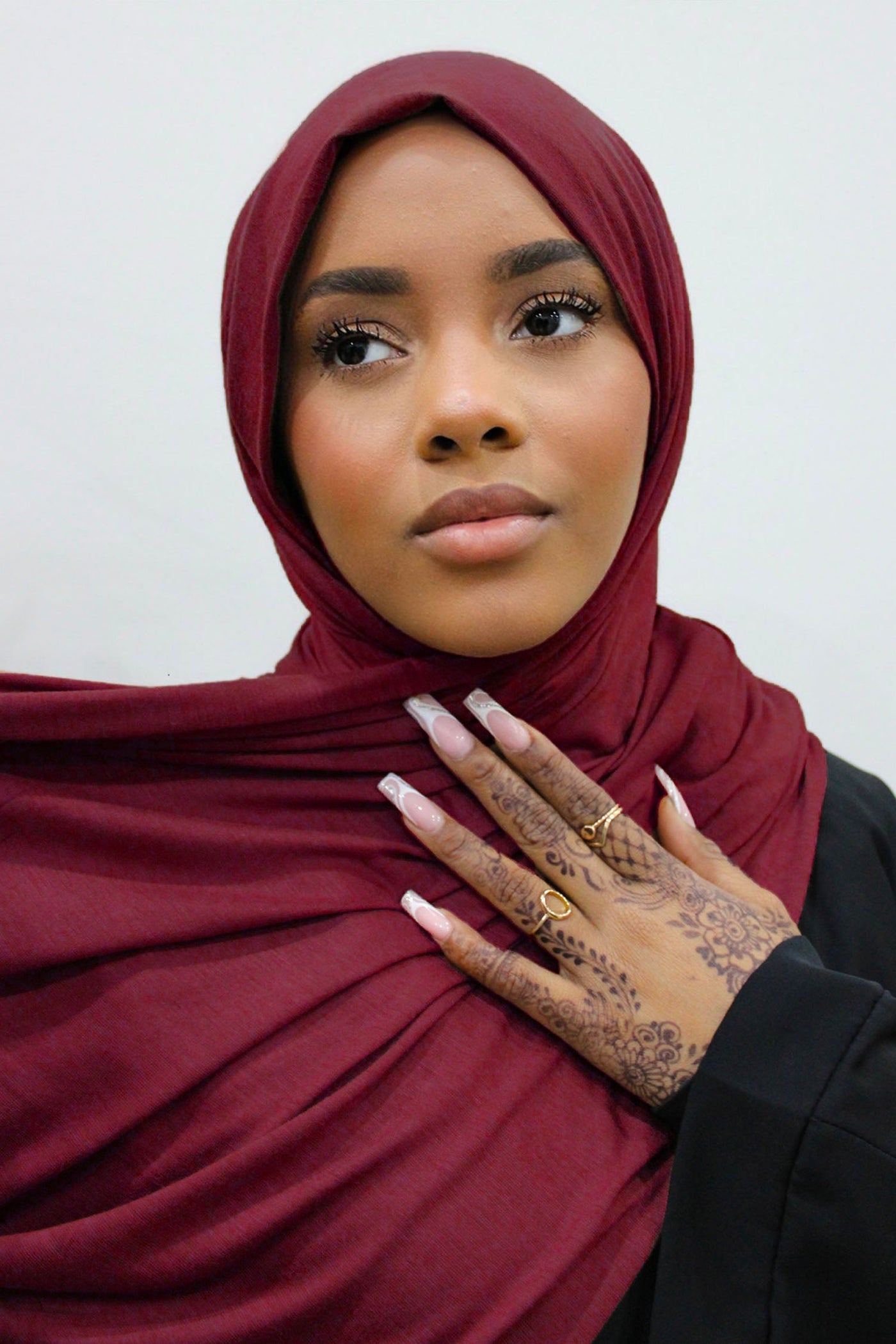
Head Wrap Hijab: Complete Modest Styling Guide
A head wrap can look simple once it is finished, but the calm version you see in the mirror usually depends on many small decisions. The scarf has to grip without pulling, fold without becoming bulky, frame the face without pressing, and keep the coverage you actually want once you start moving through the day. That is why a head wrap hijab is not just a pretty knot or a copied photograph. It is a practical arrangement of fabric around a real head, real hair, real glasses or earrings or headphones, and a real standard of modesty that belongs to the woman wearing it.
The difficulty is that many wraps look effortless only after the awkward work has been hidden. A picture rarely tells you whether the scarf slid backwards after twenty minutes, whether the knot pressed into the nape, whether the neck still felt covered, or whether the fabric became too heavy on one side. A useful guide has to talk about those hidden details, because those are the details that decide whether a style becomes part of your ordinary routine or remains something you only try when you have extra time.
This guide keeps the focus on head wrapping as a practical modest styling choice. It does not treat every wrapped style as identical, and it does not pretend that a turban-style finish and fuller hijab coverage are always the same thing. Some women want a compact crown shape. Some want the scarf to continue around the neck or over the chest. Some need the wrap to work under a coat hood, through a commute, at work, or during a long family day. The right answer depends on the fabric, the route of the wrap and the coverage requirements you are trying to meet.
A head wrap hijab is a method, not one fixed shape
A head wrap hijab usually means a scarf arranged around the head in a wrapped style rather than simply draped in one loose fall. That broad idea can include many looks: a smooth wrapped crown, a side knot, a tucked end, a layered front, a fuller wrap that continues around the neck, or a compact style worn with a separate high neckline. The phrase describes a way of using fabric, not one universal rule for where every fold must sit.
That distinction matters because a woman may search for a head wrap hijab while imagining a very specific need. She may want something less fussy than a flowing scarf. She may want fabric kept away from her shoulders. She may need coverage that stays put while working. She may be trying to understand why the same wrap looks neat on one person and bulky on another. If the answer simply says “wrap the scarf around your head”, it misses the real question.
The most helpful way to think about it is to separate shape from function. Shape is what the wrap looks like from the front, side and back. Function is whether it stays secure, whether it respects your coverage needs, whether it is comfortable, and whether the fabric still behaves after several hours. A style is not successful just because it photographs well. It succeeds when it lets you carry on with your day without constantly negotiating with your scarf.
This is also why head wrap styling should not be collapsed into one neighbouring style name. A turban-inspired wrap may be part of the wider conversation, but it is not the whole subject. A wrapped hijab can be compact or full, decorative or understated, pinned or pinless, high at the crown or flatter at the back. The useful question is not “what is the trend?” but “what does this particular wrap need to do for the woman wearing it?”
The first question is not “how do I wrap it?” but “what must it do?”
Before you choose a fabric or copy a route, it helps to decide what the wrap needs to achieve. Do you need full neck coverage? Do you want the chest softened by fabric? Will you be wearing a high-neck dress, an abaya, a coat, a blazer or a loose tunic? Do you need to remove glasses during the day? Will you be walking in wind, driving, working with children, praying, travelling or sitting for hours at a desk? Those details affect the wrap more than the name of the style.
A wrap for a quiet evening indoors can be softer and more relaxed than a wrap for a long workday. A wrap worn with a high-neck underlayer can be more compact than one that has to provide its own neckline coverage. A scarf used for a sculpted crown may need enough length to tuck securely, while a scarf used for fuller modest coverage may need width and drape as much as length. The method follows the need.
This also protects the article from becoming a fake tutorial. There is no single head-wrap technique that works for every scarf, every head shape and every understanding of coverage. A satin-like scarf, a jersey scarf, a square cotton scarf and a fine modal scarf will not respond the same way. If you follow the same route with all of them, one may cling, one may slide, one may bulk at the neck and one may collapse at the crown.
Start with the practical demand. Once you know whether you need height, flatness, neck coverage, pinless security, low pressure or easy rewrapping, the rest becomes easier to judge. A wrap that serves the wrong purpose can still look beautiful, but it will feel like work from the moment you step outside.
Fabric behaviour decides more than the tutorial does
Fabric names are not enough. Two scarves can both be called jersey and still behave differently. One may be heavy and springy, another soft and thin. A chiffon scarf can be crisp or limp. A modal scarf can feel smooth, grippy, light or slippery depending on the weave and finish. For head wrapping, behaviour matters more than the label because the fabric is being asked to turn, overlap, hold tension and sit close to the face.
Stretch is useful when it gives a little comfort around the head, but too much stretch can tempt you to pull harder than necessary. Grip helps a wrap stay in place, but a very grippy fabric can catch on itself and make neat folds harder. Drape gives softness, but too much drape may collapse if you want a firm crown. Thickness can create coverage and structure, but it can also build bulk at the nape or behind the ears.
Jersey often suits practical wrapping because it has some friction and can hold against itself. It may feel forgiving for beginners, especially when the route is simple and the tension is gentle. The trade-off is that thicker jersey can become warm or heavy if too many layers are crossed at the same point. If a jersey wrap feels tight after an hour, the problem may not be the style. It may be that stretch made it easy to pull more than the scalp wanted.
Chiffon or georgette can create a refined shape with cleaner folds, but smooth versions may need an underscarf, magnet, pin or carefully placed tuck. They can look light while still shifting if there is not enough friction. Modal or viscose-type scarves can feel soft against the face and reduce bulk, but the smoother the finish, the more attention the anchor point may need. Cotton and woven scarves may hold shape well, yet thick hems can create lumps if they are folded into the wrong place.
Scarf size changes the whole result
The same wrapping route can feel completely different when the scarf length or width changes. A short scarf may produce a neat compact wrap, but leave fewer options for chest coverage or secure tucking. A very long scarf gives more freedom, yet it can also create too much weight if every layer ends up at the back of the head. A wide scarf can cover more, but if it is thick it may turn into bulk rather than softness.
There is no honest universal measurement that suits every woman and every wrap. The better question is what the extra fabric will do. Will it be opened over the chest? Folded into the crown? Tucked under the nape? Wrapped twice around the head? Left as a soft tail? Each decision changes pressure, coverage and the final look. More fabric is only helpful when it has somewhere sensible to go.
Width deserves special attention. Some women focus on length because they want enough fabric to tie, but width often decides whether the neck and chest can be covered without strain. A narrow scarf can make a beautiful head shape but leave you relying on your clothing for modest coverage elsewhere. A wider scarf may let you open the fabric across the upper chest or back, but only if the fabric is light enough not to overwhelm the shape.
If a wrap repeatedly feels bulky, look at where the spare fabric is collecting. Thick corners at the nape, rolled hems at the temples or doubled fabric behind the ears can make the whole style feel heavier than it needs to. Sometimes the solution is not a new tutorial, but using fewer layers, choosing a softer fabric, or changing which part of the scarf sits closest to the face.
A secure wrap should never depend on painful tension
A head wrap needs security, but security should not mean pulling until the scarf hurts. Tightness can feel reassuring for the first few minutes because the fabric seems fixed. After an hour, that same tightness may become pressure at the hairline, tenderness around the temples, or irritation at the nape. A wrap that only stays put because it is painfully tight has not really been solved.
Better security comes from structure. The base should sit where it naturally has support. The main crossing point should not drag the fabric backwards. The tucked ends should be placed where they are held by fabric tension rather than trapped by force. If pins or magnets are used, they should assist the route instead of compensating for a shape that is already fighting itself.
Pay attention to the difference between firm and strained. Firm fabric feels held. Strained fabric feels as though it is asking your skin or hairline to do the work. The moment you feel tempted to pull harder with each attempt, pause and adjust the route. A flatter fold, a different anchor point or a scarf with more friction may solve the issue without adding pressure.
Comfort also changes across the day. A wrap can feel fine in the morning and difficult by afternoon because you have moved, warmed up, put on a coat, removed glasses, answered the phone or prayed. A good wrap allows for that ordinary movement. It should not punish you for living in it.
The anchor is the quiet part that protects the whole style
Every wrapped style has an anchor, even if it is hidden. It may be a knot, a tuck, a pin, a magnet, an underscarf, a textured fold or the friction created by the scarf crossing itself. When the anchor is weak, the front can look perfect while the back slowly loosens. When the anchor is too harsh, the wrap may stay in place but feel uncomfortable. Neither result is ideal.
A useful anchor sits where the fabric naturally wants to rest. For some wraps that is low at the nape. For others it is just behind the ear, under a fold, or inside a side tuck. If the anchor is placed too high, the scarf can creep upward. If it is placed too far back, the face frame may pull away. If it is placed at the exact point where your head rests against a car seat, it may become uncomfortable while travelling.
The anchor should also match the fabric. A jersey scarf may secure with a simple tuck because the fabric grips itself. A smoother scarf may need an underscarf, magnet or discreet pin. A thick scarf may need fewer crossings, because forcing it into a small knot can create a lump that pushes against the neck. The anchor is not separate from the rest of the wrap. It is the part that decides whether the whole shape remains calm.
When a wrap keeps slipping, avoid immediately blaming your head shape. Often the issue is that the anchor is trying to hold too much weight from one side, or that the fabric is being pulled in a direction that naturally loosens as you move. Balance the route first, then secure it.
Undercaps help, but they are not automatically required
An underscarf can be very useful with a head wrap hijab, especially when the outer fabric is smooth, fine or likely to shift. It can add friction, protect the hairline, keep loose hair contained and give the wrap a stable base. For some women, it turns a difficult scarf into one they can actually wear with confidence. For others, it may feel warm, tight or unnecessary.
The point is not to make an underscarf a rule for everyone. It is a tool. If the outer scarf already grips well, your hairstyle is secure and the wrap does not slide, you may not need much underneath. If the outer scarf moves backwards, reveals hair at the sides, or needs constant readjustment, a soft undercap may be worth testing. The test is practical: does it reduce problems without creating new ones?
Cap depth matters. A very shallow cap may roll backwards under a wrap. A cap that is too tight can create pressure before the scarf is even added. A thick cap may increase bulk around the ears or crown. A smooth cap may defeat the purpose if the scarf still slides over it. Choose the base for the role it needs to play, not just because it is labelled as an underscarf.
There is also a coverage question. Some women rely on the undercap to keep hair hidden at the front or sides, while the outer scarf creates the shape. Others want the scarf itself to provide the visible coverage. Both approaches need honesty. If the wrap shifts and the cap is the only thing preventing exposure, make sure the cap is comfortable and secure enough for the full day.
Hair volume can support the shape or disturb it
Hair volume changes how a head wrap sits. A low bun, plait, twist, loose hair tucked under a cap, or thicker hair gathered high on the head will each create a different base. The wrap may look neat from the front but feel unstable if the fabric is balancing on a hard bump at the back. A very high bun can push the scarf upwards. A very loose base can let the fabric collapse.
The aim is not to create a dramatic shape unless that is truly what you want. The aim is to give the fabric an even surface. If the base is too uneven, the scarf will usually reveal it. Folds may gather into ridges, the crown may tilt, or the back may feel heavy. A flatter base often makes wrapping easier and reduces the need for extra tension.
Hairline comfort is important. Pulling the scarf tightly over the front may make the wrap appear smooth, but it can also place pressure exactly where many women feel discomfort. A softer fold at the edge, a slightly more forgiving fabric, or a cap that protects the hairline may feel better than a hard band of fabric pressed into place.
If your wrap never looks like the picture, your hair base may be one of the reasons. That does not mean your attempt is wrong. It means the tutorial was built on a different head shape, hair volume, fabric and coverage choice. Adjusting the foundation is often more useful than copying the visible knot.
The face frame has to move with your face
The front edge of a head wrap does more than create the look. It decides how the scarf feels when you speak, smile, turn your head or look down. If the front is too tight, it can press at the temples. If it is too loose, it can separate from the undercap or expose areas you wanted covered. If the folded edge is too thick, it can feel heavy around the face.
A good face frame usually has enough firmness to stay in place and enough softness to move with you. The folded edge should be intentional. A narrow fold can look neat but may roll. A wider fold can feel secure but may become bulky, especially with thicker fabrics. The scarf should not feel as though it is pulling your face into the style.
Think also about the ears. Some wrapped styles cover them fully, some sit behind them, and some depend on the scarf passing near them. Earrings, hearing aids, glasses or earphones can change the comfort of the route. If you regularly wear any of these, test them with the wrap before deciding it works. A style that ignores your real routine will not stay useful.
The most reliable face frame is one you can recreate without fuss. If it takes fifteen attempts every morning to make the front sit correctly, the method may be too delicate for daily wear. Save elaborate finishes for days when you have the patience for them, and keep a simpler route for ordinary life.
Pinless wrapping works best when the fabric is doing some of the work
Pinless wrapping can feel freeing, but it asks more from the scarf. If there are no pins or magnets, then friction, fabric route, weight distribution and tucking become more important. A smooth scarf with little grip may still be worn without pins, but it will usually need a cleverer route or a reliable underscarf. A textured or jersey-like scarf may hold more easily because the fabric grips itself.
The mistake is assuming pinless means careless. A pinless head wrap still needs structure. Ends should be tucked where they are held by the direction of the fabric. Crossings should not pull against each other. The scarf should not depend on a loose tail balancing at one side. If the first movement makes the wrap shift, it needs more support.
Pinless styles can be helpful for women who dislike sharp fastenings, worry about fabric holes, or want a softer feel around the neckline. They can also be less reliable in wind, during active work, or with very smooth fabrics. That does not make them bad. It means they need to be chosen for the right situation.
When testing a pinless wrap, move before you leave. Turn your head, bend slightly, put on your coat, lift your bag, sit down and stand up. If the wrap survives those simple movements, it has a better chance outside. If it shifts immediately, it is kinder to fix it at home than to spend the day rescuing it in every reflection.
Pins and magnets solve different problems
Pins and magnets are often spoken about as though they do the same job, but they can behave differently. A pin can hold a precise fold strongly, though it may mark delicate fabric or feel uncomfortable if placed badly. A magnet can secure layers without piercing the scarf, but it needs the layers to sit close enough together and may feel bulky depending on where it is placed. Neither tool is automatically better for every wrap.
The useful question is what problem you are solving. If the front edge keeps opening, a small secure point near the chin or side may help. If the back keeps loosening, the anchor route may need adjusting before any fastener is added. If the scarf is sliding because the fabric is too smooth, an underscarf or different fabric may be more effective than adding several fastening points.
Do not use more tools than the wrap needs. Too many pins or magnets can make the style harder to adjust and may create pressure or visible lumps. A single well-placed fastener can be more useful than several anxious ones. The scarf should still make sense without the fastening doing all the work.
Placement also depends on movement. A fastener at the side may feel fine until you put on headphones. A fastener at the back may press into a car headrest. A fastener under the chin may affect how the scarf moves when you speak. Small practical tests reveal these things quickly.
Neck and chest coverage need planning before the final fold
A wrapped style can look complete around the head while leaving questions around the neck and chest. That may be perfectly fine for a woman whose outfit already provides the coverage she wants. It may not be enough for someone who expects the scarf itself to cover those areas. The article should not pretend that every head wrap automatically provides the same level of modest coverage.
Plan coverage before you finish the crown. If you want fabric over the chest, leave enough width and length for that purpose instead of wrapping all the material around the head first. If you want neck coverage, consider whether the scarf route covers the sides and back of the neck, or whether a high-neck garment, underlayer or separate piece is needed. If the wrap is compact at the crown, the clothing beneath becomes more important.
Some women prefer a style where the scarf is mostly above the neckline because it feels tidy and practical. Others feel more comfortable when the scarf continues lower. Both choices should be discussed with respect. A practical guide can help a reader ask whether the wrap aligns with her own standard, but it should not invent religious rulings or speak as though one fashion arrangement settles every matter.
Use mirrors honestly. Check the front, sides and back, not only the angle you like best. Turn your head. Sit down. Lift your arms. Put on your outerwear. Coverage can change when the body moves, and a wrap that feels acceptable while standing still may need adjustment once the day begins.
A turban-style wrap and fuller hijab coverage are not always the same
Turban-style wrapping is often part of the wider head wrap conversation, but it needs careful handling. Some turban-inspired looks gather fabric around the crown and leave the neck to be covered by clothing or another layer. Some women wear them that way by preference. Others want a wrapped look but still need the scarf route to cover more of the neck or chest. These are not identical styling aims.
That difference is not something to hide. It is one of the most important practical distinctions for a reader to understand. If she sees a compact wrap and assumes it will meet fuller coverage needs on its own, she may be disappointed. If she wants a compact look and has already chosen suitable clothing beneath it, she may not need the scarf to do every job.
A head wrap hijab can borrow some shaping ideas from turban styling without becoming a turban-only article. It can use a twist, tuck or crown route while still keeping the broader question of hijab coverage in view. The point is to describe what the style does and does not cover, not to blur every wrapped look into one category.
When in doubt, name the function plainly. If the wrap covers the hair but not the neck, say that the outfit needs separate neck coverage if the wearer requires it. If the wrap includes a longer tail or opened scarf panel, explain how that changes the result. Clear language is more respectful than pretending every style serves the same purpose.
Glasses, hearing aids and headphones change the wrap
Accessories near the ears can completely change how a head wrap feels. Glasses may lift the fabric at the temples, create pressure under a tight fold, or disturb a pinless route each time they are removed. Hearing aids need space and should not be crushed by thick fabric. Headphones may push the scarf backwards or flatten a crown shape that looked neat before you left the house.
If you wear glasses, build the face frame first, put the glasses on, then secure the wrap. That order helps you see where the arms of the glasses need space. If you secure everything first and force glasses underneath, the scarf may feel tight or shift out of position. A slightly softer edge at the temples can make a big difference.
For headphones or work headsets, flatter wrapping is often easier than height. A bulky knot or raised crown may look attractive but become annoying when pressed under a headset band. If you know you will use headphones often, choose a wrap that distributes fabric smoothly rather than stacking it at pressure points.
These details may seem small until they affect your whole day. A wrap that fights your glasses or headset will be touched constantly. The most elegant solution is usually the one that lets those everyday objects exist without disturbing the scarf.
A work wrap should survive the work, not only the commute
A wrap for work has to do more than look presentable when you arrive. It may need to handle walking, stairs, bending, reaching, carrying bags, changing temperature, public transport, a desk chair, a headset, children, customers or a long shift. The more active the day, the more the wrap needs stable weight distribution and a low-maintenance face frame.
For many workdays, a moderate wrap is more useful than an elaborate one. Too much height can feel noticeable after hours. Too many layers can become warm. A delicate tuck may loosen every time you put on a coat. A secure, flatter route with one reliable anchor can feel calmer than a dramatic shape that needs attention.
Think also about how you will refresh the wrap. If a style only works after a long mirror session, it may not be ideal for a busy day. A practical work wrap should allow small adjustments without falling apart. You should be able to smooth the front, retuck an end or check the back without rebuilding everything from the beginning.
That does not mean work wraps must be plain or dull. It means their beauty should come from balance. A wrap that stays comfortable and composed through the day often looks more graceful than one that was complicated for the first ten minutes and stressful for the next six hours.
Travel, driving and public transport reveal weak points quickly
Travelling tests a head wrap in ways a mirror cannot. A car headrest can press into a back knot. A seat belt can disturb a loose chest drape. Wind at a station can lift a lightweight tail. Crowded transport can make constant adjustment awkward. Bags and coat collars can rub against the scarf until it shifts.
Driving especially reveals the back of the wrap. If the knot or tucked fabric sits exactly where your head meets the seat, it may become uncomfortable. A lower, flatter anchor may work better for long journeys. If the wrap has height at the back, test it while seated before assuming it is practical.
Public transport adds movement and limited privacy. You may not want a style that needs repeated fixing. A scarf with more grip, fewer loose ends and a secure underlayer can make the journey calmer. Smooth fabrics can still work, but they need enough planning that the wrap does not depend on perfect stillness.
Weather also joins the journey. Wind can find any loose edge. Rain can change the weight of fabric. Heat can make heavy layers uncomfortable. A travel-friendly wrap is not necessarily the most dramatic one. It is the one that arrives with you still feeling like yourself.
Prayer and wudu need a wrap that can return calmly
Some women need a head wrap to work around prayer during the day. That may mean checking whether the neck remains covered when bowing, whether the scarf shifts in sujood, whether the wrap can be adjusted quietly, and whether it can be put back into shape after wudu. These are practical concerns, not decorative details.
A very delicate wrap may be beautiful but difficult to rebuild if it comes loose. A wrap with hidden pins may take longer to adjust. A scarf with too many layered twists may feel awkward if you need to refresh it quickly. For days when prayer and movement are part of the routine, simplicity can be a form of mercy.
Coverage should also be checked in different positions. A style that looks covered while standing may open slightly at the side when bending. A chest drape may move if it is not anchored or if the fabric is too light. Testing the wrap with ordinary movement helps you avoid worry later.
This guide is not giving religious rulings. It is simply acknowledging that a Muslim woman may need her style to support her own practice during the day. The wrap should make that easier where possible, not add a layer of stress.
Weather can turn a good-looking wrap into a difficult one
Weather changes fabric behaviour. Wind pulls at loose ends and tests pinless routes. Rain can make some fabrics cling, crease or feel heavier. Heat can make thick layers around the crown uncomfortable. Cold weather adds coats, hoods and collars that may rub against the scarf. A good head wrap for one season may need adjusting in another.
In wind, loose decorative tails need care. They can look soft indoors and become distracting outside. A tucked end, lower knot or extra point of security may help without making the style severe. If the scarf is very light, the anchor has to be more reliable because the fabric may lift easily.
In warm weather, reduce unnecessary layers. A head wrap that crosses thick fabric several times at the crown may feel heavy. A lighter scarf or flatter route can help. In colder weather, think about coats and hoods before finalising the back of the wrap. A large knot under a hood can feel uncomfortable and may shift the whole style.
Seasonal practicality is not separate from modest styling. A wrap that constantly moves because of the weather can make you feel exposed or distracted. A wrap that respects the day you are actually entering feels calmer.
When a wrap keeps failing, repair the cause rather than the whole style
If a head wrap keeps slipping, tightening everything is rarely the best first answer. Look for the exact failure point. Does the front edge move backwards? Does the back anchor loosen? Does one side feel heavier? Does the scarf expose hair near the ears? Does the knot press? Does the chest drape fall away? Each issue has a different cause.
A front edge that moves backwards may need a different undercap, less backward pull or a softer fold. A back anchor that loosens may need a lower placement or less weight hanging from one side. A bulky crown may need fewer layers, thinner fabric or a wider fold spread more evenly. Hair showing near the ears may require a deeper cap, a changed route or a check on how the scarf passes around the side.
The habit of diagnosing one issue at a time makes wrapping less frustrating. If you change everything at once, you may never know what helped. Adjust the fabric, the base, the route or the anchor separately. This is slower for a moment, but it teaches you how your scarf behaves.
Most wraps fail for practical reasons, not because you are bad at wrapping. The scarf may be too smooth for a pinless route. The base may be uneven. The knot may sit in the wrong place. The fabric may be too thick for the style you are copying. Once the cause is clear, the solution becomes much gentler.
Buying a scarf for head wrapping requires different questions
When buying a scarf for head wrapping, look beyond colour first. Colour matters, but the scarf has to work physically. Ask about length, width, fabric composition, opacity, stretch, texture, hem thickness and care. A scarf can be a beautiful shade and still be wrong for the wrap you want if it slips, overheats, becomes bulky or lacks enough width for coverage.
Photos can help, but they do not show everything. A front image may hide the back, the knot, the neck and the amount of fabric used. Side and back views are more useful for judging coverage. If the scarf is shown only in a highly styled photograph, read the product details carefully and avoid assuming it will behave the same way in ordinary wear.
Do not assume one fabric description tells the whole story. “Soft” does not tell you whether it grips. “Lightweight” does not prove opacity. “Silky” may mean smooth and elegant, but it may also need more support. “Stretch” can mean comfort or pressure depending on how it is wrapped. The product wording should be matched against your practical needs.
Use AMANI'S product pages for live details such as current colours, available fabrics and care information, rather than relying on a guide article to promise specific stock. A guide can teach judgement. A product page should confirm what is actually available and what the item includes.
Care and storage affect how the wrap behaves tomorrow
A scarf does not behave the same forever if it is washed, dried, folded or stored carelessly. Creases can affect how the front edge sits. Stretched hems can make a wrap harder to align. Fabric that has become rough, shiny or misshapen may not fold the way it once did. Care is part of styling because the wrap depends so closely on fabric behaviour.
Follow the care label rather than assuming every hijab fabric can be treated the same. Some scarves need gentle washing, some dislike high heat, and some crease quickly if packed tightly. If a scarf is used often for wrapping, store it in a way that protects the edge you place near the face. A badly crushed edge can make the whole wrap look less intentional.
After washing, test the scarf again before a day when you need reliability. Some fabrics feel slightly different after laundering. They may become softer, less crisp, more grippy or more relaxed. That change can be welcome, but it can also alter the route that used to work.
Small care habits reduce morning frustration. If your favourite wrapping scarf is clean, dry, uncreased and easy to find, you begin with calm. If it is buried, wrinkled or still damp, even a good wrapping method can feel harder than it should.
A simple practice plan makes wrapping feel less random
Practice does not have to mean spending hours in front of a mirror. It can mean choosing one scarf, one base and one route, then adjusting only one detail at a time. Try the wrap loosely first to understand the shape. Then test where the anchor sits. Then test how the front edge feels. Then check coverage. This is more useful than attempting ten different styles in one frustrated session.
Use movement as part of practice. Turn your head, sit down, put on glasses, lift your arms, add your coat and check the back. A wrap that only works while you stand still has not been fully tested. Ordinary movement reveals the truth kindly if you check it before leaving.
Photographs can help, but use them as evidence, not judgement. A side photo may show where the fabric is bulky. A back photo may show whether the anchor is tidy. A short video can reveal slipping as you move. The aim is not to criticise yourself. It is to see what the mirror angle missed.
Once a route works, keep a mental note of why. Was it the fabric? The undercap? The lower knot? The wider front fold? The lighter tension? Knowing the reason helps you recreate it. Confidence comes from understanding the method, not from hoping the scarf behaves the same way by chance.
The mirror is not the final test
The mirror shows one moment. Your day asks more from the wrap. Before deciding a style works, test it in the conditions that usually cause problems. If you commute, put on your coat and bag. If you wear glasses, remove and replace them. If you work at a desk, sit with your head turned. If you pray outside the home, check the wrap in movement. If wind is common where you live, test any loose ends.
This does not mean you need to overthink every outfit. It means the final decision should be based on real wear, not only a still reflection. Many women have had the experience of leaving the house pleased with a wrap, then feeling it loosen, press or shift before the day has properly begun. That frustration is real, and it often comes from small things that could have been adjusted earlier.
A reliable wrap gives you fewer reasons to touch it. You may still smooth it occasionally, as anyone might adjust clothing during the day, but you should not feel trapped in constant correction. If a style demands that much attention, simplify it, change the fabric, or save it for shorter occasions.
The best test is whether you forget about the scarf for a while. When the wrap is secure, comfortable and aligned with your coverage needs, it stops asking for constant attention. That is when the style becomes useful.
Head wrapping can feel emotional as well as practical
It may seem strange to say that fabric placement can feel emotional, but many women understand it immediately. A wrap can make you feel composed, or it can make you feel distracted. It can help you get ready quickly, or it can turn the morning into a series of small disappointments. It can feel like a neat solution, or like a reminder that the look you imagined is not matching the life you are actually living.
That emotional response does not mean the style is trivial. Clothing sits close to the body and follows us into public spaces. When a head wrap feels secure and modest according to your own needs, it can make the day feel simpler. When it slips or exposes more than you intended, it can make you feel self-conscious. Practical comfort and emotional calm are connected.
The answer is not to force yourself into a style because it looks good on someone else. It is to learn what works for your fabric, your head shape, your routine and your understanding of coverage. That is a quieter kind of confidence. It does not need the wrap to be dramatic. It needs the wrap to support you.
There is also permission to prefer simplicity. A plain, well-balanced head wrap can be more beautiful in real life than a complicated style that makes you anxious. Ease is not a failure of style. Sometimes ease is the sign that the style has finally become yours.
The best head wrap hijab is the one that lets you continue with your day
A successful head wrap hijab does not have to impress everyone. It has to serve the person wearing it. It should hold comfortably, respect her coverage requirements, suit the clothing around it, and stay practical for the length of time she needs it. Those standards are more useful than chasing a perfect picture.
Some days, the right wrap will be soft and simple. Some days, it may be more structured. Some outfits need the scarf to provide chest coverage; others only need the wrap to frame the head because the clothing already covers the neckline. Some fabrics suit long wear; others are better saved for shorter occasions. Good styling is flexible because real life is flexible.
When you are comparing options, use this guide as a way to judge rather than a rulebook. Look at fabric behaviour, scarf size, security, comfort, coverage, movement and care. Then check current product information carefully if you are choosing a new scarf. The goal is not to own every possible style. It is to understand which scarf will actually help you get dressed with less stress.
If you want more help understanding fabrics, undercaps and wider hijab styling choices, the complete hijab guide can support the next step. When you are ready to compare current colours and scarf options, you can also shop related styles with a clearer idea of what the fabric needs to do.
A calm foundation route for learning the shape
If you are new to wrapping, begin with a route that teaches you how fabric behaves rather than a dramatic finish. Place the scarf so the front edge sits softly where you want the face frame. Keep one side slightly longer if you need fabric to travel around the head or cover lower down. Set the first side calmly before crossing the other. The point is not speed at first. The point is noticing where the scarf grips, where it slides and where it starts to feel heavy.
A simple foundation route may use a gentle cross at the nape, one side brought around the crown or side of the head, and the end tucked beneath a stable layer. With a grippy scarf, this may be enough. With a smoother scarf, an undercap or small fastening point may be needed. The method should remain coherent: each layer should be held by the one before it, not by panic at the end.
Keep the first practice wrap looser than you think, then tighten only the parts that truly need it. Many beginners pull the entire scarf tighter when only one area is loose. That creates pressure without solving the exact problem. If the front is moving, adjust the front. If the back is loose, adjust the anchor. If the crown is bulky, reduce overlap. Good wrapping is local and thoughtful, not forceful everywhere.
A pinless jersey wrap for mornings that need speed
A jersey or jersey-like scarf can be useful when you want a quicker head wrap because the fabric often has enough friction to grip itself. Start with a smooth front edge, keep the base even, and avoid twisting the scarf into a rope unless you actually want height. Let the fabric lie flat where it crosses. Flat fabric usually distributes pressure better than a narrow twisted band.
For a pinless route, one side can usually be brought around and tucked under a stable layer, while the other side is shaped for coverage or balance. The exact route will depend on scarf length and your coverage needs. If you want more neck or chest coverage, do not spend all the fabric on the crown. Leave enough width open so the scarf can continue downward without looking like an afterthought.
The biggest risk with stretchy fabric is over-pulling. Because jersey gives, it can feel as though tighter is safer. In reality, the stretch may keep tightening against your head as the day goes on. Use the fabric’s grip before using its stretch. If the wrap only stays because it is stretched hard, it will probably become uncomfortable.
A polished chiffon wrap needs fewer layers, not more panic
Chiffon and similar lightweight fabrics can create a polished head wrap, but they often need a calmer route. Too many layers can make the scarf look busy while still failing to secure the base. A smooth fabric may need an undercap, a discreet magnet or a carefully placed pin, but adding more and more fabric around the crown rarely solves slipping by itself.
With a smoother scarf, start by deciding where the anchor will be. If the anchor is weak, the rest of the wrap will gradually loosen no matter how neat it looks at first. Keep folds clean, avoid bunching the hem behind the ears, and use support where the fabric naturally wants to open. Chiffon can look airy and graceful, but it usually rewards patience.
Coverage also needs attention with sheer or semi-sheer fabrics. A lightweight scarf may need layering or an undercap to feel comfortable, especially near the hairline. Do not assume that because a chiffon wrap looks full in a photo, it will feel opaque or secure in every light. Check it under the lighting and movement of real life.
A square scarf can make wrapping feel less overwhelming
A square scarf creates a different wrapping rhythm because the fabric starts with corners rather than long rectangular tails. Folded diagonally, it can give a neat front edge and shorter ends to tie, tuck or arrange. For some women, that compactness feels easier. For others, it limits chest coverage or creates less fabric to continue around the neck.
The advantage of a square scarf is control. The folded edge can frame the face cleanly, while the corners give clear points to secure. It can work well for a simple wrapped look when the outfit underneath already provides enough coverage. The limitation is that the diagonal fold may reduce usable width, depending on the scarf size and thickness.
If using a square scarf for a head wrap hijab, check the back carefully. Corners can create a tidy knot or a bulky lump depending on fabric thickness. A thin cotton or modal square may sit neatly, while a thick square scarf may feel too compact at the nape. Again, the fabric decides the result.
Chest coverage works better when the fabric is opened, not twisted
When a woman wants chest coverage from a head wrap, the scarf needs to remain open enough to cover. Twisting the fabric tightly around the crown can use up width and turn a broad scarf into a narrow rope. The final style may look wrapped, but it may not provide the softness or coverage she expected lower down.
Leave the portion intended for the chest flatter and wider. Instead of pulling all fabric into the head shape, decide which part belongs to coverage and protect it from unnecessary twisting. A light scarf may need a small securing point to keep that panel from shifting. A heavier scarf may need less fabric over the crown so the lower drape does not drag the wrap backwards.
This is one reason scarf width matters so much. A narrow scarf can create a lovely head shape but may not have enough fabric left to fall lower. A wider scarf gives options, but only if it is not too bulky. The best route respects both areas: the head wrap stays secure, and the lower fabric remains intentional rather than accidental.
Common wrap failures usually have simple causes
If the wrap slides backwards, the front edge may be too smooth, the undercap may be moving, or the fabric may be pulling backward from the anchor. If the crown becomes bulky, there may be too many layers crossing in the same place. If the neck feels exposed, the scarf route may have used too much fabric above the shoulders. If the wrap feels painful, the tension is doing too much of the work.
These problems are ordinary. They do not mean the whole style is impossible. They mean something in the foundation, fabric or route needs attention. Work through one cause at a time. Change the cap, then test. Change the anchor, then test. Change the fold width, then test. This teaches you faster than abandoning the style completely.
Be especially careful with repeated discomfort. A scarf that presses every time is telling you something. The band may be too narrow, the fabric may be pulling, the bun may be too high or the route may be twisted at the nape. Loosen the base, flatten the route and choose security through structure rather than pressure.
Different days deserve different levels of structure
Not every day needs the same wrap. A quiet day may allow a softer, looser route. A long workday may need a firmer base. An occasion outfit may suit a more sculpted shape, while travel may require something flatter and less delicate. Treating one method as the answer for every setting usually creates frustration.
Build a small set of reliable choices. One quick wrap for ordinary mornings. One fuller wrap when you want more scarf coverage. One polished wrap for smarter outfits. One weather-friendly wrap that does not depend on loose ends. This is more useful than knowing many styles that none of them feel dependable.
Structure should increase only when the day asks for it. More structure can mean an undercap, a better anchor, a fabric with more grip, a securing point or a simpler route. It should not automatically mean more tightness or more layers. The best structure is often almost invisible because it simply lets the wrap behave.
Colour and outfit balance should support the wrap, not fight it
Once the practical base works, colour and outfit balance become easier. A head wrap already creates a strong line around the face, so the outfit should not compete unnecessarily. A plain dress or abaya can allow a textured or softly coloured wrap to stand out. A detailed outfit may look calmer with a smoother, simpler scarf. The goal is not to make everything match exactly, but to let the wrap belong to the whole outfit.
Fabric finish affects colour too. A matte scarf can make a bold shade feel softer. A shiny fabric can make even a simple colour feel more dressed up. A textured scarf can add depth without needing a bright tone. These choices are visual, but they still connect to function. A scarf that looks perfect in colour but fails in grip will not feel like the best choice after an hour.
Think about the neckline of the outfit before choosing the wrap. A high neck may support a compact wrap. A lower or open neckline may need the scarf to provide more coverage. A structured blazer or coat may work better with a flatter back. A loose abaya may allow more drape. Clothing and wrap should solve the day together.
A useful final check is to ask whether the wrap still feels calm at the point of the day that usually troubles you. That might be the school gate, a bus queue, a windy car park, a long desk session, a shift where you keep reaching upward, or the moment after wudu when you need to rebuild it quickly. If the same weak point appears each time, solve that single point first. Reliable wrapping grows from noticing patterns, not from starting again with a completely different style every morning.
Frequently asked questions about head wrap hijab
What is a head wrap hijab?
A head wrap hijab is a loose scarf arranged around the head, and often around the neck or shoulders, to create a wrapped hijab style. It is not one single method. Fabric, scarf size, coverage needs and securing choices all change the final result.
Is a head wrap hijab the same as a turban hijab?
They can overlap, but they are not always the same. A turban-style wrap often focuses fabric around the crown and may need separate neck coverage. A head wrap hijab can include fuller scarf routes around the head, neck and chest.
Which fabric is easiest for a beginner head wrap?
A grippy, medium-light fabric is often easier than a very slippery or very thick scarf. Jersey can feel forgiving, while textured modal or cotton blends may also help. The best choice depends on comfort, coverage and how much structure you need.
How do I stop my wrap from slipping backwards?
Check the base first. The undercap may be too smooth, the scarf may be pulling backwards, or the anchor may be too high. Add friction, lower the anchor, flatten the fold and avoid relying on painful tightness.
Can I wear a head wrap without pins?
Yes, if the fabric, route and tuck provide enough hold for your day. Pinless wrapping usually works best with grippy fabric and a stable base. Smooth fabrics may still need a magnet, pin or undercap for reliable wear.
How can I keep my neck covered in a wrapped style?
Plan the coverage before wrapping all the fabric around the crown. Use enough width and length to continue around the neck, or pair a compact wrap with a high-neck garment or underlayer if that suits your coverage needs.
Why does my head wrap feel tight after a few hours?
The scarf may have been pulled too firmly, the front band may be narrow, stretch fabric may be pulling, the bun may be too high or the route may be twisted at the nape. Loosen the base, flatten the route and choose security through structure rather than pressure.
Can a square scarf work as a head wrap hijab?
Yes. Fold it diagonally into a triangle, place the long folded edge around the face and use the side corners to tie, cross, pin or tuck. Square scarves can feel compact, but coverage depends on their size.
What should I check before buying a scarf for wrapping?
Check length, width, fabric type, opacity, texture, hem thickness and care instructions. A front photo is not enough. Side and back views help you judge coverage, bulk and how much fabric the style uses.
How do I make a head wrap work with glasses?
Form the face frame, put the glasses on, then secure the scarf. Leave a small pressure channel at each temple and test removing the glasses. A soft modal or jersey edge often feels kinder than a thick folded band.
Low Bun Hijab: Can It Work for Everyday Wear?
Yes. A low bun hijab can work very well for everyday wear when the bun is used as a quiet foundation rather than a large feature. Keeping the hair gathered low at the nape usually gives the scarf a flatter surface, reduces height at the crown and can make the wrap easier to wear with coats, car headrests or work headsets. The important part is comfort: the bun should not be pulled so tightly that the scalp or hairline feels strained before the scarf is even added.
For a low bun head scarf style, place the bun where it supports the wrap without sitting directly on a pressure point. Thick or long hair may feel better in a loose, flattened bun or tucked twist rather than a hard round knot. Finer hair may need a soft undercap or a little extra grip so the scarf does not slide backwards. An oversized scrunchie can create unnecessary bulk, so use only as much volume as the scarf actually needs.
Fabric changes the result too. Jersey and textured modal can be forgiving for busy days because they often grip with less fastening. Chiffon can still work, but a secure undercap, magnet or discreet pin may be more reliable than pulling the scarf tighter. Whatever fabric you choose, check the back and sides after turning your head, putting on a coat and sitting down.
The everyday test is simple: you should be able to get on with your day without repeatedly touching the scarf. If the wrap slips, creates a pronounced bump, exposes areas you wanted covered or causes a headache, lower or flatten the bun, reduce tension and adjust the anchor before changing the whole style. A modest, balanced low bun can give the scarf enough structure to stay neat while keeping the finished look calm and practical.