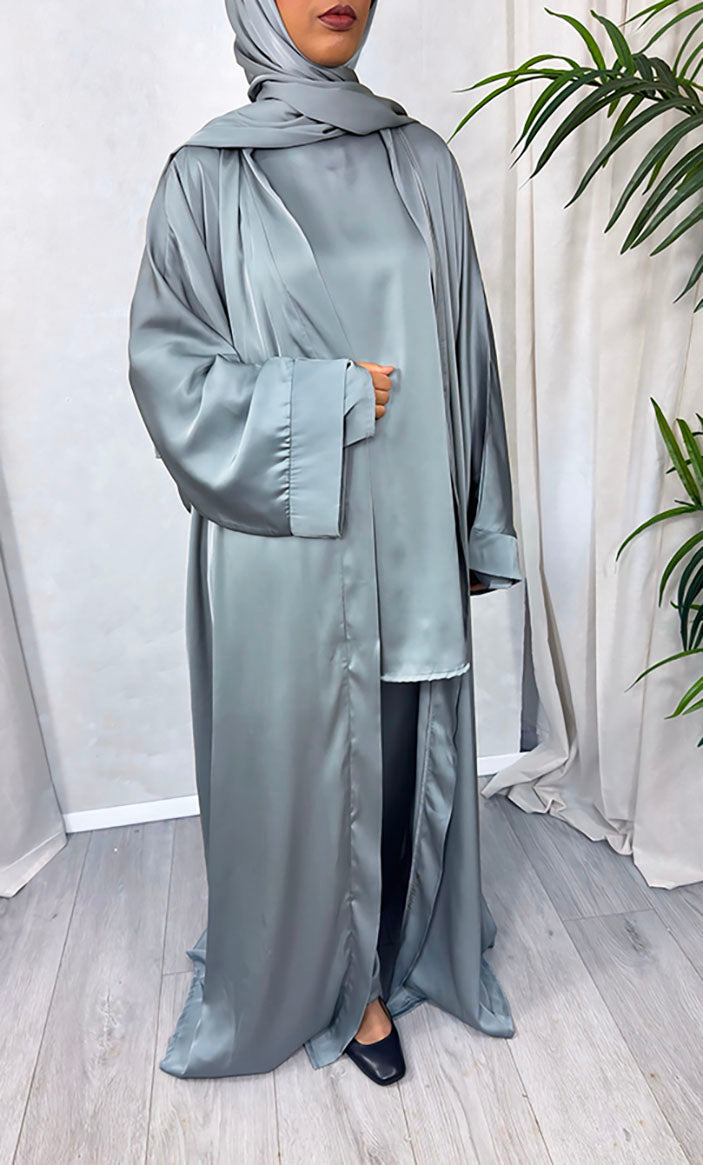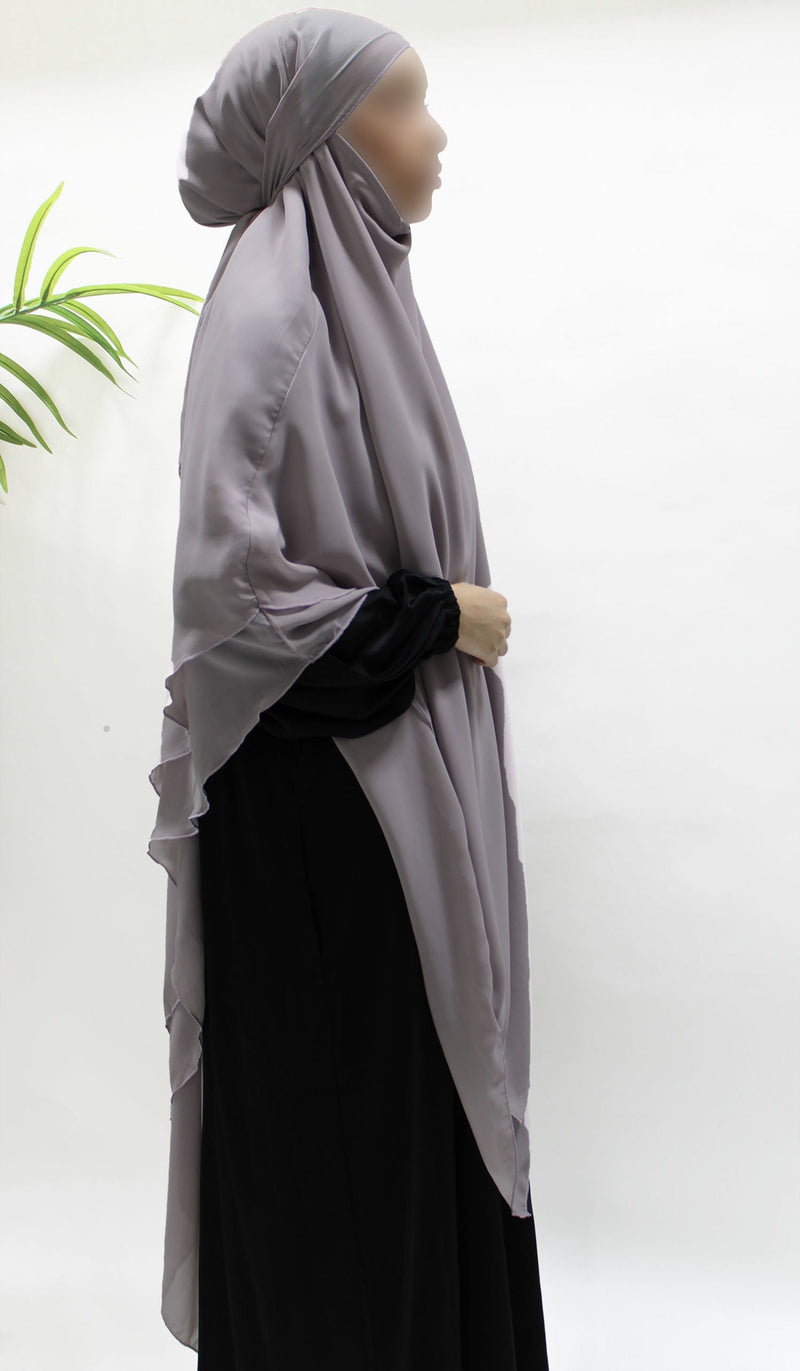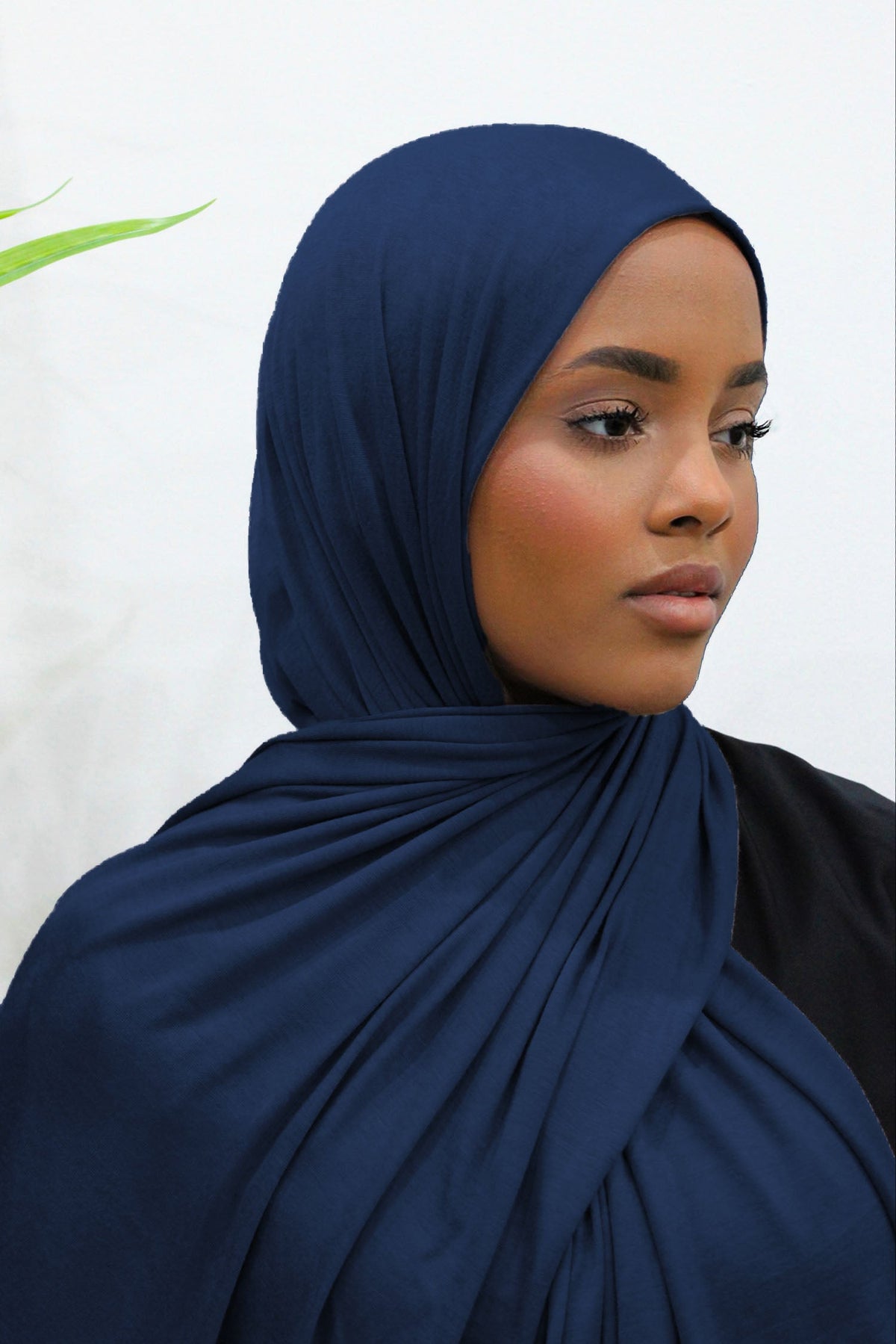
Keep the jersey hijab. Change the rest of the outfit.
You have a jersey hijab that sits comfortably, stays out of your way and works with the clothes you wear most often. Then an invitation arrives, or you buy a different coat, and suddenly that reliable scarf seems too ordinary. Before replacing it with a fabric you find difficult to manage, try changing its surroundings.
A familiar scarf can be a useful constant while you experiment with a shirt, dress or jacket. You already know how much cloth you have, which edge you like around the face and whether you prefer an undercap. That leaves fewer unfamiliar details to solve when the rest of an outfit changes.
The idea is not that every jersey scarf suits every occasion. Some are better partners for particular necklines, and a setting may call for another choice entirely. The useful exercise is to find out what your scarf can do before assuming that dressing differently requires a completely new head-covering routine.
Get to know this scarf, not an idealised version of jersey
Jersey describes a knit construction rather than one universal fibre or performance promise. CottonWorks' textile reference identifies jersey as a plain knit with different-looking faces. Read the particular scarf's composition separately; its name alone does not establish its weight, thickness or care.
Lay your scarf flat in a relaxed state and note its length and width. Compare those dimensions with how much cloth you normally use across the chest, around the head and at the back. A scarf can have generous length but still be narrower than you want for a particular arrangement.
Look at the front edge you usually fold. Is the hem substantial, very narrow or effectively absent? Does the edge roll in a way you like, or are you repeatedly flattening it? Those observations are useful when comparing another scarf, even when both products share the same material description.
Do not measure by stretching it to its fullest extent. The available comfortable drape is different from the amount of cloth you can pull across a table. A wrap that depends on keeping the knit under constant tension may not be the arrangement you want to wear.
Check opacity in the actual configuration, including any area that is only one layer deep. A folded front edge does not answer what happens at the back or sides. Establish the coverage you require before treating the scarf as the stable part of several outfits.
Keep one starting arrangement while changing the clothes
Choose the wrap you can repeat without a lengthy fitting. Put it on over a simple top and note where the main drape rests. Take a private reference photograph from the front and side if that helps you remember the shape.
Use the undercap or other support you normally find comfortable, where needed. There is no advantage in removing it merely to make the outfit sound simpler. Equally, do not add a cap automatically when the completed arrangement already provides the coverage and stability you want.
Let the scarf settle without pulling it tightly around the forehead or jaw. If an end is heavy or constantly slips from a shoulder, reassess where the length is distributed. A more secure fastening may be appropriate for some arrangements, but extra tension should not be the automatic answer.
Now make the clothing changes below one at a time. Keep the same scarf and, initially, the same wrap. This reveals which neckline or outer layer actually changes the fit instead of turning every new outfit into a separate scarf experiment.
Outfit one: a long shirt and trousers for a busy day
Take an opaque long shirt, relaxed trousers and the shoes you use for the day's route. Let the shirt hang naturally before deciding whether any part needs tucking. Your scarf already has its own shape; the shirt should not need to be pulled into a pose to meet it.
With a collar, inspect the small area where the scarf and fabric meet. A broad scarf fold resting on both collar points may feel crowded. Try letting more of the scarf fall towards the chest rather than building repeated turns around the throat. Keep your chosen neckline coverage throughout.
A navy jersey scarf with a pale blue shirt and darker trousers is one possible starting point. A brown scarf beside a cream shirt gives another effect. Use colours already in your wardrobe and compare their actual surfaces. These examples are combinations to try, not claims about which colours suit a particular complexion.
Put the bag on with your normal belongings inside it. A strap may catch an end that sat neatly before the bag was added. Move the end or alter the carrying position where that remains comfortable; do not shorten the entire drape by pulling at the face opening.
At a table, reach for a notebook or a cup. Look at the scarf ends and shirt cuffs without carefully holding them aside first. You may need a different end position or a more manageable sleeve. A successful casual outfit allows ordinary movements rather than asking you to remember several precautions.
Where a workplace has specific requirements, follow them ahead of the styling suggestion. A long shirt, loose scarf end or particular shoe may not suit every role. Choose a complete arrangement appropriate to the tasks and equipment you actually use.
Once the outfit works, keep the shirt-and-scarf pairing as a known combination. You can compare another trouser or skirt later without rebuilding the entire upper half. That is how a familiar scarf becomes useful across a week rather than merely easy on one morning.
Outfit two: a knit and coat without too much at the neck
Choose the knit first for its neckline and sleeve room, then put the jersey hijab on in its usual arrangement. A high collar plus several scarf turns may occupy more space than either did over the shirt. Look at the completed layers before assuming the scarf itself is too thick.
Try directing spare length down the front or over a shoulder where it remains secure, rather than winding it repeatedly around the neck. A shorter front fold may also change the amount of cloth at the throat. Make these adjustments gently; their purpose is to redistribute fabric, not compress it.
Now add the coat and fasten it. Turn your head, raise your hands and look down. Notice whether the collar pushes the scarf upwards or traps its back edge. A coat that fits over a thin top may have a different relationship with the knit and scarf together.
For a quiet palette, try a charcoal knit with a deep-coloured scarf and a lighter coat. Alternatively, keep the coat dark and let the scarf provide a softer contrast. Do not change all the colours while solving the neckline; first establish a comfortable shape, then decide how you want it to look.
Check what happens when the coat comes off. The scarf should remain usable without needing the collar to hold it in place. If removing outerwear dismantles the arrangement, practise the sequence and look for an end trapped beneath a lapel or hood.
Take gloves, headphones or glasses into account when you use them. Several separate items can meet around the ears and neck. Inspect the actual combination rather than assuming that each comfortable item stays equally comfortable when worn with everything else.
For a particularly crowded pairing, choose another knit or coat instead of making the scarf smaller through tension. You do not have to discard a favourite hijab because one high-necked outfit asks it to sit in a space it cannot comfortably occupy.
Outfit three: a dress for a family meal or suitable celebration
Start with the invitation and the dress itself. Does its cut and finish suit the setting? A jersey scarf neither automatically dresses it down nor transforms it into formalwear. Look at the complete combination rather than assigning a dress code to one fabric name.
With an embroidered or textured dress, try your plain scarf first. Its quieter surface may let the garment's detail remain clear. Arrange it so it does not catch on raised decoration or conceal a feature you especially want to enjoy.
With a simple dress, you could use a more deliberate front drape or a scarf colour that changes the relationship near the face. You do not need a complicated wrap. A smooth edge and a comfortable arrangement may be enough when the dress and bag provide the occasion details.
Try one accessory rather than a full collection at once. A structured bag, a favourite ring or suitable footwear can change the emphasis. A necklace hidden beneath the scarf may create a pressure point without contributing anything visible, so assess whether it earns its place.
For a brooch or decorative fastening, examine its weight and the material it will sit on. Do not place a heavy piece at the front merely to stop a drape shifting. The basic scarf arrangement should work first, with decoration added only where it can be supported appropriately.
Sit at a table during the fitting, speak normally and reach for your bag. The scarf should remain clear of the activity without requiring a raised shoulder or constant hand adjustment. A shape that only works in a still portrait is not the version to rely on for a long meal.
Keep the journey version in view too. Try the coat over the finished outfit and then remove it. You may find that a slightly different end position makes both versions work while preserving the familiar opening around your face.
The result can be a dressier outfit built around a scarf you already trust. There is no obligation to replace it with satin, chiffon or another material simply because the occasion is important.
Two small draping changes that can alter the outfit
A calmer front when the neckline already has detail
Begin with the normal front edge and the coverage you need at the sides and back. Let the ends hang before deciding where to move them. Identify which section is providing essential chest coverage and leave enough cloth available for that role.
Move only the surplus end towards a comfortable shoulder position. Keep the fold simple and use a suitable fastening where the arrangement needs it. Then turn your head and inspect the back. Moving an end can draw fabric from another area that previously looked settled.
The goal is not to make the scarf occupy as little space as possible. It is to leave the dress's neckline readable without losing the drape or coverage you want. If the scarf is too small for both, choose another arrangement rather than stretching it farther.
A broader front drape with a plain top
With a quiet neckline, you might enjoy more cloth across the chest. Start by moving the scarf slightly so one end has enough length to cross the front without pulling. Let the width open naturally instead of twisting it into a narrow rope.
Position that end towards the opposite shoulder and check where it rests. The other end should remain manageable rather than becoming a thick hidden bundle. Secure the arrangement appropriately if required, leaving the face opening relaxed.
Put the bag on before settling the final position. A cross-body strap may divide the broader drape or pull it against the top. You may prefer another carrying method, a smaller drape or simply to accept the visible strap. Choose the version that works in use, not only without belongings.
For more extensive wrapping instruction, see the scarf-wrapping guide. Here, a modest adjustment is often enough to let the same reliable hijab sit beside a different neckline.
A plain scarf and a printed one do different work
A plain jersey scarf can connect to the main garment, contrast with it or repeat a small colour elsewhere. Decide which role you want. A close colour match is not automatically more polished than a deliberate difference.
For a printed jersey scarf, inspect the pattern after wrapping. One section may stretch or fold differently from the rest, and a border can become the main feature around the face. Choose the visible arrangement rather than judging only the scarf spread out flat.
Try turning the scarf end for end when its colours appear in the wrong places for your outfit. That may bring a quieter area to the front. Do not force the fit to display a particular motif; a print that works only in an uncomfortable configuration may suit another use better.
Texture deserves its own comparison. A ribbed surface, a marled appearance and a plain knit can each look different beside the same blouse. Read the actual product information rather than assuming a textured finish has the same weight or drape as your existing scarf.
For embellishment, inspect the placement and reverse as well as the attractive side. A decorated area that ends up folded against the ear is not doing the same job as one lying comfortably over the shoulder. Choose a design that fits the arrangement you actually wear.
Settle glasses and other everyday details before leaving
Wear your glasses in their properly fitted position, then see how the scarf sits around the arms. Avoid trapping them in several tight folds or using them as the main support for a large drape. They should be removable without dismantling the entire scarf.
If the combination becomes uncomfortable, compare the glasses alone with the glasses and scarf together. Reposition obvious fabric bulk without bending the frame. For an eyewear fit problem, consult an optician rather than trying to disguise it through clothing tension.
The guide to hijab and glasses explores those interactions in more detail. It can be especially useful when a familiar scarf starts behaving differently after a change of frame.
Check a headset or other equipment where it is part of your day. Follow the relevant instructions and workplace requirements. A scarf arrangement should not obstruct vision, prevent safety equipment from fitting correctly or leave loose material where it can catch.
When the scarf feels different after an hour
Notice the adjustment you keep making. Are you pulling an end off the table, pushing fabric away from a lens or moving a fold from the jaw? Record that specific action. A general complaint that jersey does not suit you may conceal a much smaller problem.
If the front shifts backwards, compare where the ends' weight sits. If one side feels crowded, compare the seams and folds on both sides. If the scarf gathers only when the coat is fastened, the collar may be the relevant interaction.
Change one thing and try the same ordinary movements again. Removing a decorative piece or redirecting a long end is easier to evaluate than changing the scarf, cap, top and fastening simultaneously. Keep what was already comfortable while investigating the difficulty.
Do not tolerate pain or irritation simply to make a preferred arrangement work. Remove or change the uncomfortable setup. There are other fabrics, dimensions and methods; a favourite appearance does not need to become an obligation to wear it in one particular way.
A smaller scarf may reduce unnecessary cloth for one arrangement but leave too little coverage for another. A larger scarf may solve a depth issue while adding weight you do not enjoy. Choose around the actual use rather than treating either size as universally superior.
Compare scarves with a useful set of notes
When replacing a well-used scarf, record its relaxed dimensions, fibre information and edge finish before it becomes difficult to identify. Add the wrap and undercap, if any, used with it. These details are more transferable than a memory that it was wonderfully soft.
For a new scarf, ask about anything missing from the listing. The width matters as much as the length when you need fuller coverage. A photograph on a model does not show how much of the scarf has been folded, tucked or left out of view.
Compare the new item beside the old one without stretching either. Put each on with the same top and support arrangement. Note where they differ: perhaps the new edge is bulkier or the ends fall farther down the chest. Decide whether those differences help the role you had in mind.
A colour you love can remain part of the decision without overriding every practical question. Where the scarf does not work for its intended use, consider the available purchase options before washing, altering or repeatedly pulling it into a different shape.
A smaller scarf collection can still offer variety
Start with the combinations you actually use rather than a list of colours everyone supposedly needs. One scarf may partner with several tops; another may have a clear occasion role. There is no required number of neutrals or a reason every person must own black.
Put out three real outfits from your week and try the familiar scarf with each. Keep the results that work. A shirt, a knit and an occasion dress may require different end positions but not three different materials.
Where there is a gap, describe it specifically. Perhaps a particular neckline needs a different width, or a printed top would be easier with a plain scarf you do not own. Buy for that job rather than collecting near-identical shades because a product photograph suggests a complete set.
For someone learning hijab or returning to a different routine, a manageable selection can make experimenting less demanding. Keep the process at a pace that feels comfortable. There is no need to master intricate wraps before wearing a simple arrangement you enjoy.
Different ages, hair arrangements and dressing abilities do not require one universal scarf answer. Ask what the person needs from the garment, especially when buying a gift. A known comfortable size and care method may be more useful than choosing the most decorative option.
Care for the scarf that makes the outfits possible
Retain its care instructions and follow them for cleaning, drying and any permitted pressing. Do not assign every jersey scarf the same method from its stretch or softness. Decorative elements and finishes need to be considered as parts of the supplied item.
Remove separate fastenings as appropriate before care, and keep them safely organised rather than loose among fabric. Inspect an edge that is being pulled regularly. A small problem should not be handled by tugging away a thread whose role you do not understand.
Choose storage suited to the scarf and put it away fully dry. Avoid allowing rough accessories or exposed fittings to rest against it. Keep a successful wrap in a reference photograph rather than leaving a scarf indefinitely fixed with several sharp fastenings.
If a scarf seems to have changed, compare it with your notes using the same measuring approach. Do not attempt a hot wash to shorten it or a forceful stretch to restore it. Seek appropriate advice when the care result differs from what the instructions led you to expect.
Our modest-wear care guide helps organise the wider wardrobe routine. The purpose is to keep useful pieces ready, not to promise that any fabric remains identical through unlimited wear.
Keep a warm-weather option without relying on a fabric promise
A scarf can be useful in one setting and feel too substantial in another. Compare the total arrangement: scarf, cap, folds and the collar beneath. Removing one unnecessary turn may help the fit, but it is not a guarantee that the same garment suits every temperature.
Do not assume that a thinner scarf automatically makes the whole outfit simpler if it needs several additional layers for your chosen opacity. Assess the completed wrap instead of comparing only the cloth in your hand.
When another scarf is more appropriate for the conditions, use it. Keeping a favourite jersey hijab does not mean wearing it for every journey or every season. A small wardrobe can still contain alternatives with genuinely different roles.
For prayer, check the outfit separately through the movements and coverage guidance you follow. Comfort in an ordinary daily wrap does not establish suitability for every use. A clothing label should not replace your own fitting or qualified guidance on religious requirements.
Pack the scarf with a tested outfit, not a hopeful one
For an overnight visit, take the top and outer layer you actually tried with the jersey scarf. A replacement blouse may have a higher collar, while another coat can leave less room behind the neck. Matching colours do not guarantee that the same wrap will still feel comfortable.
Keep the scarf away from exposed bag zips, jewellery and toiletries. Use a clean compartment or suitable pouch without packing it while damp. On arrival, unpack it and follow its own care instructions if it needs attention; an unfamiliar iron is not automatically appropriate.
Make the spare arrangement just as specific. A second scarf is useful when you already know how it works with the outfit, not merely because it occupies little luggage space. That small rehearsal is especially helpful when you will be getting dressed somewhere without your usual mirror or wardrobe.
Choose a change you can repeat tomorrow
After trying the three outfits, keep the most useful adjustment from each. Perhaps the shirt works with a simple shoulder drape, the coat needs less cloth at the throat and the dress looks best without a competing necklace. Those observations turn familiar pieces into dependable combinations.
Write down anything unresolved instead of buying a new scarf immediately. A restrictive coat collar or an unsuitable dress neckline may be the real problem. Changing the hijab will not necessarily fix it, especially when the scarf is already comfortable with other clothes.
You can enjoy novelty without replacing every reliable item. Keep the jersey hijab when it does its job, change the garment or accessory that genuinely alters the outfit, and let a few practical combinations save you the effort of starting from scratch every time.