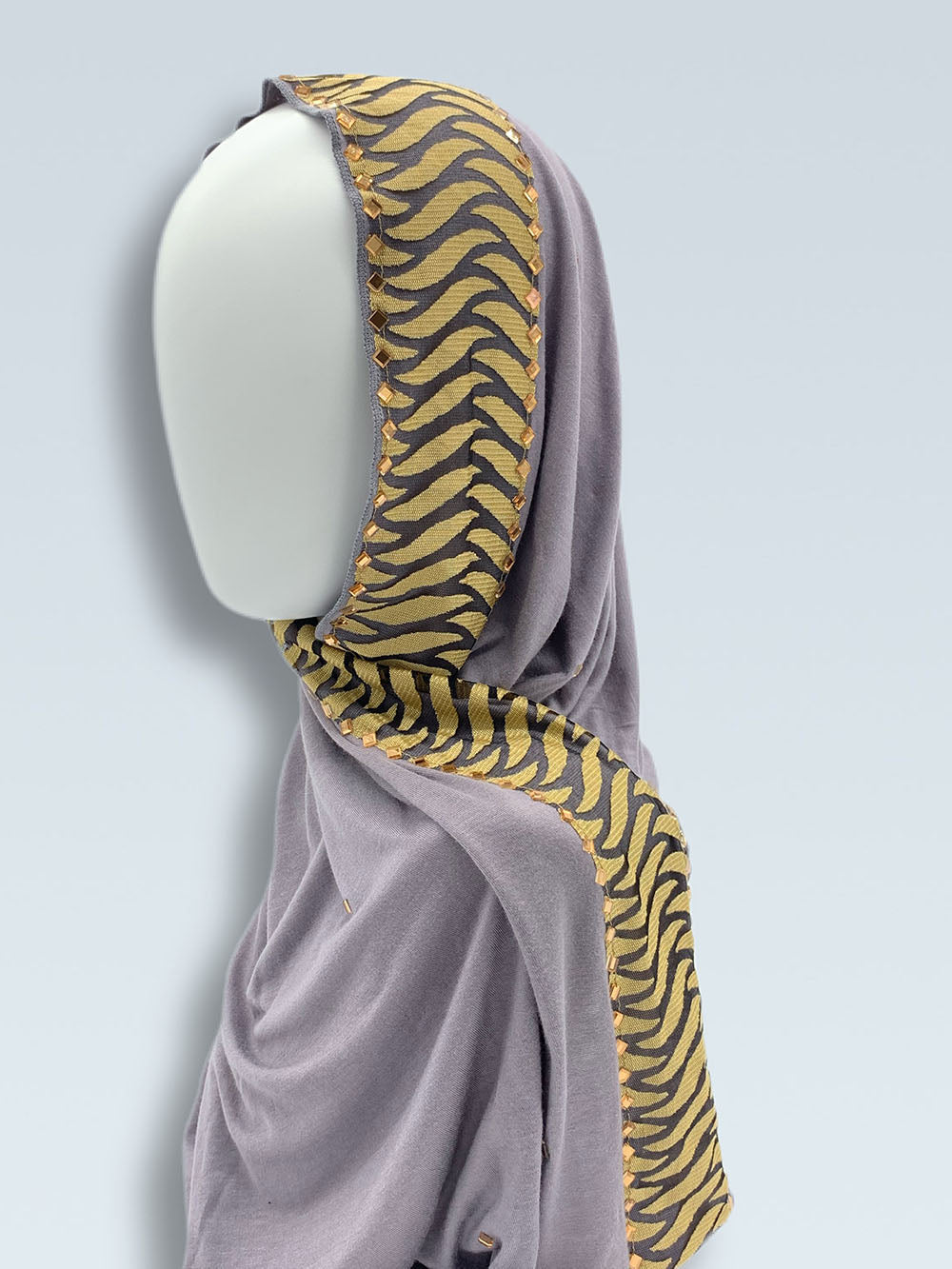
What Makes an Eid Hijab Style Feel Special Without Becoming Difficult to Keep Secure Through Prayer, Visits and a Long Day?
Bismillah. The most reliable eid hijab style is the one that works with the outfit, protects the coverage you intended, and stays comfortable from the first morning rush to the last family goodbye. Eid dressing can feel tender because the day carries prayer, joy, visitors, memory, food, children, photographs and sometimes a little nervousness in the same few hours. A scarf may look beautiful while it is folded on the bed, but the real question is whether it still feels calm when you are putting shoes on, greeting relatives, travelling in changing weather or helping someone else get ready.
That is why this guide begins with the day itself, not with a random wrap. Choose the dress, abaya, suit, kaftan or cultural outfit first. Look at its colour, neckline, sleeve volume, embroidery, print and fabric surface. Then decide what the hijab needs to do. It may need to soften the outfit, frame the face, add a little colour, calm down heavy detail, give more chest coverage, survive wind, or simply stay in place while you move through the morning.
There is no single Eid scarf that suits every woman. Some sisters love a simple under-chin fastening with a soft chest drape. Some prefer a fuller wrap that gives generous shoulder coverage. Some want chiffon movement, some need jersey security, and some feel best in a familiar everyday scarf because the occasion already feels big enough. The right choice depends on the wearer, the garment, the setting and the level of attention the scarf will need during the day.
This is not a guide about proving anything through clothing. Eid can be honoured with beauty, cleanliness and care without turning the outfit into a competition. New clothes are not a requirement for joy. Jewellery, makeup and decorative pins are optional. A scarf does not become better because it is harder to wear, and a modest outfit does not become less meaningful because it is simple. The aim is a look that lets a sister feel present, covered and settled.
For broader help with scarf fabrics, undercaps, sizing, grip and everyday techniques, the complete hijab guide gives a wider foundation. This article stays focused on Eid: prayer, family visits, occasion clothing, weather, comfort, photographs and the small practical decisions that decide whether the scarf becomes a support or a distraction.
Begin with the Eid day, not the mirror
A mirror shows the first version of the outfit. Eid shows the working version. Before choosing a scarf, think through the route of the day. Will you attend Eid salah early? Will you be outside in wind or rain? Will you take a coat on and off? Will you travel across town, host guests, serve food, carry a baby, sit on the floor, visit elders or remain in one warm house for hours? Each answer changes what the hijab has to handle.
A light chiffon style can feel beautiful for a short formal visit, but it may need more anchoring if the morning includes outdoor prayer and a windy walk. A jersey wrap may feel secure for travel, but it can become warm in a crowded home. A long front drape may give the coverage a sister wants, while another woman serving food may need the loose end controlled. The same scarf can be right or wrong depending on the day around it.
This is where many Eid outfits become stressful. They are styled for the photograph, then forced to survive prayer, children, food and weather without being tested. A better approach is to let the practical route shape the beauty. If your hands will be full, choose fewer loose ends. If your morning starts early, avoid a technique that needs ten careful attempts. If you will be outside, test the scarf with the coat. If you will sit for long periods, check whether the drape pulls against the neck.
A thoughtful outfit does not remove joy. It protects it. When the hijab has been chosen for the real day, you are less likely to spend Eid adjusting the same fold or asking whether the neckline is still covered. You get to forget the mechanics and return to the people, worship and gratitude that give the day its meaning.
Let the outfit tell the hijab what role to play
A good eid dress with hijab pairing begins by reading the garment. Is the dress plain, embroidered, printed, metallic, softly gathered, structured, wide-sleeved, high-necked or open at the front? Does the outfit already have a strong focal point near the chest or shoulders? Does it have a colour that wants warmth, a border that can be echoed, or a neckline that needs a fuller scarf? The hijab should answer these questions instead of fighting them.
If the garment is heavily embellished, the scarf may need to give the detail breathing room. A plain matte hijab in a shade from the embroidery can look calm and deliberate. If the outfit is very simple, a textured scarf, deeper colour or elegant drape may bring enough interest without adding many accessories. If the garment has a dramatic sleeve or shoulder shape, too much scarf volume near the neck can crowd the upper half. If the neckline is open, coverage planning comes before decorative styling.
This matters for different garment traditions too. A Moroccan kaftan, South Asian suit, Somali dirac, West African boubou, Turkish-inspired abaya and British maxi dress do not all ask for the same scarf behaviour. Some garments are meant to show a border. Some are already layered with a dupatta or shawl. Some carry family memory through textile and colour. A respectful hijab choice allows the outfit's own language to remain visible while still serving the woman's coverage and comfort.
When a reader thinks about hijab dresses for eid, she is often asking how to make the scarf and dress feel like one outfit. The answer is not always a matching shade. It may be a tonal scarf, a quieter texture, a wider drape, a neutral frame, or a small colour repeated from the garment. The goal is relationship, not a forced match.
Give colour a job instead of chasing identical shade
Colour can make an Eid outfit feel soft, joyful, grounded or formal, but it should have a job. A hijab can brighten the face, calm a busy print, echo embroidery, deepen a pale outfit or connect separate accessories. Once the job is clear, colour becomes easier. Without that clarity, a sister may keep trying scarves because none of them feels truly right.
Identical colour matching works when the tones genuinely agree. A rose dress with a rose chiffon scarf can look polished when both lean the same way. But near-matches are often harder than contrast. A cream hijab with a sage dress, a taupe scarf with a champagne abaya, a navy scarf with silver detail, or a burgundy scarf with a soft stone outfit can look more intentional than two colours that almost match but keep arguing in daylight.
Prints need especially careful colour reading. Choose the background colour if you want quietness. Choose a small repeated colour if you want softness. Choose a grounding neutral if the print is already lively. A patterned scarf can work with a patterned outfit, but it needs enough shared colour and different scale so the face is not lost between competing designs. The article should never tell a woman that pattern mixing is always wrong; it should teach her how to judge whether the result feels readable.
Colour also changes with light. Warm indoor bulbs can turn ivory creamier and make grey look taupe. Flash can brighten satin and metallic thread. A sheer scarf may shift depending on the undercap beneath it. Before Eid, check the full outfit in daylight and ordinary indoor light. One honest phone photograph is useful, but the camera should not become the judge of the whole day.
Use fabric behaviour to decide how much effort the scarf will need
Fabric is not only a look. It is behaviour. Chiffon can give a soft formal fall, but it often needs anchoring and may be sheer in pale colours. Georgette can offer similar lightness with a little more texture. Jersey can feel secure and forgiving, but a thick piece may grow warm or heavy. Modal can give a relaxed drape and generous coverage, though some versions need opacity checks. Satin and silk can look polished, but smooth surfaces may slide and reflective fabric can show marks more quickly.
Because fabric behaviour changes by weave, weight, finish and size, avoid universal rules. Chiffon is not always formal. Jersey is not always casual. Satin is not always the best occasion choice. A familiar scarf that you can wear for six hours may be better for Eid than a delicate fabric you have only tried for two minutes. The most suitable fabric is the one that matches the route, the garment and the amount of attention you are willing to give it.
Test fabric against the outfit surface. A delicate scarf can catch on beadwork, sequins or rough embroidery. A slippery scarf can move against a satin dress. A thick scarf can hide a neckline or make the upper body feel crowded beside puff sleeves. A textured scarf can make a plain outfit feel layered without needing heavy jewellery. The scarf and garment should cooperate physically as well as visually.
Opacity belongs in this fabric decision. Pale scarves over dark hair, sheer chiffon at the crown, stretched jersey and single-layer modal can reveal more than expected. Use a suitable undercap or fold where needed. Check near a window, not only under soft room lighting. Modest styling is easier when the fabric has already been tested before the morning begins.
Build a simple hijab style for Eid prayer
A simple hijab style for eid is often the wisest choice for the first part of the day. Early prayer can include rushing, parking, walking, finding a space, carrying a prayer mat, greeting sisters and moving through salah. The scarf should not depend on constant finger checks. It should give the coverage a woman intends while allowing her to bow, sit and move into sujood without fear of the front falling open or the end dropping forward.
Start with a comfortable base. If you use an undercap, make sure it gives grip without headache, numbness or hairline tension. Place the hair in a way that does not push painfully against a car seat or coat collar. Use one secure under-chin fastening if the fabric needs it. Bring the longer side across the chest or over the shoulder and secure only where movement requires. More fastenings do not always mean more security; sometimes they simply create more places to pull.
Test the full style through prayer movement. Raise the hands, bow, sit and lower into sujood. Look for gaps at the neck, hairline and side of the chest. Check whether the scarf tightens across the jaw or slips back from the undercap. If the occasion scarf is delicate, a separate prayer layer may help without forcing the fashion scarf to do a job it was not suited for.
This is also where AMANI'S prayer-clothing boundary matters. A prayer dress is for prayer use and home prayer, not an Eid fashion piece to decorate with jewellery, handbags or party styling. If a sister uses a prayer garment for salah, that should remain distinct from whatever she chooses to wear for the wider Eid day. The article can discuss prayer practicality without turning prayer clothing into occasion fashion.
Protect chest, neck and shoulder coverage while the outfit moves
Coverage cannot be measured from the best front-facing pose. Eid involves turning, hugging, sitting, eating, lifting and sometimes chasing small children across a room. A scarf may look covered in the mirror and still shift when the shoulders move. A dress may seem closed while standing but open at the neckline when seated. A sleeve may be modest at rest and reveal more when the arm lifts. These are ordinary garment issues, not personal failures.
Begin with the neckline. A high closed neck gives more flexibility. A V-neck, wrap front, keyhole, deep scoop or open abaya needs a deliberate base layer or a fuller scarf. Avoid using a decorative brooch as the only thing holding important coverage in place. Decoration should never be the sole structure. If the hijab must provide chest coverage, choose enough width and a fabric that can stay where placed.
Then check the shoulders and sleeves. Wide sleeves and butterfly shapes can pull fabric away from the side body. Embellished shoulders can push the scarf into a bulky pile. A chest drape may cover beautifully until the wearer reaches for a child or handbag. Try the complete outfit while sitting on a chair, sitting lower, reaching forward and turning sideways. A trusted sister can help check angles you cannot see.
Coverage preference remains personal. Some women prefer a generous front drape. Others wear a neater wrap with a high-neck underlayer. Some need more shoulder coverage, some need less fabric around the neck for comfort. This guide should support those decisions, not issue religious rulings. Seek qualified knowledge for rulings; use styling checks to make the chosen clothing physically work.
Let embellished outfits breathe
Eid clothing often carries beadwork, lace, metallic thread, sequins, stones, embroidery or rich woven texture. Those details can be beautiful, but they already create visual activity near the face and chest. A hijab that repeats too much shine, too much texture or too much pattern may make the upper half feel crowded. The aim is not to hide the outfit. It is to let the strongest detail remain clear.
A quiet hijab can be powerful here. Matte chiffon, georgette, fine crepe or smooth jersey in the base colour, a muted embroidery shade or a soft neutral can frame the face without competing. If the abaya has gold thread, the scarf might be warm cream, taupe, olive, cocoa or the garment's own base colour. If the detail is silver or pearl, grey, navy, ivory or muted blue may feel calmer. These are relationships to test, not fixed rules.
Place the scarf where it will not rub constantly against rough decoration. Chiffon and modal can catch on stones and metallic thread. Long scarf ends may need to fall on the plainer side or sit across the chest without repeated friction. After Eid, store the scarf away from beaded garments so it does not snag while folded.
Accessories should be chosen after the scarf, not before. A detailed neckline may make a necklace unnecessary. A long chest drape may hide earrings or catch a chain. A small ring, bracelet, bag clasp or inherited brooch can be enough. A sister who loves more ornament can still choose it, but the decision should be deliberate rather than automatic.
Give plain outfits room for texture or keep them beautifully minimal
A plain dress or simple abaya can make hijab styling feel easier, but it can also create pressure to add something extra. That extra may be colour, texture, a border, a layered drape or a stronger accessory. It may also be nothing. Minimal dressing is a finished style when the fabric, colour and fit already feel calm.
If you want interest, add it with one element. A softly crinkled scarf can give texture to a plain crepe abaya. A satin scarf can bring controlled sheen to matte tailoring. A deep jewel tone can lift a neutral dress. A tonal scarf in a slightly darker shade can create depth without drama. A border or subtle print can work when the garment surface is quiet enough to hold it.
If you prefer minimalism, let the scarf and garment stay close. A black abaya with black or charcoal hijab, a cream dress with taupe scarf, a navy dress with soft blue scarf, or a muted green outfit with olive scarf can feel complete without a visible accessory story. The success comes from good proportion, enough opacity and a calm face frame.
The point is not to make a plain outfit louder because Eid is expected to look festive. Some sisters feel most joyful in restraint. Some feel more themselves in bright colour. Both can honour the day when the clothing is clean, suitable and chosen with care. Personal style should remain present.
Work with cultural garments carefully and respectfully
Many Eid outfits carry family identity. A kaftan, abaya, thobe-inspired outer, boubou, salwar kameez, anarkali, gharara, dirac, lace set or hand-sewn dress may already have a language of drape, colour and occasion. A hijab should not flatten those differences into one generic style. It should respect what the garment is trying to say while still giving the wearer the coverage and ease she needs.
First notice whether another piece is already part of the outfit. A dupatta may be intended to sit across the chest or shoulder. A kaftan may include a belt or central embroidery. A wide-sleeved garment may need the scarf to sit cleanly above the sleeve rather than hanging into it. Some outfits ask for a very simple hijab because the fabric and structure already carry the occasion.
Family advice can be valuable here. An older relative may know how a fabric is usually draped, how a belt is tied, or which detail should remain visible. Listen when that knowledge is offered with kindness. Then adapt the look for your body, prayer plans, sensory comfort and climate. Honouring tradition does not require accepting a painful pin, unsafe hem or uncovered area you are not comfortable with.
Keep claims humble. Do not present one family's custom as the rule for an entire culture. Do not invent meanings for garments whose context is unknown. If an outfit carries memory of a mother, grandmother, wedding, migration or homeland, that story may matter more than whether the scarf looks like a current photograph. Eid clothing can carry devotion and memory at once.
Plan around UK weather without overloading the scarf
Eid in the UK can mean a cold walk to the car, sudden rain, a windy masjid entrance, bright sunshine after prayer and a crowded living room that becomes too warm by lunchtime. Because Islamic dates move through the solar calendar, Eid does not belong to one season. A practical eid hijab style needs to work with changing temperature and outerwear.
Test the scarf with the coat before the day. A high collar can push the face frame forward. A rough wool coat can catch chiffon. A tight hood can flatten volume. A crossbody bag can drag one side backwards. Put everything on together, then walk, turn the head and sit. If the scarf only works without the coat, the journey still needs solving.
For wind, control loose ends. Tuck one side, use a shoulder fastening or choose a fabric with more grip. For rain, think about fabric marks. Satin, silk and pale chiffon can show water quickly. A scarf with easier care or a protective hood may be wiser for a long exposed journey. For indoor heat, avoid unnecessary layers around the neck. Sometimes one opaque scarf is cooler than a sheer one folded repeatedly.
Weather planning should not make the outfit feel defensive. It should disappear quietly. Once the scarf, coat and bag have been tested together, the sister can move from street to home without feeling that the sky has undone the whole outfit.
Make room for new Muslims and sisters returning to hijab
A first Eid in hijab can feel beautiful and vulnerable. A new Muslim may be finding a masjid, learning the rhythm of the day and choosing modest clothing without a mother, auntie or sister beside her. A woman returning to hijab may feel watched by people who remember her differently. In both cases, the hijab should not become another test she must pass perfectly before she is allowed to belong.
Choose familiarity over performance. Wear a fabric you already understand. Use a wrap you can repeat without following a screen on Eid morning. Pick a colour that works with clothes you own. Prepare everything several days ahead, including shoes, coat, underlayer and fastenings. A simple practised scarf can offer more confidence than a dramatic wrap attempted for the first time while everyone is waiting by the door.
Ask for practical support from one kind woman if possible. She can check the neckline, help with a fastening, explain the prayer space or keep a spare pin. Support should never come with shame. A woman learning her way into modest dressing needs patience, not a public correction that stays in her memory for years.
Allow mixed emotions. It is possible to feel grateful and lonely, excited and awkward, proud and unsure. Clothing can support the day, but it cannot carry every feeling. The sister belongs before the scarf is perfect. The goal is enough comfort and confidence to enter the morning and let Eid itself hold her.
Choose mother-friendly styling for a physically busy Eid
A mother may reach her own scarf after dressing children, packing bags, setting food out, answering messages and finding shoes that somehow disappeared. Her hijab styles for eid need speed, softness and resilience. Beauty remains important, but the scarf must survive closeness: hugs, sticky hands, feeding, carrying, bending, serving and sitting on the floor.
Controlled ends are often better than very long loose drapes. A generous chest fall can still be pinned or tucked so it does not land in food or get pulled by a toddler. Too many sharp fastenings near a baby can create worry. A grippy fabric, comfortable undercap and one or two reliable closures often feel calmer than a complex decorative shape.
Colour matters practically too. Pale cream can be beautiful, but taupe, rose, olive, cocoa, burgundy, navy or a soft print may make small marks less frightening. A washable scarf can give a mother permission to relax. If breastfeeding is part of the day, test the scarf and dress together. A wide drape may offer privacy, but it should not become tangled or require a full rebuild every time.
A mother does not need to disappear into functionality. She is allowed to feel lovely while choosing garments that respect the work her body and hands are doing. Practical styling is not a compromise in this context. It is care.
Respect sensory comfort, health needs and mobility
Eid advice often assumes that tight undercaps, heavy scarves, decorative pins, long standing and layered clothing feel fine for everyone. They do not. Some women live with migraines, scalp tenderness, sensory sensitivity, chronic pain, hearing devices, limited hand movement, pregnancy, menopause, disability, anxiety or fatigue. A respectful guide must leave room for those bodies.
If a scarf slips, try grip and placement before tightening. A softer undercap, lower hairstyle, textured fabric or smaller wrap may solve movement without pressure. Pain around the ears, jaw or hairline is not proof that the style is secure. It is a sign the body is asking for another solution.
Glasses, hearing aids and other devices should be worn while styling. The scarf must not press them painfully, reduce function or require complete removal for small adjustments. Magnets, pull-on styles and pre-shaped scarves may help some women, while others may avoid them. Choose according to the actual device, body and comfort needs.
Mobility also changes scarf length. Long ends, wide sleeves and trailing hems should stay clear of wheels, walking aids, controls and hands. A shorter secure drape can still be modest and beautiful. Adaptation is skilled dressing, not a lesser version of style. The best outfit lets the wearer move, communicate, worship and rest without avoidable strain.
Use accessories only after the outfit is already stable
Accessories should support the outfit, not rescue it. A brooch should not be holding essential coverage if the scarf would fall open without it. A necklace should not be added simply because jewellery is expected. A bag should not drag the scarf backwards. A shoe should not make the wearer tense before she even reaches the masjid. Eid style improves when accessories are chosen after the garment and hijab are already working.
Pick one secondary focus. If the dress is plain and the scarf quiet, a bag, ring, brooch or shoe can carry a small point of beauty. If the outfit is heavily embroidered, a plainer accessory may be enough. A long chest drape can hide a necklace and make earrings irrelevant, while wrist jewellery may show more naturally when serving food or greeting family. Optional means optional. A woman is not unfinished because she chooses none of it.
Decorative pins and brooches need practical testing. Heavy pieces can pull the scarf, widen holes or catch the garment. Place them away from delicate fabric and essential coverage. Magnets can be useful, but they should be handled carefully and stored safely, especially around children and where personal medical guidance may apply.
Shoes belong in the hijab decision because they change the way the outfit is carried. Wet pavements, grass, stairs, driving and long standing all matter. A comfortable flat, clean trainer or low heel can look coherent when colour and proportion suit the outfit. Pain shows in posture. Comfort shows too.
Handle makeup and photographs without making the camera the point
Families often take photographs on Eid, and it is sensible to check how fabric behaves in a picture. But the camera should not become the purpose of the morning. The outfit has to feel good after the photograph is taken, when the scarf has softened, the food is served and the day is no longer arranged around a pose.
If makeup is part of your personal routine, protect the scarf from transfer. Apply what you plan before the final scarf placement where possible. Keep hands clean while adjusting. Pale chiffon, satin and silk can mark easily, so test carefully before the day. If makeup is not part of your routine, leave it. The outfit does not require it to be complete.
Check one photograph in natural posture. Stand normally, turn slightly and sit. If flash makes the fabric look transparent or shine too sharply, adjust with lining, a different scarf layer or a calmer fabric. Then stop. Repeated checking can create anxiety and late departures. A family photograph with one imperfect fold can still become a beloved memory.
The scarf should help frame the woman, not erase her. A smile, a tired mother, a new Muslim standing at her first Eid, a grandmother holding a child and a sister laughing after prayer all carry more beauty than perfect symmetry. Let the clothing support the memory rather than control it.
Shop for Eid hijabs with evidence, not pressure
Buying an Eid scarf can be useful, but it should not be driven by panic. Before ordering, name the gap in the outfit. Do you need a warmer colour, a more secure fabric, more chest coverage, a softer frame, less shine, a longer scarf, a calmer neutral or a washable option for a long family day? A clear need protects you from buying several beautiful scarves that solve nothing.
Check scarf dimensions against one you already own. Length and width affect coverage, volume and styling options. Read composition and care details where they are provided. Look for opacity clues, close-up images, fabric texture and whether the product is actually a hijab-sized scarf rather than a small hair accessory. Do not assume an undercap, magnets, pins or matching pieces are included unless the listing confirms them.
If a dress or abaya is also being ordered, confirm what the listing includes. A model image may show a belt, inner slip, bag and coordinated scarf while the product includes only one garment. Read measurements, closure details, sleeve length, lining notes and return terms before relying on the outfit for Eid. Keep tags attached while testing at home.
When you know which fabric, colour and size the outfit needs, you can shop related styles with a reason rather than hoping a pretty picture will decide for you. Thoughtful buying should make the wardrobe calmer. It should not make Eid feel like a financial test.
Practise early enough for Eid morning to stay peaceful
Many outfit problems are not design failures. They are rehearsal failures. A scarf may need a different undercap. A dress may need a higher base layer. A coat may push the wrap forward. A brooch may catch embroidery. A hem may need different shoes. These discoveries are much easier three days before Eid than five minutes before leaving.
A week before, confirm the garment, scarf, underlayer and shoes. Check opacity, sleeve movement and length. Three days before, test two scarf options in daylight. Choose one primary style and one simpler backup. One day before, lay out the undercap, fastenings, garment, shoes, bag, coat and any optional accessory. Store spare pins or magnets safely. Check the weather and journey.
On Eid morning, follow the version you practised. Avoid opening several tutorials or changing the colour because of one uncertain mirror moment. Make practical corrections only. After prayer, check once in a private space if needed, then let the scarf become background. Repeated adjustments can turn a stable outfit into a source of worry.
Practice is not about controlling the blessing out of the day. It creates room for ease. When the clothing is settled, the morning can hold takbeer, messages, laughter, small delays, children, elders and whatever Allah allows the day to bring.
Restyle the same scarf beyond Eid
A scarf chosen for Eid can return to ordinary life. It may pair with a plain work abaya, a relaxed weekend dress, a masjid outfit or a simple long cardigan. This is useful because Eid should not train a woman to see clothing as one-use. A scarf becomes more valuable when it can hold memory and still serve daily modest dressing.
Change the surrounding pieces rather than abandoning the scarf. A chiffon used with an embellished dress can look calmer with a plain closed abaya. A deep colour worn for Eid can become everyday when paired with flat shoes and a simple bag. A soft georgette can move from family gathering to work when the wrap is neater and accessories are reduced.
If the scarf is opaque and secure, it may also work with prayer-friendly clothing or masjid wear. If it is delicate, keep a simpler prayer layer available rather than forcing the occasion wrap to do every job. Again, prayer clothing and Eid fashion should remain distinct where the garment purpose is different.
Before storing the scarf, photograph three combinations from your wardrobe. This prevents future panic buying and reminds you that one good choice can have several lives. Air it, remove fastenings, treat marks according to the care label and store it away from rough beadwork. Rewear can be a sign of wisdom, not a lack of celebration.
If the Eid outfit is an open abaya
An open abaya can look graceful on Eid because it allows an inner dress, colour story and scarf to work together. It also asks for more honesty than a closed garment. The hijab should not be expected to fix an inner layer that is too low, too short, too sheer or constantly shifting. Begin with the inner outfit. Check the neckline, sleeve length, fabric weight and how the front behaves when you sit or walk. Once the base is complete, the scarf can become styling rather than emergency coverage.
A fuller front drape may suit an open abaya when the wearer wants more chest coverage. A shorter shoulder drape may work when the inner dress is high necked and secure. A tonal hijab can help the open layer and inner layer feel connected, while contrast can make each piece clearer. If the abaya has embroidery down the opening, avoid placing a heavily textured scarf directly over it unless the fabric relationship feels intentional.
Belts and ties need testing. A scarf that falls over a belt can create bulk at the waist. A tie that sits under a long front drape may catch fabric whenever the wearer sits. If the abaya is loose and flowing, a controlled scarf can keep the upper body calm. If the abaya is plain and straight, a softly textured scarf may bring enough occasion feeling without adding another layer of clothing.
Open abayas are also affected by weather. Wind can move the front panels and the scarf at the same time. Use an inner layer that remains modest even if the outer layer shifts. The scarf should support that security, not replace it. When the outfit has been tested as a system, an open abaya can feel relaxed, elegant and still practical for the real Eid day.
If the Eid outfit is a dress, suit or kaftan
Many sisters do not wear an abaya for Eid. A dress, suit, kaftan, skirt set or cultural outfit may be the centre of the look. The hijab decision should still begin with construction. A dress with a fitted bodice needs a different scarf plan from a loose kaftan. A suit with a dupatta needs a different decision from a plain maxi dress. A layered skirt may call for a calmer scarf so the outfit does not become heavy from top to bottom.
With dresses, the neckline decides the first practical question. If the neckline is high and opaque, the scarf may frame the face without needing to cover the entire chest. If the neckline opens or the fabric pulls when seated, the inner layer or scarf needs to solve that before colour matters. With suits and kaftans, notice whether a border or embroidery panel is meant to show. A hijab can frame that detail rather than hiding it accidentally.
The phrase eid dresses hijab can sound awkward on its own, but the need behind it is natural: a woman wants the dress and scarf to belong together. She may be asking whether the scarf should match, soften, contrast, cover, simplify or add celebration. Give that question a real answer through colour, proportion and movement instead of reducing it to a list of phrases.
A dress or suit can also carry more cultural expectation than a basic abaya. Some families read colour, fabric and drape through tradition. A sister can respect that while still choosing the coverage and comfort she needs. The strongest result is not always the most dramatic one. It is the one where the garment, scarf and wearer seem at ease with one another.
Keep the face frame calm when the outfit already has a lot happening
The area around the face is small, so it fills quickly. Embellished sleeves, a detailed neckline, earrings, glasses, makeup, a brooch, scarf folds and a patterned fabric can all gather in the same visual space. Some women love that richness, and it may suit their style. Others feel overwhelmed and keep adjusting because the outfit never quite settles. The answer is not to police beauty. It is to choose which details deserve attention.
A calm face frame can come from a smooth fold, a clear undercap line, a scarf colour that supports the skin without rigid complexion rules, or a fabric that does not spring away from the head. It can also come from removing one unnecessary item. Perhaps the necklace is hidden anyway. Perhaps the brooch pulls the scarf. Perhaps the earrings catch the edge. Perhaps the scarf needs one less wrap around the neck.
Avoid face-shape rules that tell women how to look slimmer, younger or more corrected. A closer frame, softer frame, visible forehead, fuller drape or flatter wrap should be offered as preference and proportion, not beauty judgement. The reader can decide what feels like herself. Eid should not make a woman feel that her face is a problem to fix.
When the face frame is calm, the whole outfit often feels calmer. The eyes are not fighting several details at once. The scarf supports expression, the outfit keeps its character, and the woman can stop wondering whether the top half is too busy. That quiet confidence is one of the most useful forms of occasion styling.
When family visits last longer than expected
Eid plans often stretch. A short visit becomes dinner. One house becomes three. A quick cup of tea becomes hours of sitting, helping, laughing, washing dishes, listening to stories and holding someone's baby while the adults talk. The hijab should be chosen with that extra time in mind. A scarf that feels fine for one hour may feel hot, heavy or unstable by evening.
Think about what changes after several hours. The undercap may begin to press. The scarf may loosen around the chin. Makeup may transfer at the edge. A brooch may pull. A heavy drape may make the neck tired. If the outfit is pale, small marks may feel stressful. These are practical issues that can be softened by choosing a forgiving colour, an easier fabric, fewer fastenings and a style that can be corrected privately in a few seconds.
Hosting adds another layer. A host may serve food, bend into cupboards, move between rooms and greet late guests. A long loose scarf can become tiring in that setting. A controlled drape, tucked end or secure shoulder point can keep the fabric out of the way while still maintaining coverage. If the wearer wants a more dramatic scarf for the first part of the day, she can keep a simpler backup for later without feeling that the outfit has failed.
A long Eid day teaches which styles are truly useful. The scarf that survives the unexpected visit, the warm room and the sleepy journey home becomes part of the wardrobe's trusted memory. It may not be the most complicated style, but it is the one the wearer reaches for again because it let her live the day.
A final checklist before leaving
Use a checklist once, then trust it. The outfit should support joy and presence rather than pressure. The garment should be complete, opaque and comfortable through sitting. The neckline should hold the coverage you intend from the front and side. The scarf fabric should suit the heat, grip, shine and duration of the day. The undercap, if used, should not cause pain. The fastenings should be few, secure and safe.
Test prayer movement or keep a suitable prayer layer ready. Put on the coat, bag and shoes. Check wind, rain and indoor heat. Make sure long ends remain away from food, children, wheels, walking aids and delicate embroidery. Decide whether accessories are helping or only adding weight. Check one photograph if photographs matter. Keep a small recovery option for a long day.
Then stop adjusting. No Eid outfit will remain untouched for every hour. Fabric will soften. A child may hug you. Food may be served. A coat may shift a fold. The day will become real, and that is not failure. Clothing is there to support life, not to keep life away from it.
When the practical checks pass, step into the morning. Let the scarf do its quiet work. Let your hands become free for the prayer mat, the child, the gift, the cup of tea, the elder's embrace and the du'a you whisper when no one is watching.
Frequently asked questions about Eid hijab styling
What is the best Eid hijab style for a long day?
Choose a style that uses a fabric you already trust, gives the coverage you intend and stays secure through prayer, travel, greetings and meals. Fine jersey, textured georgette, modal or chiffon with a comfortable undercap can all work. Test the complete outfit with its coat, bag and shoes before Eid, then use the fewest reliable fastenings.
Which fabric is best for an Eid hijab?
The best fabric depends on the setting. Chiffon gives a light formal drape, georgette can add grip, fine jersey supports movement, modal creates soft coverage, and satin or silk offers controlled shine. Consider opacity, indoor heat, wind, prayer and how long you will wear it. A familiar fabric is usually safer than an untested occasion fabric.
How should I match a hijab with an Eid dress?
Begin with the dress construction, neckline and strongest detail. Use a plain scarf when the garment is embroidered or printed. Choose a tonal shade, a minor colour from the print or a grounding neutral rather than forcing an identical shade. Different textures can separate similar colours and make the combination look deliberate.
Can a simple hijab style still look special for Eid?
Yes. A clean face frame, one graceful chest or shoulder drape and a beautiful colour can feel more polished than a complicated wrap. Simplicity is particularly useful for Eid prayer and long family days because it reduces slipping, heat and repeated adjustment. Fabric quality, proportion and ease create the special feeling.
How do I keep my Eid hijab secure during prayer?
Practise the full style before Eid. Raise your hands, bow, sit and move into sujood while checking the hairline, neck and chest. Use a grippy base, one suitable under-chin fastening and a controlled drape. Avoid loose ends that fall forward. A simple khimar or prayer layer can support a delicate occasion scarf.
What hijab colour works with a black Eid abaya?
Black supports many colours. Cream, taupe, rose and sage create softness; burgundy, emerald and navy add depth; cocoa and bronze bring warmth; grey and black create a tonal look. Check the abaya's embroidery undertone and view the full outfit in daylight. The most successful shade is one you will comfortably wear again.
How can a new Muslim choose an Eid hijab without feeling overwhelmed?
Choose one familiar fabric, one repeatable wrap and a colour that works with clothing you already own. Prepare the outfit several days early, test prayer and travel, and ask one compassionate sister for practical help. You do not need a complicated style or a large wardrobe to belong. Comfort and sincerity are enough for a beginning.
What is a practical Eid hijab style for mothers?
Use a washable, grippy fabric with controlled ends and very few secure fastenings. Test the style while lifting, bending and sitting. Choose a colour that does not make you fear every small mark, and plan for feeding or privacy where relevant. The scarf should survive hugs, food, children and prayer without constant rebuilding.
Can I wear a patterned hijab with a printed Eid dress?
You can, but two patterns need a clear relationship and enough visual rest. Usually a plain hijab in a smaller colour from the dress print is easier. When mixing patterns, vary their scale, keep colours connected and reduce accessories. Stand back from the complete outfit to make sure the face and garment do not compete.
How do I stop an Eid hijab from looking too bridal?
Reduce shine and pale-on-pale styling. Choose matte chiffon, georgette, crepe or fine jersey, use a deeper or more grounded colour, and limit crystals, jewellery and decorative pins. Pair the scarf with a garment whose detail feels festive rather than bridal. One reflective surface is usually enough.
Can I reuse the same hijab after Eid?
Yes. Restyle it with a plain work abaya, a relaxed weekend dress or a prayer-friendly layer. Change the wrap, footwear and bag rather than buying another scarf. Photograph three outfit combinations before storing it and care for it promptly. Rewear often proves that the Eid purchase was thoughtful rather than one-use.
What should I avoid when choosing Eid hijab outfits?
Avoid an untested wrap, painful undercap, uncertain opacity, excessive fastenings and a scarf that competes with the garment. Do not rely only on a styled photograph or trend title. Check the real day, including prayer, weather, travel, children and sitting. Most outfit problems are easier to solve before Eid than during it.
Let the finished Eid outfit become quiet enough for the day to begin
A good Eid outfit becomes quieter once it has done its work. The scarf frames the face, the dress moves without worry, the neckline stays where it should, the coat does not disturb the wrap, and the day is allowed to become larger than clothing. That quietness is not plainness. It is the peace that comes when beauty has been made liveable.
Choose the garment first. Read its neckline, volume, texture and cultural language. Choose fabric for the length and temperature of the day. Build colour through relationship rather than fear of an imperfect match. Test coverage while moving. Prepare for prayer. Respect sensory and mobility needs. Add accessories only after the outfit is stable. Practise early enough that Eid morning can remain Eid morning.
Many eid hijab outfits can look beautiful in a picture, but a picture cannot feel the undercap against your temples or know whether you will carry a sleeping child home. It cannot tell you which colour brings back a memory of your mother, which dress connects you to family, or which simple wrap helps a new Muslim feel brave enough to enter the masjid. Those decisions belong to the woman inside the clothing.
So stand once in daylight. Sit. Raise your arms. Put on the coat and bag. Make the practical correction, then stop looking for another version of yourself. Say Bismillah. Step into the morning with coverage you trust, beauty you can live in and enough calm to notice the blessing of the day.