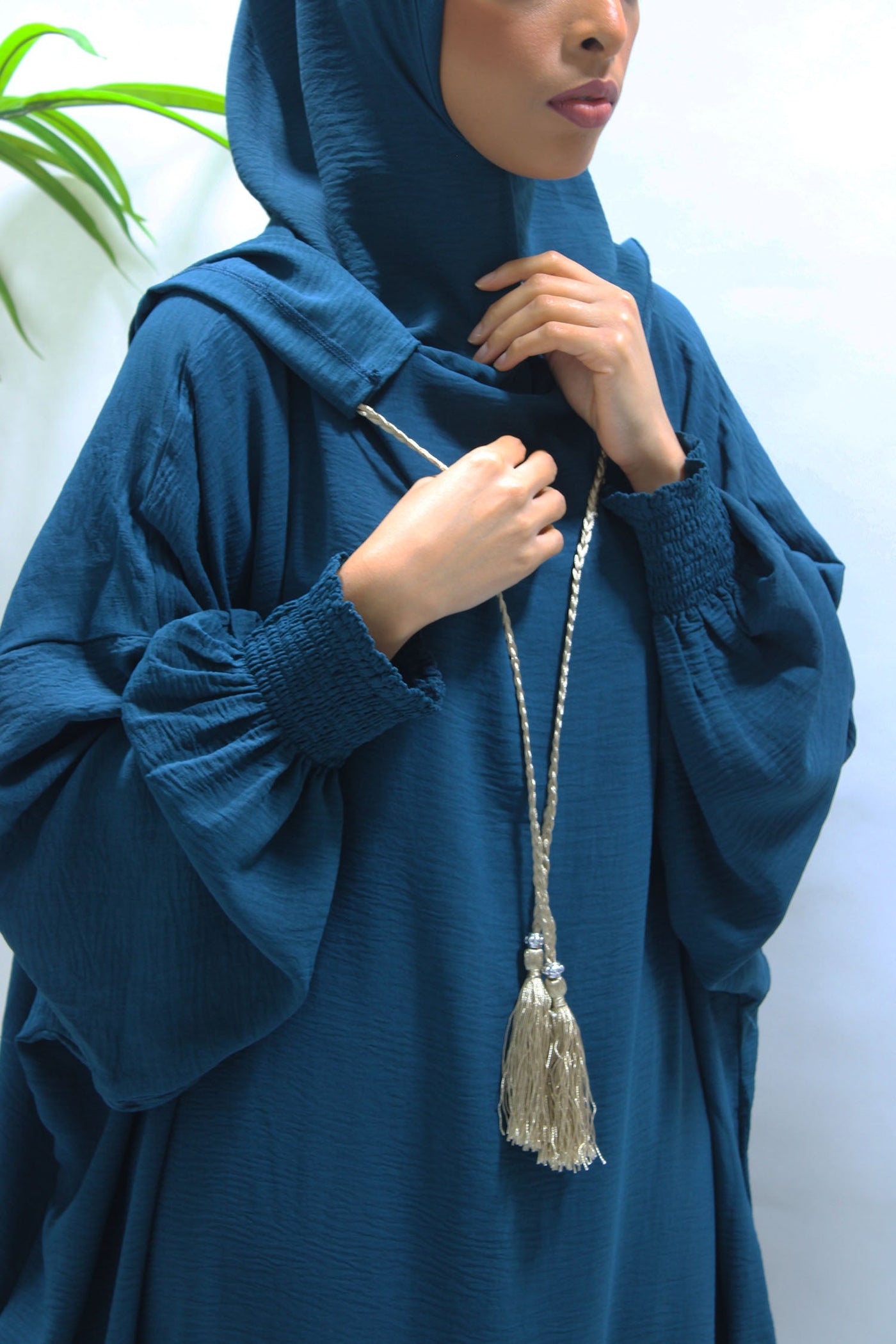
What Makes a Prayer Dress Earn Its Place When Salah Arrives in the Middle of an Already Chaotic Day?
Bismillah. Let us talk about the outfit that is not really about fashion first.
A prayer dress is one of those pieces that can quietly change a sister's day. It may not be the most glamorous garment in the wardrobe. It may not be the one she saves for photos, Eid gatherings or family dinners. But when prayer time arrives and life is already busy, a reliable prayer dress can feel like relief. It can help her stand before Allah without rushing through a wardrobe panic. It can help her cover properly without searching for a scarf, sleeves, skirt, cardigan and underlayer. It can make salah feel more accessible on the days when everything else feels loud.
Many sisters understand this feeling. You hear the adhan reminder or notice the time. You want to pray, but you are in home clothes. Your scarf is downstairs. Your sleeves are short. The doorbell might ring. The baby is crying. Your work call finished late. You are tired after cooking. You are at university, at work, travelling, visiting family or rushing between errands. You do not want clothing to become another obstacle between you and salah. You want something ready, something simple, something that lets you say, "I can pray now."
That is why a prayer dress matters. Not because it replaces intention. Not because clothing alone creates khushu. Not because a sister needs a special outfit to be accepted by Allah. But because practical ease can support worship. When the body is covered comfortably and the garment stays in place, the heart has one less distraction. When a prayer outfit is ready, the step into salah becomes softer. When a sister is new to Islam, returning to prayer, busy with children, working long hours or trying to build consistency, that softness can matter deeply.
This guide is written like a sincere sister-to-sister conversation. We will look at what makes a good prayer dress, why coverage in movement matters, how a hooded prayer abaya can help, why pockets are more useful than they sound, what fabric should feel like, how to choose for home, work, travel and masjid, and how revert sisters can begin without feeling overwhelmed. We will also talk about the emotional side, because salah is not only a schedule. It is a meeting with Allah, and many sisters carry private struggles around consistency, confidence and readiness.
If you are looking for a prayer dress because you want salah to feel easier, you are in the right place. You do not need to feel ashamed for needing practical help. You do not need to be perfect before you prepare your wardrobe for worship. Sometimes one ready outfit can become a small mercy in a busy life.
Why a prayer dress matters more than we realise
At first, a prayer dress may seem like a simple clothing item. But for many sisters, it becomes part of their rhythm with salah. It sits on the back of a door, folded near the prayer mat, hung in the bedroom, kept in a work bag, placed in the car, or carried while travelling. It becomes a visual reminder. It says, "Prayer is coming. You are ready." That readiness can reduce the little delays that build up during the day.
Sometimes the delay before prayer is not because a sister does not care. It is because she feels unprepared. She needs to find a long enough scarf. She needs to change her top. She needs to put on a skirt. She needs to check whether her sleeves cover. She needs to make sure her clothing will not shift in sujood. These steps may only take a few minutes, but when the day is already busy, they can feel heavy. A prayer dress removes some of that heaviness.
For mothers, this can be especially important. Children do not always wait quietly while you prepare. A baby may need feeding. A toddler may pull at your clothes. A school run may be minutes away. Having one garment that gives quick coverage can make prayer easier to begin. It does not make life calm, but it removes one obstacle.
For students and working sisters, a prayer dress can help outside the home. Many sisters pray in office rooms, classrooms, staff areas, quiet corners or borrowed spaces. When your outfit is not already prayer friendly, having a prayer dress nearby gives peace. You do not have to wonder whether your work clothes cover enough in ruku or sujood. You have something designed for that moment.
For revert sisters, the prayer dress can feel like a gentle anchor. When everything is new, from wudu to prayer words to qiblah direction, clothing should not become a source of panic. A ready prayer outfit says, "You can begin." That simple reassurance can mean a lot.
A prayer dress matters because it supports consistency. It helps a sister move from intention to action. It turns "I need to find something" into "I am ready to stand." That is why it deserves careful thought.
Coverage in movement is the real test
A prayer dress should not only look covered when standing still. Salah is movement. You raise your hands, bow into ruku, stand again, go down into sujood, sit, turn your head and repeat. Fabric shifts. Sleeves move. Necklines open. Scarves slip. The real test is not the mirror pose. The real test is whether the garment keeps you comfortably covered throughout prayer.
Start with the head and chest. If the prayer dress has an attached hood, overhead layer or built-in head covering, check whether it stays in place when moving. Does it cover the hair properly? Does it sit comfortably around the face? Does it give enough chest coverage? Does it feel too tight or too loose? A good head covering should make prayer easier, not distract you with constant adjusting.
Then check the sleeves. When you raise your hands or move into sujood, do the sleeves slide back? Do they expose the wrists or arms more than you are comfortable with? Cuffed sleeves can help, but they need to feel comfortable. Wide sleeves can feel airy, but they may need inner sleeves. Prayer clothing should make movement calm.
Check the lower half. Can you bow and kneel without the fabric pulling across the knees or hips? Is the dress wide enough for sujood? Does the back remain covered? Does the hem get caught under your feet? Length and width both matter. Too narrow can restrict. Too long can trip. The right prayer dress gives enough room without becoming unsafe.

A double hooded prayer abaya can be helpful because it is designed around the act of covering for salah. The hood gives a ready head covering, while the full length abaya shape supports body coverage. But even with a prayer-specific garment, sisters should still test it at home. Bodies, heights and comfort levels differ.
Coverage in movement brings peace. When you trust the garment, you can focus more on your recitation, your du'a and your standing before Allah. That does not mean distractions disappear, but it removes one common worry.
The emotional side of being ready for salah
Prayer clothing is practical, but the emotion behind it can be deep. Many sisters carry private feelings around salah. Some feel guilty because they struggle with consistency. Some feel nervous because they are new to prayer. Some feel tired because the day is demanding. Some feel embarrassed praying outside the home. Some feel overwhelmed when they cannot find suitable clothing quickly. These feelings do not mean a sister does not care. They mean she is human.
A prayer dress cannot fix every spiritual struggle, but it can make one part easier. It can reduce friction. It can help a sister move toward salah with less delay. It can turn a chaotic moment into a prepared one. It can give a revert sister something physical to hold onto while her heart is learning. It can help a mother pray before the next interruption. It can help a student feel less exposed in a shared prayer space.
There is also comfort in having a dedicated garment for worship. Not because Allah needs us to have a special outfit, but because the routine can train the heart. When you put on your prayer dress, your body recognises the shift. The world pauses for a moment. You are leaving the noise and entering salah. That transition can be meaningful.
For some sisters, a prayer dress becomes associated with Ramadan nights, tearful du'as, quiet fajr prayers, learning to pray for the first time, returning after a difficult period, or teaching children by example. Clothing can carry memories. It can become part of a sister's private worship story.
If you have struggled with salah, do not let shame keep you from practical support. Preparing a prayer dress is not pretending to be perfect. It is creating ease for the next prayer. Sometimes the most loving thing you can do for your future self is to make obedience easier before the difficult moment arrives.
Be gentle with yourself. If one ready garment helps you pray sooner, that is not a small thing.
Fabric should help you focus, not distract you
Fabric is one of the most important parts of a prayer dress. During salah, you want the garment to feel comfortable, breathable and stable. If the fabric is too heavy, you may feel warm and restricted. If it is too thin, you may worry about coverage. If it is too slippery, it may shift. If it is too clingy, it may distract you. The best fabric is the one that helps you forget about the garment and focus on prayer.
For home prayer, softness matters. Many sisters pray in the middle of ordinary tasks: cooking, cleaning, working from home, caring for children or resting. A fabric that feels harsh or stiff may make the dress less inviting. A soft but opaque fabric can make the prayer dress easier to reach for again and again.
For work or travel, fabric durability matters. The dress may be folded in a bag, used in shared spaces and worn quickly over existing clothes. It should not crease so badly that it feels uncomfortable. It should not collect lint too easily if that bothers you. It should not be so delicate that you fear using it. A practical prayer dress is meant to be used, not protected like an occasion garment.
Opacity matters because prayer often happens in different lighting. A dress that feels fine in a dim bedroom may feel too light in a bright office or masjid room. If the fabric is lighter, make sure it is worn over suitable clothing. If you want the dress to work over any home outfit, choose stronger coverage.
Breathability also matters. In Ramadan, taraweeh, summer days or warm homes, heavy fabric can feel tiring. In colder months, slightly heavier fabric may feel comforting. There is no single perfect fabric for every sister. The right choice depends on your body, climate and use.
Before buying, ask: will I want to put this on when I am tired? Will it feel comfortable over my usual clothes? Will it help me focus? If the fabric makes you hesitate, it may not become your prayer favourite.
Why pockets are not a small detail
Pockets may sound like a small feature, but in a prayer dress they can be surprisingly useful. A sister might use them for a phone with a prayer app, tasbih, tissues, a small wudu cloth, keys, lip balm, or simply to keep her hands settled before and after salah. For mothers, pockets can be even more practical because there is always something small to carry.
The value of pockets is not only storage. It is ease. If you move from room to room with your prayer dress, pockets let you keep small items nearby. If you pray at work, pockets may hold your phone while you find the qiblah or check prayer times. If you are at the masjid, pockets can keep essentials close without needing a bag beside you.
But pockets must be placed well. If they are too bulky, they may affect the drape. If they sit too low, they may be awkward. If they are weakly stitched, they may pull. A good pocket should be useful without ruining the modest shape of the garment. It should hold small items without making the dress feel heavy.

For busy sisters, practical details can make the difference between a garment that is admired and a garment that is actually used. A prayer dress with pockets feels like it understands real life. It understands that a sister may be moving between children, work, wudu, prayer mat, phone reminders and daily tasks. It gives a little more ease.
When choosing prayer wear, do not dismiss practical features as unspiritual. Ease can support worship. A pocket will not make salah more sincere by itself, but it can remove a tiny inconvenience. Sometimes tiny inconveniences are what delay us. Removing them is wise.
Hooded prayer abaya or simple prayer dress?
There are many kinds of prayer dresses. Some are simple one-piece garments with an attached head covering. Some are hooded abayas. Some are overhead prayer garments. Some sisters use a jilbab. Some use a khimar over a loose dress. Some keep a long abaya and scarf ready. The best choice depends on what makes salah easier for you.
A hooded prayer abaya can be useful because it combines the body garment and head coverage in one piece. You do not need to search for a separate scarf. This is helpful at home, when travelling, or when you need to pray quickly. The hood should be comfortable, cover properly and stay in place during movement.
A simple prayer dress with attached hijab can also be useful, especially if it is lightweight and easy to put on. Some sisters prefer this style because it feels quick and familiar. Others prefer a prayer abaya because it feels more like an outer garment and may be easier to wear over clothing.
A jilbab can be prayer friendly because it is designed for full coverage and movement. If you already wear jilbab outside, it may be enough for salah. But if you want a dedicated home prayer piece, a prayer dress may feel more convenient.
A khimar and abaya combination can work beautifully too. This may suit sisters who prefer separate pieces or want extra chest coverage. The downside is that it requires more than one item, which may not be as quick when time is tight.
| Prayer wear option | Best for | What to check |
|---|---|---|
| Hooded prayer abaya | Quick full coverage | Hood fit, sleeve coverage, length |
| Attached hijab prayer dress | Home and travel simplicity | Face opening, fabric opacity, movement |
| Jilbab set | Fuller coverage outside and salah | Skirt width, head coverage, ease of movement |
| Khimar and abaya | Extra chest coverage | Layer comfort and whether both pieces stay secure |
| Loose maxi dress with prayer layer | Flexible home use | Sleeves, neckline and underlayer needs |
The right choice is the one you will actually use. A beautiful prayer garment that stays folded away is less useful than a simple one you reach for five times a day.
Choosing a prayer dress for home
Home is where many prayers happen, but home is also where interruptions happen. A prayer dress for home should be easy to grab, comfortable over normal clothes and simple enough to wear when tired. It should not require a complicated scarf style or careful layering every time. Home prayer wear should make salah accessible.
Think about where you will keep it. If it is hidden in the wardrobe, you may forget it. If it is hung near your prayer mat or bedroom door, it becomes part of the routine. Some sisters keep one upstairs and one downstairs if they can. Others keep one near their main prayer space. The goal is to reduce delay.
For home, choose fabric that feels comfortable enough for repeated use. You may wear it over pyjamas, house clothes, nursing clothes, loungewear or work-from-home outfits. It should give coverage without needing you to fully change. If you often get warm, choose breathable fabric. If your home is cold, choose something slightly more comforting.
Length matters at home too. A dress that drags may be annoying on stairs or around children. A dress that is too short may not feel comfortable in prayer. Choose a length that works for your height and prayer space.
Home prayer dresses can also help with children. When children see a prayer garment used regularly, they begin to understand prayer as part of the day. Some mothers find that a ready prayer dress helps them pray even when children are around because there is less preparation needed. It is not always peaceful, but it becomes possible.
A home prayer dress should feel like a friend: familiar, ready and easy to return to.
Choosing a prayer dress for work, study and travel
Outside the home, prayer clothing needs to be even more practical. You may have limited space, limited time and less privacy. A prayer dress for work, study or travel should be easy to fold, easy to put on and secure enough for unfamiliar environments.
If you plan to carry it in a bag, consider weight and creasing. A very bulky garment may be hard to transport. A very delicate one may get damaged. A prayer dress used outside should be durable enough for real use. It should not make you feel embarrassed when unfolded, but it also should not require perfect care.
For work, choose a colour that feels calm and professional if that matters to you. Navy, black, grey, brown and deep green can work well. If the prayer space is shared, you may prefer something simple and not too visually loud. Comfort matters more than making a statement.

Navy can be a strong option because it is dark enough to feel practical, but softer than black for some sisters. A navy prayer abaya can work well in a work bag, travel case or shared prayer space. It feels calm and steady.
For travel, pockets and hooded coverage can help. You may be praying in service stations, airports, relatives' homes or hotel rooms. A garment that goes over your outfit quickly can reduce stress. Keep it in a clean pouch if possible, so it feels respected and ready.
For students, prayer wear can help reduce anxiety on campus. You may not know who will be in the prayer room. You may be carrying books and rushing between classes. Having a ready prayer dress means one less thing to worry about. It helps you protect salah in a busy environment.
Outside prayer wear should be chosen for reliability. Ask whether you would trust it when tired, rushed or away from home. If yes, it may be a strong choice.
A gentle note for revert sisters choosing a prayer dress
If you are a revert sister, choosing a prayer dress can feel emotional. You may still be learning how to pray. You may be worried about making mistakes. You may not know what should be covered. You may feel nervous asking questions because everyone else seems to know. Please know that you are allowed to learn slowly. Every sister had to learn at some point, even if she learned as a child.
A prayer dress can make the beginning gentler. Instead of wondering what outfit works for salah every time, you have one ready garment. It can help you focus on the prayer itself. It can reduce fear around whether your clothes are suitable. It can make you feel more prepared when standing before Allah.
Choose something simple. A calm colour, comfortable fabric and easy head covering are enough. You do not need a large wardrobe. You do not need to understand every modest fashion category immediately. Start with what helps you pray. The rest can grow with time.
Practise wearing it at home. Put it on before prayer. Learn how the hood sits. Learn how the fabric moves. Adjust it in private so you feel calmer when praying. If you attend the masjid, you may choose to carry it or wear a prayer-friendly outfit from home. Do what feels manageable.
If you feel emotional putting on a prayer dress for the first time, that is okay. It may symbolise a new chapter. It may feel tender, strange, beautiful or overwhelming. You do not have to rush past those feelings. Allah knows your heart and your effort.
Do not wait until you feel perfect to prepare for salah. Preparing is part of the journey. A prayer dress is not a claim that you have everything sorted. It is a tool to help you keep turning back to Allah.
Busy mothers, home life and the reality of praying with interruptions
For many mothers, salah happens between interruptions. A child needs food. A baby wakes. Someone spills something. A school pickup is coming. The house is noisy. Privacy is limited. Some days, even making wudu feels like a mission. In that reality, a prayer dress can be a small but powerful support.
A mother may not always have time to change fully. She may need something she can throw over her clothes quickly. A hooded prayer abaya can help because it covers head and body in one piece. Pockets may help because she can keep tissues, phone or small items nearby. Comfortable fabric matters because she may be wearing it while children climb around or ask questions.
It is also useful for teaching children. When they see their mother preparing for salah with consistency, even in imperfect moments, they learn that prayer remains part of life. The prayer dress becomes familiar. It becomes associated with stopping for Allah. Children may play nearby, interrupt or imitate. It may not be the peaceful prayer image people imagine, but it is real motherhood worship.
If you are a mother and you feel guilty that your prayer is not always calm, be gentle with yourself. Allah knows the effort behind praying while caring for others. Do what you can to create ease. Keep your prayer dress accessible. Keep your prayer mat nearby. Teach children gently. Use practical tools without feeling less spiritual.
A prayer dress will not stop every interruption, but it can reduce preparation time. Sometimes that is enough to help you pray before the next demand arrives.
Colour and emotional comfort in prayer clothing
Colour may seem secondary, but it can affect how a sister feels in her prayer dress. Some sisters feel calm in black. Some prefer navy because it feels softer. Some like grey for quietness. Some feel comforted by brown, teal, burgundy or earthy tones. Since prayer clothing is connected to intimate moments of worship, the colour should feel peaceful to you.
Dark colours are practical because they are easy to maintain and often feel secure. Black, navy, brown and deep green can work well for home, travel and shared prayer spaces. Lighter colours can feel soft and serene but may need more care and stronger underlayers. There is no single best colour. The best colour is one that makes you want to use the garment regularly.

Moon grey can feel gentle and calm, especially for sisters who find black too strong for home prayer. It has a softness that can make the garment feel less formal while still practical. But colour is personal. Choose what helps your heart settle.
If you are buying one prayer dress only, choose a colour you will not tire of quickly. If you plan to carry it outside, choose something that feels comfortable in public. If it is only for home, you may choose whatever feels peaceful. Some sisters even choose a colour that reminds them of Ramadan, a fresh start or a personal du'a.
Do not overthink colour, but do not ignore emotional comfort either. A prayer dress should feel inviting. If the colour makes you reach for it more often, that matters.
How many prayer dresses do you actually need?
You can begin with one. One reliable prayer dress is enough to start. It can live near your prayer space and serve you daily. Over time, you may choose to add another for washing rotation, travel, work or another floor of the house. But there is no need to buy many before you know what works for you.
Some sisters like one home prayer dress and one travel prayer dress. The home one may be softer and more comfortable. The travel one may be darker, lighter to fold or easier to carry. Some working sisters keep one at work and one at home. Some mothers keep one upstairs and one downstairs. This is practical if it fits your budget and routine.
But do not let the idea of multiple prayer dresses become pressure. More garments do not automatically create better worship. Ease matters, but excess is not necessary. Start with the piece that solves your biggest problem. Is your problem finding a scarf? Choose a hooded style. Is your problem warmth? Choose breathable fabric. Is your problem praying outside? Choose something portable. Is your problem home interruptions? Keep one ready nearby.
Use the first prayer dress properly before buying another. Wash it. Pray in it. Travel with it if needed. Notice what you love and what you would change. Then choose the next one wisely, if you need it.
A small, thoughtful prayer wardrobe is better than many unused garments. Worship support should feel simple, not cluttered.
Mistakes to avoid when buying a prayer dress
The first mistake is buying only because the dress looks pretty. A prayer dress should be beautiful in its usefulness. It needs to cover, move, breathe and stay in place. If it looks nice but distracts you during salah, it is not doing its job.
The second mistake is ignoring the face opening or hood. If the head covering is too tight, it may feel uncomfortable. If it is too loose, it may slip. If you wear glasses, check whether the hood works with them. If you get headaches easily, avoid anything that feels restrictive.
The third mistake is choosing fabric without thinking about season and use. A heavy fabric may feel difficult in summer or Ramadan. A very light fabric may need layers. Choose for your real prayer environment.
The fourth mistake is ignoring length. If the prayer dress drags, it may annoy you. If it is too short, you may feel uncomfortable. Check your height and movement. Remember that prayer includes kneeling and sitting, not only standing.
The fifth mistake is keeping it somewhere inconvenient. Even the best prayer dress will not help if it is always hidden away. Keep it where you pray or where you get ready for prayer.
The sixth mistake is feeling guilty for needing practical support. There is no shame in making worship easier. Preparing your environment can be part of taking salah seriously.
| Mistake | Why it causes problems | Better choice |
|---|---|---|
| Only choosing by appearance | May distract during salah | Prioritise coverage and comfort |
| Ignoring hood fit | Can slip or feel tight | Check face opening and head comfort |
| Wrong fabric for season | May feel hot or too light | Match fabric to home, work or travel use |
| Poor length choice | Can drag or feel too short | Compare with your height and movement |
| Stored too far away | Does not reduce prayer delay | Keep it near your prayer space |
Caring for your prayer dress with respect
A prayer dress is used for worship, so many sisters naturally want to treat it with care. That does not mean it must be treated like something untouchable. It is meant to be worn. It is meant to support salah. But caring for it properly helps it remain clean, comfortable and ready.
Follow the care guidance for the fabric. Wash gently when needed. Avoid harsh heat if the material does not suit it. Let it dry properly before storing. If it creases, steam or iron according to instructions. If it has pockets, empty them before washing. If it is carried in a bag, keep it in a clean pouch where possible.
Keep it in a place that feels respectful and practical. Hanging near the prayer mat can be helpful. Folding it in a drawer may work if it is easy to access. If you keep one at work, store it cleanly. The aim is to make it ready without making access difficult.
Some sisters like to lightly scent their prayer space or keep their prayer garment fresh, but be careful with strong perfumes if they irritate you or others. Cleanliness and comfort matter more than fragrance.
Repair small issues early. If a hem loosens or a pocket stitch weakens, fix it before it becomes worse. A prayer dress that is cared for can serve for a long time. That is better than constantly replacing neglected garments.
There is beauty in preparing what helps you worship. It is a quiet kind of care, one that no one may see except Allah.
Frequently asked questions about prayer dresses
What is a prayer dress?
A prayer dress is a garment designed to help a Muslim woman cover comfortably for salah. It may be a one-piece dress with attached head covering, a hooded prayer abaya, a jilbab-style garment or another loose outfit used specifically for prayer.
Do I need a special dress to pray?
You do not need a special branded garment to pray. You need clothing that covers properly for salah according to your understanding and guidance. A prayer dress is helpful because it makes that coverage easier and quicker, especially on busy days.
Is a hooded prayer abaya good for salah?
Yes, it can be very useful because it combines body coverage and head coverage in one garment. Check that the hood sits comfortably, the sleeves stay covered, the fabric is opaque enough and the length works for your height.
Can I wear a prayer dress outside?
Some prayer dresses can be worn outside if they are suitable as modest outerwear. Others may feel more like home prayer garments. Check fabric, fit, colour, length and styling before wearing one outside.
What fabric is best for a prayer dress?
The best fabric is comfortable, opaque, breathable and easy enough to maintain. It should not distract you by slipping, clinging, overheating or feeling rough. The right choice depends on whether you use it at home, work, travel or masjid.
Can reverts use a prayer dress while learning to pray?
Yes. A prayer dress can be very helpful for revert sisters because it removes one worry during the learning stage. It gives a simple, ready outfit for salah while the sister focuses on learning the prayer itself.
How long should a prayer dress be?
It should be long enough to give comfortable coverage in standing, ruku, sujood and sitting, without becoming unsafe or constantly dragging. Height matters, so compare measurements with a garment you already own if possible.
Are pockets useful in a prayer dress?
Yes. Pockets can hold small essentials such as a phone, tissues, keys or tasbih before and after prayer. They are especially useful for busy mothers, students, workers and sisters praying outside the home.
How many prayer dresses should I own?
You can start with one reliable prayer dress. Later, you may add another for travel, work, washing rotation or another prayer space in the home. Buy based on real need, not pressure.
People also ask
Can I pray in an abaya instead of a prayer dress?
Yes, if the abaya gives suitable coverage and movement for salah, and your hijab or khimar covers properly. Many sisters pray in abayas, jilbabs or khimars. A prayer dress is simply a convenient dedicated option.
What should I wear under a prayer dress?
This depends on the fabric and where you are praying. At home, you may wear it over comfortable clothing. If the fabric is lighter or you are outside, make sure your underlayer gives enough coverage and comfort.
Can a prayer dress help me pray on time?
It cannot create discipline by itself, but it can remove a practical delay. When your prayer clothing is ready, it becomes easier to begin salah quickly. For many sisters, that support is meaningful.
Is a prayer dress suitable for Ramadan?
Yes. A comfortable prayer dress can be very useful in Ramadan for daily prayers, taraweeh at home, Qur'an reading and quick transitions between worship and household tasks. Choose breathable fabric if you get warm easily.
What colour prayer dress is best?
There is no single best colour. Black, navy, grey, brown, teal and burgundy can all work. Choose a colour that feels calm, practical and inviting to you. If you carry it outside, darker colours may feel easier to maintain.
Can girls use prayer dresses too?
Yes, age-appropriate prayer clothing can help girls learn salah with comfort and familiarity. The garment should be comfortable, easy to wear and not make prayer feel difficult or heavy.
Sisterhood reflections for sisters trying to protect salah
Sometimes a sister does not need another lecture. She needs something that helps her take the next prayer seriously. She needs fewer barriers, more mercy and a reminder that preparation can be an act of love for her own worship.
“Keeping one prayer dress near my mat changed my routine. I stopped delaying because I no longer had to search for something suitable every time.”
“As a revert, my prayer dress helped me feel ready while I was still learning. It gave me one less thing to worry about.”
“The pockets sound simple, but as a mother they made the dress practical. I could move between rooms and still keep what I needed with me.”
If you are trying to protect salah in a busy life, you are not alone. Many sisters are trying too. Some days are easier than others. Some prayers feel calm. Some feel rushed. Preparing a prayer dress is not a complete solution, but it is a gentle support. Sometimes gentle supports are what help us keep going.
About Amani's
At Amani's, modest fashion is not treated as just clothing. It is part of a sister's journey, her worship, her confidence and her everyday dignity. We create and curate abayas, hijabs, jilbabs, khimars, prayer wear, baati dresses and modest pieces for women who want coverage without losing softness, beauty or ease.
Our experience in modest fashion comes from listening to real sisters. We think about how clothing moves, how it feels during salah, how it supports reverts, how it works for busy routines and how it can help a woman feel gently put together without pressure.
If you are choosing your first prayer dress, looking for a ready salah outfit, or trying to make prayer easier during busy days, you are welcome here.
With love and du'a,
Amani's
More than clothing, a community intention
Amani's was built with a purpose beyond fashion. Modest clothing can help a sister feel covered and confident, but the work is also connected to sisterhood, sadaqah jariyah and caring for women who may be at the beginning of their modest dressing journey.
In Ramadan, Amani's donates abayas to reverts as part of our wider intention to support sisters who are beginning or strengthening their journey with modest dress. For us, this is not only about giving fabric. It is about dignity, welcome and reminding a sister that she is not alone.
When you choose Amani's, we want you to feel part of something gentle, sincere and rooted in care. Modest fashion should not make a sister feel pressured. It should help her feel supported.
Where to begin with your own prayer dress
Begin with the prayer moment that feels hardest. Is it fajr when you are sleepy? Dhuhr at work? Asr during school runs? Maghrib while cooking? Isha when you are exhausted? Choose a prayer dress that helps that moment become easier. The right garment should answer a real need in your life.
If you want ready coverage for salah, explore Amani's prayer dresses. If you prefer fuller everyday coverage, browse jilbabs and khimars. If you want a modest outer layer for daily wear, look through abayas. If you need hijabs that support your prayer and daily wardrobe, choose from hijabs.
You do not need a perfect routine before you prepare for salah. You prepare because you want the next prayer to be easier. One good prayer dress can become a quiet invitation back to Allah, again and again, even on the busiest days.