What to look for in a rayon prayer abaya
A soft, fluid fabric can make an abaya appealing from the first touch. Whether it remains useful through an ordinary day depends on more than that first impression. The cut, seams, lining, neckline and care requirements all contribute to the experience.
Rayon is no exception. An abaya described as rayon may be a useful choice for everyday wear or prayer, but the name does not guarantee cooling, opacity, easy care or unrestricted movement. Assess the actual garment and the layers you intend to wear with it.
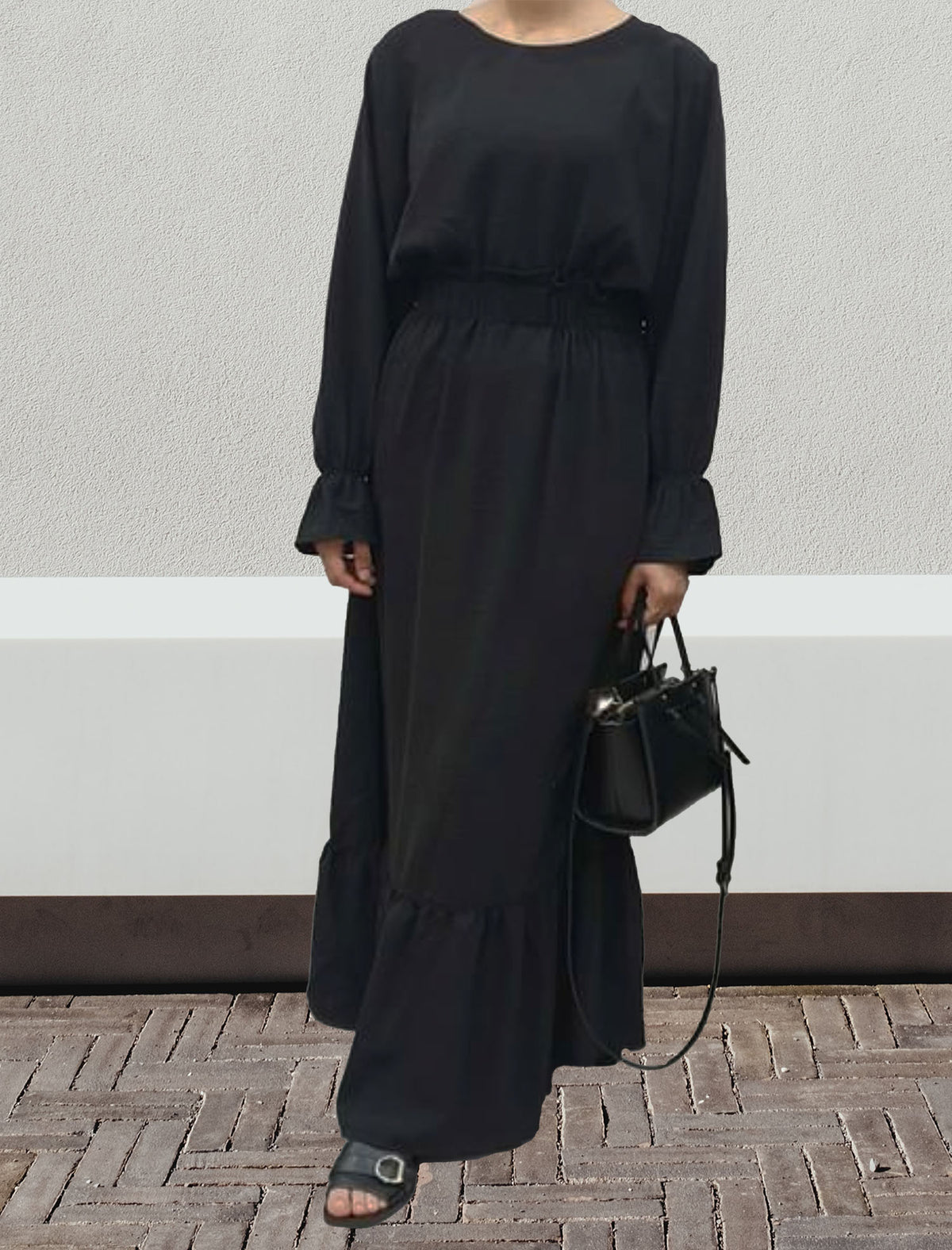
Illustrated: Amani’s black viscose maxi dress. A full-length dress still needs an individual coverage and movement check before being used for prayer.
Understand the fibre description
Rayon is a manufactured cellulosic fibre. Viscose is a familiar term used in garment descriptions; Textile Exchange’s fibre glossary explains how these fibres are made by regenerating cellulose from plant sources. The fibre name alone does not describe the finished cloth’s construction.
Read the fibre composition, including the proportions in a blend. The weave or knit, weight, finish and lining also affect how the abaya behaves. Two garments with rayon in their descriptions may have noticeably different surfaces and amounts of movement.
Do not assume that a fluid or silk-like appearance means the garment contains silk. Use the label and product information rather than making a material judgement from shine or softness alone.
Look for a useful drape, not just a soft touch
Put on the abaya and let it settle without pulling it into position. Notice whether the fabric hangs freely or catches on the clothing beneath. Check the back and sides as well as the front.
A fluid material can follow the body closely if the cut is narrow. Choose enough ease for your coverage preferences rather than expecting softness to create room that the pattern does not provide.
Move your arms forward and sit in a normal chair. Look for pulling at the upper back, sleeve or seat. The garment should remain comfortable through those movements, not only when you stand with your arms at your sides.
Check opacity with the intended layers
Inspect the outfit in ordinary daylight and indoor light. Look especially at areas where the cloth stretches or falls close to the body. A loose fold may conceal more than a taut area of the same fabric.
Confirm whether the abaya is lined and which sections the lining covers. A body lining may leave the sleeves unlined, and a shorter lining may create a different appearance near the hem.
If an underlayer is required, assess the complete arrangement for comfort. The extra garment can change the weight, warmth and movement of the outfit. Do not judge a rayon abaya as a light option while overlooking the layers needed to wear it as intended.
Fit the shoulders, sleeves and neckline
A generous lower half does not guarantee a comfortable upper body. Check the shoulder position and upper-arm room, particularly if you plan to wear another garment beneath the abaya.
Assess the neckline with your usual head covering. It should not need repeated pulling backwards or forwards to sit where you want it. If the design includes a fastening, use it as intended rather than stretching the opening when dressing.
Look at the cuffs while reaching and raising your arms. A sleeve can feel comfortable at rest yet slide back or pull during movement. Choose the construction that works for your intended use rather than assuming every long sleeve provides identical coverage.
Check prayer use as a separate task
Try the complete clothing arrangement through the movements of prayer in a private, suitable space. Observe the head covering, neckline, wrists, back and hem while standing, bowing, kneeling and moving into prostration.
Fluid fabric may shift differently from a more structured garment. Notice whether it gathers beneath the knees, pulls across the back or moves away from an area you intend to keep covered. Make the assessment through normal movement, not a careful pose that holds the cloth in place.
Use the coverage requirements you follow and seek trusted religious guidance for questions about those requirements. A product’s prayer-wear description can explain its intended use, but it should not promise the validity of worship or replace a personal fit check.
Where the abaya does not include head coverage, choose a separate scarf arrangement that works with its neckline. If it has an attached covering, assess that component too. Neither should be assumed from the fibre name.
Choose a length for the way you will wear it
Measure according to the product’s stated method. At Amani’s, a numbered abaya length describes the shoulder-to-feet measurement in inches; it is not the wearer’s overall height. A design measured from the top of an attached covering needs a different comparison.
Check the hem in the intended footwear situation. An outdoor outfit may be worn with shoes, while prayer use may involve a different arrangement. Do not rely on one posed photograph to establish both.
Walk and turn at a normal pace, then assess kneeling where relevant. The garment should not become trapped underfoot or require constant lifting. If alteration is needed, confirm that the fabric, lining and any border detail can be adjusted appropriately.
Judge warm-weather comfort without guarantees
Some rayon garments have a light, fluid feel that people enjoy in warmer conditions. That does not mean every rayon abaya keeps the wearer cool or dry. The complete construction and outfit still matter.
Consider the amount of cloth, the lining and how closely it sits against the body. A scarf wrapped in several layers or a heavy underdress can alter the experience considerably. Compare actual combinations rather than relying on one fibre to solve the whole outfit.
No abaya should be treated as protection from heat-related illness merely because its description says breathable. Plan for the conditions and use appropriate health guidance when needed. Clothing comfort and medical safety are not interchangeable product claims.
Make an everyday outfit easy to repeat
Start with a scarf that stays comfortable, a practical bag and shoes suited to your route. Let the garment’s cut and colour provide the main style direction. A quiet outfit can still feel considered.
Check the bag strap where it contacts the fabric. A heavy bag can pull the neckline or change the fall of one side. Rough hardware may catch a delicate surface. Try the carrying arrangement before deciding whether the abaya itself is difficult to manage.
A belt is optional. It changes the drape and may gather the fabric in a way you enjoy, but it should not be necessary to hold an unsuitable inner layer in place. Assess the outfit unbelted first, then decide whether the addition genuinely helps.
Use texture rather than excess detail
A plain rayon abaya can work with a scarf that has a different surface or a subtle print. Choose a colour relationship you enjoy and keep the scarf’s practical qualities in mind. The hijab fabric guide can help compare those options.
For an occasion, one more refined accessory may be enough. A small bag or visible jewellery can change the emphasis without requiring an elaborate collection of pieces. Check that the garment’s cut and finish suit the event rather than assuming a fabric name determines formality.
When wearing a coat or jacket, try it over the actual abaya. Sleeve room, collar space and friction between the layers matter. A fluid garment can still become uncomfortable beneath outerwear that is too restrictive.
Check the care routine before buying
Rayon-containing garments do not all share one permitted cleaning method. Read the label for the complete abaya, including lining and trim, before deciding whether its care needs fit your routine.
Do not assume that handwashing is always allowed or that a familiar machine programme is suitable. Follow the specified method and restrictions. Where information is missing, ask the seller or an appropriate textile-care professional rather than experimenting.
Consider how often you expect to wear the garment. A piece with more involved care needs may still be a good occasional choice, but it may not be the easiest option for frequent use. Practical maintenance is part of comfort over the life of the garment. Allow space in your routine for the actual cleaning and drying method it requires.
Handle drying and pressing deliberately
Follow the drying instructions rather than choosing a method from the fibre name alone. Support the garment appropriately for its weight and construction, and avoid pulling it forcefully into shape.
Press only where the label permits it and within its limits. A lining, decorative finish or trim may need attention beyond the outer fabric. A pressing cloth does not make an unsuitable temperature safe.
The fabric care guide provides a useful wider routine. Keep relevant care information with the garment so you do not have to reconstruct the instructions from memory after several wears.
Respond to marks and small changes early
Inspect the garment after use, particularly around cuffs, the hem and areas under a bag strap. Identify an appropriate treatment for marks instead of rubbing repeatedly or using several household products in succession.
If a seam begins to pull or a fastening becomes loose, have it assessed before the problem grows. Do not assume that a change in shape is harmless because the material is soft. It may affect how the garment hangs or covers during movement.
Store the abaya fully dry with support suited to its construction. Give it enough space that rough or decorated neighbouring garments do not catch the surface. A tidy routine is more useful than a promise that the fabric will remain unchanged through unlimited washing and wear.
Compare the description with the finished garment on arrival
A rayon prayer abaya may be described with words such as soft, flowing or lightweight. Treat those descriptions as invitations to inspect the garment, not as substitutes for inspection. Read the fibre label and check whether the listing referred to the outer fabric alone or to every layer of the finished piece.
Let the garment hang in an appropriate way before assessing its length and fall. Compare its measurements with the information supplied for the size you ordered. Make sure you are using the same starting point and method; a difference caused by measuring from another point is not the same as a discrepancy in the garment itself.
Try it with the inner clothing you expect to wear for prayer. Look at the neckline, sleeve openings and hem during the movements relevant to your practice. Notice whether the fabric remains comfortable and whether it settles without repeated pulling into place. A pleasant feel in the hand is only one part of that assessment.
Check the care instructions before deciding that it will be a convenient everyday choice. Be realistic about any drying or pressing arrangements you need to follow. A garment can be attractive and well made while requiring a routine that does not suit the role you had planned for it.
Keep any important uncertainty specific when asking the seller for help: the measurement, fibre description, opening or care instruction involved. Clear questions provide a better basis for a decision than broad assumptions about rayon. Choose the actual abaya in front of you, with its particular construction and fit, rather than an idealised version of a fabric name.
Choose it for the garment it is
A rayon abaya can be a welcome part of a wardrobe when its drape, fit and care needs suit you. It does not need to promise serenity, emotional resilience or effortless performance in every situation.
Assess the cloth, test the movement and choose the layers deliberately. The result should be a garment you can comfortably use for its intended purpose, leaving you free to focus on your day or prayer rather than repeatedly managing your clothes.