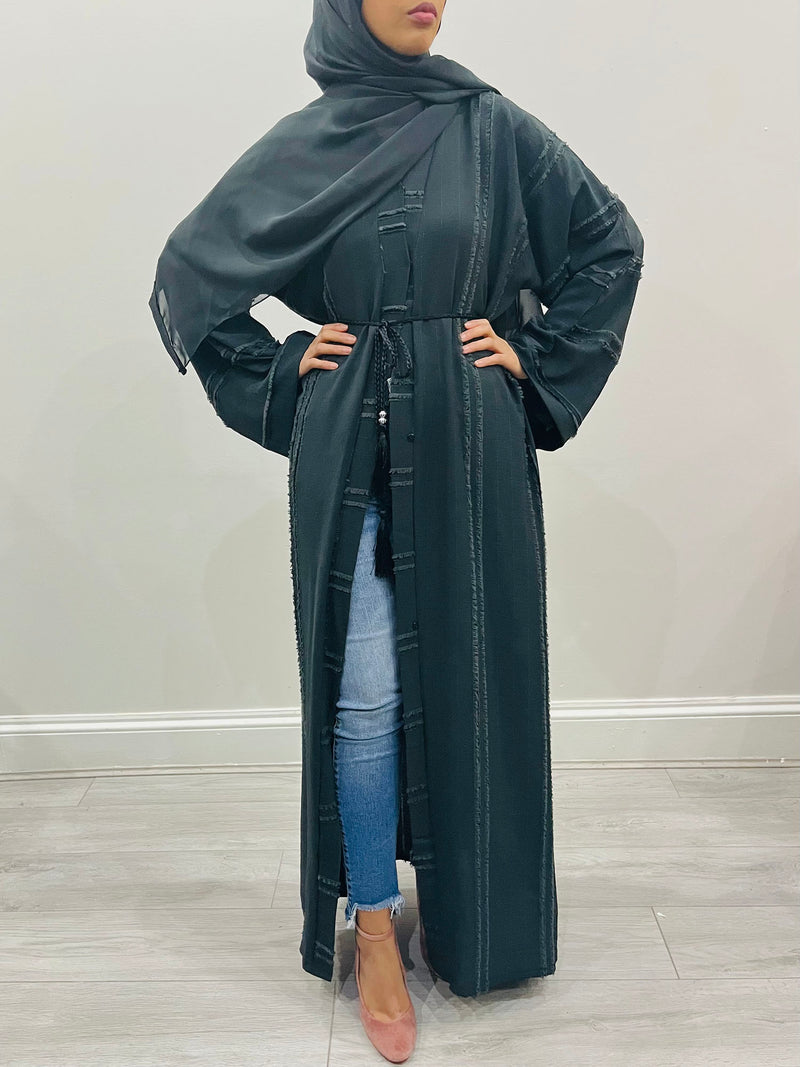
How Do You Choose a Two- or Three-Layer Abaya Without Ending Up With Extra Fabric That Feels Heavy or Awkward?
Choosing between a two- and three-layer abaya becomes much easier when you stop treating the number of layers as a quality score. The better choice is the one whose layers have a clear purpose for your comfort, coverage and real routine. A two-layer design can feel lighter, calmer and easier to care for, while a 3 layer abaya can create more depth, movement or opacity when the third layer genuinely adds something useful.
Start by asking what each layer actually is. One seller may count a separate slip and two chiffon overlays as three layers. Another may use “three layer” for three attached tiers of one outer fabric. A third may describe a sleeve or cape panel as an extra layer even though the body itself is not fully tripled. The label alone does not tell you how warm, opaque, heavy or modest the garment will feel.
If you need wider help with cuts, fabrics, sizing and everyday styling before comparing layered constructions, our complete abaya guide covers those foundations. Here, the question is narrower: how to decide whether two or three layers make more sense for the way you actually dress, move, wash, travel and wear an abaya.
Begin with the job each layer is meant to do
A useful layer should solve a real clothing problem. It might add opacity, soften the outline of the body, create a floating outer drape, give the garment occasion depth, or provide an inner slip that prevents a sheer outer fabric from revealing too much. When every layer has a clear job, the design usually feels intentional.
Problems begin when extra fabric is present mainly to make the garment sound more substantial. Three layers of lightweight chiffon may still need careful opacity checks. Two well-chosen layers can sometimes provide more dependable coverage than three very sheer ones. Equally, a third panel can transform the movement of an occasion abaya without making it uncomfortably heavy if the fabrics are light and the pattern is balanced.
Before buying, look for a description of the construction rather than only the layer count. Ask whether the layers are attached or separate, whether they cover the whole body or only part of it, what fabric each one uses, and where each layer finishes. Those details explain far more than the number on its own.
A two-layer abaya is often the simpler everyday choice
A 2 layer abaya commonly combines a base garment or slip with one outer layer, although construction varies by brand. That relatively simple arrangement can work beautifully for everyday wear because there are fewer panels to twist, catch, crease or separate in the wash. It can also make dressing quicker when the pieces are attached or clearly designed to sit together.
Two layers can provide enough visual depth without making the silhouette feel busy. A plain underdress with a soft open or semi-open outer layer gives movement while keeping the outfit easy to understand. If both fabrics are breathable and the cut has enough ease, this can be practical for work, family visits, the masjid, errands and long days when you do not want to keep managing your clothing.
Do not assume two layers always feel cool. A dense polyester base beneath a dense outer fabric can still trap heat. Likewise, a very wide double-layered skirt can feel heavier than a narrower three-layer design made from finer cloth. Construction, fibre, width and season matter as much as the count.
Three layers make sense when the third layer earns its place
A three-layer abaya can be lovely when the third layer creates a result you genuinely want. It may add a soft cascade over the skirt, create a cape-like effect across the shoulders, deepen the colour of translucent chiffon, or give an occasion garment the floating movement that one flat outer layer cannot achieve.
The question is not whether three is better than two. It is whether layer three improves the garment enough to justify the extra fabric, care and potential warmth. If the answer is yes, the design can feel luxurious rather than excessive. If the third layer merely repeats what the second already does, it may add bulk without improving comfort or coverage.
When you see wording such as abaya 3 layer on a listing or in a search result, look past the phrasing and inspect photographs from the front, side and back. Try to identify the actual panels. A clear construction image, garment video or detailed description is more useful than a dramatic studio photograph where several folds can make one layer look like three.
Opacity depends on fabric and placement, not just the count
Many shoppers associate more layers with more coverage, but opacity is not guaranteed by a number. A pale chiffon outer can remain transparent even when doubled, especially in strong daylight. A single opaque crepe base beneath one chiffon layer may provide more reliable coverage than several thin overlays with no substantial foundation.
Check sleeves separately from the body. Some layered abayas have multiple body panels but only one sleeve layer. If you expect the entire garment to provide the same opacity, this difference matters. Also look at areas where the outer fabric moves away from the base, because gaps between layers can reveal how sheer each fabric really is.
Lighting in product photography can hide transparency. If the retailer provides video, daylight photographs or close-ups, use them. At home, check the garment near a bright window and against contrasting clothing. The goal is not to count fabric but to confirm that the complete outfit provides the coverage you intend through standing, walking, sitting and reaching.
Comfort is usually decided by weight, heat and friction
Every additional layer adds some combination of weight, insulation and surface friction. Whether you notice it depends on the fabric. Three very light georgette panels may feel airy, while two dense satin layers can feel much warmer. The useful comparison is therefore not “two versus three” in the abstract, but the total behaviour of the garment.
Think about your usual environment. If you spend much of the day in heated buildings, travel on busy public transport or live through warm summer days, a lighter construction may be easier. If the abaya is mainly for evening events, cooler months or shorter periods of wear, extra drape may feel completely manageable.
Friction matters because layers move against one another. A rough inner surface can make an outer panel catch instead of flowing. Static can cause lightweight synthetics to cling. A smooth but slippery combination can shift out of alignment. When possible, rub the fabrics lightly together and move in the garment rather than judging only how it hangs on a still hanger.
Movement tells you whether the pattern is balanced
A layered abaya should move as a coordinated garment rather than as several unrelated pieces. Walk at normal speed, turn, sit, climb a few steps and raise your arms. Watch whether the outer layers return to place or twist around the legs. The more panels a design contains, the more important balanced cutting becomes.
Pay particular attention to the hem. Three long independent layers can create beautiful movement, but if each one reaches the floor they may overlap under your shoes. A staggered hem can reduce that problem while still showing the layered effect. With two layers, check that the base does not hang lower than intended when the outer fabric lifts.
Shoulders and sleeves need the same test. A decorative top layer should not restrict arm movement or pull the neckline backwards. If an outer cape is attached too tightly across the shoulders, the garment may look fluid while standing but become frustrating as soon as you reach forward. Good layering should add beauty without taking away ordinary movement.
Choose the layer count around the occasion, not the photograph
Occasion wear often benefits from extra depth because soft panels catch light and move beautifully in photographs. Weddings, Eid gatherings, dinners and family celebrations may be exactly where a three-layer design feels special. Yet the same garment may be unnecessary for a long commute or a day involving children, shopping bags and repeated movement.
For everyday use, two layers can be easier because the construction is quieter and quicker to handle. For an occasion, a third layer can add presence without relying on heavy embellishment. This is particularly useful if you prefer simple decoration but still want the garment to feel different from an ordinary daily abaya.
Think about the whole day rather than the first ten minutes. Will you sit for hours? Need to make wudu? Travel by car? Walk outside? Carry a baby? Wear a coat? A layered design should remain manageable through those moments. A garment that only works while standing for photographs is not necessarily the best choice for a real event.
Fabric choice can matter more than whether there are two or three layers
Chiffon and georgette are popular for layered designs because they create movement without the bulk of heavier fabrics. Crepe can give a calmer fall and may offer stronger opacity depending on its weight. Satin adds shine but can increase visual volume and may show pulling more clearly. Jersey can be comfortable but is less common for floating multi-layer occasion designs because its stretch changes the way panels hang.
Do not assume a fabric name guarantees performance. “Chiffon” covers many weights and finishes. One version may be soft and matte; another may be crisp, shiny and prone to static. Ask for composition and care information where it is available, but also judge what you can actually see: thickness, drape, surface texture and whether the cloth springs back after creasing.
A successful layer abaya uses fabrics that cooperate. The base should support the outer layers rather than fighting them. If the inner is clingy and the outer is static-prone, even a beautiful cut may need more management than you want.
Fit has to account for all the layers together
Layered construction does not remove the need for sufficient ease through the bust, hips, upper arms and shoulders. In fact, extra panels can disguise a narrow base in photographs. The outer fabric may look loose while the underdress beneath it is much closer to the body.
Check the measurements of the base garment if they are provided. A flowing top layer cannot compensate for an inner layer that feels restrictive when sitting or walking. If the design includes a separate slip, compare its bust and hip measurements with a garment you already wear comfortably rather than relying only on the outer abaya’s width.
Also consider your height. More layers can create more horizontal lines, particularly when tiers finish at different points. On a petite frame, very large tier spacing may feel overwhelming; on a taller frame, short layers may finish higher than expected. This is not a rule about what body types may wear. It is simply a reason to check actual lengths and proportions instead of assuming the product photograph will translate exactly.
Two-piece and three-piece sets are not the same as two or three fabric layers
Retail language can become confusing because “two layer”, “two piece” and “three piece” do not necessarily mean the same thing. A two-piece set may contain an underdress and an open abaya. Each piece might itself be single-layered. A three-piece set might add a belt or hijab rather than a third body layer.
Similarly, an abaya described as three-layered may be one garment with three overlapping panels rather than three removable pieces. Always separate the ideas of pieces and layers before comparing products. This prevents disappointment when a listing sounds more substantial than the actual construction.
You may also encounter the phrase abaya 2 layer in translated or search-led product wording. Treat it as a prompt to inspect construction, not as a standard technical category. The useful questions remain the same: what are the pieces, which parts are doubled, how opaque is the body, and how does the garment move?
Attached layers are easier to keep aligned, while separate layers offer flexibility
Attached layers tend to stay together because their anchor points are sewn into the garment. This can make dressing simpler and prevent an underdress from rotating independently. The trade-off is that you cannot easily remove one layer when the weather changes, and washing or ironing may take longer because several fabrics remain connected.
Separate layers give you more control. You may be able to wear the underdress alone at home, pair the outer with another base, or replace one piece if it wears out. They also allow easier drying because the garments can be separated. But separate pieces can shift against one another, and the outer layer may expose more of the base as you move.
Neither system is automatically superior. If you value speed and a coordinated look, attached construction may be calmer. If you value wardrobe flexibility and easier care, separate layers can be more practical. Check fastening points, shoulder stability and whether the base is designed to remain covered when the outer opens.
Sleeves deserve their own layer check
Layer counts often describe the body and say little about sleeves. Yet sleeves are where comfort, opacity and practical movement can fail first. A single sheer chiffon sleeve may not give the coverage you expected from a garment advertised as multi-layered. A fully lined sleeve may feel warmer than the body because the arm already sits close to the fabric.
Look at cuff construction too. Bell sleeves with layered chiffon can be elegant but may fall forward during eating, wudu or household tasks. A narrower inner sleeve beneath a decorative outer sleeve can help, provided the inner layer is not tight. Elastic cuffs can be convenient for wudu, though the elastic should sit comfortably rather than gripping.
Raise your arms and bend your elbows. Check that inner and outer sleeve layers move together and that one does not pull the other up sharply. Beautiful layered sleeves earn their place when they remain practical through the motions you actually make.
Think about a coat before choosing extra shoulder volume
If you will wear the abaya in Britain through autumn or winter, test how the layers behave beneath outerwear. Shoulder capes, ruffles and wide floating panels can bunch under a fitted coat. A roomy coat may accommodate them, but the combined volume can still feel warm on public transport or indoors.
A simpler two-layer design often sits more easily beneath a coat because there is less fabric concentrated around the shoulders and upper arms. A three-layer design with most of its volume lower down can work just as well. Again, placement matters more than the number.
Try the full combination before an important day. Put on the underlayers, abaya, hijab and coat, then sit, turn your head and raise your arms. If the coat drags the abaya backwards or crushes a decorative layer, choose a different outer layer or save that abaya for weather where a heavy coat is unnecessary.
Care can be the deciding factor if you wear the garment often
More layers mean more fabric to wash, dry, steam and store. That does not make a three-layer garment impractical, but it does make care worth considering before purchase. A special-occasion abaya worn a few times a year can justify more delicate handling than a garment you expect to wear every week.
Read the care label rather than assuming every chiffon or crepe garment can be washed in the same way. Mixed constructions may use different fibres in the base and outer panels. Heat that is safe for one layer may damage another. Embellishment, pleating or fine edges can also change what care is sensible.
After washing, attached layers can dry at different speeds. Make sure the garment is fully dry before storing it. When steaming, work from the inner layer outward so hidden creases do not pull the top layer out of shape. If the maintenance already sounds more demanding than your routine allows, a simpler construction may bring more actual wear.
Colour can make layers look heavier or lighter than they feel
Layering changes how colour reads because transparent or semi-transparent panels deepen where they overlap. A pale outer over a matching base can look soft and dimensional. Dark layers can create strong depth and make the garment appear visually heavier even if the fabric itself is light.
If the layers use different colours, check them in daylight. A warm beige base beneath a cool taupe outer may look harmonious in studio lighting and unexpectedly mismatched outside. Tonal differences can be beautiful when clearly intentional, but tiny accidental differences may bother you once you notice them.
For an everyday abaya, one tonal family is often easy to style with different hijabs. For an occasion design, contrast between layers can become the main decoration. Decide whether you want the layers themselves to be a feature or whether you prefer them to create quiet depth in the background.
Use the product photographs to identify construction, not just style
Front-facing studio photographs show the overall look but often hide exactly how layers connect. Side and back views are more revealing. Look for seam lines, staggered hems, openings and attachment points. A video can show whether the top layer swings independently or remains attached along the side seams.
Zoom in on the neckline and shoulders. If three panels all begin from the same narrow seam, that area may carry considerable fabric weight. If the layers are distributed through separate seams or tiers, the garment may feel more balanced. Also inspect the inside if the retailer shows it. Inner finishing tells you whether the base is a complete garment or simply a lining.
Do not count folds in a photograph and assume they are separate layers. Full skirts naturally create overlapping folds. If the listing does not explain the construction clearly, ask before buying when the layer arrangement matters to your decision.
A quick comparison can clarify whether two or three suits you
| Question | Two layers may suit you when... | Three layers may suit you when... |
|---|---|---|
| Everyday simplicity | You want fewer panels to manage, wash and dry | The third layer is still light and easy enough for regular wear |
| Occasion depth | You prefer restrained movement and simpler styling | You want extra float, tiering or visual softness |
| Warmth | You run warm or spend long periods indoors | The fabrics are light or the weather makes extra coverage comfortable |
| Opacity | A substantial base already gives reliable coverage | The third layer meaningfully deepens a sheer outer construction |
| Movement | You want a calmer hem and less fabric around the body | The pattern distributes the extra panels without tangling or pulling |
| Care | You want quicker washing, steaming and storage | You are happy to spend more time caring for an occasion garment |
The table is a starting point rather than a rule. A beautifully cut three-layer garment can be easier than a poorly designed two-layer one. Use the construction and your routine to make the final decision.
Try a two-minute movement test before deciding
Once the abaya is on, leave the mirror for a moment and move. Take ten normal strides, then a few quicker ones. Sit on a firm chair and stand again. Raise both arms. Turn at the waist. Walk up and down a few stairs if it is safe to do so. These movements reveal whether the layers cooperate.
Notice what happens at the hem, shoulders and side seams. Does one panel wrap around your legs? Does the underdress climb while the outer stays down? Do the sleeves pull? Does the neckline move because the weight of the top layer drags backwards? A good design settles again rather than requiring constant rearrangement.
Then check heat and sensory comfort. Some women dislike the feeling of several surfaces moving against each other even when the garment looks beautiful. Others love the soft motion of layered chiffon. Your response matters. Choosing well means respecting how the garment feels on your body, not only how it looks in a photograph.
Ask whether the extra layer duplicates something you already own
A layered abaya sits inside a wardrobe, not in isolation. If you already own slips that work beneath open abayas, you may not need a built-in extra base. If you already have several formal three-layer pieces but reach for simpler designs most weeks, another elaborate garment may not fill a useful gap.
Conversely, if your wardrobe is mostly plain everyday abayas and you need one occasion piece that feels special without heavy beadwork, a three-layer design can add that difference through movement alone. This is a practical way to buy with intention: choose the construction that gives you a function you do not already have.
The same applies to a two-layer option. If you want a versatile coordinated set that can be worn together without much thought, two layers may solve the gap perfectly. The best choice is often the one that makes the rest of your wardrobe easier rather than more complicated.
Do not let the layer label distract from modest fit
An abaya layer can soften the outline of the garment, but extra fabric does not automatically make a narrow cut modest. If the inner dress is fitted through the body, a floating outer may open, lift or blow aside. If modest ease matters to you, check the base garment as carefully as the top layer.
Likewise, a wide outer does not solve transparency if the sleeves or back remain sheer. Judge the complete garment in movement and light. Check that closures remain secure, the neckline works with your hijab and the length allows you to walk without lifting the hem excessively.
Layer count is therefore one part of the decision, not a shortcut around fit. The strongest layered design combines sufficient ease, dependable coverage, comfortable movement and fabric that suits the setting in which you will actually wear it.
Budget for the construction you will actually use
More layers can increase fabric use, sewing time and finishing work, but price still does not tell you automatically which garment is better. A three-layer design may justify a higher price when the panels are cleanly finished, the fabrics work well together and the construction gives you a result you will wear. A simpler two-layer abaya can offer better value if it fits your routine more closely and spends less time hanging unworn.
Look at cost per wear rather than only the number of layers. An occasion piece worn twice a year can still be worthwhile if it fills a clear need and you enjoy wearing it. An everyday layered abaya needs to survive far more washing, sitting, commuting and ordinary movement. For frequent wear, durable seams, sensible care and a comfortable base may matter more than decorative complexity.
Check what is included in the price. A coordinated underdress may save you from buying a separate slip. A removable outer panel may give you more than one styling option. On the other hand, a belt, scarf or extra accessory should not distract you from assessing the main garment. Spend for construction and usefulness rather than for the largest possible piece count.
Returns and sizing information matter more with unfamiliar layer systems
If you have never worn a particular layered cut before, check the retailer’s current sizing and returns information before ordering. The outer layer may look forgiving while the inner dress has more exact measurements. A design that is labelled one size can still have a fixed shoulder width, sleeve length or inner-garment circumference that does not suit everyone.
Compare measurements with an abaya or dress you already own and like. Do not rely only on your usual clothing size because brands cut layered garments differently. If a separate underdress is included, its measurements are especially important. An outer chiffon panel can make the overall silhouette look generous even when the base underneath has less ease than you expect.
When the garment arrives, keep it in the condition required by the retailer while you carry out your fit and movement checks. Try the exact hijab, shoes and outerwear you expect to pair with it. A few careful minutes at home can tell you whether the layer count genuinely suits your life before the garment becomes part of your wardrobe.
How do you make the final two- or three-layer choice?
Choose two layers when you want the calmer option: enough depth or opacity for your purpose, fewer panels to manage, easier care and a silhouette that works through ordinary movement. A well-designed two-layer abaya is not a lesser version of a three-layer one. It may simply be the more useful garment for your week.
Choose three layers when you can name what the third layer adds. Perhaps it creates occasion movement, improves the appearance of a sheer fabric, gives you a cape or tier you genuinely love, or produces the visual depth you were missing. If that benefit matters more to you than the extra warmth, weight or care, the third layer has earned its place.
Before deciding, confirm what the seller means by the layer count, inspect the base as well as the outer panels, check opacity and sleeve construction, and test movement. The right answer is not “three is better” or “two is easier” for everyone. It is the construction whose layers make sense together for your coverage, comfort, climate, wardrobe and real use.
Frequently asked questions
Is a three-layer abaya automatically better than a two-layer abaya?
No. Three layers are useful only when the extra layer adds a benefit you want, such as additional drape, visual depth or support for a sheer outer fabric. A well-cut two-layer abaya can be more comfortable, easier to care for and just as suitable for your intended coverage.
Does a three-layer abaya automatically give more coverage?
Not necessarily. Coverage depends on fabric opacity, garment ease, sleeve construction and how the layers are placed. Several sheer panels can still reveal more than one substantial base with a light outer layer. Check the complete garment in bright light and through normal movement.
Is a two-layer abaya better for everyday wear?
It can be. Two layers often mean fewer panels to manage and may make washing, drying and styling simpler. However, fabric weight and cut matter more than the number alone. A light three-layer design can sometimes feel easier than a dense or very wide two-layer one.
What should I check when a listing says an abaya has three layers?
Check whether the layers are attached or separate, which parts of the garment are actually layered, what fabrics are used, where each panel finishes and whether the sleeves are lined. Product videos and side or back photographs can make the construction much clearer than a front studio image.
Are two-layer and two-piece abayas the same thing?
No. “Two layer” describes fabric or garment layers, while “two piece” normally describes the number of separate pieces sold together. A two-piece set may contain two single-layer garments, and a three-layer abaya may still be one attached piece. Read the construction details rather than relying on the label.
How do I choose between two and three layers if both look good?
Compare the job of the extra layer, total weight, heat, movement, opacity, care and how often you expect to wear the garment. Choose the option that solves more of your real needs with fewer compromises. The best layer count is the one you can wear comfortably and confidently.