What to wear to an interview with hijab
An interview outfit should let you concentrate on the conversation. You should not have to keep pulling a sleeve into place, rewrapping a slippery scarf or wondering whether the skirt still covers you comfortably when you sit down. The most useful outfit is often not the newest or most elaborate one. It is the one you have tried properly and can stop thinking about once the interview begins.
Wearing hijab does not reduce your options to a single uniform. Depending on the role and setting, you might choose trousers and a long shirt, a skirt with a jacket, an abaya, a dress or a coordinated suit. What connects those choices is thoughtful fit, appropriate coverage for your own preferences and attention to the actual interview instructions.
Clothes cannot guarantee an offer, and they do not measure your ability to do the job. This guide deals with the practical outfit decisions so they take up less of your preparation time, leaving room for the experience, examples and questions you want to bring to the meeting.
Find out what the interview involves before choosing the clothes
Read the invitation carefully. An interview may involve a seated conversation, a presentation, a tour, a practical task or several stages in different spaces. The clothes that feel comfortable for a short discussion may need adjusting for a day with considerable walking or a workplace visit.
Look for any clothing or footwear instructions supplied by the employer. Follow those rather than assuming that every office, creative business or public-facing role uses the same dress code. A broad label such as “corporate” or “casual” is not a complete description of the day.
Where the invitation is unclear, ask a straightforward practical question: “Will the interview include a site tour or any activity with particular clothing or footwear requirements?” This is more useful than trying to infer everything from a few photographs on a company's website. If something in the instructions needs clarification in relation to your clothing, ask before the day rather than making an unsupported assumption.
For a video interview, confirm the format and any equipment instructions. The National Careers Service distinguishes live and recorded video interviews and advises preparing for the arrangement you have been given. That distinction matters to your practical setup, even though your outfit should remain comfortable and considered in either case.
Start with one reliable outfit you already have
Take a familiar garment as the starting point. It might be trousers that sit comfortably, a dress with sleeves you do not need to adjust, or an abaya whose length works with your usual shoes. Build around something you trust before deciding that an interview requires an entirely new wardrobe.
Try on the core pieces together. A shirt that works with one pair of trousers may sit differently over another waistband. A jacket that looks neat over a thin top may feel restrictive over a dress with fuller sleeves. The outfit has to work as a combination, not as a collection of individually suitable items.
Check condition in good light. Look for loose threads, missing buttons, marks, a lining that has twisted or a hem that needs attention. These are practical checks, not a demand for expensive clothes. A well-maintained garment you own can be more useful than a new one whose fit you have not had time to understand.
Make a short list of genuine gaps. Perhaps you need a suitable underlayer for a blouse or shoes that work with the hem. Solve that specific problem. Avoid turning one interview into a shopping project involving a new suit, scarf, bag and accessories when most of your existing pieces already do the job.
Four outfit routes, with the checks each one needs
Trousers, a longer top and a jacket
This combination offers several ways to adjust coverage and formality. Start with trousers that allow comfortable sitting and walking. Then choose a shirt, blouse or tunic whose length and side openings provide the coverage you prefer. The jacket can add structure without being responsible for covering a top that does not work on its own.
Try the outfit with the jacket both open and closed. Reach forward as though taking a document from a table. Check whether the top pulls at the chest, whether the jacket shoulders feel crowded and whether the trouser waistband remains comfortable. A garment described as tailored does not need to be close-fitting.
If the top has a long front or side slit, look at it while seated as well as standing. A wide trouser leg may create a different silhouette from a straight one, so judge the full outline rather than assuming one cut is inherently more professional. Our guide to tunic lengths, side slits and trouser pairings can help with that relationship.
A skirt with a blouse or knit
A skirt outfit can be straightforward when the waist and hem have been tested. Sit in a chair similar to one you might use during the interview. Notice where the skirt settles, whether the lining moves with it and whether the waistband presses when you lean forward.
Choose the top according to how you want the waist area to look and feel. A full tuck is not compulsory. A longer blouse can work well, and a jacket may provide a useful additional layer. Check that several hems do not create a cluttered arrangement that you feel you need to keep straightening.
Think about the route to the interview. A skirt that is easy to manage indoors may be less convenient on stairs or during a walk from the station. Try it with the shoes and coat you will actually use. The relevant test is your own movement, not whether the outfit resembles a formalwear photograph.
A modest dress with a suitable outer layer
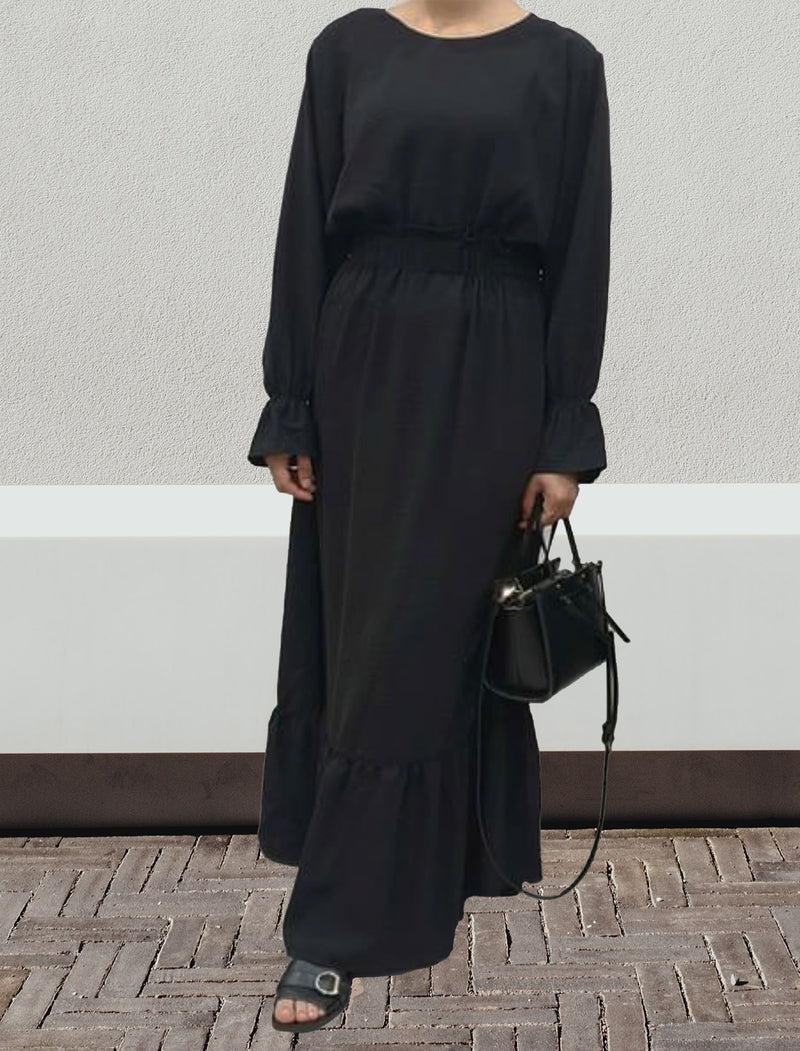
A dress reduces the number of separate pieces, but it still needs a full fit check. Pay attention to the shoulder position, arm movement, neckline, lining and any slit. A long hem does not answer every coverage question, particularly when you sit or reach.
When adding a blazer, compare the dress sleeves with the jacket sleeve space. A gathered or wide sleeve may bunch inside a narrow jacket. A different outer layer or a simpler-sleeved dress can be a better solution than trying to force the fabric into place.
Keep the scarf arrangement compatible with the neckline. A bow, collar or front fastening may become bulky beneath a deep fold of fabric. You can cover the detail if that is what you prefer; the important point is that it sits comfortably. There is no requirement to display every feature of the dress.
An abaya as the main garment
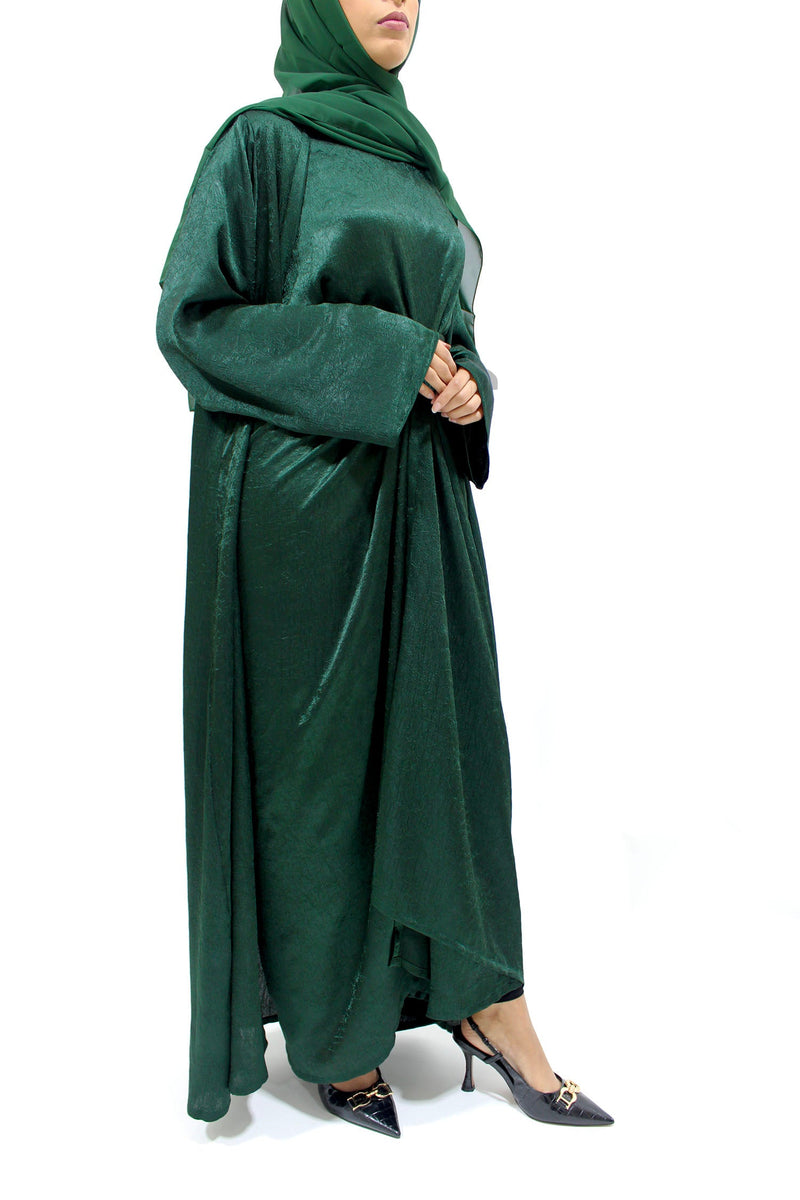
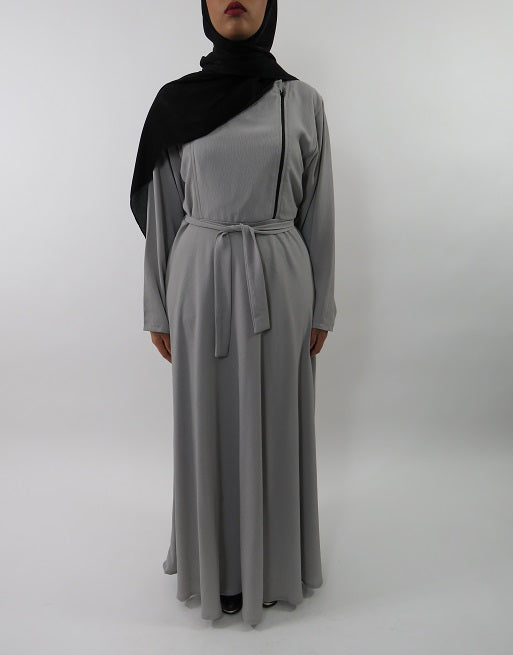
An abaya can be the starting point when it fits the setting and your preferred way of dressing. Consider the actual design rather than relying on the garment name. A simple closed style, an open outer layer and an embellished occasion piece present different practical questions.
For an open abaya, check the complete outfit beneath it. Walk, sit and reach so you can see how far the front opens. Do not depend on holding it together throughout the interview. If you prefer a closed outline, use a design or fastening arrangement that genuinely provides it.
Check sleeve ends around the hands and any desk work. Test the length with your chosen shoes, including a walk and a few steps if that is part of your route. The complete abaya guide explains the broader differences between styles, fabrics and fit without treating one design as suitable for everyone.
Choose a hijab arrangement you can rely on
The day before an interview is rarely the best time to discover that a complicated new wrap needs constant repair. Start with an arrangement you already know. Then make small adjustments to suit the neckline and outer layer, rather than rebuilding your usual technique entirely.
Try the scarf for longer than a quick mirror check. Read aloud, turn your head and look down at notes. Notice whether the fabric moves over your eyes, pulls across the neck or shifts away from the coverage you want. If it does, change the fold, support or scarf rather than simply tightening the whole arrangement.
Consider the scarf ends in relation to your jacket and bag. Long ends can be attractive, but they should not interfere with a zip, chair arm or document folder. A chest drape can be broad and comfortable without requiring a large bundle of fabric beneath the chin.
Use secure accessories that you already handle confidently. Check that a pin is properly closed and not positioned where it presses or catches. Do not leave a loose accessory to be dealt with on the way. Any small spare items should be stored securely in a pouch rather than scattered through the bag.
Glasses, hearing devices and headphones belong in the outfit trial if you use them. Fit the scarf around the equipment you need, not the other way round. A wrap that looks neat but creates pressure or interferes with use is not a successful interview arrangement.
For fabric comparisons, see our hijab fabric guide. Choose the individual scarf for its dimensions, finish and behaviour in your preferred wrap, rather than assuming a particular fabric name guarantees comfort or a crease-free result.
Use colour deliberately, without treating neutrals as compulsory
Black, navy, grey, cream and similar neutrals are convenient because many wardrobes already contain them. They can make it easier to assemble an outfit quickly. They are not the only colours capable of looking considered, and wearing a colour you enjoy does not automatically make an outfit unsuitable.
Begin with two main colours and assess the complete combination. You might use navy trousers and jacket with a soft neutral hijab, or a dark dress with a muted coloured scarf. A stronger colour can also work when it fits the setting and you feel comfortable wearing it.
Patterns need the same practical judgement. A familiar small print may sit comfortably within a simple outfit. A very busy combination might draw more attention than you intend, but that is a styling choice to assess, not a rule that patterned hijabs are inherently unprofessional.
Check colour relationships with the outerwear you need for the journey. A large coat or cardigan changes the overall palette more than a watch or small piece of jewellery does. Decide which version of the outfit you will be wearing when you arrive and where you will put any layer you remove.
For a video call, use your actual camera preview to see how the outfit appears in your available lighting. You may decide to change a scarf or background because the combination is difficult to see clearly. There is no need to buy special “interview colours” based on a blanket claim about what all cameras prefer.
Keep personal style without making the outfit a performance
You do not have to erase your preferences to attend an interview. A colour you like, a familiar scarf style or a meaningful accessory can remain part of the outfit. The aim is to make considered choices that suit the occasion, not to dress as a different person.
Equally, you do not have to use your clothes to explain your culture, defend your faith or represent every woman who wears hijab. That is an unreasonable amount of responsibility to place on an outfit. Choose any cultural or personal detail because it matters to you, not because you feel obliged to turn the interview into a statement.
Inspiration can help when you are unsure how pieces fit together. Look at the arrangement rather than trying to reproduce the person. Perhaps you like the relationship between a long shirt and a shorter jacket, or the way a scarf sits beside lapels. Adapt that idea to your own clothes, coverage preferences and activities.
Do not confuse an unfamiliar outfit with a more capable version of yourself. If a look makes you feel as though you must monitor every fold and accessory, simplify it. The attention you save can go towards listening and responding during the interview.
Footwear and bags deserve a proper trial
Choose shoes that suit the interview instructions and the journey. Wear them with the complete outfit beforehand, including the socks or tights you intend to use. A hem that works with one sole height may sit differently with another, and a shoe that feels fine for a few steps may not be your preferred choice for a longer walk.
There is no general requirement to wear heels. Decide according to the setting, your own comfort and any specific instructions. If you plan to travel in one pair and change into another, test both against the hem and make sure the change is practical. Avoid creating a plan that depends on finding a private place at the last moment.
Your bag needs to carry the items requested for the interview and anything you personally need. Check that papers fit without being folded unnecessarily, that you can find them easily and that the strap does not disturb your scarf arrangement. A bag you can open and set down calmly is more useful than one selected only for its formal appearance.
Keep the contents simple. A secure place for small scarf accessories, a tissue and any essential personal items may be enough alongside your documents and usual belongings. The purpose is not to carry an emergency wardrobe. It is to avoid preventable inconvenience.
Make the seated fit check as thorough as the standing one
Spend a few minutes seated in the complete outfit. Put your feet where they naturally rest, lean forward to pick something up and turn slightly as though addressing another person at the table. Look at what the clothes do without arranging them for the mirror.
Check shirt buttons, sleeve cuffs and the relationship between the top and waistband. Notice whether the skirt or dress rides to a position you do not like. If your coverage depends on sitting in a very particular pose, consider another combination that gives you more freedom.
Try handling a notebook or folder. Wide sleeves may be manageable with a small adjustment to the outfit, but you should not need to hold them away from the table continuously. Check whether jewellery makes a noise or catches on the cuff. These details are easier to solve at home than while trying to concentrate on a question.
A standing mirror view remains useful for overall proportion, but it is only one part of the assessment. The best interview outfit is comfortable in the positions you will actually use.
Adapt the same principles for a video interview
Prepare the whole outfit even when the camera is likely to show only your upper body. You may need to stand, move or adjust equipment, and feeling properly dressed can remove one avoidable distraction. Choose something comfortable for the chair and room you will use.
Test your camera position, lighting and sound while wearing the scarf and top. If you use a headset, make sure it sits comfortably without pulling the hijab. Speak at a normal volume and listen to a short test recording where the platform allows it. Notice any scarf or accessory movement close to the microphone.
Keep the clothing trial separate from the technical trial, even though they happen together. A camera problem is not necessarily a wardrobe problem. Adjust the light or camera position before deciding that you need a completely different outfit.
The National Careers Service recommends practising with the technology and preparing a suitable space for a video interview. Use the employer's own instructions for the final setup, especially for a recorded format. Do not assume that every platform permits repeated attempts or the same preparation time.
Prepare the outfit without letting it take over the evening
Once the combination has passed its fit and movement checks, set it aside together. Include the scarf, any underlayer, shoes and the outerwear you need. This prevents a small missing item from turning the next morning into another round of outfit decisions.
Follow each garment's care instructions when dealing with creases or marks. A trim, lining or delicate scarf can require different treatment from the main fabric. Do not experiment with unfamiliar heat settings immediately before an important appointment.
Check the invitation again for documents, location, timing and practical requirements. The National Careers Service’s interview guidance emphasises understanding the role and preparing examples of relevant experience. Clothing preparation should support that work, not replace it.
Leave yourself a simple alternative when possible. A second suitable scarf or a different top that already works with the trousers can be enough. You do not need two complete new outfits. The aim is to have a calm response to a small problem, not to anticipate every imaginable mishap.
Small outfit problems and proportionate ways to solve them
The jacket fits, but the sleeves feel crowded
Try the jacket over a different top before deciding that the jacket itself is wrong. A gathered sleeve, thick cuff or bulky shoulder seam can take up more space than expected. Compare a simpler sleeve with the same jacket and trousers. If that resolves the restriction while preserving the coverage you want, you have changed one item rather than replaced the whole outfit. If the jacket still restricts your arms, choose another outer layer; an interview is not a good reason to tolerate a garment that prevents ordinary movement.
The scarf looks neat until you pick up your bag
Put the bag on at the point in your routine when you would normally collect it. Check whether its strap crosses a loose scarf end or pulls a fold from your shoulder. You may be able to move the end to the other side, choose a different strap arrangement or use a bag carried in the hand. Make the adjustment before fastening the final scarf position. This is a useful reminder that accessories are part of the outfit's mechanics, not just its appearance.
The blouse is comfortable, but you keep checking its front
Identify the specific concern. Is there a gap between buttons, a neckline that moves when you lean forward, or a fabric that looks more transparent in another light? Each needs a different response. A suitable underlayer may answer one issue, while a different blouse is the cleaner solution to another. Do not rely on holding a folder in front of your body to make the outfit feel secure. Choose an arrangement that works when your hands are free.
You have several interviews but only one suitable outfit
There is nothing wrong with repeating a reliable outfit. Keep it clean and ready according to its care instructions, and make a note of any practical adjustment after the first wear. A second scarf or top can provide an alternative when needed, but it is not a requirement to create a new look for every conversation. Build additional combinations around genuine everyday needs, especially if the same clothes could later serve you at work.
The outfit seems too plain once you see other people's examples
Return to the purpose of the clothes. Does the outfit fit the setting, remain comfortable and allow the coverage you prefer? If so, simplicity may be doing exactly what you need. Add a familiar detail only when you genuinely like it. Comparing yourself with a styled photograph can create problems that were not present when you tried the clothes on. Your interview is not a competition to assemble the most memorable outfit.
An unexpected change is needed on the morning
Use the alternative you already tested, then stop revising. If a scarf is marked, replace the scarf rather than changing the dress, shoes and bag as well. Keep the essentials of fit and coverage intact and leave nonessential details alone. A modest change to a known outfit is easier to manage than an entirely new combination made under pressure.
Put two possible outfits through the same rehearsal
Suppose you are choosing between navy trousers with a long cream shirt and a plain black dress. Use the same comfortable shoes and familiar scarf for the first comparison. Sit at a table with your notebook, reach for a folder and stand up without arranging the clothes. This reveals whether one combination needs less attention before accessories complicate the choice.
For the trousers and shirt, check the shirt’s side openings when seated. Add the jacket only after that base outfit works. For the dress, check whether the hem and sleeves remain manageable when you pick up the same bag. Neither route wins because it is a dress or trousers; the better starting point is the combination that does the intended job in your actual setting.
Now include the journey. Put on the coat and carry the documents you need. If you plan to remove the coat on arrival, practise that transition without pulling the scarf out of place. A fit problem revealed here deserves a small, specific change—not an entirely new outfit chosen at the last minute.
Write a brief note for the version you keep: the clothes and shoes, the scarf arrangement and any item still needing care. Add a separate note for the interview itself, such as the employer’s contact details or the examples you want to discuss. Keeping the two lists apart helps prevent clothing decisions from taking over the preparation that matters most.
For a second interview, reuse the same process and the same outfit where it remains suitable. Change a piece because the activities or requirements differ, not because repetition is a failure. A reliable combination is something you have already solved.
Frequently asked questions
Do I need a matching suit?
Not automatically. Start with the interview instructions and the setting. Coordinated separates, a suitable dress or an abaya may be appropriate options. A matching suit can be useful, but buying one is not a substitute for checking fit, condition and comfort.
Can I wear a colourful hijab?
Yes, subject to the actual context and any relevant instructions. Try the colour with the full outfit and choose a combination you feel comfortable wearing. You do not need to use black or beige simply because you wear hijab, and you do not need a dramatic colour to demonstrate personality.
Should I change my usual hijab style for the interview?
Only where a practical adjustment helps. A familiar arrangement that gives you reliable coverage and comfortable movement is a strong starting point. Change it to accommodate a collar, equipment or activity when necessary, not because an unfamiliar style is assumed to be more professional.
What if I cannot afford new interview clothes?
Begin with what you own, then identify the smallest genuine gap. A borrowed suitable piece or a careful adjustment to an existing outfit may solve it. Check fit with enough time to make another choice. There is no need to treat an interview as a requirement to purchase a complete wardrobe.
Do I need makeup, jewellery or a particular kind of handbag?
No single accessory makes an outfit complete. These are personal choices. Focus on clothes that are clean, comfortable and suitable for the setting, and a practical way to carry what you need. Adding details you do not normally use can create more to manage without improving the outfit.
How do I know when to stop adjusting the outfit?
Once it meets the instructions, gives you the coverage you want and works while sitting, walking and handling your belongings, stop looking for a supposedly perfect version. Repeated last-minute changes can make a reliable outfit feel unfamiliar. Put your attention back on the conversation you are preparing to have.
You deserve an interview outfit that supports you rather than tests your patience. A thoughtful combination can help you arrive feeling prepared, but the important material is still what you know, what you have done and what you want to understand about the role. Let the clothes do their practical job quietly enough for that conversation to take the lead.