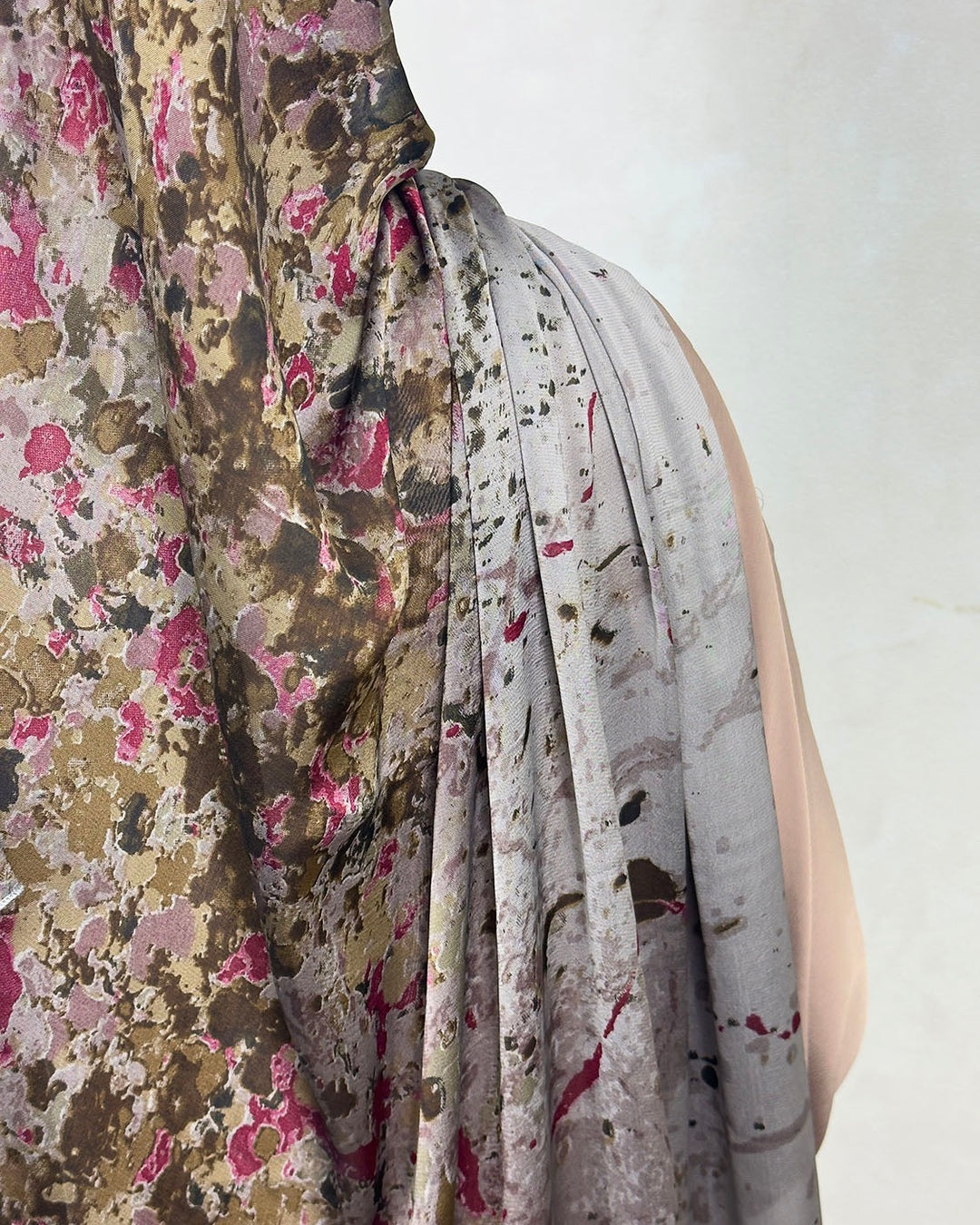
Pashmina Head Scarf: Complete Modest Styling Guide
Bismillah. A pashmina head scarf can be useful for modest dressing, but the name needs to be handled carefully. In everyday hijab shops and tutorials, pashmina often describes a long rectangular scarf that can be wrapped around the head, brought across the shoulders and arranged for extra front coverage. In textile language, the word can also point toward specific fibre traditions and cashmere-related claims. Those two meanings should not be mixed together casually, because a shopper deserves clear information before trusting a scarf with her hair, neckline, comfort and outfit.
This guide uses the term in the practical head-scarf sense unless a fibre label proves more. That means the article is not claiming that every scarf called pashmina is pure pashmina, cashmere, wool, silk, viscose, polyester, cotton or any other composition. The safer question is not, “Does the title sound luxurious?” It is, “What does the label prove, what are the measurements, how does the fabric behave when wrapped, and does it give the coverage I need?”
A long rectangle can feel generous in the hand and still become difficult on the head. The fabric might be wide but stiff, long but heavy, textured but rough near the jaw, smooth but prone to moving, or opaque flat but less secure once stretched around the face. None of those possibilities makes the scarf bad. They simply mean the wearer needs evidence before choosing a style.
This is especially important for sisters who use a pashmina-style scarf as hijab. A head covering has to work through walking, sitting, prayer planning, school runs, public transport, glasses, coat collars, wind and indoor heat. A beautiful still photograph cannot prove all of that. The wrap must be tested as part of real life.
For broader guidance across chiffon, jersey, modal, silk, undercaps and full modest outfit planning, the complete hijab guide is the wider starting point. Here, the focus stays with the long rectangular pashmina-style head scarf: how to understand it, how to wrap it, what to check before buying, and how to keep modest coverage practical without making false fabric claims.
Start by separating the scarf shape from the fibre claim
The first repair in thinking is simple: a pashmina head scarf can describe a shape, a styling category or a verified fibre product, but those are not automatically the same thing. A modern modest-fashion listing may use pashmina to mean a long rectangular scarf suitable for wrapping. A textile seller may use the word in a more specific way connected to fine animal fibre or a traditional shawl category. The reader needs to know which meaning is being used before trusting any claim about warmth, softness, care or price.
For head covering, shape often matters first. A rectangle gives routes: one end can stay short, one end can travel around the head, and the remaining fabric can be opened over the shoulder or chest. That does not prove the scarf is warm, opaque or secure. It only tells you the scarf has a form that may support certain wraps.
Fibre matters for a different reason. Composition affects care, breathability, heat, texture, durability and how the scarf reacts to water or friction. A scarf sold as a pashmina hijab without a clear fibre label should be treated as a pashmina-style scarf, not as proof of cashmere or heritage.
That distinction protects both the shopper and the article. It allows the guide to help with real head-scarf use while avoiding material claims that the product evidence does not prove.
Read the label before believing the word pashmina
A reliable scarf description should not hide behind mood words. It should tell the buyer the fibre content, measurements and care needs plainly. UK textile guidance says textile labels must show fibre content, and United States FTC guidance explains that pashmina is not itself a recognised fibre name under the Wool Products Labeling Act. Those points matter because a phrase such as authentic pashmina or pure pashmina sounds meaningful, but it is not enough without composition evidence.
When the label is clear, the buyer can make a calmer decision. Cashmere, wool, silk, viscose, polyester, acrylic, modal-like fabrics and cotton blends can all behave differently. Some may need delicate care. Some may hold folds better. Some may feel warmer. Some may suit frequent washing better. The fibre content does not make the scarf automatically good or bad; it simply gives the wearer information.
When the label is vague, stay cautious. Do not assume that a higher price proves a better fibre. Do not assume that a soft photograph proves a soft surface. Do not assume that a romantic heritage sentence proves origin, handwork or certification. Good shopping starts with what can be checked.
This is also why vegan pashmina wording should be read carefully. If the scarf is described as vegan, then the term pashmina is being used as a style or shape description, not as proof of animal fibre. The non-animal composition should still be stated clearly.
A head scarf needs different evidence from a shoulder shawl
A scarf that works beautifully across the shoulders may not automatically work well around the head. Shoulder wear allows gravity to spread the fabric. Head wrapping asks the fabric to sit near the forehead, jaw, neck, ears and chest while the wearer moves. That is a different job.
For a head scarf, the first questions are practical. Does the fabric fold without becoming too bulky at the cheeks? Can the width open over the upper chest without dragging backwards? Does the surface stay calm against an undercap? Does the edge irritate the forehead? Will a pin or magnet hold the layers without damaging the fabric? Does the scarf still feel comfortable after an hour?
The words scarf, shawl, stole and wrap can overlap in shops, but the use changes the test. A wide shawl can be too heavy for a neat face frame. A narrow stole can look elegant over a coat but offer too little chest drape. A long head scarf pashmina style needs enough size and movement to serve the wrap, not only the outfit photograph.
Keeping the head-scarf purpose central prevents the article from drifting into generic shawl advice. The reader is not buying a sofa throw or a shoulder layer. She is trying to understand fabric that may sit close to her face all day.
Size decides what kind of wrap is possible
Size is not a decoration detail. It decides what the scarf can physically do. Length creates routes around the head and shoulders. Width creates coverage over the hair, neck and front. A scarf may be long enough for a dramatic trail but not wide enough for the chest coverage the wearer wants. Another may be wide enough but too thick to fold neatly at the face.
A useful product page gives measurements in centimetres. Without measurements, the buyer has to guess from photographs, and photographs can mislead. A model may be petite. The scarf may be styled with hidden clips. The visible portion may not show the full width. A cropped image may hide how the front drape really falls.
The best measurement is the one connected to a real styling goal. A sister who wants a one-pass everyday wrap may not need the same length as someone who prefers layered chest drape. A woman who wears glasses may prefer less bulk near the temples. Someone who wears thick winter coats may need a scarf that fits under the collar without creating pressure.
Before buying, imagine the wrap you actually repeat. Then ask whether the length and width make that wrap possible without forcing tension.
The 180 by 75 idea is only a starting point
A measurement such as pashmina 180 75 appears often because 180 cm by 75 cm can be a useful rectangular range for many head-scarf styles. It may allow unequal sides, one turn around the head and enough remaining fabric to open across the shoulder. But it is not a universal answer.
Two scarves with the same numbers can feel completely different. A thin, fluid 180 by 75 rectangle can compress into gentle folds. A dense, brushed or heavily textured scarf with the same measurement can feel much larger around the face. The wearer’s height, shoulder width, preferred chest coverage, coat style and hair arrangement also change how the scarf feels.
Use 180 by 75 as a comparison point, not a rule. If your current favourite scarf is shorter and works beautifully, that is evidence. If a wide rectangle keeps swallowing your frame, you may need a narrower piece or a lighter fabric. If you always run out of front drape, you may need more width, a different wrap, or a more stable underlayer.
The number helps only when it is interpreted with behaviour. Measure, fold, wrap and move before deciding that a size is right.
Measure the scarf you already trust
The easiest way to learn your preferred size is to measure a scarf you already wear without thinking. Lay it flat, smooth it gently and record the length and width without stretching. Then add notes about how it behaves: matte or smooth, light or dense, stiff or fluid, textured or plain, easy to fold or bulky near the jaw.
Those notes become your personal buying standard. “Long enough for one wrap” is useful. “Wide enough for chest coverage without crowding the chin” is even better. A product size chart feels less mysterious when you have a familiar scarf to compare against.
Measure one failed scarf too. Sometimes the problem is not your styling skill. The scarf may be too narrow for the coverage you wanted, too wide for the face frame you prefer, too slippery for your undercap, or too textured for sensitive skin. That information prevents repeat disappointment.
It also helps with pashmina basic purchases. A basic is not merely plain. It is a predictable rectangle whose colour, size, surface and care needs fit the way you actually dress. Without that evidence, even the prettiest neutral can sit untouched.
Width creates coverage and length creates routes
Length and width are often spoken about together, but they solve different problems. Length lets fabric travel. It gives you the longer side, the shoulder pass, the return to the front and the option of a second layer. Width gives the fabric depth. It creates the panel that can cover hair more fully, open over the upper chest and soften the side of the face.
If the neckline feels exposed, adding length may not fix it. The scarf may need more width or a different arrangement of the first layer. If the wrap feels unfinished at the shoulder, then length may be the issue. If the head feels crowded, width, thickness or folding method may be the problem.
For hijab use, chest coverage should be checked before leaving home. Open the width diagonally and see whether it stays where intended when sitting, reaching and carrying a bag. A scarf that covers in a still mirror image may shift once the day begins.
This is why a large pashmina scarf should never be praised only because it is large. Size is helpful only when it gives useful routes and coverage without creating discomfort.
Opacity has to be checked after wrapping
Opacity is not proved by holding a folded scarf in the hand. A fabric can look covered when flat and become more transparent around the crown, jaw or neckline after it is pulled into shape. Light, undercap colour and garment colour all change the result.
Use a simple test. Hold one layer near a window, then fold it as you would wear it. Try the scarf over the undercap you plan to use. Check it against both pale and dark fabric. A pale scarf over a dark undercap may show more than expected. A patterned scarf can hide transparency in one area while revealing it in another.
For formal events, check the scarf with flash or bright indoor light. A fabric that appears modest in soft bedroom lighting can behave differently in photographs. This does not mean the scarf is unusable. It means the wearer should know whether she needs a tonal undercap, an extra fold, a different wrap or a more complete garment neckline beneath it.
Never let the word pashmina do the work of an opacity test. Coverage depends on the actual scarf and the way it is worn.
The undercap is optional, but the foundation matters
An undercap is not compulsory for every wearer or every scarf, but it can change the whole system. It may contain the hair, add friction, protect the hairline, reduce transparency at the crown or make a smooth fabric easier to manage. It can also feel tight, warm or uncomfortable if chosen badly.
Match the undercap to the scarf rather than using the same one automatically. A very smooth pashmina hijab may benefit from a grippier base. A textured pashmina crinkle may need a gentler cap so the layers do not catch too much. A pale scarf may look cleaner over a tonal cap than over black or bright white.
Comfort should be checked honestly. Temple pressure, headaches, scalp pain and tugging are not signs of a successful style. They are signs that the foundation needs adjustment. A lower hair arrangement, softer cap edge or looser first fold may improve the whole wrap.
The undercap is part of the engineering even when it is invisible. Its job is to make the scarf quieter to wear, not to make the head feel trapped.
Pins and magnets should support the scarf without punishing it
Fastening should solve a problem, not prove a point. Some pashmina-style scarves can be worn without pins for short, calm days. Others need a magnet under the chin, a small pin at the shoulder or another discreet support. Weather, fabric, hair, undercap choice and movement all affect the decision.
Magnets can avoid piercing the fabric, but they are not automatically suitable for every scarf. Strong magnets can pull through thick folds; weak ones may not hold enough layers. They should also be kept safely away from children and used with care around relevant medical devices.
Pins offer precision, especially in wind or with a smooth scarf. Use them through a stable fold rather than repeatedly piercing the most visible area. Remove pins before washing or storing. If the fabric is delicate, do not assume a pin will leave no mark.
A brooch or scarf ring should be placed where control is already needed. Decoration alone can drag the drape and distort the fabric. The best fastening is the one that lets the wearer stop touching the scarf every few minutes.
Simple wrapping works best when the first layer is calm
A simple wrap is not a lazy wrap. It is a controlled sequence that gives the fabric a clear job. Begin with unequal sides: one short enough to sit neatly, one long enough to travel. Set the front edge around the face before moving the long end. If the face frame is unstable, every later fold will be trying to repair it.
Fasten beneath the chin only if it suits the scarf and your comfort. Leave enough ease to speak, smile and turn the head. Then take the longer side around once without twisting it into a rope. Spread the fabric so the width can support coverage rather than becoming a thin cord around the neck.
Bring the long end forward and decide whether it belongs over the shoulder, across the chest or tucked under a layer. This is the practical heart of how to use pashmina hijab styling: one stable frame, one controlled pass and one deliberate drape.
After that, move. Sit, turn, lift the arms and try the coat. If the scarf survives ordinary movement, the simple style has done its work.
Chest and neck coverage need movement checks
Chest and neck coverage should not be judged only from the front. Turn the head fully left and right. Look below each ear, under the jaw and across the upper chest. A tidy front view can hide a gap at the side, especially when the scarf is pulled tight around the face.
Begin with a complete neckline beneath the scarf. A high inner layer, closed abaya or suitable dress gives the scarf support. The pashmina head scarf can then add coverage and softness instead of becoming the only thing protecting the neckline through movement.
When using a front drape, open the width diagonally. A vertical hanging end may look long but cover little. A diagonal panel can use more fabric across the body. Anchor only where needed, and choose a spot that the garment can support without pulling.
Sit down before deciding the style is finished. Fabric often shortens, shifts or falls sideways when seated. A modest wrap needs to be tested in the positions of the day, not only in a still mirror moment.
Face framing is preference, not a correction
Face-shape advice can become harsh very quickly. A scarf should frame the face; it should not treat the face as something to fix. The language around pashmina for round face, long face or square face should be handled as preference, not rule.
A soft frame may use a gentle curve beside the cheeks with a shallow forehead fold. A cleaner frame may use a narrow folded edge and smoother sides. A slightly lifted centre fold can create more vertical feeling if the wearer likes it, but it should not become a command. Tight cheek lines and painful under-chin tension are not necessary for beauty.
Fabric thickness changes the frame. A bulky scarf creates more volume near the jaw. A fluid scarf falls closer to the face. A crinkled texture may create small shadows. None is automatically better. The wearer’s comfort and desired coverage should guide the choice.
The mirror test should feel kind. If a style makes the face feel crowded, disciplined or unlike the wearer, change the fold. Modest dressing should not require self-criticism.
Glasses change the pressure around the ears
Glasses should be part of the styling test, not added after the scarf is finished. Frames need space near the temples and ears. Thick fabric layers can push the arms of the glasses into the skin, and a tight undercap can make that pressure worse.
Put the glasses on before finalising the side folds. If the frames catch whenever they are removed, reduce fabric at the temples or shift the fold slightly. A smooth undercap may let the glasses slide; a textured one may grip too firmly. The correct balance depends on the scarf and the wearer.
For long days, test the scarf while reading, looking down, checking a phone and removing the glasses. A style that feels fine for five minutes can become annoying by late afternoon. Comfort around the ears matters because the scarf sits there for hours.
Do not accept constant catching as normal. A pashmina hijab style that works with glasses usually has fewer layers near the temples, gentler tension and a more deliberate route for the frame arms.
Coat collars and UK weather change the finished wrap
A scarf can look balanced indoors and change completely once a coat is added. High collars lift the jawline folds. Hoods press on the back of the head. Zips catch loose panels. Thick outerwear can push a wide scarf upward until it crowds the face.
For British weather, check the scarf with the coat you actually plan to wear. Wind may pull a loose shoulder end backwards. Rain may mark some fabrics or make delicate fibres harder to manage. Cold weather may encourage extra neck layers, but too many tight turns can become uncomfortable once indoors or on public transport.
Style with the coat on, then take it off and see whether the wrap collapses. If removing outerwear pulls the scarf apart, reduce the layers beneath the collar or secure the shoulder drape more carefully.
Wearing a pashmina through changing weather is less about one clever wrap and more about realistic testing. The scarf should survive doorways, buses, school gates, umbrellas and heated rooms without demanding constant repair.
Warmth should never be assumed from the name
The word pashmina often makes people think of winter, but warmth depends on fibre, weave, density, thickness and layering. A scarf described as pashmina may be light and airy, dense and insulating, smooth and cool, or somewhere between. The name does not prove thermal performance.
If the scarf is meant for cold weather, look for evidence. What is the fibre content? How dense is the weave? Does the fabric trap warmth around the neck? Does it become too hot indoors? Can the width be used over the shoulders without creating uncomfortable bulk under a coat?
A dense rectangle may feel reassuring outside and excessive on a heated train. A lighter scarf may be easier indoors but need a coat, hood or underlayer outdoors. Neither is universally better. The choice depends on the day.
The same caution applies to summer. Do not assume a pashmina-style scarf is breathable or suitable for heat without composition and behaviour evidence. For warm days, check weight, weave, layering and how much fabric the style places around the neck.
Care advice begins with the exact fibre label
There is no safe universal washing method for every scarf called pashmina. Cashmere, wool, silk, viscose, cotton, polyester and mixed fibres can need different care. A legacy care tip that tells every reader to hand wash, hang dry or avoid a machine may sound helpful, but it can still be wrong for the scarf in front of her.
Start with the care label. If it says dry clean, do not replace that instruction with a generic home method. If it allows machine washing, use the stated setting and protect delicate edges where appropriate. If the fibre is unknown, keep advice general: remove pins and magnets, reduce friction, protect fringe or embellishment, avoid harsh rubbing and dry in a way that prevents distortion.
Heavy wet scarves can stretch if hung from one narrow point. Some colours may transfer. Some surfaces may snag. Some fibres dislike heat. These possibilities are why care instructions must be tied to evidence, not to the word pashmina alone.
A scarf lasts longer when the wearer knows what it is made from and how it is meant to be handled.
Printed and patterned scarves need quieter surroundings
A printed pashmina can look calm when laid flat and much more active once wrapped. Every fold breaks the design, repeats the motif and decides which part of the print sits near the face. The pattern needs to be read as a worn scarf, not only as a rectangle on a table.
Small repeated motifs usually remain easier to control. Large flowers, borders or abstract designs can place one strong shape beside the cheek or chest. If the scarf has a border, decide where that border should appear before securing the wrap. A border across the forehead feels different from a border over the shoulder.
A patterned pashmina works best when the outfit around it stays quieter. Choose one colour from the print and let the dress, abaya or co-ord support that shade. Do not force every colour in the scarf into the outfit. That can make the look feel planned too loudly.
The goal is not to hide the print. It is to give the print enough room to look intentional while the head scarf still provides coverage and comfort.
Leopard prints need controlled contrast
A leopard pashmina can behave like a neutral texture or like a statement piece, depending on scale and contrast. A soft camel-and-brown print may sit easily with cream, chocolate, olive and warm black. A sharper black-and-gold or grey-based print may need a simpler outfit around it.
Keep the garments solid. A plain abaya, long dress or simple co-ord lets the print carry the visual movement. Avoid adding competing florals, checks, heavy embroidery or loud jewellery near the face. Animal print already has rhythm; it does not need several other rhythms beside it.
Use a lower-volume wrap if the pattern feels strong. Large winged folds repeat the print across more space. A controlled shoulder sweep or neat tucked style can make the same scarf feel more wearable.
Leopard does not have to mean harsh or immodest. The difference is proportion. Let one printed scarf lead, then keep the rest of the outfit steady enough for the wearer to feel composed.
Neutrals depend on undertone before colour names
Neutral pashmina shades can be more complicated than bright colours because the undertone sits close to the face. A taupe pashmina may lean grey, brown or mauve. An ivory pashmina may feel warmer than white but still look too pale over a dark undercap. A champagne pashmina may be soft and muted in matte fabric, but more formal if the surface catches light.
Hold the scarf beside the clothes it is meant to support. Brown taupe may work with camel and chocolate. Grey taupe may suit charcoal and navy. Mauve taupe can soften dusty rose or plum. Ivory can look beautiful with cream, mocha, sage and soft gold details, but opacity must be checked carefully.
Blush pashmina and pashmina peach shades need the same honesty. Blush may feel cooler and dustier. Peach may lean warmer and brighter. A scarf that looks gentle online can become more colourful beside the skin.
Neutral does not mean invisible. It means the shade supports the outfit without asking for too much attention. The correct undertone makes that support feel effortless.
Green and blue shades need enough depth around them
A sage pashmina can create a calm modest outfit, especially with stone, oatmeal, chocolate, navy, cream or soft black. The risk is that a fully muted outfit can lose definition. Add one deeper anchor through the abaya, coat, shoe, bag or underlayer so the scarf does not disappear into similar tones.
A mint pashmina feels fresher and usually cooler. It may work with white, pale grey, navy or controlled pastels, but it should be checked in daylight because indoor warmth can change how green or blue it appears. A turquoise pashmina has more saturation and often needs stronger balance from navy, black, cream or chocolate.
Blue-green shades should not be chosen only because they look peaceful in a photo. They interact strongly with skin tone, lighting and outfit depth. A scarf that feels delicate on its own may need a darker garment to make the colour look intentional.
When green or blue is the main colour, keep the wrap simple. Let the shade carry the mood while the folds and accessories stay calm.
Purple, pink and bright shades need breathing room
Purple and pink pashmina colours are families, not single answers. A lilac pashmina is light and cool. A mauve pashmina has dustier restraint. A plum pashmina has depth and can replace burgundy for an occasion look. A magenta pashmina or pashmina magenta is much brighter and needs space around it.
A pashmina violet shade may lean blue and suit navy, silver-grey or deep teal. A cerise pashmina sits between pink and red, so it can become the main colour of the outfit very quickly. Keep garments plain when the scarf is strong. Black, cream, charcoal or one deep companion shade is usually enough.
Warm bright colours need the same balance. Coral pashmina shades can feel lively beside cream, navy and chocolate. Pashmina terracotta feels earthier with olive, stone and warm black. Yellow pashmina, orange pashmina and sunflower pashmina shades can be joyful, but the surrounding clothing should ground them.
Colour is allowed to bring happiness. The task is to give it proportion, opacity and a wrap that still feels secure.
Formal styling should be rehearsed before the event
A formal pashmina style has to work after the first photograph. It needs to survive greetings, sitting, eating, travelling, coat changes and prayer planning. A scarf that looks beautiful for one minute may become distracting if the shoulder drape keeps sliding or the under-chin fastening pulls.
Choose the finish before adding decoration. A smooth matte scarf can look more polished than a heavily decorated one when the folds are clean. If a sparkly pashmina, beaded border or metallic detail is genuinely part of the scarf, keep the dress and jewellery quieter and check whether the embellishment catches on pins, earrings or bag straps.
For pashmina formal outfits, rehearse the full look with the dress, coat and accessories. A hijab pashmina formal finish often works best with one stable undercap, one tested fastening and one controlled shoulder drape. Adding more complexity at the last minute rarely creates more elegance.
If salah will be prayed during the event, decide before leaving whether the wrap will remain in place, be simplified privately or sit beneath a separate prayer garment. That decision protects peace.
Premium wording should remove uncertainty, not hide it
Premium pashmina scarves should justify their price through information, construction and performance, not only through soft lighting and packaging. A higher price does not prove fibre composition, authenticity, regional origin, handwork or durability. The listing still needs to show what the buyer is paying for.
Useful information includes fibre percentages, dimensions, edge finish, care instructions, close-up texture, worn photographs and honest notes about weight or transparency where available. A premium product page should reduce uncertainty. If the description uses only words such as luxury, elegant, soft and timeless without evidence, the buyer still has to guess.
Best pashmina does not mean the most expensive scarf. It means the scarf whose composition, dimensions, care and behaviour match the wearer’s real use. Daily commuting, sensitive skin, formal events, travel and verified cashmere luxury all have different needs.
If a scarf is described as authentic pashmina, genuine pashmina or cashmere pashmina, look for the exact composition and evidence behind that claim. Price and touch are not enough. A trustworthy listing should make the proof easy to see.
Shopping checks that protect the decision
Before buying a pashmina head scarf online, look for six essentials: measurements, fibre content, care instructions, photographs of the scarf worn, close-up texture and edge construction. These details help you predict the scarf as a head covering, not only admire the colour.
Read photographs carefully. A cropped portrait cannot prove chest coverage. A close-up cannot prove length. A model holding the ends cannot prove they stay secure while walking. Flat photos show print scale and border placement. Worn photos show how much fabric gathers near the face.
Reviews can help when they describe behaviour. “Beautiful” is a preference. “The fabric was thicker than expected,” “the colour looked warmer in daylight,” or “the width gave enough front drape” gives practical evidence. Treat vague praise as mood, not proof.
Do not let urgency replace missing information. Limited-stock messages, sale timers and strong adjectives do not make an unclear fibre label safer. A careful purchase is not slow for no reason. It protects your money, comfort and modest-dressing needs.
Keep instant and sewn pashmina styles separate
This article focuses on the loose long rectangle. Instant pashmina, sewn pashmina and attached-scarf styles need different checks. They involve face openings, seams, size grading, attached panels and sometimes fixed drape. A scarf that is already stitched into shape cannot be judged by the same rules as a loose rectangle.
Instant styles may save time, but the buyer should check face opening, chin coverage, stretch, seam placement and whether the attached panel gives the desired chest coverage. If the opening is too tight or too loose, there may be less flexibility to adjust than with a normal scarf.
Jilbab pashmina Melayu styling also belongs in its own space because it is an outfit system, not only a scarf technique. The jilbab beneath changes coverage, movement and cultural style references. Designer silk head scarves need separate guidance too, especially when the shape is square rather than rectangular.
Keeping these topics separate helps the reader. A pashmina modern rectangle, instant style, jilbab combination and silk square each deserve advice that matches the thing being worn.
Build a small pashmina capsule by function
A useful scarf drawer is built by function, not by collecting every shade. One dependable everyday scarf may do more work than five colours bought in a hurry. Start by naming what each piece should solve.
The everyday option should be easy to frame, suitable for your normal outerwear and realistic to care for. It might be a plain pashmina in black, brown, navy, taupe, grey or another shade that behaves as your neutral. The lighter neutral can lift dark dresses and abayas; ivory, champagne, blush or stone may work if opacity and makeup transfer are checked.
One intentional colour can change the mood of outfits you already own. It may be sage, plum, coral, turquoise or another shade with a real place in your wardrobe. Name three outfits before buying. If you cannot, the scarf may be beautiful but not useful yet.
The occasion scarf can be more fluid, decorative or polished, but it should still pass the movement and care tests. A capsule should make dressing easier, not create a drawer of anxiety.
Let the scarf support worship, travel and real life
A scarf becomes trustworthy when it supports the life inside it. For a Muslim woman, that may include prayer planning, wudu away from home, family visits, work, study, travel and moments when clothing should become quiet so the heart can focus elsewhere.
Move through the positions of salah in the full outfit if the scarf will be worn during prayer. Notice whether the front falls open, a pin presses beneath the chin or a shoulder panel slides forward. If wudu may be needed outside the home, choose a style that can be rebuilt privately without a full mirror, or carry a simpler backup scarf.
For travel, keep the wrap lower in volume around the back of the head. Car seats, train headrests and hoods can disturb a high or bulky style. Carry a small repair kit with a spare magnet or pin stored safely, not an entire scarf drawer.
The final goal is not a perfect fold. It is a scarf that lets the wearer be present, covered, comfortable and honest about what the fabric can actually do.
Edge finish and fringe change how a head scarf behaves
The edge of a scarf can decide whether the wrap feels calm or constantly untidy. A stitched hem may sit neatly around the forehead. A raw or lightly finished edge may need a careful fold. Fringe can look beautiful over the shoulder, but it can also tangle with jewellery, catch in zips or create extra movement near the face. These details should be shown or described by the seller rather than imagined from a distant photograph.
A useful pashmina design description tells the reader what has actually been made. It may explain border placement, fringe, texture, crinkle, woven pattern, smooth finish or sewn detail. It should not use design language as a substitute for measurements and fibre content. Pretty surface description is helpful only when the practical structure is still clear.
If a scarf has fringe, decide where that fringe will sit before choosing the wrap. Fringe at the chest can draw attention and move during the day. Fringe over the shoulder may be easier to control. Fringe tucked inside a coat can become bulky. None of these outcomes is wrong; they simply need to be considered before the scarf is worn for a long day.
Care also changes with edge construction. A delicate fringe, open weave or embellished border may need gentler handling than a plain finished edge. The label remains the authority, but the visible construction tells you where the scarf may need extra care.
Styling a pashmina should begin with the day ahead
Styling a pashmina is easier when the day is named first. A workday, family meal, wedding, school run, journey, study day and quiet errand do not ask the scarf for the same performance. The most beautiful wrap for a seated event may be annoying while carrying bags. The simplest tucked style may be perfect beneath a blazer but too flat for an occasion dress. The scarf should answer the day, not the other way around.
For everyday wear, reduce moving parts. Use a stable first layer, one main pass and a shoulder or chest drape that does not need constant correction. For a more formal setting, keep the same logic but refine the finish: cleaner folds, fewer visible fastenings, controlled volume and accessories that support rather than pull the scarf out of shape.
For an outfit built around a plain pashmina, let texture and proportion do the work. A matte rectangle can calm embroidery, soften tailoring or make a simple abaya feel considered. If the dress is printed or heavily detailed, the scarf should usually become quieter so the face and neckline do not look crowded.
A modern pashmina style does not have to be difficult. It can be a clean frame, a soft side line and a front drape that stays where it belongs. Modernity can come from restraint, not from complicated wrapping.
Sensory comfort deserves equal respect
Some women notice fabric more intensely than others. A scarf can look polished and still feel distracting because of edge friction, heat, sound, pressure or repeated movement. That does not make the wearer fussy. It means comfort is part of the quality test.
Check the forehead edge first. If it scratches, reverse the scarf, make a narrow fold or choose a smoother finish. Notice the fabric under the chin when speaking. A rough surface may feel tolerable in the shop and irritating after an hour. Around the ears, listen for crinkled fabric rubbing against glasses or earrings. Repeated small sounds can become tiring during study, travel or work.
Heat and pressure should also be treated seriously. A wide scarf, full undercap and several neck layers can trap warmth. A high hair arrangement can press against car seats or train headrests. Too much tension beneath the chin can make eating, smiling and speaking feel restricted.
The answer is not always a new scarf. Sometimes it is a looser first fold, a different undercap, fewer layers around the neck or a lower-volume style. The best head scarf is the one that can be lived in without asking the wearer to ignore her body all day.
Frequently asked questions about pashmina head scarves
What is a pashmina head scarf?
A pashmina head scarf usually means a long rectangular scarf used around the head, neck and sometimes chest. In modern modest-fashion language, pashmina can describe the shape or styling category rather than verified fibre. Check the actual composition, size, opacity and care label before treating the word as a material claim.
Is every pashmina scarf made from cashmere?
No. Many pashmina-style hijab scarves are made from non-cashmere fibres or blends. The word pashmina alone does not prove cashmere, traditional origin, handwork or luxury fibre. Read the fibre percentages and treat terms such as pure, genuine or authentic as claims that need clear evidence.
What size is easiest for pashmina hijab styling?
A rectangle around 175 to 185 cm long and 70 to 80 cm wide can be a useful starting range for many wraps, but it is not universal. Fabric thickness, width, height, face framing, chest coverage and coat use all affect whether the scarf feels manageable.
How can I stop a pashmina scarf slipping?
Build security through the whole system: a suitable undercap, calm face frame, manageable folds and one fastening where needed. A smooth scarf may need more grip support, while a textured scarf may need less. Avoid relying on tightness, because pressure often creates discomfort without solving movement.
Can I wear a pashmina without pins?
Sometimes, depending on the scarf surface, undercap, wrap and day. Test head turns, sitting, bending, coat collars and bag straps before relying on a no-pin style. Keep a discreet magnet or pin available when weather, travel or neckline coverage needs more stability.
Is a pashmina head scarf suitable for winter?
It may be, but the name alone does not prove warmth. Winter suitability depends on fibre content, weave, thickness, density and how much fabric the wrap places around the neck. Check the actual scarf and remember that very warm layers can become uncomfortable indoors.
Can a pashmina head scarf be worn in summer?
It can work for some wearers if the fabric, weave and wrap feel manageable in heat, but do not assume breathability from the word pashmina. Look for fibre information, avoid excessive neck layers and test comfort in realistic conditions before choosing it for a long warm day.
How do I style a printed pashmina modestly?
Keep the outfit around the scarf quieter. Choose one supporting colour from the print, use a simple wrap and place borders deliberately. Check the worn view because patterns change once folded around the face and shoulders. The print should add interest without making coverage harder.
What should I check before buying one online?
Check fibre content, measurements, care instructions, worn photographs, close-up texture and edge construction. Cropped photos cannot prove chest coverage, and luxury wording cannot prove fibre. Reviews are most useful when they describe behaviour, such as thickness, grip, opacity, colour accuracy or how the scarf sits.
Is pashmina the same as a shawl?
Not always. Pashmina, scarf, shawl, stole and wrap can overlap in retail language, but the structure and intended use may differ. A shoulder shawl can be too wide or heavy for head wrapping, while a narrower scarf may not give much front coverage. Judge the actual dimensions and fabric.
How should I care for a pashmina scarf?
Follow the care label first. Scarves called pashmina can contain different fibres, so there is no single washing method that suits all of them. Remove pins and magnets, reduce friction, protect fringe or embellishment, and dry the scarf in a way that avoids distortion when the label permits.
Where can I compare related scarf styles?
Use the checks in this guide first: composition, size, opacity, surface, coverage and care. Then compare options in the hijabs collection by what each scarf can actually do, not only by colour or the word pashmina on its own.
The final reminder: choose the scarf you can live in
A pashmina head scarf should not make a woman spend the day managing fabric. It should help her feel covered, considered and able to move through ordinary life with less fuss. That begins with honest information: what the scarf is made from, how large it is, how it behaves when wrapped, how it sits with an undercap, how much coverage it gives and how safely it can be cared for.
Do not let a beautiful name replace those checks. Pashmina can be a useful style word, but it should not be used to invent cashmere, warmth, softness, opacity, origin or care instructions. The most trustworthy choice is the one whose evidence matches your needs.
Bismillah, choose slowly. Let the label speak clearly. Let the measurements answer the wrap. Let the fabric prove itself in movement. Then let the scarf become quiet enough to serve the life, worship and confidence inside it.