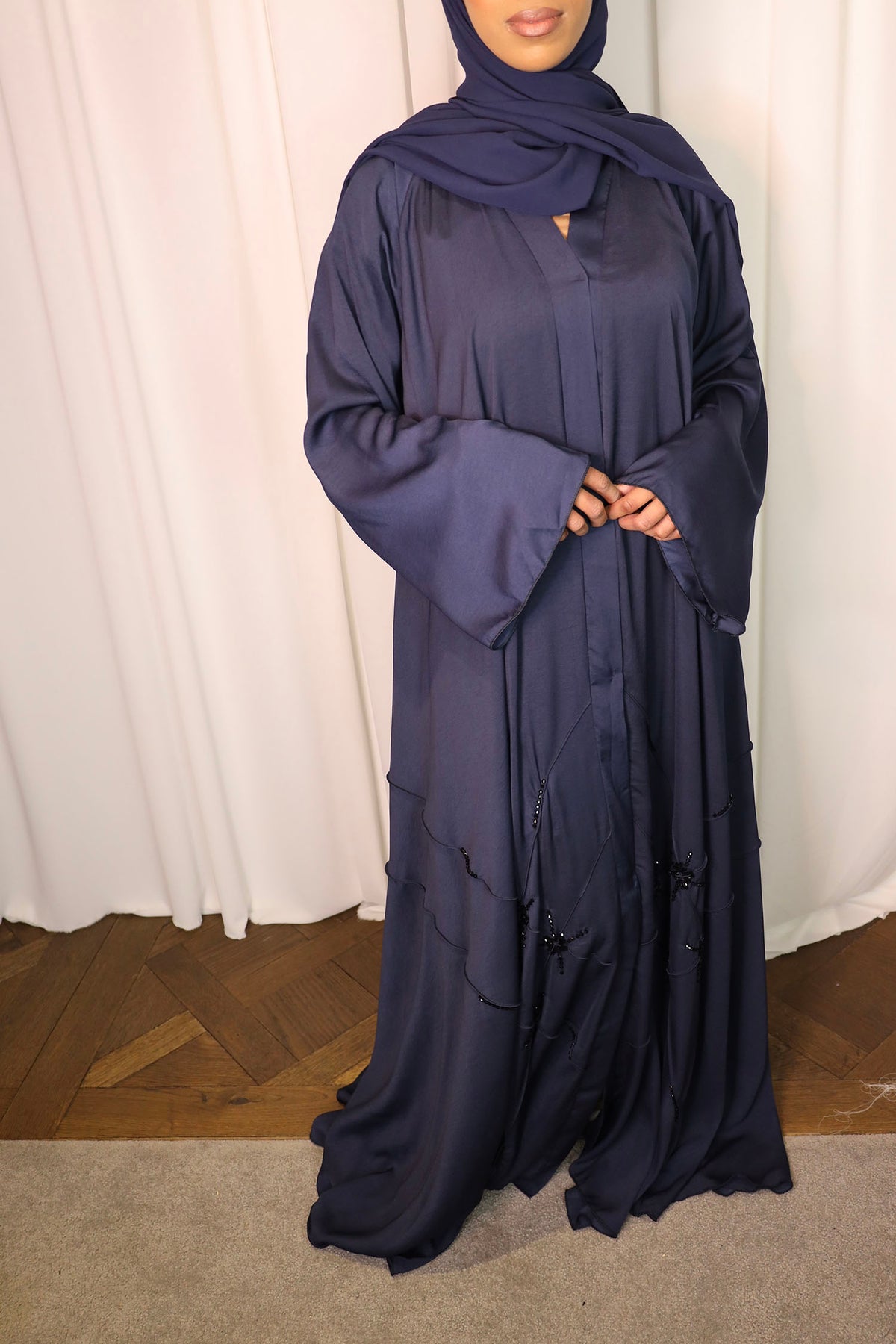
Complete Abaya Guide: Styles, Fabrics, Sizing and Modest Styling
Sister, choosing an abaya should not feel like sitting an exam in a language everyone else seems to understand. You should not have to stare at words such as nida, farasha, umbrella cut, open front and batwing while wondering whether the garment will be too long, too warm, too sheer, too formal or simply unlike the photograph. You are trying to find something that helps you move through your day with dignity and ease. The shopping process should give you clarity, not more doubt.
Perhaps this is your first abaya. Perhaps you have worn them for years but still have a wardrobe full of pieces that looked beautiful online and somehow never became the ones you reached for. Perhaps your body has changed, your work has changed, your confidence has changed, or your understanding of modest dressing has deepened. Those changes matter. The right abaya for you now may not be the one you would have chosen three years ago, and that is not inconsistency. It is simply life.
This complete abaya guide is here to walk beside you through every decision that actually affects how an abaya feels once it leaves the product page and enters your real world. We will talk about open and closed styles, the way different fabrics behave, how to measure length properly, what comfortable coverage looks like in movement, and how to choose for British weather, work, prayer, travel, Eid, weddings and ordinary Tuesdays. We will also talk about the quieter things that size charts cannot answer, such as feeling self-conscious in a new silhouette, wanting beauty without feeling overdone, and learning to buy for the woman you are rather than the woman a model photograph seems to be.
You do not need to memorise every style name. You do not need to own a large collection. You do not need to choose what is trending simply because other sisters are wearing it. By the end of this guide, you will know how to look at any abaya and ask the right questions: Does the cut give me the coverage and movement I need? Will the fabric suit my climate and routine? Is the length right with the shoes I actually wear? Can I sit, walk, drive, work and pray comfortably in it? Will I need a separate inner? Is the detailing secure? Does this piece make getting dressed simpler?
That last question is the one we will keep returning to. A good abaya should support your life. It should not spend most of its time waiting for a version of your life that rarely happens. It can be elegant, expressive and special, but it should also be honest. If your mornings are busy, choose ease. If you love layering, choose flexibility. If you feel most peaceful in a simple black abaya, there is no need to apologise for simplicity. If colour lifts your heart, modesty does not require you to disappear into a shade that never feels like you.
Take what is useful from this guide and leave what is not. Modest dressing is personal, and religious questions should be taken to a qualified scholar rather than a fashion article. Here, our role is practical: to help you understand garments, make thoughtful choices and feel respected while you shop. Let us begin with the foundation, because once the foundation is clear, everything else becomes much easier.
What an abaya is, and why one simple word covers so many garments
An abaya is generally understood as a loose, full-length outer garment worn by many Muslim women as part of modest dress. It usually falls from the shoulders towards the ankles and is worn with a separate head covering, such as a hijab or khimar, according to the wearer's preference and practice. That definition is simple, but the garments sold under the word abaya can look and feel very different from one another.
One may be a closed pull-on robe in matte black crepe. Another may be an open chiffon layer with a matching slip dress. A third may have wide butterfly sleeves, hand-finished beadwork and enough movement for a wedding entrance. They belong to the same broad family, but they are not interchangeable in daily life. This is why shopping by the word abaya alone can be confusing. You are not choosing one fixed garment. You are choosing a combination of construction, silhouette, fabric, length, sleeve, finish and purpose.
It helps to separate those decisions. Construction asks whether the abaya is open or closed. Silhouette asks whether it falls straight, widens gently, gathers into volume or flows from wide panels. Fabric asks whether it is matte, glossy, breathable, structured, stretchy, sheer or lined. Finish asks whether it is plain, piped, embroidered, pleated, beaded or printed. Purpose asks whether you need it for daily wear, work, prayer, travel or an occasion.
Once you look at an abaya through those five questions, product names lose their power to overwhelm you. A label may call something a Dubai abaya, kimono abaya, luxury abaya or premium occasion abaya, but you can still examine what is physically in front of you. Is it open? What is the fabric composition? Does it include an inner? Where does the volume begin? How are the sleeves finished? What length is shown? The garment must answer those questions, even when the marketing name is vague.
This distinction also protects you from buying based on atmosphere alone. A product photograph may show soft lighting, a tall model and fabric caught beautifully in motion. The mood may be lovely, but your decision still needs facts. What does the abaya look like when standing still? Is the back as detailed as the front? Are the cuffs practical? Is the belt removable? Does the inner dress have sleeves? Is the lighter colour fully opaque? A thoughtful product page should help you answer these questions.
You may also come across related garments such as jilbabs, kaftans, prayer dresses and maxi dresses. They can overlap visually, but they are not always the same in construction or intended use. For a clear explanation of the vocabulary, Amani's has a separate guide to the difference between an abaya, jilbab, hijab, niqab and burqa. The useful lesson here is not to become strict about labels. It is to understand what coverage and function a garment actually provides.
For many sisters, an abaya is both practical clothing and something emotionally meaningful. It may be the first garment in which she felt visibly Muslim. It may remind her of her mother, a trip, a wedding, a first Ramadan or a quiet decision to dress differently. We can honour that meaning without pretending every abaya choice is spiritual. Sometimes you simply need pockets, a hem that does not drag through London rain and sleeves that stay out of your lunch. Practicality is not a lesser concern. It is part of wearing a garment with ease and consistency.
So begin with a grounded definition: an abaya is a modest outer garment, and its usefulness depends on how its construction meets your life. The rest of this guide will help you make that meeting a good one.
Start with your real life, not the most beautiful product photograph
Before you compare colours or embroidery, pause and picture an ordinary week. Not Eid morning, not a carefully styled photograph, and not the version of yourself who has unlimited time to steam layers before leaving home. Picture your actual mornings. Where are you going? How are you travelling? What do you carry? Do you walk quickly, drive, use public transport, collect children, sit at a desk, move between indoor heating and cold streets, or need to make wudu away from home?
Your routine gives you a better buying brief than trend pages ever will. A sister who takes two buses to university needs different details from someone choosing an abaya for a wedding. A mother carrying a changing bag may value hidden pockets, secure cuffs and washable fabric more than delicate beadwork. A woman working in a formal office may want a clean shoulder line, restrained sleeves and fabric that remains neat after sitting. Someone attending evening classes at the masjid may care most about quick coverage, easy movement and a style that layers comfortably over everyday clothes.
Write down three situations in which you expect to wear the abaya. Be specific. "Everyday" is too broad. "School run in cool weather", "office twice a week" and "family visits at weekends" are useful. Now ask what each situation requires. You may discover that one versatile closed abaya covers two of them, while an open set suits the third. You may also discover that the piece you were drawn to solves none of them. That realisation can save you money without taking any joy out of shopping.
Next, think about friction. What has annoyed you about previous garments? Sleeves falling into water? Buttons opening between fastenings? A neckline that required constant adjusting? Fabric clinging to tights? A hem that caught under shoes? A belt that never stayed tied? A pale inner that became visible in sunlight? These are not small complaints. Repeated friction is why a beautiful garment stops being worn.
Now think about what has made you feel good. Perhaps you love a slightly structured shoulder because it makes you feel polished. Perhaps a flowing A-line shape gives you room without making you feel lost in fabric. Perhaps you feel safest in darker colours, or more alive in olive, plum and soft blue. Perhaps you prefer sleeves that narrow gently at the wrist. Those preferences are evidence. Use them.
There is also an emotional version of practicality. Some sisters feel exposed in an open abaya even when the inner layer is fully covering. Others feel restricted in a closed style and more confident when they can build an outfit underneath. Some enjoy a belt for styling but would never wear it outside. Some love embellishment on another woman and feel unlike themselves when they put it on. No size chart can decide this for you.
Shopping becomes calmer when you stop asking, "Which abaya is best?" and ask, "Which abaya is best for this part of my life?" There may be no single perfect piece for every setting, but there can be a small, thoughtful wardrobe in which each garment has a clear role.
A useful starting formula is one dependable daily abaya, one flexible open layer or coordinated set, and one occasion piece only if occasions are genuinely part of your life. Build from use, not fear of missing out. The goal is not to prove that you understand modest fashion. The goal is to open your wardrobe and find garments that make the next step of your day easier.
Open or closed abaya: the first decision that changes everything
If you learn only one distinction before shopping, make it this one. An open abaya is designed to fall open at the front or fasten partially, while a closed abaya is worn as one complete robe. Both can be modest, elegant and practical, but they ask different things from the wearer.
When a closed abaya makes life easier
A closed abaya is usually the simplest option when you want complete dressing in one step. You put it on over comfortable clothing, add your chosen head covering and leave. There is no need to coordinate an inner dress, worry about a contrasting waistband showing, or check whether the front is sitting evenly. For busy mornings, prayer, travel days and anyone new to abayas, that simplicity is valuable.
Closed styles vary. Some pull over the head. Some have a short zip at the neckline. Others have concealed buttons or a full placket that closes from top to bottom. Check the closure rather than assuming "closed" means there are no openings. If you breastfeed, need easy access for medical reasons, or dislike pulling garments over a styled hijab, a front zip or buttoned design may be far more practical than a pure pull-on style.
The main risk with a closed abaya is buying a cut that looks simple but feels restrictive. Check garment measurements through the bust and hips, especially if the fabric has no stretch. Look at the stride width near the hem. Sit down in it if you can. Lift your arms. A closed abaya should remain loose during movement, not only when you stand still.
When an open abaya gives you more freedom
An open abaya offers styling flexibility. You can wear it over a matching slip, a neutral maxi dress, a long tunic and wide trousers, or another modest base. The same outer layer can feel casual with jersey and flats, polished with a tonal inner, or formal with satin and a refined hijab. For sisters who enjoy creating outfits, this can make one garment work very hard.
The flexibility comes with responsibility. The base layer matters. An inner dress may be sleeveless, fitted, thin or shorter than expected, so read its details carefully. If the outer abaya has no fastening, wind and movement can reveal more of the base than a still photograph suggests. This is not necessarily a problem, but it means the inner needs to provide the coverage you are comfortable with.
Some open abayas include press studs, buttons or a removable belt. Test whether the fastening sits flat and whether gaps appear between buttons when walking. A belt can make an open abaya feel secure, but it also changes the silhouette. Wear it only in the way that suits your comfort and understanding of modest dress.
How to decide without overthinking
Choose closed if you want speed, consistency and minimal layering. Choose open if you enjoy versatility and already own suitable base pieces. Choose a coordinated open set if you want the look of layering without the work of matching colours and lengths. Many women eventually own both because they solve different needs.
You can browse the current open abaya collection and closed abaya collection side by side. Do not compare only the front view. Compare fabric, included pieces, fastening, sleeve shape, opacity and stated length. The best choice is the one whose practical demands match the amount of effort you genuinely enjoy giving an outfit.

Understand silhouette without memorising every abaya name
Abaya names can sound more precise than they really are. One retailer may call a wide style butterfly, another may call it farasha, and a third may describe a similar shape as batwing. Rather than relying only on the name, learn to read where the fabric begins, where it widens and how it moves.
A straight-cut abaya falls down in a relatively clean line from the shoulder. It tends to look minimal, modern and controlled. It can be a strong everyday or work option, particularly in fabric with enough drape to avoid stiffness. The fit still needs room. "Straight" should describe the visual line, not mean narrow around the hips.
An A-line abaya is narrower through the upper body and widens gradually towards the hem. This is one of the easiest silhouettes to wear because it creates movement without a large amount of volume around the shoulders. It often feels balanced on petite, tall and fuller figures alike, although the exact shoulder and bust measurements still matter.
An umbrella-cut abaya usually uses generous fabric to create a fuller circular or semi-circular fall. It can move beautifully and feel very graceful, but the amount of fabric changes how practical it is. A lightweight umbrella cut may be effortless. The same shape in a heavy fabric can feel substantial on stairs, public transport or busy days. Look for videos that show walking and turning rather than judging only from a front photograph.
A butterfly or farasha silhouette often has wide side panels or sleeves that form a continuous flowing shape. It gives striking movement and can create a sense of occasion without needing a fitted waist. The trade-off is sleeve width. Very wide sleeves may need careful handling while eating, cooking, making wudu or carrying a bag. Some designs include an inner cuff, which gives the beauty of width with more control at the wrist.
Kimono-style abayas are generally open, with a relaxed sleeve and robe-like front. They layer well and can feel contemporary without being loud. Coat-style abayas are more structured, sometimes with collars, lapels or defined cuffs. They can work well in cooler climates and professional settings, though you should check whether the shape remains loose enough for your preference.
Bisht-inspired abayas tend to drape from broad panels and may have a ceremonial, elegant quality. Kaftan-inspired designs often use a loose central body and decorative neckline or sleeve. These names describe influences rather than one universal pattern, so the product measurements and photographs remain more reliable than the label.
Amani's already has a detailed visual guide to the types of abaya, including cuts and fabrics. Use that page when you want the vocabulary in depth. This pillar guide has a different purpose: helping you choose among those possibilities without losing sight of your body, routine and comfort.
When reading silhouette, ask four questions. Where is the shoulder seam? Where does the garment begin to widen? How much fabric gathers under the arm? How wide is the hem? Then ask one more: what happens when I move? A silhouette is not a drawing. It is a relationship between fabric and a moving body.
If you are unsure, a gently A-line or relaxed straight cut is often the least demanding place to begin. You can explore more volume once you know how much fabric feels natural to you. There is no prize for choosing the most dramatic cut. Elegance often comes from a garment that lets you forget about it and be present in your day.

What good abaya fit feels like when you move, sit and live
Fit is where many sisters become confused because an abaya is supposed to be loose, yet "loose" does not mean every oversized garment fits well. A good abaya creates comfortable distance from the body while still hanging with intention. It should give you room to move without pulling, clinging or twisting, and it should not rely on you standing perfectly still to look modest.
Begin at the shoulders. On a set-in sleeve, the seam should sit close to the natural edge of your shoulder unless the design is intentionally dropped. If it sits too high, the upper body may pull when you reach forward. If it falls far down the arm on a style that was not designed to be oversized, the whole garment may look heavy and the sleeves may finish too long. Raglan, batwing and butterfly cuts do not follow the same seam rule, so judge them by movement instead.
Next, look at the bust. The fabric should fall rather than stretch across the front. Buttons, zips or press studs should lie flat. If a front closure creates gaps, the garment needs more room even if it technically closes. On an open abaya, check whether the front panels remain balanced when you walk. If one side pulls back repeatedly, the shoulder or sleeve fit may be off.
Through the hips, sit down and take a normal stride. A garment can seem loose while standing and become tight across the lap when seated. This matters in the car, at work, during meals and in prayer. If you must constantly arrange fabric to feel covered, the fit is asking too much from you. A slightly fuller cut or one size up may feel much calmer.
The back deserves attention too. Ask someone you trust to look at the garment from behind or use a mirror. Fabric may cling across the upper back, seat or legs because of static, a thin lining or the wrong underlayer. That is not always a sizing issue. Sometimes an anti-static slip, smoother base layer or heavier fabric solves the problem better than a larger size.
Lift both arms to shoulder height. The hem should not rise dramatically, and the body should not pull tight across the chest. Reach forward as though holding a steering wheel. Bend slightly as though picking something up. Walk quickly. Climb a step. These movements reveal more than a posed fitting-room photograph.
Now notice how the garment makes you feel. Are you holding your body differently because you are worried it is showing too much? Are you shortening your stride to stop the front opening? Are you avoiding raising your arms because the sleeves slide back? Physical discomfort often creates emotional self-consciousness. The right fit gives you permission to stop monitoring yourself every second.
Do not become trapped by the letter on the label. A medium in one style may be wider than a large in another. Fabric, pattern and intended silhouette all change the measurement. Use the garment chart, not the size name, and compare it with a similar abaya you already own and enjoy wearing.
If you are between sizes, consider the design. Sizing up often works well in straight, closed and non-stretch styles. In a very wide butterfly cut, sizing up may add unnecessary sleeve length and volume without improving coverage. This is why garment measurements matter more than a universal rule.
A well-fitting abaya should feel spacious but not accidental. It should allow sitting, walking and reaching without exposing areas you intended to cover. Most importantly, it should let you turn your attention away from your clothes and towards the people, work, worship and responsibilities in front of you.
Abaya length guide: measure for the shoes and life you actually have
Length is one of the simplest measurements and one of the most common reasons an abaya disappoints. A garment that is too short can make you feel unfinished or under-covered. A garment that is too long can become dirty, unsafe and exhausting to manage. The beautiful middle is usually a hem that falls close to the top of your foot without dragging on the floor.
Start by checking how the retailer defines length. Many abayas are measured from the highest point of the shoulder down to the hem. Some size labels, such as 52, 54, 56 or 58, may refer mainly to garment length in inches, but do not assume this is universal. Read the chart on the specific product page.
To measure yourself, stand upright in the shoes you expect to wear most often. Place the start of the tape at the highest point of your shoulder, close to where the shoulder meets the neck, and let it fall straight down towards the floor. Decide where you want the hem to finish. Ask someone to help if possible, because bending to read the tape can change the result.
Measure in flats if the abaya is for everyday wear and you usually wear trainers, loafers or flat sandals. Do not choose an extra-long length for heels unless the garment is genuinely reserved for occasions. An abaya that works only with one pair of shoes is less versatile than it first appears.
Consider the shape of the hem. A straight hem behaves predictably. A circular or umbrella hem can appear slightly shorter at the sides or move higher when walking. A high-low design may be intentionally longer at the back. Product photographs should show these differences, but the written measurement is still important.
Your body proportions also affect where a stated length finishes. Two women of the same height can need different lengths because of shoulder shape, bust, torso and posture. That is why height-based recommendations are useful starting points, not guarantees. Your own shoulder-to-hem measurement is more reliable.
Think about weather and surfaces. In the UK, a hem that brushes the pavement will collect rain, dust and grit quickly. On escalators, stairs and public transport, extra fabric can become a safety issue. If you walk often, a slightly clearer hem is usually more elegant in practice because you can move naturally rather than lifting the garment at every step.
For prayer, many sisters prefer enough length to maintain coverage through bowing and prostration, but the garment still needs to be safe and manageable. The overall cut, head covering and way the piece is worn all matter. For specific religious guidance, speak to a qualified scholar. From a clothing perspective, test the garment through the movements you intend to make.
If an abaya is too long, professional shortening can be worthwhile, especially for a high-quality everyday piece. Ask the tailor to preserve any border, piping or embellishment. Chiffon layers and circular hems require skill, so use someone experienced with formal or modest garments. If it is too short, alteration options are more limited. A coordinating border can sometimes add length, but this changes the design.
When comparing an abaya you own, lay it flat and measure from the same shoulder point to the hem. Note whether you love its length or merely tolerate it. That one garment can become your personal benchmark for future shopping.
Sister, do not let a model's height do your measuring for you. Product images are inspiration, not a ruler. Five careful minutes with a tape measure can protect you from the disappointment of opening a parcel, loving everything about the abaya and realising the hem will never work for your life.
Sleeves, cuffs and practical details that matter more than they seem
Sleeves can make an abaya feel graceful, frustrating or wonderfully practical. They are often treated as a design detail, but they affect eating, working, making wudu, carrying children, typing, cooking and keeping your arms covered when you reach. Look at them with the same seriousness you give the body length.
A straight sleeve is simple and versatile. It should give enough room through the upper arm and elbow without ending in a cuff so wide that it falls over your hands. If you wear bracelets or a watch, check whether the opening catches. If you type often, a clean wrist finish is usually easiest.
Elasticated cuffs stay secure and can be pushed up for wudu. The elastic should feel firm without leaving a painful mark. Poor elastic can twist inside its casing, loosen quickly or make an otherwise elegant abaya feel casual. A covered elastic or soft gathered cuff often looks more refined.
Buttoned cuffs create a tailored finish and may open wide enough for wudu. Check the button placement and whether the cuff still covers the wrist when fastened. Tiny decorative buttons can be beautiful but slow when you are in a hurry. Press studs are quicker, though they should be securely attached and smooth against the skin.
Inner cuffs are especially helpful on butterfly, bell and flared sleeves. The outer sleeve keeps its dramatic shape while the inner cuff maintains coverage and control. Confirm whether the inner cuff is full length, stretchy and breathable. A narrow synthetic cuff can feel hot even when the outer fabric is light.
Bell sleeves widen towards the wrist and add movement. They are lovely for occasions but may dip into food, water or work surfaces. If you adore the look, reserve it for settings where you can enjoy it rather than fighting it. There is no shame in choosing beauty for a special context. The problem comes only when an occasion sleeve is expected to behave like an everyday cuff.
Batwing and dolman sleeves join the body with a low armhole, creating softness and volume. They can be very comfortable and forgiving, but raising your arms may lift the side of the garment. Test the movement and check what you plan to wear underneath. A fitted long-sleeve base may make you feel more secure.
Sleeve length should finish at or just beyond the wrist according to the style. If it covers half your hand, daily tasks become awkward. If it rides several centimetres above the wrist when you reach, it may not provide the coverage you want. Model photographs with arms resting down do not reveal this, so look for movement images or video.
Pockets are another small detail with large consequences. Deep side-seam pockets can hold a phone without changing the front line. Patch pockets may be easier to access but more visible. Check whether the pocket pulls the fabric when filled and whether it sits too low for your arm length. A pocket that fits nothing securely is decoration, not function.
Fastenings deserve the same inspection. A hidden zip can make breastfeeding and dressing easier. Press studs should be spaced closely enough to avoid gaps. Buttons should have reinforced stitching. A removable belt should have loops if you want it to stay in place. Side slits should not rise higher than you are comfortable with.
These details are not unromantic. They are how a garment earns your trust. An abaya becomes a favourite because it behaves well during ordinary moments. The cuff stays where it should. The pocket holds your keys. The zip opens smoothly. The sleeve does not require a second thought. Quiet reliability is one of the most beautiful forms of design.
Abaya fabrics explained by feel, drape, warmth and care
Two abayas can share the same cut and look completely different because fabric decides how the shape comes alive. It controls weight, movement, opacity, warmth, texture, shine, static and how much care the garment needs. When buying online, fabric information is not a technical extra. It is central to the decision.
Nida and related crepe fabrics
Nida is widely used for abayas because it offers a smooth, fluid fall with a generally matte or softly polished surface. Different suppliers use the name for fabrics of varying weight and quality, so one nida may feel lighter or silkier than another. It is often comfortable for daily wear, resists severe creasing and gives a refined drape without the high shine of satin.
Crepe is a broad family rather than one single material. It may feel fine and smooth, softly textured, heavy and structured, or light and airy. Premium crepe can hold a clean silhouette while moving beautifully. Lower-quality crepe may cling with static or feel rough. Look for composition, weight descriptions and close-up images rather than assuming every crepe behaves the same.
Chiffon and georgette
Chiffon is light, sheer and graceful. It is often used as an outer layer over a lining or slip, especially for occasion abayas. The movement can be beautiful, but opacity depends on the layers beneath it. Ask whether the lining covers the full body and sleeves. A short body lining with unlined sleeves may be intentional, but you need to know before buying.
Georgette has a slightly grainier texture and often more body than chiffon. It can float without feeling as delicate, making it useful for layered occasion pieces. Both fabrics may snag on jewellery, rough bags and embellished shoes, so they require thoughtful wear.
Satin and lustrous weaves
Satin describes a weave that creates a smooth, reflective surface. It can look luxurious and photograph beautifully, but shine also reveals creases, pulls and water marks. A heavier satin may drape elegantly, while a thin satin can cling or show every line underneath. For occasion wear, check whether the garment is lined and whether the seams lie flat.
Jersey
Jersey offers stretch, softness and ease. It can be ideal for travel, prayer, pregnancy and relaxed daily wear. The challenge is cling. A heavier jersey with good recovery usually gives better coverage than a thin, lightweight knit. Wear smooth, non-static layers underneath and assess the garment from the back as well as the front.
Cotton, linen and blended natural fibres
Cotton blends can feel breathable and familiar. They may be crisp or soft depending on the weave. Pure cotton can crease and may shrink if washed incorrectly. Linen and linen blends are excellent for warm weather because they allow air to move, but their natural creasing creates a relaxed rather than polished finish. Blends often balance breathability with easier care.
Velvet and heavier winter fabrics
Velvet brings richness, warmth and visual depth. It suits formal winter occasions but can feel heavy and warm indoors. The pile may crush under pressure, so storage matters. Wool blends, brushed crepes and structured twills can also work for cool weather, though an abaya is not always a substitute for a coat in British winter. Layer according to temperature and safety.
Fabric composition helps but does not tell the whole story. Polyester can be airy or heavy, matte or glossy, soft or stiff. Natural fibres can breathe beautifully but crease or require more care. The best fabric is not the one with the most prestigious name. It is the one whose behaviour suits the garment's purpose.
When a product page says only "premium fabric", ask for more. Premium is a claim, not a composition. You deserve to know whether a piece is lined, whether it stretches, whether it is likely to be sheer in daylight and how it should be washed.
Imagine the fabric after four hours of wear, not only in the first minute. Will it feel warm under a coat? Will it crease across the lap? Will a shoulder bag roughen the surface? Will it need steaming every time? Sister, the right fabric is the one you can live with happily, not the one whose name sounds most luxurious.
Opacity, static and lining: the hidden side of abaya comfort
Some of the most important qualities of an abaya are difficult to see in studio photographs. Opacity changes in sunlight. Static appears after walking. Linings twist, ride up or trap heat. These issues can turn a promising garment into one you never feel settled in, so they deserve their own check.
Light colours are not automatically sheer, and dark colours are not automatically opaque. Opacity depends on fibre, weave, weight and stretch. A tightly woven cream crepe may be more covering than a thin black jersey. Ask whether the product has been tested in daylight and whether a lining or inner dress is included.
When trying an abaya at home, stand near a bright window with your back to the light. Wear a contrasting base layer so you can see what is visible. Move, bend and stretch the fabric slightly. A garment may appear opaque when relaxed and become translucent across areas of tension.
Lining can solve sheerness but create other challenges. A full lining adds weight and warmth. A partial lining may end at the knee and become visible as a horizontal line. A lining that is too narrow can restrict stride even when the outer layer is wide. Check whether sleeves are lined and whether the lining is attached or separate.
A separate slip gives flexibility. You can wash it independently, replace it, or wear the outer over a different base. It also means one more piece to coordinate and manage. Check slip length, neckline, sleeve coverage and fabric. Many occasion slips are sleeveless because the outer layer is intended to remain on. If you expect to remove the outer in a women-only setting, decide whether the slip works for that context.
Static happens when fabrics rub and develop an electrical charge, causing the abaya to cling to legs or underlayers. Synthetic fabrics, dry air and certain tights can make it worse. An anti-static spray may help, but test it on an unseen area first. A smooth cotton-blend or anti-static slip can reduce friction. Moisturised skin and fabric conditioner may help in some cases, though always follow the care label.
Do not solve every static problem by sizing up. Extra fabric can still cling. The issue may be the interaction between the outer and inner materials. Try a different base layer before deciding the garment is the wrong size.
Seams and lining attachment affect comfort too. Turn the garment inside out. Are the seams neat? Does the lining pull at the hem? Are loose threads catching? Does the lining sit flat at the armhole? Quality on the inside often predicts how calmly the abaya will wear.
For hot weather, an unlined opaque fabric may be more comfortable than a lightweight sheer fabric with two layers. For a formal event, the structure and finish of a lining may be worth the added warmth. There is no universal answer. The right choice depends on temperature, duration and how much movement the occasion involves.
If you have ever wondered why one abaya makes you feel composed while another makes you keep checking your reflection, opacity and static may be part of the answer. Feeling covered is not only about the written size. It is about what the fabric does in light and motion. Give yourself permission to test thoroughly. Confidence grows when the garment has already answered your concerns.
Choosing an abaya for British weather without losing the elegance
British weather asks an abaya to do more than look graceful in a still photograph. It may need to move from a cold pavement into an overheated train, survive a sudden shower, sit under a winter coat, avoid catching in the wind and still feel comfortable when the sun appears unexpectedly. A useful UK abaya wardrobe is built around layers and fabric behaviour rather than one seasonal rule.
Spring: flexible layers and unpredictable days
Spring can begin cold, turn mild by lunchtime and end in rain. Mid-weight crepe, nida and open abayas work well because you can adjust what sits underneath. A long-sleeve base and light knit give warmth in the morning, while the open layer can be worn more loosely later. Choose hems that clear wet ground and sleeves that fit comfortably under a trench or light coat.
Soft neutrals, olive, blue, taupe and muted rose can feel fresh without becoming difficult to coordinate. Colour is practical too. Very pale hems show pavement splashes quickly, so reserve them for dry days or settings with less walking if that would bother you.
Summer: breathability is more than thin fabric
A thin synthetic fabric is not always cool. Breathability depends on airflow, weave, layers and colour. An unlined, opaque crepe with a loose cut may feel cooler than sheer chiffon over a full synthetic slip. Cotton and linen blends can be comfortable, but check how much they crease and whether they become transparent in strong light.
Wide sleeves increase airflow but may expose the forearm when lifted unless they include cuffs. A slightly looser body can help air circulate. Dark colours absorb more heat in direct sun, although fabric and duration matter. The best summer abaya is one you can wear without feeling trapped, not simply the one marketed as lightweight.
Autumn: texture, deeper colours and rain-aware hems
Autumn suits heavier crepe, textured weaves and coat-inspired open abayas. Burgundy, forest green, charcoal, navy and warm brown pair naturally with boots and knit hijabs. Watch the hem around fallen leaves and rain. A length that seemed perfect indoors may be too close to the ground for a wet commute.
Static often increases as tights, knitwear and synthetic fabrics return. Choose smooth underlayers and keep an anti-static solution available if needed. A lined sleeve may slide more easily over knitwear than an unlined one.
Winter: the abaya is part of the layer system
An abaya is not automatically winter outerwear. A heavier fabric adds warmth, but wind and rain protection may still require a proper coat. Check that the coat is roomy enough over the abaya and does not pull the fabric tightly around the legs. A straight or gentle A-line silhouette often layers more easily than a very full butterfly cut.
Thermal tops, leggings, long dresses and knit layers can sit underneath, but avoid so much bulk that the abaya loses movement. If you commute, test sitting in all layers together. Choose sleeves that fit under the coat without bunching and fabrics that recover after being compressed.
Footwear changes the line. Boots may require a slightly different hem than sandals. Make sure the abaya does not catch on buckles, laces or textured soles. On icy days, safety comes first. A shorter hem that allows a full stride is more elegant than a long one you must hold constantly.
You do not need four separate wardrobes. A strong mid-weight everyday abaya can work across much of the year with thoughtful layering. Add one genuinely breathable summer option and one structured or heavier cool-weather piece if your routine needs them. This is more useful than buying seasonal colours without considering fabric.
Sister, the weather will not respect a perfectly styled outfit. Build in kindness for yourself. Carry a simple clip for an open front on windy days. Keep a compact umbrella that does not fight wide sleeves. Choose washable fabrics for regular travel. The elegance is not ruined by practicality. It is protected by it.
The everyday abaya: how to choose the one you will reach for most
The everyday abaya rarely receives the most dramatic compliments, but it does the most important work. It is there for errands, school runs, appointments, family visits, groceries, classes and the days when you have ten minutes to get ready. It should feel dependable enough that choosing it becomes almost automatic.
Start with fabric. Look for something opaque, comfortable against your usual underlayers, washable and resistant to severe creasing. Mid-weight nida, practical crepe, quality jersey and some cotton blends can all work. The best choice depends on whether you prefer fluidity, structure or stretch.
Choose a silhouette that gives a natural stride and sits comfortably under outerwear. A relaxed straight cut, A-line or modestly flared closed abaya is usually easy. An open abaya can also be an everyday favourite if you keep reliable base layers ready. The less daily negotiation an outfit requires, the more often you will wear it.
Pockets can be transformative. Check that they are deep enough for a phone and positioned where the contents do not swing against your leg. Secure closures matter if you travel. A concealed zip pocket may be worth more to you than decorative embroidery.
Look at the cuffs. Can you wash your hands without soaking them? Can you make wudu without a complicated struggle? Can you push a pram, type or cook? Everyday sleeves should cooperate. If you love a wide sleeve, choose one with an inner cuff or keep it for less task-heavy days.
Colour should support repeated wear. Black remains popular because it is forgiving, easy to coordinate and suitable across settings. Navy, charcoal, chocolate, olive and taupe offer similar versatility with a softer effect. If you prefer colour, choose a shade that works with at least three hijabs you already own. You should not need to rebuild your accessories around one basic garment.
Detailing should be secure and easy to care for. Contrast piping, tonal embroidery, pleats or a textured panel can add interest without making washing difficult. Loose stones, delicate sequins and trailing ties are usually better for occasion wear. Daily beauty can be quiet.
Ask how the abaya looks after sitting. Some fabrics crease deeply across the lap or become shiny at pressure points. If you work, drive or use public transport, this matters. Reviews and videos may reveal it. At home, sit for fifteen minutes before deciding whether to keep a new piece.
Comfort under the arm is often overlooked. A high, narrow armhole can pull during movement. A very low batwing armhole can add bulk under a coat. Find the balance that suits your body and routine.
Your everyday abaya should also be emotionally easy. You should not feel that it is too precious to wear, too noticeable for a simple outing or too difficult to replace if life happens to it. A garment can be premium without making you nervous. Quality should invite use.
Consider owning two everyday options if you wear abayas frequently. This allows washing and gives you variety without clutter. One might be a closed neutral for immediate ease. The other might be an open or coloured style for days when you want a little more expression.
When you try it on, do not ask only whether it looks flattering. Ask whether you can forget about it. Can you carry a bag, walk quickly, sit on the floor, reach a shelf and move through your day without repeated adjustment? The best everyday abaya is not merely the one that looks like you. It is the one that quietly takes care of you.
Abayas for work, university and professional settings
Dressing modestly for work or study can carry a particular kind of pressure. You may want to look polished without feeling that you must soften or explain your Muslim identity. You may be navigating a formal office, a creative workplace, placements, interviews, laboratories, classrooms or long days on campus. The right abaya can help you feel prepared rather than self-conscious.
Professional does not have to mean fitted. A clean silhouette, neat fabric and considered details create polish. Straight, A-line and coat-inspired abayas often work well because their lines are controlled. Avoid a cut so narrow that it pulls when sitting or so wide that it becomes difficult around office chairs and stairs.
Fabric should recover from a full day. Mid-weight crepe and good nida are popular because they drape well and resist excessive wrinkling. Matte finishes usually feel quieter and more versatile than high shine. Jersey may be comfortable for campus or relaxed workplaces, but choose sufficient weight so it does not cling.
Colours such as black, navy, charcoal, mocha, stone and deep green are easy to repeat. You can create variety through hijabs, bags and shoes. A tonal outfit often looks especially composed: navy abaya with a blue-grey hijab, chocolate with warm taupe, charcoal with soft silver or black with muted olive.
Check the neckline. A closed round or band collar can look neat without needing much adjustment. An open abaya may work beautifully over a coordinated inner, but make sure the base stays professional if the outer moves. A belt can create a coat-like look, though you should wear it in the way that matches your comfort and modesty preferences.
Sleeves should allow typing, writing and handling documents. Narrow cuffs, discreet buttons or gentle elastic are useful. Very wide bell sleeves can become tiring at a desk. If your work involves food, healthcare, machinery, children or laboratory equipment, follow the relevant safety and uniform requirements first. A modified sleeve or different garment may be necessary.
For interviews, choose the abaya you trust rather than a new, elaborate piece. Test it seated, under a coat and with your bag. Steam it the night before. Keep accessories simple and shoes comfortable enough to walk confidently. The goal is to remove clothing anxiety so your attention can stay on the conversation.
University brings different demands. You may walk long distances, sit on the floor, carry a backpack and move between hot lecture theatres and cold outdoors. A washable closed abaya or simple open layer over a dependable base can work well. Backpacks can roughen delicate fabric and pull open front panels, so test the combination. A crossbody bag may distort a flowing silhouette less, but comfort and safety come first.
If colleagues ask questions, you are not required to turn every outfit into a lesson. You can answer briefly, share more when you choose, or redirect the conversation. Your abaya is clothing you are wearing, not public property. Feeling professional includes having boundaries.
Some sisters worry that an abaya will make them appear less ambitious, less modern or less approachable. Those fears often come from environments that treat visible Muslim identity as unusual. You do not need to solve every prejudice through styling. A polished garment can support confidence, but your competence is not created by the cut of your sleeve.
Choose an abaya that lets you enter the room with your shoulders relaxed. Let it be neat, practical and true to you. Professional modest dressing should not require you to shrink. It should give you a stable foundation from which your work can speak.
Choosing an abaya for prayer, the masjid and faith-centred spaces
For many sisters, the abaya becomes closely connected with prayer and the masjid. That connection deserves sensitivity. Clothing guidance can discuss coverage, comfort and practicality, but it should not pretend to issue religious rulings. Requirements and scholarly opinions can vary, and a qualified scholar should be consulted for personal questions. What we can do is help you assess whether a garment supports the movements and situations in which you intend to wear it.
For prayer, test the abaya through standing, bowing, prostration and sitting. Does the neckline remain secure? Do the sleeves slide back? Does the hem move in a way that exposes an underlayer you did not intend to show? Does the fabric cling when you rise? A garment that feels covering while standing may behave differently through movement.
A closed abaya is often convenient because it provides one continuous outer layer. An overhead prayer garment may combine body and head coverage in a dedicated design, while a standard abaya usually requires a separate head covering. Do not assume an everyday abaya is a complete prayer outfit. Look at the whole clothing system you plan to use.
Wudu-friendly cuffs can make a meaningful difference. Elastic, buttons, zips or inner cuffs should open or push up without becoming painfully tight. Test whether the sleeve returns to place easily afterwards. If you make wudu away from home, speed and discretion may matter.
At the masjid, think about shoes, stairs, crowded entrances and sitting on the floor. A very long hem may be beautiful but difficult to manage. Heavy embellishment can catch on carpets or other garments. Strong fragrance may be inappropriate in some settings. Keep the focus on ease, cleanliness and respect for the shared space.
Pockets are useful for keys, a phone on silent, a small tasbih or other essentials, but make sure hard objects do not press uncomfortably during prostration. A secure bag left in the appropriate place may be better.
Fabric should suit the temperature. Masjids can be cool, warm or crowded. Breathable layers are easier to adjust. Chiffon and loose open fronts may move when fans or doors create airflow, so secure your base layer in a way that makes you comfortable.
For Jummah, classes or Taraweeh, you may be in the garment for a long time. Comfort becomes spiritual support in a practical sense because fewer clothing distractions can help you settle. This does not make a particular abaya more religious. It simply means good design can remove avoidable discomfort.
New Muslims sometimes feel anxious about appearing to know less than everyone around them. Clothing can become part of that anxiety: Is this the right style? Is this colour acceptable? Am I doing something wrong? Sister, a fashion guide cannot answer religious questions, but it can remind you not to confuse unfamiliar vocabulary with personal failure. Ask trusted women, seek qualified knowledge and choose simple garments that allow you to learn without added pressure.
A plain, opaque, loose closed abaya with manageable sleeves is often a practical starting point. It does not need embellishment or a special label. If you prefer a dedicated prayer dress, choose one designed for home or prayer use and understand how it differs from outerwear. Amani's prayer wear collection can help you compare purpose-built options.
The garment should serve the moment without becoming the centre of it. Choose coverage you trust, movement that feels free and details you can manage quietly. Then let your attention move beyond the fabric.
Eid, weddings and occasion abayas: choosing beauty you can actually wear
Occasion abayas hold a special promise. They arrive with shimmer, embroidery, flowing chiffon, rich colour and the feeling that a meaningful day deserves something different. There is joy in that. Modest fashion does not have to treat beauty as suspicious. The task is to choose an occasion piece that lets you enjoy the event rather than spend it protecting, adjusting or enduring the garment.
Begin with the event. Eid morning at the masjid, a daytime nikah, an evening wedding and a family dinner have different demands. Consider location, seating, temperature, walking, prayer, children and how long you will wear the abaya. A heavily beaded butterfly style may be perfect for a formal evening and exhausting for a busy Eid day.
Look at where embellishment sits. Beading at the cuff catches on bags and table edges. Stones around the neckline may rub against a hijab. A fully embellished hem can add weight and collect damage from the floor. Tonal embroidery, piping or concentrated shoulder detail may create occasion impact with less maintenance.
Check how decoration is attached. Secure stitching, reinforced backing and neat spacing are signs of care. Glue-only stones can loosen with heat and wear. Turn the garment inside out if possible. Rough backing may scratch or snag the inner layer.
Chiffon creates graceful movement, but it needs lining. Confirm whether the inner dress is included and whether its colour matches in different light. Satin brings lustre, but thin satin can cling and mark easily. Velvet feels rich in winter but may be too warm for crowded indoor venues. Fabric must suit the event, not only the image.
Full silhouettes photograph beautifully, especially umbrella and farasha cuts. Test whether you can sit without gathering a large amount of fabric into other people's space. Walk up stairs. Hold a small bag. Raise your hands. Occasion wear should still allow normal human movement.
Colour can carry emotion. Deep emerald, burgundy, navy, plum and black feel rich. Champagne, blush, silver-grey and soft blue can feel delicate. Consider the wedding party's colours and cultural expectations, and avoid a shade that may be reserved for the bride where relevant. When in doubt, ask.
Your hijab does not need to match exactly. Tonal shades often look more refined than a perfect match that is slightly off. If the abaya has strong embellishment, a simple chiffon or satin hijab can balance it. If the abaya is plain but beautifully cut, the hijab may carry more texture.
Shoes affect the hem and stamina. Wear them during the fitting. A heel that changes your posture can change how the abaya falls. Bring a comfortable alternative if the event is long. Elegance is not reduced by being able to walk home without pain.
Consider rewear. Can you remove the belt, change the inner, simplify the hijab or style the outer separately? A coordinated set may offer several future outfits. A very specific colour and heavy decoration may be worth it for a major event, but make that choice consciously.
Browse occasion abayas after you have defined the event, not before. It is easier to enjoy beauty when you know the boundaries. You can then say, "I need an evening piece with a full lining, secure cuffs, moderate embellishment and a hem that works with low heels." That is a much kinder shopping experience than hoping the prettiest image will somehow become practical.
Sister, you are allowed to feel beautiful without turning the day into a performance. Choose a garment that gives you presence and peace together. The best occasion abaya receives compliments, yes, but it also lets you laugh, eat, pray, embrace people and be fully there.

Travel, Umrah and long days away from home
Travel exposes every strength and weakness in a garment. A sleeve that felt slightly wide at home becomes difficult while handling luggage. A fabric that seemed smooth begins to crease after two hours of sitting. A hem that was fine indoors catches on escalators, airport trolleys and unfamiliar pavements. For travel, the best abaya is not the most impressive one. It is the one that reduces decisions and behaves well for many hours.
Choose fabric that is soft, opaque, breathable and reasonably crease resistant. Mid-weight crepe, good nida and substantial jersey can work well. Very delicate chiffon, high-shine satin and heavy beadwork are usually less forgiving. If you love an open abaya, secure it with discreet fastenings or wear it over a base that remains fully comfortable when the front moves.
Pockets are useful, but do not overload them. A heavy phone or passport can pull the silhouette and become uncomfortable while seated. A secure crossbody or travel bag may be safer. Check that straps do not snag embellishment or push open front panels.
For flights and long journeys, test the abaya seated for at least thirty minutes before packing it. Does the neckline shift? Does the fabric bunch around the waist? Can you use the bathroom without the hem becoming difficult? Can you layer a cardigan or coat without feeling compressed? Practical testing protects your dignity far better than hoping.
Temperature changes quickly during travel. Airports can be warm, aircraft cabins cool, and destinations very different from departure. Build a simple layer system: breathable base, reliable abaya, light extra layer and weather-appropriate outerwear. Avoid an inner dress so slippery that the outer constantly shifts.
For Umrah or Hajj, clothing decisions may carry religious and practical considerations beyond ordinary travel. Seek qualified guidance on any ruling. From a garment perspective, many women prefer simplicity, opacity, breathable fabric, easy sleeves and a shape that allows walking and prayer. Avoid details that demand care or draw your attention away from the purpose of the journey.
Bring more than one practical option if washing and drying conditions are uncertain. Dark or mid-tone colours may show marks less quickly. Check care instructions before travel. A garment that requires dry cleaning may not suit a journey where easy laundering matters.
Footwear and hem length are especially important. You may walk far more than usual. The abaya should clear your feet and allow a full stride. Test stairs while wearing the shoes you intend to take. Safety and energy matter more than achieving a floor-skimming photograph.
A travel steamer can help, but not every fabric tolerates high heat. A wrinkle-release spray may be useful if tested first. Hanging the abaya in a steamy bathroom can relax light creases. Fold around tissue or a soft scarf to reduce sharp lines, and place embellished areas inward so they do not catch.
If you are travelling with children, choose sleeves and fronts that leave your hands free. A closed abaya or securely fastened open set may be calmer than loose panels. If you are breastfeeding, front access can make a major difference. If your mobility is limited, reduce volume and trailing fabric.
Travel can already make a woman feel visible, tired and out of routine. Your clothing should not add a layer of constant vigilance. Choose the abaya that feels like a dependable companion. It may not be the one you photograph first, but it may become the one you remember with most affection because it allowed you to move through the journey with ease.
Choosing an abaya when your body, confidence or life has changed
Bodies change. Weight moves, pregnancies happen, babies are born, illness affects energy, medication changes shape, menopause arrives, and grief or stress can alter how we inhabit ourselves. Yet clothing advice often speaks as though the body is a fixed problem to solve. It is not. Your body is living, and your abaya should meet it with room and respect.
If your usual size no longer feels right, begin again with measurements rather than judgement. Bust, upper arm, shoulder, hip and desired length can all change. Record the numbers neutrally. They are information, not a verdict. Compare them with actual garment measurements and allow ease for movement.
After pregnancy, you may need front access, softer waist treatment and more room through the bust or hips. A zip-front or buttoned closed abaya can support breastfeeding. An open abaya over a comfortable nursing dress may offer flexibility. Avoid stiff belts or narrow armholes if your body feels tender.
During pregnancy, do not rely only on sizing up a straight garment. You need enough forward and side volume for later stages, and the front hem may lift as the bump grows. A flared, umbrella or maternity-designed cut can maintain length more evenly. Stretch panels, soft jersey and adjustable closures may help, but opacity and cling still need checking.
If your weight fluctuates, open abayas, gentle A-lines, butterfly cuts and adjustable sets may offer longer wear across changes. A fixed fitted bodice or narrow cuff can become restrictive sooner. Choose the points of flexibility that matter to your body rather than assuming the whole garment must be oversized.
Mobility needs also shape the decision. Heavy fabric can be tiring. Long hems can create trip hazards. Tiny fastenings may be difficult with pain or reduced hand movement. A lightweight zip-front abaya, magnetic-style closure where safe, or easy pull-on shape may restore independence. Adaptive practicality deserves the same design attention as appearance.
Body confidence can change even when measurements do not. A style you once loved may suddenly make you feel exposed. A colour you avoided may begin to feel joyful. Give yourself permission to update your preferences without building a story of failure around them.
Be cautious with advice that claims one cut "hides" a body type. You are not an inconvenience to conceal. The more useful language is balance, drape, comfort and ease. A vertical line may make you feel composed. An A-line may give you movement. A fuller cut may feel freeing, or it may feel like too much fabric. Your response matters more than a generic rule.
Try garments at a time of day when your body reflects normal life, not only first thing in the morning. Sit after a meal. Wear the underlayers you use. Move in the way you usually move. Comfort that survives real conditions is more meaningful than a flattering mirror moment.
If you are rebuilding a wardrobe after change, buy slowly. One dependable abaya can teach you more than five uncertain purchases. Notice what you reach for. Then repeat the useful qualities, not necessarily the exact style.
Sister, your body does not need to earn beautiful, modest clothing by becoming smaller, younger or more predictable. It needs garments that recognise where you are now. Choose with gentleness. The right abaya should create space around you, not another reason to be hard on yourself.
Petite, tall and plus-size abaya guidance without rigid body rules
Height and body proportions matter in abaya fit, but they should not become another set of rules telling women what they are allowed to wear. Petite sisters can wear volume. Tall sisters can wear straight cuts. Plus-size sisters do not have to remain in dark, plain garments. The aim is not restriction. It is understanding how proportions affect comfort and fall.
For petite women
Length is the first priority. Look for shorter stated lengths and compare the shoulder-to-hem measurement with an abaya you already own. A hem alteration is possible, but heavy borders and shaped hems make it harder. A clean straight or A-line cut often creates an uninterrupted vertical line, while very wide sleeves and large gathers may feel visually or physically overwhelming if the fabric is heavy.
This does not mean avoiding butterfly or umbrella styles. Choose lighter fabric, controlled volume and a sleeve length that does not swallow the hands. Smaller-scale detailing may feel balanced, but if bold embroidery makes you happy, wear it. Proportion is a tool, not a prohibition.
For tall women
Do not assume the longest standard size will be enough. Measure carefully and check sleeve length separately. Some abayas gain body length without gaining enough arm length. Look for brands that publish both. Wide and full silhouettes can fall beautifully on a taller frame, but a simple straight abaya can be equally elegant when the hem is right.
Watch raised hems in front or at the sides, especially in circular cuts. Check the back view. If you often wear flats, do not buy for heels simply to gain length. A tailor may be able to add a coordinating border, but it is better to begin with adequate fabric.
For plus-size women
Garment measurements are essential because size labels vary widely. Check bust, upper arm, hip, bicep and sweep. The sweep is the circumference or width around the lower garment and affects stride. A piece can be generous at the bust and unexpectedly narrow at the hip.
Fabric should skim rather than grip. Mid-weight crepe, quality nida and flowing woven fabrics often create clean movement. Very thin jersey may cling, while very stiff fabric can add bulk. An A-line, relaxed straight, umbrella or open layer can all work depending on the exact pattern.
Details can create interest wherever you want it. Vertical piping, tonal embroidery, cuffs, textured panels and colour blocking may feel balanced, but you do not need to use them to appear smaller. Choose what looks intentional and feels like you.
For broad shoulders, fuller busts or larger upper arms
Check the shoulder construction. Dropped shoulders and raglan sleeves can give room, but they may also add fabric under coats. A set-in sleeve needs adequate bicep and armhole measurements. Front closures should lie flat without gaping. For fuller busts, a slightly longer front or generous A-line may keep the hem balanced.
For fuller hips or thighs
Focus on hip measurement, sweep and slit placement. A narrow straight cut can restrict sitting and walking even when the upper body fits. A gentle flare often adds ease without creating dramatic volume. Test the garment seated.
Every body has a combination of proportions. A woman can be petite and plus-size, tall with narrow shoulders, or average height with long arms. Generic categories cannot describe you fully. Use them only to identify which measurements need special attention.
The most flattering abaya is not the one that creates an illusion of a different body. It is the one that falls cleanly, moves freely and allows you to stand without tugging or hiding. When comfort and intention meet, the garment looks settled, and so do you.
Abaya colours and hijab pairings that feel like you
Colour is one of the quickest ways an abaya can feel personal. It can calm, brighten, soften or strengthen an outfit before any embellishment is added. Yet many women stay with black because it feels safe, familiar and easy. There is nothing wrong with that. Black is not a lack of imagination. It can be deeply elegant. But if you are curious about colour, you can explore without turning your wardrobe into a difficult puzzle.
Begin with the colours already near your face. Which hijabs make you feel rested and alive? Which ones receive genuine wear rather than admiration in the drawer? Your best abaya colours often live in the same family or create a gentle contrast with those favourites.
Black pairs with almost everything, but the effect changes. Black with cream feels clean, with olive grounded, with burgundy rich, with dusty rose soft, with grey modern and with black itself quietly powerful. Texture prevents an all-black outfit from feeling flat: matte crepe, ribbed jersey, chiffon and subtle embroidery can create depth.
Navy offers many of black's practical benefits with less severity. Pair it with soft grey, pale blue, taupe, cream, muted pink or a tonal navy hijab. Chocolate and mocha work beautifully with sand, camel, rose-beige, olive and warm cream. Charcoal suits cool taupe, silver-grey, blue and plum.
Olive and sage can be surprisingly versatile. Olive pairs with black, stone, warm beige and muted gold tones. Sage feels lighter with cream, soft grey, blush or a slightly deeper green. Burgundy and plum work with blush, taupe, grey, black and soft mauve.
If you want a tonal look, the hijab does not need to match exactly. In fact, a slightly lighter or darker shade often looks more refined. Keep the undertone consistent where possible. A warm brown abaya with a cool grey-brown hijab can clash even when both are called taupe.
Contrast can be intentional. A navy abaya with a rust hijab, forest green with soft pink, or charcoal with muted mustard can feel expressive without becoming loud. Use one main contrast and keep shoes and bag quieter.
Print needs balance. If the abaya is printed, pull one subtle colour from the pattern for the hijab. Avoid matching the busiest shade unless you want a strong look. If the hijab is printed, a plain abaya gives it room.
Lighting matters. A colour photographed under warm studio lights may look cooler or deeper in daylight. Product videos and customer images can help. When the parcel arrives, check near a window before removing tags.
Consider care. Very pale colours show makeup, rain marks and dirt more quickly. Deep saturated shades may transfer dye in early washes. Follow instructions and wash similar colours together. If you commute daily, a mid-tone hem may be more practical than ivory.
Colour can also carry emotion and culture. You may associate a shade with family celebrations, a country, a season or a version of yourself you miss. Let that matter. Clothing does not have to be emotionally neutral to be sensible.
Build slowly. One coloured abaya in a shade that works with three existing hijabs is enough to test whether colour belongs in your regular rotation. If you wear it often, you have learned something useful. If you keep returning to black, you have learned something equally useful.
Sister, your abaya does not need to announce you, but it does not need to erase you either. Choose colour in the measure that feels peaceful. The most successful pairing is the one that lets your face remain the centre and your outfit feel complete without feeling forced.
What to wear under an abaya for comfort, coverage and a smooth fall
What sits underneath an abaya changes how the outer garment looks and feels. A fabric that drapes beautifully over a smooth slip may cling over textured leggings. An open abaya can feel effortless over a coordinated dress and frustrating over a short top that keeps moving. Underlayers are not an afterthought. They are part of the outfit's structure.
For a closed abaya, choose breathable, comfortable clothing that does not create unnecessary bulk. A long cotton dress, loose trousers with a long top, leggings under a long tunic, or another modest base can work depending on your setting and preferences. The abaya should not be relied on to hide an underlayer that makes you uncomfortable if the fabric catches or the garment opens unexpectedly.
Smooth fabrics often reduce static and visible lines. A lightweight slip dress can help an abaya fall cleanly, especially in crepe, chiffon or satin. Make sure the slip is not so fitted that it changes your comfort, and check whether it rides up while walking.
Under an open abaya, the base is visible by design. A matching inner dress creates a long, uninterrupted line and removes colour decisions. A contrasting inner can make the outer stand out. A long top and wide-leg trousers feel modern and practical, but the top should remain long enough when sitting and reaching.
If the abaya includes a sleeveless inner, decide whether you are comfortable relying on the outer sleeves for coverage. In wind, movement or women-only spaces where you may remove the outer, the sleeveless design may affect usefulness. A long-sleeve base layer can add flexibility, but it may also add warmth.
Necklines should work together. A high inner neckline can provide security under an open front. A low or wide neckline may require a separate undercap, vest or modesty insert. Avoid a bulky combination that creates ridges under the abaya.
For winter, thermal leggings, long-sleeve base layers and knit dresses can provide warmth. Check that the outer still moves freely and that static does not increase. A smooth lining between knitwear and the abaya may help.
For summer, fewer breathable layers are usually better. An opaque unlined abaya over a light base can be cooler than chiffon over a full synthetic slip. Cotton-rich underlayers can absorb moisture, though they may grip certain outer fabrics. Test the combination.
Undergarment colour matters under pale or sheer fabrics. Skin-toned options usually show less than white under white or cream. Seams, lace and strong contrast can become visible. Daylight testing is essential.
Footwear also interacts with underlayers. Wide trousers that extend below the abaya may catch at the hem. A long inner dress may become visible when walking if it is longer than the outer. Decide whether that layered effect is intentional.
Keep a small set of dependable bases rather than buying a new inner for every abaya. A black long-sleeve slip, a neutral maxi dress, a breathable long top and wide trousers, and one tonal inner can support many looks. The exact pieces depend on your wardrobe.
If an abaya never sits right, try changing the underlayer before giving up on it. The issue may be friction, texture or length rather than the outer garment itself. Clothing works as a system, and sometimes the smallest hidden change creates the calmest visible result.
How to recognise quality before price or branding persuades you
Quality in an abaya is not one dramatic feature. It is a collection of quiet decisions: fabric that suits the cut, seams that lie flat, closures that work smoothly, embellishment that is secured, and a pattern that allows movement. A high price can accompany those decisions, but price alone does not prove they were made.
Begin with the fabric description. A trustworthy product page should tell you more than "luxury material". Look for composition where available, lining details, stretch, opacity, weight and care instructions. Close-up photographs should show texture rather than only full-length styling.
Examine the seams. Straight stitching, finished edges and even hems suggest care. On delicate fabric, puckered seams can distort the fall. At stress points such as pockets, cuffs, underarms and fastenings, reinforcement matters. Loose threads are not always a serious fault, but multiple unfinished areas may indicate rushed construction.
Check pattern alignment on prints, stripes, piping and embroidery. Perfect matching is not always possible or necessary, especially on curved seams, but major front panels should feel intentional. Uneven trim can make an otherwise elegant abaya look unsettled.
Closures should open and close without force. Zips should run smoothly and lie flat. Press studs should be attached through reinforced fabric, not pulling at a thin layer. Buttons need secure stitching and enough overlap to prevent gaps. If spare buttons or beads are included, keep them safely.
Pockets should be integrated without dragging the side seam. Put your phone inside and look at the garment from the front and side. A pocket that changes the silhouette may still be useful, but you should know.
On embellished abayas, gently inspect beadwork. Are threads secured? Are stones evenly placed? Does the backing scratch? Is the embellishment concentrated where a bag strap will rub? Handwork may include tiny variations, which can be part of its character, but it should not feel fragile before the first wear.
Look at the inside. A full lining should be attached evenly and allow the same stride as the outer layer. Seams should not rub. Labels should be secure but removable if they irritate. Quality is often most obvious where the camera does not focus.
Drape must match design. A structured coat-style abaya needs fabric with body. A butterfly cut needs enough fluidity to move. A fabric can be good in itself and wrong for the pattern. When fabric and cut disagree, the garment may look stiff, collapse or cling.
Consider cost per wear rather than price in isolation. A simple £70 abaya worn twice a week for two years may offer far more value than a £40 piece worn once because the sleeves annoy you. An occasion abaya may naturally have a higher cost per wear, but it can still be worth it if the event and craftsmanship matter to you.
Do not confuse weight with quality. Heavy fabric may feel substantial in the hand and still be unsuitable for your climate. Light fabric may be beautifully woven and durable. Do not confuse shine with luxury either. A matte finish can be more refined than a reflective one.
Reviews can help, especially when they mention height, usual size, fabric feel and repeated washing. Be cautious with vague praise that gives no detail. Customer photographs reveal length and opacity, though lighting and individual fit vary.
A premium abaya should make its quality useful. It should wear well, feel considered and survive appropriate care. The point is not to own an expensive garment. It is to buy fewer pieces that respect your money and your daily life.
How to buy an abaya online without turning the parcel into a gamble
Online shopping removes the fitting room, but it does not have to remove confidence. The key is to replace assumptions with a repeatable checking process. A beautiful image can begin your interest. Measurements, fabric information, policies and your own wardrobe evidence should make the final decision.
Start with the product title and description, then verify every important claim in the specifications. If the title says "set", confirm how many pieces are included. If it says "lined", check whether the sleeves are lined. If it says "one size", look for actual garment measurements. If it says "wudu friendly", identify the cuff mechanism.
Read the size chart for that exact product. Do not use a general chart unless the page clearly directs you to it. Compare bust, hip, bicep, sleeve and length with your body and with an abaya you own. Remember that garment measurements need ease. A garment measuring exactly the same as your body will not fit loosely.
Check the model information, but do not let it replace measurement. Model height and worn length can help you visualise the hem. Body proportions, styling, camera angle and sample adjustments can still change the appearance. If the model is 5 feet 9 inches and wearing length 58, that does not automatically tell a woman of 5 feet 5 inches which size to choose.
Look through every image. Front, back, side, close-up, open, closed and movement views each answer different questions. Zoom in on cuffs, neckline, fastenings and embellishment. Watch video without being distracted by music or editing. Pause when the model walks or sits.
Read fabric and care details. If information is missing, contact customer service before ordering. Ask specific questions: Is the cream colour opaque in daylight? Does the fabric stretch? Is the inner dress full length and long sleeved? What is the garment bust measurement in size 56? Specific questions are easier to answer accurately.
Review delivery and return terms before paying. Know the return window, whether sale items can be returned, who pays postage, and whether tags must remain attached. Occasion wear may have special conditions. International orders can involve duties and more expensive returns.
When the parcel arrives, open it carefully and keep packaging. Do not remove tags. Inspect for faults before trying it with jewellery or makeup. Try it over intended underlayers and shoes. Check daylight opacity, sitting, walking, sleeves, closures and hem. Take a short video for your own review if helpful.
Do not keep an abaya because returning it feels inconvenient if you already know you will not wear it. Return postage is frustrating, but a garment that lives unused in the wardrobe costs more. Equally, do not reject a piece because it looks less dramatic than the styled image in the first minute. Steam light packing creases where permitted, style the intended base, and assess it fairly.
Keep notes from successful purchases: brand, style, garment measurements, fabric, length and what you liked. This becomes your personal size guide. Online shopping becomes easier each time you build evidence.
Amani's has a focused guide on how to buy an abaya online, and you can use it alongside this broader guide when you are ready to compare products. The goal is not to eliminate every uncertainty. Clothing will always involve feel and preference. The goal is to make uncertainty small enough that your choice is informed rather than hopeful.
Abaya care: washing, steaming, repairing and storing with less stress
Good care begins before the first wash. Read the label, understand the fabric and notice the details that need protection. The same routine will not suit a plain jersey abaya, a layered chiffon set and a velvet piece with hand-applied stones.
For washable everyday abayas, turn the garment inside out and fasten zips, buttons or press studs. Place delicate pieces in a large mesh laundry bag. Use a cool, gentle cycle and mild detergent unless the label says otherwise. Wash similar colours together. Avoid overloading the machine, which increases friction and deep creasing.
Hand washing may be safer for chiffon, satin, embroidery and light embellishment. Support the garment in water rather than lifting it when saturated, because wet fabric becomes heavy and can strain seams. Do not wring. Press water out gently between clean towels and reshape.
Dry away from harsh direct heat unless the care label allows otherwise. Padded hangers can support structured shoulders, while heavy knit or jersey garments may stretch if hung wet and are often better dried flat. Keep dark colours away from prolonged direct sunlight, which can fade them.
Steam is usually kinder to flowing fabrics than direct ironing, but always test and follow the label. Keep the steamer moving and avoid holding it close to glue-applied stones. For ironing, use low heat and a pressing cloth. Satin, velvet and synthetic crepe can mark or shine under excessive heat.
Velvet needs special attention. Steam from the reverse or use a method suitable for the pile. Do not press it flat. Store with enough space so the surface is not crushed. Chiffon should be kept away from rough hangers and jewellery. Fold heavily embellished pieces with acid-free tissue or soft clean fabric between decorated areas.
Deal with stains quickly but gently. Blot rather than rub. Test any product on an hidden area. Makeup at the neckline may respond to a small amount of suitable detergent, but fabric and dye vary. For valuable occasion wear, professional cleaning may be safer than experimenting.
Repair small issues before they grow. Secure a loose button, thread or bead. A tiny opened seam is easier to mend than a tear. Keep spare embellishments with the receipt or garment notes. If you cannot repair confidently, a tailor experienced with delicate fabrics can help.
Store everyday abayas where you can see and reach them. Overcrowding creates creases and hides what you own. Use broad or padded hangers for structured garments. Fold heavy jersey to prevent shoulder stretching. Cover occasion pieces in breathable garment bags rather than sealed plastic for long storage.
Let garments air after wear before returning them to the wardrobe. Not every abaya needs washing after a short clean outing. Overwashing can fade colour and shorten fabric life. Follow hygiene needs and the garment's exposure, then spot clean or air when appropriate.
Rotate your daily pieces. Repeated friction from the same bag, coat or seat can wear one area. Notice pilling, shine and thinning early. A fabric shaver may help some materials, but test carefully.
Care is not about keeping clothes untouched. It is about allowing them to be used longer. An abaya that serves you will collect ordinary signs of life. A careful repair can be part of its story, not evidence that the garment has failed.
Build a small abaya wardrobe that gives you more, not less
A wardrobe can be full and still leave you feeling that you have nothing to wear. This happens when garments repeat the same role, require missing underlayers, fit only one kind of day or no longer reflect your life. A small abaya wardrobe works when each piece has a purpose and connects with what you already own.
Begin with your most frequent setting. If you wear an abaya daily, the foundation may be two dependable closed styles in washable fabrics. If you wear one mainly for the masjid and family visits, one versatile neutral may be enough. If you enjoy open layering, invest in base pieces before adding many outers.
A practical capsule might include a dark everyday abaya, a softer neutral or coloured option, a flexible open abaya or set, and one occasion piece. This is not a required list. A woman who rarely attends formal events may not need the occasion garment. A woman whose work requires polished dressing may need more professional options and fewer casual ones.
Choose a colour palette that allows hijab sharing. Black, navy, charcoal, taupe, chocolate or olive can form a base. Add one or two colours you love. If every abaya needs a unique hijab, bag and shoe combination, the wardrobe becomes expensive and mentally demanding.
Vary function before varying decoration. One closed daily piece, one open layer, one breathable summer garment and one cooler-weather option may create more useful range than four differently embroidered black abayas. Look at silhouette, fabric and season as well as colour.
Photograph complete outfits that worked. Save them in a simple album. On a busy morning, you can repeat rather than recreate. Include the hijab, underlayer, outerwear and shoes. This also reveals gaps: perhaps every outfit depends on one black slip that needs a backup.
Use a one-in, one-question rule rather than a strict one-in, one-out rule. Before buying, ask: What role does this piece fill that is not already filled? If it repeats a role, is it replacing something worn out or offering a meaningful improvement? The answer can still be joy. A garment does not need a business case, but it should not enter by pretending to solve a problem it does not solve.
Review what you avoid wearing. Is it the fit, care, colour, missing inner, difficult sleeve or emotional association? Some pieces need alteration or restyling. Others should be sold, donated or passed on in a suitable way. Keeping guilt in the wardrobe does not recover the money.
Quality matters most in high-use pieces. Spend according to frequency. Your everyday abaya may deserve the strongest fabric and construction. Your occasional piece may justify craftsmanship, but only if the occasion and budget support it.
Leave room for your style to evolve. A capsule is not a permanent uniform. It is a clear foundation. You can add a seasonal colour, a beautiful set or an experimental cut without losing coherence.
Sister, abundance is not measured by how many hangers are occupied. It can be the feeling of opening the door and knowing that the garments inside fit, coordinate and support your week. A smaller wardrobe can hold more peace because each piece has been chosen with attention.
Common abaya mistakes, and how to fix them without blaming yourself
Most disappointing purchases are not proof that you are bad at shopping. They come from missing information, inconsistent sizing, persuasive images or a mismatch between the garment and its intended use. The aim of reviewing mistakes is not self-criticism. It is to turn experience into a better next decision.
Buying the photograph instead of the garment
You loved the movement, setting or styling and overlooked the lack of measurements. Fix this by separating mood from facts. Save the image for inspiration, then check construction, fabric, included pieces, length and returns.
Choosing by usual dress size
Abaya sizing varies, and length-based labels can create confusion. Fix this by keeping your body measurements and the measurements of a favourite abaya. Compare garment to garment where possible.
Ignoring sleeve behaviour
The sleeves looked elegant down by the model's side but slide back or interfere with tasks. Fix this by checking videos, inner cuffs and wrist openings, and testing arm movement immediately on arrival.
Assuming lightweight means breathable
A thin synthetic outer over a synthetic lining can feel hotter than a mid-weight single layer. Fix this by looking at composition, opacity and number of layers.
Keeping the wrong length
You hoped different shoes would solve it, but the abaya keeps dragging or feels too short. Fix it through timely return or professional alteration. Do not let inconvenience turn into permanent non-use.
Buying an open abaya without a base plan
The outer is beautiful, but nothing underneath looks right. Fix this by buying or identifying the base before the outer. Coordinated sets are useful when matching is not enjoyable.
Overbuying occasion wear
Special pieces are exciting, so the wardrobe fills with garments that wait. Fix this by investing first in high-use roles and restyling occasion outers in simpler ways where possible.
Choosing volume to hide discomfort
Very wide fabric can feel protective at first but may become physically tiring. Fix this by seeking clean ease rather than maximum size. A well-cut A-line can offer coverage with less bulk.
Ignoring the back view
Static or thin fabric clings behind even when the front looks loose. Fix this by daylight and movement testing with intended underlayers.
Removing tags too quickly
Excitement turns into uncertainty after one home try-on. Fix this by keeping tags attached until you have tested shoes, layers, sitting, light and movement within the return window.
Believing discomfort is the price of elegance
You tolerate scratchy cuffs, painful elastic or a restrictive stride because the garment is beautiful. Fix this by treating comfort as a design requirement. Beauty that prevents participation is not serving the event.
Sometimes the fix is small: a tailor shortens the hem, an anti-static slip changes the drape, a hidden press stud secures an open front, or a different hijab balances the colour. Sometimes the honest fix is return, resale or letting go.
Keep a note of why a garment failed. "Did not suit me" is less useful than "armhole too high, lining too narrow, length 56 too short with flats". Specific evidence improves every future purchase.
Be kind to the version of you who chose it. She used the information she had and may have been seeking confidence, beauty or belonging. Learn from her without speaking to her harshly. A better wardrobe can be built from compassion as well as measurements.
Your first abaya, especially when everything about modest dressing feels new
Your first abaya can carry more emotion than anyone around you realises. It may be a simple parcel, but opening it can feel like opening a question about identity. Will I look like myself? Will people stare? Will my family understand? Am I doing this for the right reasons? What if I wear it one day and struggle the next?
For a new Muslim, or a sister returning to modest dress after time away, the amount of information can become heavy. There are style names, opinions, cultural expectations and online voices speaking with certainty. You may feel that everyone else received a handbook you missed. Please do not let clothing vocabulary become a measure of your faith or worth.
Begin simply. Choose an opaque, loose, comfortable abaya in a fabric you can care for, with sleeves and length that work in your routine. A closed neutral style is often easiest because it requires fewer layers and decisions. If black feels natural, choose black. If it makes you feel unlike yourself, a calm navy, taupe, olive or charcoal may feel gentler.
Wear it at home first. Walk, sit, pray where appropriate, try your coat and bag, and learn the fabric. Then wear it for a short familiar outing. You do not need to make the first day a public declaration. Confidence often grows through small ordinary experiences.
Expect feelings to move. You may feel peaceful in the morning and exposed by afternoon. You may love how covered you feel and miss an old style at the same time. Mixed emotion does not automatically mean the decision is wrong. Change can be sincere and still feel difficult.
Find one trustworthy sister who can answer practical questions without shaming you. Ask how she manages sleeves, weather, work or family events. For religious guidance, seek qualified knowledge. Social media comments are not a substitute for scholarship or compassionate community.
Do not spend beyond your means to look established. You do not need a full wardrobe immediately. One or two garments and reliable base layers are enough to begin. Repeating an outfit is normal. The people who matter will not measure your sincerity by variety.
If family or colleagues react, prepare a simple sentence: "I feel comfortable dressing this way", "This is part of how I choose to dress", or "I am still learning, but this matters to me." You can share more if you want. You do not owe everyone a debate.
Remember that an abaya is not a costume that turns you into a different kind of Muslim woman. You bring your humour, accent, history, interests and personality with you. You are not borrowing someone else's identity. You are finding how modest dress sits within your own.
Some days may be easier than others. Avoid using one difficult day as evidence against your whole journey. Adjust fabric, fit, colour and context. Practical discomfort can masquerade as spiritual failure. Solve the cuff before judging your heart.
Sister, you are allowed to learn slowly. You are allowed to ask basic questions. You are allowed to choose a simple garment and grow into it. The first abaya does not need to prove anything. It only needs to give you a safe, workable place to begin.
Modesty without comparison, pressure or turning clothing into a competition
Modest fashion can be supportive and beautiful, but it can also become another place where women compare themselves. One sister worries her abaya is too plain. Another worries hers is too decorative. Someone feels judged for wearing colour, someone else for always wearing black. A garment meant to create ease becomes surrounded by scrutiny.
This guide can help with clothing decisions, but it cannot measure intention or issue religious judgement. An abaya brand should never imply that buying a product makes a woman more righteous. Clothing can support a practice, express identity and meet practical needs, but faith is not sold by the metre.
When you see another sister, resist turning her outfit into a public case study. You may not know her circumstances, knowledge, health, safety, family situation or stage of growth. Advice about religion belongs in appropriate, compassionate contexts, not casual criticism disguised as concern.
Apply the same mercy to yourself. Do not use a mirror to conduct a trial every morning. Make informed choices, seek knowledge where needed, and then allow yourself to get dressed without endless self-accusation. Perfectionism can create paralysis rather than consistency.
Trends can intensify comparison. A particular sleeve, colour or brand becomes visible everywhere, and suddenly your reliable abaya feels inadequate. Ask whether the new style solves a need or only creates urgency. Admiration does not require purchase.
Beauty and modesty do not have to be enemies. Many sisters understand modest dressing as including looseness, coverage and restraint, while still appreciating colour, craftsmanship and elegance. Where religious details are disputed or personal, consult a qualified scholar. A fashion article should not flatten sincere differences into slogans.
Commercial language needs care. Phrases that suggest a product is "more modest" without explaining construction can manipulate anxiety. Look at objective features: opacity, cut, length, openings, sleeves and layering. Decide according to your understanding and guidance, not a fear-based sales message.
There is also no single cultural expression of the abaya. Women across countries and communities style modest clothing differently. Respect does not require pretending every variation is identical, but it does require avoiding contempt. Learn vocabulary, history and context with humility.
If wearing an abaya makes you feel proud, let the pride be gratitude and confidence rather than superiority. If you are struggling, let another woman's ease encourage rather than shame you. Community is strongest when sisters can be honest without being ranked.
Your wardrobe can be a place of intention and practicality. Choose garments that help you move through life with less distraction. Care for them. Repeat them. Enjoy them. Ask questions. Make changes when needed. None of this requires turning the woman beside you into a comparison.
Sister, the aim is not to win at modest fashion. There is no podium. There is only the daily work of dressing, living, learning and returning to what matters. Let your abaya be part of that life, not a scorecard held against it.
How to choose your abaya: a calm final checklist before you buy
By now, you have enough information to examine an abaya in detail. The final step is to make the decision feel simple again. Use this checklist in order. If a garment fails an early practical question, you do not need to keep persuading yourself because the colour is beautiful.
- Purpose: Name the three real settings in which you will wear it.
- Construction: Decide whether open, closed or a coordinated set fits the effort you enjoy giving an outfit.
- Measurements: Compare bust, hip, bicep, sleeve and shoulder-to-hem length with your body and a favourite garment.
- Ease: Allow enough room for walking, sitting, reaching and your chosen underlayers.
- Fabric: Check composition, weight, stretch, opacity, lining and care.
- Sleeves: Test wrist coverage, arm movement and wudu practicality where relevant.
- Hem: Choose for your usual shoes, weather and walking habits.
- Underlayer: Confirm what is included and what you already own.
- Details: Inspect closures, pockets, embroidery, beads, belts and slits.
- Climate: Think about the season, indoor temperature, outerwear and number of layers.
- Care: Be honest about whether you will hand wash, steam or dry clean as required.
- Return policy: Read it before payment and preserve tags until full home testing is complete.
- Wardrobe fit: Identify at least three hijabs or outfit combinations you can create.
- Emotional fit: Ask whether you feel settled, not only impressed.
If several questions remain unanswered, pause. A missed sale is less costly than a garment you cannot use. Contact customer service, compare another style or return later. Urgency is often created by the shopping environment, not your actual need.
When the answers are clear, allow yourself to choose. Endless comparison can become another form of anxiety. No garment will be perfect in every possible situation. The aim is a good, informed match for the role you have defined.
You can explore the full Amani's abaya collection with this checklist beside you. Start with purpose, then filter through style and fabric. The collection should be a place to apply your knowledge, not lose it.
And remember the standard that matters most: does this abaya make your life easier while giving you the coverage, comfort and expression you were seeking? If the answer is yes, you have found more than a beautiful garment. You have found something useful enough to become part of your ordinary story.
Judge an abaya by the tenth wear, not only the first five minutes
The fitting-room moment matters, but long-term wear tells the fuller truth. An abaya can feel impressive when it is new, perfectly steamed and worn for a few minutes. The pieces that become genuinely valuable reveal their quality after repeated washing, sitting, walking, layering and ordinary use.
Before keeping a garment, imagine the tenth wear. Will the fabric still suit the role once the excitement is quieter? Can you wash or clean it in a way that fits your routine? Will you still enjoy the sleeve after carrying bags and preparing food? Does the colour coordinate with enough of your wardrobe to avoid becoming a one-outfit piece?
After the first wash, check the length again. Some fabrics shrink, linings may respond differently from outer layers, and hems can twist if construction is uneven. Follow the label exactly and keep evidence if the garment changes beyond what reasonable care should cause. A quality retailer should provide clear support when a product has a genuine fault.
Look at colour retention. Dark abayas may release excess dye in early washes, so wash them separately where instructed. Fading at seams, cuffs and shoulders can occur through friction even when the main fabric remains dark. Rotate bags and coats if the same area rubs repeatedly.
Notice pilling. It often appears under the arms, at the sides, where a bag rests or between layers. Some pilling is a normal response to friction, especially in soft knits, but rapid severe pilling can make a garment look tired. A suitable fabric comb or shaver may help certain materials, but use it cautiously and never over embellishment.
Check the closures after repeated use. Press studs should remain firm without tearing the surrounding fabric. Buttons should not loosen immediately. Zips should continue to move smoothly. Close fastenings gently rather than pulling the fabric panels apart, and reinforce any loose stitching early.
Watch the sleeve shape. Elastic may relax. Cuffs can collect makeup or water marks. Wide sleeves may develop snags. If the sleeve repeatedly causes difficulty, consider a discreet alteration rather than abandoning the whole garment. A tailor may add an inner cuff, narrow an opening or replace tired elastic.
Evaluate comfort across different days. Hormonal changes, heat, tiredness and underlayers can alter how a garment feels. A good everyday abaya has enough tolerance to remain comfortable through normal variation. If it works only when your body is at one exact measurement, the pattern may be too close for its purpose.
Pay attention to emotional wear too. Did the abaya make you feel calm at the first outing but self-conscious in another setting? Was that because of the garment, unfamiliarity or comments from others? Do not rush to blame yourself or the clothing. Identify the actual source. A different hijab, underlayer or context may change the experience. Sometimes confidence simply needs repetition.
Keep a small note for high-use garments. Record the style, size, length, fabric and what made it successful. Note care methods that worked. This may sound overly organised, but it turns future shopping into recognition. You can say, "I need the same 56-inch shoulder-to-hem length, at least this much bicep room, and a crepe with similar weight." That is far more useful than trying to remember whether the label said medium or large.
When an abaya reaches the end of regular wear, decide whether it can be repaired, altered, repurposed, donated or recycled appropriately. A faded everyday piece may still work at home or for tasks where appearance matters less. A damaged occasion outer may be transformed by removing embellishment or using intact fabric. Not every garment can or should be saved, but thoughtfulness can reduce waste.
The tenth wear also reveals something about you. Perhaps you thought you wanted drama and discovered that you love simplicity. Perhaps you bought black for safety and realised you keep reaching for colour. Perhaps pockets became non-negotiable. These are not minor preferences. They are the knowledge from which a personal style is built.
Sister, let garments earn their place through service. The first impression may open the door, but repeated ease is what creates trust. A beautiful abaya becomes truly valuable when it continues to support you after the packaging, compliments and novelty have passed.
Frequently asked questions about choosing and wearing an abaya
What is the best abaya for a first-time buyer?
For most first-time buyers, a simple closed abaya in an opaque, mid-weight fabric is the calmest place to begin. Look for a relaxed straight or gentle A-line cut, manageable sleeves and a neutral colour that works with hijabs you already own. A closed style removes the need to coordinate an inner dress and reduces worries about the front moving in wind.
Measure from your shoulder to the desired hem and compare the garment's bust, hip and sleeve measurements rather than choosing only by your usual dress size. Choose washable fabric if you expect regular wear. Black, navy, charcoal, taupe and olive are practical starting colours, but the best colour is one you feel comfortable repeating. Your first abaya does not need to represent every future preference. It only needs to fit well, move easily and give you a reliable starting point from which you can learn what you enjoy.
How should an abaya fit around the bust and hips?
An abaya should fall with visible ease around the bust and hips rather than stretching, pulling or tracing the body. Front buttons, zips or press studs should lie flat without gaps. When you sit, the fabric should not become tight across the lap or restrict your stride when you stand and walk.
Compare your body measurements with the actual garment measurements and allow extra room for the intended loose fit and any layers underneath. The amount of ease varies by cut: a straight style needs careful hip and sweep measurements, while an umbrella or butterfly shape naturally provides more lower-body room. Check the back view for cling caused by static or thin fabric. Sizing up may help when the pattern is too close, but underlayers and fabric behaviour also matter. The correct fit should let you move naturally without repeatedly pulling the garment into place.
How do I know which abaya length to order?
Measure from the highest point of your shoulder, near the base of the neck, down to where you want the hem to finish. Wear the shoes you expect to use most with the abaya. For everyday wear, many women prefer the hem close to the top of the foot while still clearing the floor, especially in wet British weather.
Do not rely only on height recommendations because body proportions can change where the garment falls. Compare the stated length with a favourite abaya measured from the same point. Remember that circular and umbrella hems may move differently at the sides, and a fuller bust can lift the front slightly. If you are between lengths, think about safety, walking and footwear rather than choosing the longest option automatically. Shortening is often possible, but preserving borders, layers and embellishment may require an experienced tailor.
Is an open or closed abaya better for everyday wear?
A closed abaya is usually easier for everyday wear because it creates a complete outer layer in one step. It suits busy mornings, prayer, errands and anyone who does not want to coordinate a visible inner. Choose a front zip or button opening if you need breastfeeding access or prefer not to pull garments over your head.
An open abaya can be equally practical when you enjoy layering and keep dependable base outfits ready. It offers more styling variety and can move between casual and polished settings. The base layer must provide the coverage you want when the front shifts. Some women keep one of each: a closed abaya for immediate ease and an open set for flexible outfits. The better everyday option is the one whose dressing demands match your routine, not the one that appears more fashionable.
Which abaya fabric is best for summer?
The best summer fabric is breathable, opaque enough for the intended layers and loose enough to allow airflow. Lightweight nida, airy crepe, cotton blends and linen blends can work well. The exact weave matters more than the fabric name alone, so read composition and weight details where available.
Do not assume the thinnest fabric is coolest. Sheer chiffon may require a full synthetic lining or slip, creating more heat than a single opaque layer. Dark colours can feel warmer in strong direct sun, although airflow and fabric remain important. Check sleeve design as well: wide sleeves improve ventilation but may need inner cuffs for coverage. For long warm days, choose a garment you can wash easily and wear over a light, breathable base. The most comfortable summer abaya is often simple, unlined and fluid rather than heavily layered or embellished.
Which abaya fabric is warmest for winter?
Heavier crepe, brushed woven fabrics, wool blends and velvet provide more warmth than light chiffon or summer nida. Velvet is especially rich for formal winter occasions, while structured crepe or coat-inspired fabrics are often easier for everyday wear. Jersey can also feel cosy when it has enough weight.
An abaya alone may not provide wind or rain protection in a British winter, so treat it as part of a layer system. Check that thermals, knitwear and a proper coat fit without restricting movement. Very full silhouettes can bunch under outerwear, while a relaxed straight or A-line cut often layers more smoothly. Choose a hem that remains safe with boots and wet pavements. Warmth should not require so much bulk that you cannot sit, walk or move comfortably.
Are light-coloured abayas see-through?
Some are and some are not. Colour alone does not determine opacity. Fabric weight, weave, stretch and lining make the difference. A tightly woven cream crepe can be more opaque than a thin black jersey. Product descriptions should state whether an inner or lining is included.
Test a light-coloured abaya near a bright window while wearing a contrasting underlayer. Check the front, back, sleeves and areas where the fabric stretches during movement. A garment may look opaque while standing and become more transparent when seated or in direct sunlight. Skin-toned undergarments usually show less beneath pale fabric than bright white. If the piece is sheer by design, make sure the included or planned base layer offers the coverage and comfort you want.
What should I wear under an open abaya?
You can wear an open abaya over a matching slip dress, a neutral maxi dress, a long tunic with wide-leg trousers, or another modest base that remains comfortable when the front moves. A tonal inner creates a long, polished line, while contrast can highlight the outer layer.
Check the inner's neckline, sleeve coverage, length and opacity. Many coordinated slips are sleeveless because the outer is intended to remain on. If you may remove the outer in a women-only space, decide whether the slip still works for that setting. Avoid base fabrics that create static or ride up. The inner should be slightly shorter than or level with the outer unless a layered hem is intentional. Keeping a few dependable long-sleeve bases in black and neutral shades can make several open abayas easier to wear.
Can I wear an abaya to work or university?
Yes, an abaya can work well in professional and study settings when the cut, fabric and details suit the environment. Clean straight, A-line and coat-inspired silhouettes in matte crepe or nida often look polished. Neutral colours are easy to repeat, while restrained piping or tonal embroidery can add interest without feeling overly formal.
Choose sleeves that allow typing, writing and any safety requirements connected with your role. Check that the garment sits comfortably under a coat or backpack and remains neat after sitting. If your work involves healthcare, laboratories, food, machinery or uniform rules, follow the relevant safety and workplace guidance. For interviews, wear a trusted abaya that you have already tested with your shoes, bag and outerwear. Professional modest dressing should support your work, not create constant adjustment.
What makes an abaya wudu friendly?
A wudu-friendly abaya usually has sleeves that can be opened or pushed above the forearm easily and then returned to place. Elasticated cuffs, buttoned cuffs, zips, press studs and stretch inner cuffs are common solutions. The best mechanism is quick, comfortable and secure rather than painfully tight.
Test the sleeve with your actual arm rather than trusting the label. Make sure the opening is wide enough, the cuff does not twist and the outer sleeve does not fall into water. Wide bell or butterfly sleeves can be practical when they contain a fitted inner cuff. Also consider fabric drying time if splashes occur. "Wudu friendly" describes a clothing feature, not a religious ruling, so seek qualified guidance for any personal question about prayer clothing or coverage.
How many abayas do I actually need?
There is no correct number. Your needs depend on how often you wear abayas, how frequently you wash them, your climate, work and social life. A sister who wears one daily may benefit from two or three dependable everyday options so she can rotate laundry. Someone who wears abayas mainly for the masjid or family visits may need only one versatile piece.
A useful small wardrobe might include a dark everyday closed abaya, a second neutral or coloured option, an open set if you enjoy layering, and an occasion piece only when formal events are genuinely part of your life. Build by function rather than collecting near-duplicates. Before buying, ask what role the garment fills and whether you already own something that serves it. A smaller wardrobe can feel abundant when every piece fits and works.
How can I stop an abaya from clinging with static?
Static often comes from friction between synthetic fabrics, tights and dry air. Try changing the underlayer first. A smooth cotton-blend or anti-static slip may reduce cling more effectively than sizing up. Moisturising skin and using appropriate fabric conditioner can sometimes help, provided the care label allows it.
An anti-static spray may be useful, but test it on an unseen area to avoid marks. Lightly mist the inside rather than saturating the fabric. A metal hanger or other common home methods may provide temporary relief, but fabric compatibility varies. Check the back view after walking because static often appears in movement. If one particular combination always clings, separate those fabrics. Extra width alone does not solve static when the materials continue to attract.
Can petite women wear butterfly or umbrella abayas?
Yes. Petite women do not need to avoid full silhouettes. The key is controlling length, sleeve reach, fabric weight and the amount of volume. A lightweight butterfly or umbrella cut can fall beautifully, while the same shape in a heavy fabric may feel physically overwhelming.
Choose a stated length that suits your shoulder-to-hem measurement and check whether the sleeves cover the hands excessively. Look for volume that begins in a balanced place rather than large gathers at the shoulder if you prefer a cleaner line. Smaller-scale detailing can feel proportionate, but bold design is not forbidden. Try the garment with your usual shoes and outerwear. Proportion is about comfort and visual intention, not rules about making yourself appear taller.
What abaya styles work well for plus-size women?
Many styles can work well, including relaxed straight, A-line, umbrella, butterfly and open abayas. The important factors are actual garment measurements, enough room through the bust, bicep and hips, and fabric that skims rather than grips or stands stiffly away from the body.
Mid-weight crepe and fluid nida often create a clean fall. Check the sweep around the lower garment so sitting and walking remain easy. Open abayas offer adjustable layering, while a gentle A-line can add room without excessive upper-body volume. Plus-size women do not need to remain in black or avoid detail. Colour, embroidery and piping can be chosen according to taste. The best silhouette is one that feels settled and allows natural movement, not one marketed as hiding the body.
How do I care for an embellished abaya?
Check the label first. Many embellished abayas need hand washing or professional cleaning. If hand washing is allowed, turn the garment inside out, use cool water and mild detergent, and support its weight. Do not wring, scrub stones or lift a saturated garment by delicate shoulders.
Lay it flat or dry it in the recommended way, away from harsh heat. Steam cautiously from the reverse and avoid holding heat near glue-applied stones. Store with soft tissue or clean fabric between embellished areas so they do not catch. Keep the garment away from rough jewellery and bag straps. Repair a loose bead or thread early before surrounding work unravels. For valuable hand-finished pieces, an experienced cleaner or tailor is safer than experimenting.
Can an abaya be altered if it is too long?
Yes, many abayas can be shortened, but the difficulty depends on the hem. A plain straight hem is usually straightforward. Circular, layered chiffon, scalloped, embroidered or embellished hems require more skill because the original design must be preserved or repositioned.
Use a tailor experienced with occasion or modest garments. Wear your intended shoes during pinning and test walking before the final cut. Ask how the alteration will affect lining and side seams. Keep enough clearance for wet ground and stairs. If a border cannot be moved, the tailor may shorten from another seam, but this can alter proportions. It is usually easier to shorten an abaya than add convincing length, which is why accurate ordering remains important.
Why does my abaya look different from the product photo?
Product photographs use a particular model, size, height, underlayer, lighting, pose and movement. Clips or adjustments may also be used during styling. Your body proportions, chosen length, fabric batch and base layers change how the same garment falls.
Begin by steaming packing creases if the label permits, then try the abaya with the intended inner and shoes. Check whether you ordered the same length worn by the model. Static, an unsuitable base or a twisted lining can change the silhouette. Watch the product video again for how the fabric looks when still, not only in motion. A difference does not always mean the garment is faulty, but the listing should still represent colour, cut and included pieces honestly. Use the return policy if the real garment does not meet the information provided or your needs.
Should I size up in an abaya?
Size up when the garment measurements do not provide enough ease through the bust, upper arm, hips or seated position, especially in a straight non-stretch style. Do not size up automatically simply because an abaya should be loose. Very wide butterfly or umbrella cuts may already have substantial body room, and a larger size may mainly add sleeve length or shoulder bulk.
Compare your measurements with the garment chart and consider underlayers. Test movement rather than judging only the standing silhouette. If the issue is static cling, a smoother base may help more than a larger size. If you fall between sizes, contact the retailer with your measurements and ask how the specific cut is intended to fit. The goal is comfortable ease, not the largest possible garment.
Are expensive abayas always better quality?
No. A higher price may reflect premium fabric, handwork, design, ethical production, limited quantities or branding, but it does not guarantee the garment will suit you or be well constructed. Quality should be visible in fabric behaviour, seams, lining, closures, measurements, secure embellishment and clear product information.
Judge value by use as well as price. A simple well-made abaya worn weekly can offer excellent cost per wear. A costly occasion piece can still be worthwhile when craftsmanship and the event matter, but it should be purchased consciously. Check reviews, inside finishing and care requirements. A garment is not a good investment if the fabric is wrong for your climate, the sleeves frustrate you or the required maintenance means you avoid wearing it.
Where should I start when shopping for abayas at Amani's?
Begin with the role you need to fill, then visit the Amani's abaya collection. Decide whether you want a closed everyday garment, an open layer, a coordinated set or an occasion piece. Filter by the practical features that matter, such as fabric, length, sleeves, included inner and care.
Use this guide's checklist while comparing products. Read the exact size chart, inspect every image and confirm the return terms before buying. If style terminology is still confusing, the Amani's guide to types of abaya provides a focused visual explanation. Start with one garment that solves a real need rather than trying to build the whole wardrobe at once. A confident first choice gives you better evidence for the next one.
A final word for the sister standing in front of her wardrobe
There is a moment that happens after all the measuring, comparing and planning. You stand in front of the mirror wearing the abaya, and the decision becomes quiet. You are no longer thinking about product names or search filters. You are asking something more human: Can I live in this? Can I walk into my day and still feel like myself?
That question matters because clothing is worn in ordinary life, not in a guide. The abaya will meet rainy mornings, tired evenings, joyful gatherings, rushed school runs, peaceful prayers, difficult conversations and days when you simply want to leave the house without thinking about what to wear. It should have enough beauty to bring you pleasure and enough practicality to remain beside you when the day is not beautiful.
You now know how to look beyond the photograph. You can read construction, silhouette, fabric, opacity, length, sleeves, lining and care. You can choose for your climate, body, routine and emotional comfort. You can notice quality without being persuaded by price alone. You can return a garment that does not work without turning the decision into a judgement about yourself.
Keep the process simple. Start with purpose. Measure carefully. Choose the fabric for the life the garment will enter. Test movement. Respect your budget. Seek qualified guidance for religious questions. Build slowly enough to notice what you truly wear.
And please remember this, sister: an abaya does not need to transform you into someone else to be right. It should not make you perform a version of modesty for strangers, compete with another woman or hide from your own reflection. It can be part of a sincere, evolving way of dressing while still being clothing that needs to fit, wash and survive the weather.
When you are ready, explore the Amani's abaya collection with clarity rather than pressure. Choose the piece that answers your real needs and gives you room to move. The best abaya is not the one everyone notices first. It is the one you keep reaching for because, somewhere between the shoulder seam and the hem, it has made your day feel a little lighter.