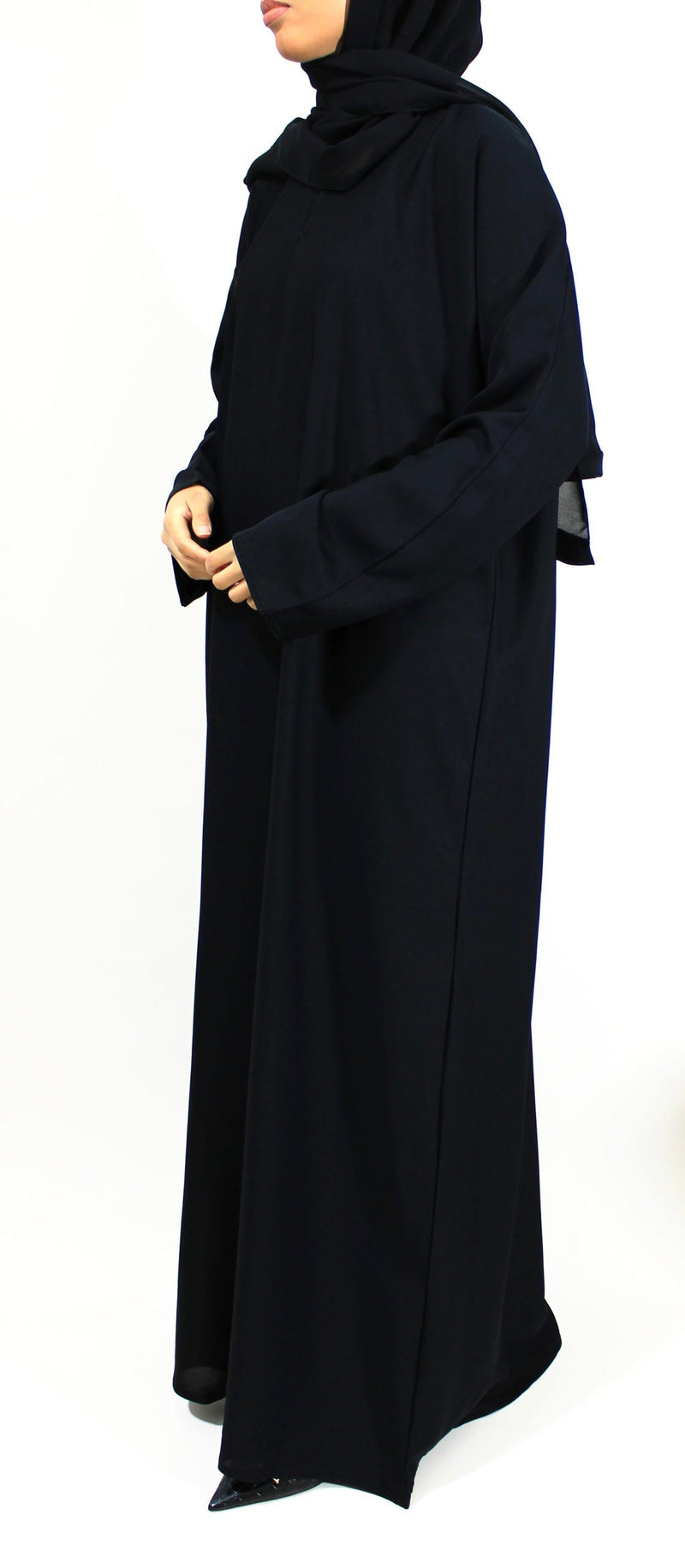
Front Open Burqa Layering Can Feel Effortless or Turn Into All-Day Adjusting — the Front Tells You Which
Front Open Burqas Need a Layering Plan Before They Feel Effortless
The front opening is the part that looks easiest in a still photograph and causes the most small surprises in real life. It can fall beautifully while you are standing straight, then shift when you reach for your bag, step into a car, carry shopping, hold a child’s hand or walk into a sudden gust of wind. That does not make the garment impractical. It simply means the opening has to be planned as part of the outfit, not treated as a pretty detail that will somehow behave by itself.
A closed outer layer makes many modesty decisions for you. A front open burqa asks you to make those decisions before you leave the house. What will show underneath if the panels separate? Will the base layer still feel decent when you sit down? Are the sleeves long enough when your arms move? Is the neckline secure, or are you expecting the outer fabric to protect an area it cannot reliably cover? These are not dramatic questions. They are the quiet things that decide whether the outfit feels graceful or fussy.
This guide is for the sister who likes the softness and ease of an open shape but still wants reliable coverage. It looks at underlayers, fastenings, sleeve behaviour, fabric weight, neckline security, walking comfort and the ordinary tests that matter far more than a mirror pose. If you are also comparing wider face-covering and scarf language, the niqab and hijab guide gives broader context. This article stays with the front opening itself and the practical layering that makes it work.
The aim is not to make getting dressed feel complicated. It is the opposite. Once the hidden decisions are made well, you stop fussing with the garment every few minutes. You know which base dress works, where the fastening should sit, which scarf arrangement protects the chest, and which shoes let the hem move properly. Effortless dressing usually looks effortless because the planning happened before anyone saw the outfit.
Why the Front Opening Changes the Whole Outfit
A front open burqa has a different character from a fully closed style because the centre line becomes active. It moves, frames the underlayer and responds to the body rather than sitting as one uninterrupted piece of fabric. That can be elegant. It can create length, ease and a softer silhouette. It can also reveal very quickly whether the outfit underneath was chosen with enough care.
The first mistake is assuming the outer garment will do all the modesty work alone. With an open front, the inner layer is visible during normal movement. It appears when you walk quickly, sit down, bend slightly, turn sideways or face wind. If the layer underneath is too thin, too shaped, too short or simply too casual for the situation, the outer layer will not hide that weakness. It will frame it.
The second mistake is treating the opening as automatically casual. Some open burqa designs are relaxed, but others can look polished and dignified when the layers beneath are quiet. A plain underdress, secure scarf, calm sleeve combination and well-placed fastening can make the whole look composed. Without those decisions, even a beautiful outer layer can look like it was thrown on at the last second.
There is also an emotional side to an open garment. A sister may be fully covered and still feel uneasy because she knows the panels can shift. If that awareness keeps pulling her attention back to her clothes, the outfit is not serving her yet. Modest clothing should give a woman steadiness, not leave her negotiating with fabric every time she crosses a road or stands up from a chair.
The Underlayer Must Be Modest Before the Outer Layer Goes On
The underlayer is the foundation of a front open burqa. It should not be an old dress chosen because it happens to be nearby. It should be something you would feel comfortable being seen in if the front panels moved apart. That does not mean it has to be formal or decorative. It means it has to be opaque, loose enough, long enough and calm enough to belong to the outfit.
A plain underdress often works better than separates because it creates one continuous line beneath the opening. There is no top riding up, no waistband making a ridge, and no awkward gap appearing when you bend or sit. A loose tunic and skirt can work too, but they need more checking. The tunic must stay long during movement, and the skirt should not cling or twist beneath the outer layer.
Think of the underlayer as the garment that protects your peace. If it is strong, the outer layer can move without making you anxious. If it is weak, every shift of fabric feels like a problem. A front open burqa feels most natural when the base outfit could stand alone modestly and the outer layer adds grace, shape and privacy rather than emergency coverage.
Colour harmony helps as well. A matching base can look sleek, but it is not the only answer. Tonal combinations can feel softer and more personal: charcoal under black, cream under brown, navy under grey, or a muted dress under a darker outer layer. The important thing is that the inner garment looks intentional. If it looks like something accidentally revealed, the open design loses its calm.
Fastenings Should Support the Opening Without Fighting It
Fastenings are the difference between a front open burqa that behaves and one that constantly asks for attention. A closure does not need to turn the whole garment into a closed style. It only needs to hold the areas that matter most. The upper chest, the neckline and the point where the panels begin to separate are usually more important than a neat line all the way down.
A discreet snap, hidden hook, internal tie or small button can be enough if it sits in the right place. The best fastening almost disappears. It lets the fabric fall naturally while preventing sudden exposure in wind or movement. A poor fastening pulls the panels out of shape, creates strain lines, traps your stride or makes the garment look tense. Security is useful only when it keeps the garment graceful.
More fastenings are not always better. Closing the front too firmly may make sitting uncomfortable or make stairs difficult. A lower fastening can help on windy days, but it should not narrow the stride so much that you start taking short, careful steps. Modesty should not require you to move as though your clothing is working against your body.
Pins can be useful, but they should be chosen with restraint. A heavy pin can drag delicate fabric. A sharp pin used repeatedly in the same area can leave marks. A pin placed too close to the scarf can disturb the face and chest arrangement. If you rely on pins, test them while sitting, walking and lifting your arms. The fastening plan has succeeded when you forget about it.
Sleeves and Wrists Need Their Own Plan
Wrists are often where an otherwise modest outfit quietly fails. The front may be covered, the underdress may be loose, and the scarf may be secure, yet the sleeves reveal more than expected when you reach for something. With an open burqa, sleeve movement is more noticeable because the outer layer already has movement at the front. If the sleeve plan is weak, the whole outfit feels less settled.
The easiest approach is to secure the inner sleeve first. A long, comfortable inner sleeve protects coverage when the outer sleeve shifts. It should not be so tight that it feels like sportswear under a modest garment, and it should not be so loose that it bunches under the outer sleeve. A soft cuff or gently fitted wrist can be enough.
Outer sleeves can be wide, straight, flared or gathered, but each shape behaves differently. A wide sleeve looks elegant when the arm is down but can fall back when lifted. A straight sleeve is easier for errands but may look plain if the rest of the garment is formal. A gathered wrist gives security but can feel warm. The right choice depends on the use, not only on the look.
Before wearing the garment outside, do ordinary sleeve tests. Reach for a high shelf. Pick up a bag. Pretend to hold a rail on public transport. Adjust your scarf. If your wrist or lower arm appears every time, do not ignore it. Add a better underlayer or choose a different sleeve combination. Small coverage gaps become large irritations when repeated through the day.
The Neckline and Chest Area Decide How Secure You Feel
The neckline is the part many women notice only after they have left the house. A front open shape can pull the eye towards the centre of the body, so the scarf and chest coverage need to be deliberate. If the underlayer has a low neckline, if the scarf is too narrow, or if the outer panels slide apart near the collarbone, the outfit will feel insecure even if the lower body is covered.
A higher underlayer neckline is usually easier. It gives coverage before the scarf is added and reduces pressure on the hijab arrangement. A longer scarf, khimar-style layer or chest-covering drape can also work well, especially when the front panels are soft and moving. The goal is not to pile fabric around the throat. It is to create a calm upper body that does not need constant pulling.
If the garment is worn with niqab, the plan has to include the face veil without assuming the niqab solves everything. The niqab covers the face, but it does not automatically secure the neck, chest or underlayer. The scarf beneath or around it must still sit properly with the open outer layer. The front panels should not catch on the veil or pull the fabric when you turn your head.
This is where mirror checks should be honest rather than rushed. Look from the front, then from the side. Sit down and see whether the neckline opens. Turn your head as if greeting someone. Lift your arms gently. If the chest coverage changes too easily, strengthen the base before relying on the outer burqa. A secure upper body makes the entire outfit feel more dignified.
Fabric Weight Changes the Mood and the Modesty
Fabric weight is not just a comfort detail. It changes how the front opening behaves. A very light fabric may feel airy and beautiful indoors, but it can fly open outside, cling to the underlayer or reveal the outline of seams beneath it. A heavy fabric may feel secure, but it can pull at the shoulders, drag at the fastenings or make the outfit too warm for long wear.
The most useful fabrics sit somewhere between collapse and stiffness. They have enough weight to fall cleanly, but enough softness to move without looking harsh. A fabric with a gentle drape can make the front panels feel elegant because they return to place after movement. A fabric that creases sharply, sticks to the underlayer or twists around the legs can make even a good design feel difficult.
Texture matters too. A slippery outer layer over a slippery underdress can slide constantly. A textured underlayer beneath a delicate outer fabric may catch. Shiny fabrics can make the opening more noticeable, especially if the base layer also reflects light. Matte combinations usually feel calmer for everyday modest wear because they do not draw attention to every fold and movement.
Season should guide the decision. In warm weather, breathable layers are more important than a dramatic silhouette. In cold weather, the open shape can work well over warmer garments, but bulk needs control. A thick jumper under a fine open burqa may distort the shoulders and sleeves. A warmer underdress or smooth thermal base is often neater than adding random layers beneath a flowing garment.
How to Keep Shape Without Making the Outfit Heavy
Many women choose an open style because they want ease rather than a sealed, heavy feeling. The challenge is keeping enough shape for modesty without building an outfit that feels overloaded. A front open burqa should not need five layers, six pins and constant correction to feel acceptable. If it does, the base plan is probably too complicated.
Shape begins with the underlayer. A loose but structured base helps the outer fabric sit properly. If the underdress clings, the outer layer has to hide too much. If the underdress is huge and bulky, the open panels may balloon or sit unevenly. The best base often has quiet structure: enough room for movement, enough weight to hang cleanly, and no unnecessary gathers beneath the opening.
The outer layer should add vertical flow rather than extra confusion. Clean panels, calm seams and simple edges often look more elegant than busy decoration. A little detail can be beautiful when it belongs to the garment. Too much detail around the opening, sleeves and hem can make the eye jump everywhere, especially when the front is already moving.
Balance is the word to keep returning to. Secure the parts that need security, and let the rest breathe. Choose one main detail rather than several. Let the underlayer be calm if the outer layer has texture. Let the outer layer be simple if the scarf has more presence. Modest dressing can be rich without becoming crowded.
Everyday Wear Needs Different Checks From Occasion Wear
A front open burqa for a quiet visit, Eid gathering or women’s event may be judged differently from one you wear for errands, school runs or travel. Occasion clothing can tolerate slightly more delicacy because the movement is limited. Everyday clothing needs endurance. It has to survive shoes being changed, doors opening, children pulling, bags rubbing and weather interrupting your plan.
For everyday wear, the question is not only whether the garment looks modest when arranged. It is whether it stays modest when life happens. Can you climb stairs without lifting the front too high? Can you sit in a car without the panels exposing the underlayer awkwardly? Can you carry a tote bag without dragging one side of the garment? These tests matter because everyday modesty is lived in motion.
Occasion wear can allow softer sleeves, a more delicate fastening or a slightly richer fabric, but it still needs an honest base. A special garment should not make you feel fragile. If you spend the whole gathering checking whether the panels are still in place, the outfit has become a distraction. Beauty should support confidence, not replace it.
The most useful wardrobe approach is to separate your open styles by function. One may be for easy daytime wear with a strong underdress and simple fastening. Another may be for visiting and more polished settings. Another may be too delicate for outdoor wind but lovely indoors. Knowing the role of each garment prevents disappointment and helps you choose without forcing one piece to do every job.
Open Burqa Designs Look Best When the Detail Stays Quiet
Open burqa designs can be elegant, but they do not need loud detail to prove it. The front opening already creates a visual feature. It draws a line through the outfit, frames the underlayer and moves as you walk. If heavy embroidery, shiny trims, dramatic sleeves and a busy scarf all compete at once, the garment can lose the calm that made it attractive in the first place.
Quiet detail often has more lasting beauty. A clean edge, a soft sleeve finish, a subtle panel shape, a delicate border or a thoughtful fastening can make the garment feel refined without making it feel showy. The detail should help the eye understand the shape. It should not make the wearer feel as though she has to perform the outfit.
Think about where the detail sits. Detail near the centre opening will be seen often because the panels move. Detail at the sleeve will be noticed when the hands move. Detail at the hem may be beautiful but needs enough weight and length to stay clean. If detail appears everywhere, nothing feels intentional. If it appears in one or two places, it can feel chosen.
This is especially important for sisters who want modest clothing to feel beautiful but not attention-seeking. The answer is not always plainer clothing. Sometimes it is better placement. A front open burqa with one graceful detail and a calm underlayer can feel more elegant than a heavily decorated piece that makes the whole outfit restless.
The Wind, Stairs and Sitting Test
The mirror is useful, but it is not enough. A front open burqa has to be tested in the situations that usually reveal problems: wind, stairs and sitting. These three moments tell you more than a full-length photo. They show whether the front panels separate too much, whether the underlayer remains modest, whether the hem trips you, and whether the fastenings still feel comfortable.
Wind tests the honesty of the opening. You do not need to stand outside in a storm to understand this. Walk across a room quickly, turn around, or gently move the panels with your hands. If the garment opens widely and the underlayer feels too exposed, you need either a stronger base layer or a discreet fastening. If the fabric flies around your legs, the weight or cut may not suit outdoor wear.
Stairs test stride and hem control. A garment can look long and elegant while standing, then become awkward when you lift your foot. If you need to hold too much fabric, the front may open more than you want. If the lower fastening restricts your step, you may start moving unnaturally. A modest garment should allow careful, dignified movement without making ordinary steps feel like a negotiation.
Sitting tests the neckline, lap and side drape. Some front panels fall open when seated, especially if the fabric is slippery or the fastening is too high. Sit as you would on a chair, in a car and on a lower sofa if relevant. Look at the lap area and chest line. If everything still feels covered without your hands holding the garment in place, the outfit is much closer to real ease.
A Reliable Layering Formula Makes Mornings Easier
The easiest way to wear a front open burqa regularly is to build a formula rather than start from nothing each time. A formula is not a uniform. It is a dependable order of decisions. Once you know the base, scarf, fastening and footwear that work, you can vary colour and fabric without rebuilding the whole outfit every morning.
Start with the base layer. Choose an opaque underdress or modest outfit that gives complete coverage. Then add the scarf or face-covering arrangement and check the neckline before the outer garment goes on. After that, put on the open burqa and decide which fastening point is needed for that day. Finally, check shoes and hem length together because footwear changes how the garment moves.
A simple everyday formula might be: plain long underdress, secure inner sleeves, chest-covering scarf, front open burqa with one upper fastening, comfortable shoes and a bag that does not drag the shoulder. A more polished formula might use a smoother underdress, slightly richer outer fabric and a neater scarf finish. The formula changes in mood but not in modest logic.
This approach is especially helpful if you are building modest dress into a busy life. You may not have time to experiment every morning. You may be getting children ready, preparing for work, travelling, studying or managing family responsibilities. A reliable formula lets the garment support your day instead of becoming another decision that drains you before you leave.
Common Mistakes That Make the Outfit Feel Fussy
One common mistake is choosing a base layer only for colour. A matching colour helps, but it cannot fix poor coverage. If the underlayer is thin, tight or too short, matching it to the outer garment only makes the problem more coordinated. The base must be modest first and harmonious second. That order matters.
Another mistake is using too many visible fixes. Several pins, a belt, a tight scarf, extra sleeve covers and a bag placed strategically can make the outfit feel anxious. Sometimes the cleaner answer is to change the underlayer or choose a garment with better natural closure. Fixes should simplify the experience, not advertise that the outfit is struggling.
A third mistake is ignoring fabric relationship. A soft open burqa over a stiff underdress may not fall well. A slippery outer layer over a shiny base may keep moving. A heavy underlayer beneath a fine outer fabric may create uneven shoulders. The pieces do not have to be identical, but they should agree with each other in weight and behaviour.
Finally, many women forget to check the outfit with the bag they actually plan to carry. A crossbody bag can pull the panels apart. A heavy shoulder bag can drag one side lower. A backpack can crush the back drape. If the bag changes the garment, it is part of the styling plan. Treat it that way before leaving.
Buying With Real Life in Mind
When choosing a front open burqa, do not judge only by the front view. Look at the shoulder line, sleeve shape, fabric weight, fastening options and the way the panels are cut. Ask yourself whether the garment is designed to move gracefully or whether it looks good only when perfectly arranged. A beautiful hanger shape can become difficult if it has no practical structure.
Check the opening length carefully. Some styles open all the way down; others have partial closure or overlap. A full opening needs a stronger underlayer. A partial opening may feel more secure but can still need chest and neckline planning. Neither is automatically better. The best choice is the one that matches your coverage expectations and daily routine.
Sleeve length deserves real attention. If the sleeve is wide, ask what you will wear underneath. If the cuff is gathered, check comfort. If the sleeve is decorated, think about whether it will catch on bags, bracelets or door handles. Small frustrations matter because they decide whether you reach for the garment often or leave it untouched.
Do not buy a garment hoping it will change your habits completely. If you walk a lot, choose movement. If you drive, test sitting. If you are usually carrying things, choose secure panels. If you dislike pins, do not choose a style that only works with several pins. Good modest clothing should meet your life with respect.
How This Style Fits Into a Wider Modest Wardrobe
A front open burqa does not need to replace every other outer garment. It can sit as one option in a wider modest wardrobe. Closed abayas, jilbabs, khimars, overhead pieces and open outer layers all serve different moods and routines. The wisdom is knowing which garment supports which day.
An open style can be useful when you want the softness of an outer layer without feeling sealed into one shape. It can work over a dependable underdress for visits, everyday errands or calm occasions. It can also help when you want the appearance of layered dressing but still need the coverage to remain serious. The underlayer is what keeps that flexibility modest.
It should not be confused with garments that have a different job. A khimar has its own head and chest coverage role. A jilbab has its own outer coverage structure. A niqab covers the face. A front open burqa may interact with all of these choices depending on language and local use, but the open garment still needs its own layering plan. Clear distinctions prevent muddled outfits.
There is no need to force one word or one garment to carry every modest dressing need. A good wardrobe gives you options without confusion. If a front open style makes certain days easier, keep it for those days. If a closed garment is better for travel, wind or simplicity, honour that too. Practical modesty is allowed to be flexible.
A Note on Burqa Language and Community Use
Modest clothing language changes by country, family, shop and community. One sister may say burqa and mean a full outer garment with face coverage. Another may use the word for a loose outer layer worn with niqab. Another may be describing a front open piece that functions more like an outer abaya in her local vocabulary. Because of this, kindness matters when discussing the garment.
The practical questions are often more important than correcting someone’s wording. Does the garment cover the body shape? Does it need an underlayer? Does it include face coverage, or is that separate? Does it open at the front? Does it behave in wind? Does it suit salah movement if she needs to pray while out? These questions help a woman choose well without making her feel embarrassed.
For a new Muslim or someone changing her wardrobe, terminology can feel intimidating. She may already be nervous about asking basic questions. Clear, gentle explanations are more useful than sharp corrections. You can say that this article is discussing an open-front outer modest garment and its layering needs. That keeps the guidance precise without making vocabulary the centre of the conversation.
At the end of the day, the garment name does not protect modesty by itself. Coverage, opacity, movement, neckline security and intention do. If the piece called a burqa behaves like an open outer layer, it needs the planning of an open outer layer. That is the honest way to make the guidance useful across different communities.
Prayer, Movement and Respectful Practicality
If you are wearing a front open burqa while out and may need to pray, think carefully about movement before the prayer time comes in. Salah asks the body to stand, bow, prostrate and sit. Clothing that feels fine while walking may shift differently in sujood. The underlayer, chest coverage and sleeves need to remain secure without you using your hands to hold everything together.
This does not mean turning every open outer garment into prayer clothing. It means being honest about whether the outfit you are already wearing will remain modest if you need to pray in it. A secure underdress, reliable sleeves and a chest-covering scarf make a real difference. A front opening that falls apart every time you bend will make prayer feel distracted rather than settled.
At home, many women prefer dedicated prayer clothing because it removes decision-making. Outside, you may be relying on the outfit you have on. In that case, a front open burqa should be checked for bowing and sitting, not only walking. The panels should not expose a base layer that is too fitted, and the scarf should not slide away from the chest or neck.
There is a quiet mercy in preparing for prayer before you are rushing. You are not only styling fabric; you are making space for worship in the middle of real life. If a small fastening, a better underlayer or a longer scarf helps you pray with less worry, that is not overthinking. It is clothing serving something more important than appearance.
Different Weather Needs Different Layer Discipline
Weather changes the behaviour of a front open burqa more than most women expect. On a still, mild day, the panels may fall softly and stay close without much help. On a windy street, the same panels can lift, twist or separate. In rain, a hem can feel heavier and a slippery underlayer can become harder to manage. In warm weather, extra layers can make you feel tired before you have even reached your destination. The solution is not to avoid the style. It is to treat weather as part of the layering plan.
For wind, security matters more than decoration. A strong underlayer, a discreet upper fastening and a scarf that covers the chest without sliding will do more for modesty than a dramatic fabric with no control. For rain, think about length, footwear and fabric recovery. A garment that drags at the hem or holds water can become uncomfortable quickly. For heat, choose breathable layers that are still opaque, because thinness alone is not modest or comfortable if it makes you anxious in daylight.
Cold weather can make open styles easier in some ways because the extra layer feels useful. The risk is bulk. A thick jumper, heavy dress and flowing outer burqa can create too much volume around the shoulders and sleeves. A smoother warm base, a practical coat if needed, and a front opening that still allows clean walking may feel better than stacking unrelated pieces underneath. Seasonal modesty is not about using the same formula all year. It is about keeping the same principles while changing the materials.
The most useful habit is to decide the day’s risk before you dress. Is the problem likely to be wind, warmth, wet pavements, long travel or sitting for hours? Choose the underlayer and fastening around that answer. A front open burqa becomes much easier when it is not expected to behave identically in every condition. You give it the support the day demands, and in return it feels less fragile.
The Bag, Shoes and Coat Are Part of the Layering Plan
Many women perfect the garment in the bedroom and then disturb it with the accessories they actually use. A shoulder bag can pull one side of the front open. A crossbody strap can press the fabric diagonally across the chest. A backpack can crush the back drape and make the panels sit unevenly. None of this means the outfit is wrong. It means the bag is not separate from modest styling. It is touching the garment, so it becomes part of the test.
The easiest bag is often one that does not drag the shoulder or force the front panels apart. A handheld bag, a light shoulder bag kept stable, or a structured tote can work depending on the day. If you need a heavy practical bag, test the outfit with it before leaving. Watch whether the opening shifts when the strap is placed where you normally carry it. If the bag creates exposure, adjust the fastening or choose a more secure outer layer for that day.
Shoes matter because they change the hem. A flat shoe may make the garment sit longer. A small heel may lift the hem just enough. Trainers may be practical but can catch certain fabrics if the hem is too low. Sandals may show more of the foot than intended when the front panels move. Footwear does not have to be formal, but it has to let you walk properly. A modest outfit loses dignity if every step feels cautious and awkward.
Coats add another layer of decision. A coat over a front open burqa can compress the panels and make the lower half behave differently. A coat under the burqa can create shoulder bulk. In cold weather, try the full outfit rather than assuming the coat will sit as it does over a closed garment. The aim is not perfection. It is knowing whether the layers still allow you to move, sit and keep the upper body covered.
How to Make the Outfit Feel Polished Without Looking Overdone
Polish usually comes from restraint. A front open burqa already gives visual interest through its layers, so the rest of the outfit can stay calm. Choose one main point of beauty: perhaps a graceful sleeve, a clean contrast underlayer, a soft fabric, or a subtle trim. If every part tries to be the feature, the outfit loses dignity and becomes tiring to look at.
Footwear affects polish more than many women expect. Shoes that catch the hem, show too much of the foot unexpectedly or make you walk awkwardly can disturb the whole outfit. A modest outer garment looks more elegant when the wearer can move naturally. The shoe does not have to be formal. It has to work with the hem, the weather and the pace of your day.
Bags also matter. A structured bag may suit a cleaner open style, while a soft tote may suit a relaxed one. The main thing is not to let the bag drag the panels apart. If your usual bag keeps pulling one side open, either change how you carry it or choose a more secure fastening. Practical details are part of polish, not separate from it.
The most elegant version of the outfit is often the one that looks unforced. The underlayer belongs, the scarf sits quietly, the outer fabric moves cleanly, and nothing looks as though it is being held together by fear. That kind of polish is deeply connected to comfort. When you feel settled, the garment settles with you.
Small Alterations Can Save an Almost-Right Garment
Sometimes the difference between awkward and effortless is not a new garment, but a small alteration. A fastening moved higher by a few centimetres can protect the chest better. A loose internal tie can stop the panels separating too widely. A sleeve lining can protect the wrist. A hem adjustment can make walking easier. These small changes are not glamorous, but they can turn a front open burqa from occasional wear into something genuinely useful.
Alterations should respect the original drape. If a closure pulls the fabric sideways, it may make the garment look strained. If a hem is raised too much, the underlayer may show more than intended. If a sleeve is narrowed without considering the inner layer, it may become uncomfortable. A good alteration solves one problem without creating two new ones. That is why it helps to identify the exact issue before changing anything.
Not every garment is worth altering. If the fabric is too sheer, the cut is too narrow, the opening is much wider than you like, and the sleeves are also impractical, you may be fighting the whole design. But if one detail keeps spoiling an otherwise beautiful piece, alteration can be wise. Modest dressing does not have to mean accepting every design as it comes. It can mean shaping the garment modestly around real use.
There is also a confidence benefit. Once a sister knows a garment has been adjusted for her life, she wears it differently. She stops feeling as though she is borrowing someone else’s idea of elegance. The front opening sits where she needs it. The sleeves behave. The hem no longer interrupts her stride. That quiet ownership matters because clothing becomes easier when it has been allowed to meet the wearer honestly.
A Gentle Note for Newer Sisters Building Modest Dress
If you are newer to modest dressing, a front open burqa can feel both appealing and confusing. It looks graceful because it has movement, but it also asks for more decisions than a closed garment. You might wonder whether you are doing it properly, whether the underlayer is enough, whether the scarf sits correctly, or whether other people will silently judge the way you use the word burqa. Those worries are real, but they do not have to control the experience.
Start with modesty before styling. Choose a base layer that makes you feel safe. Add a scarf or chest covering that does not need constant correction. Then add the outer garment. If the whole thing feels too much, simplify rather than blame yourself. Many confident-looking outfits are just the result of repeated trial and error. The sister who looks calm in her layers has probably had mornings where something did not sit right either.
Do not rush into the most delicate or dramatic version of the style if you are still learning what feels comfortable. A simple open shape with reliable fabric may teach you more than a heavily detailed design that demands careful handling. Once you know what kind of underlayer you like, how much fastening you need and how your scarf behaves, you can choose more expressive pieces with confidence.
Most importantly, let modest dress become a place of steadiness rather than punishment. You are allowed to learn. You are allowed to adjust. You are allowed to prefer practical beauty over dramatic beauty. A front open burqa should help you feel covered, dignified and able to move through the day. If it does that, it has served you well. If it does not yet, the answer is usually a better plan, not shame.
What to Do If the Garment Almost Works
Many front open burqas are not wrong; they are just unfinished in the way they are being worn. If the garment almost works, look for the one issue causing most of the trouble. Is the underlayer too visible? Is the fastening in the wrong place? Is the sleeve exposing the wrist? Is the fabric too slippery? One focused correction is usually better than adding several new complications.
If the opening feels too wide, try a discreet upper fastening before rejecting the garment. If the base looks too casual, replace it with a plain underdress. If the outfit feels heavy, remove unnecessary layers and choose a more breathable base. If the scarf keeps shifting, solve the neckline first instead of blaming the outer garment. The problem is often in the relationship between pieces.
If the garment still feels wrong after honest adjustments, that is useful information. Not every style suits every woman’s routine, body, climate or comfort level. A front open burqa may be beautiful and still not be the easiest piece for a windy commute or a day full of carrying children. Modesty includes wisdom. You are allowed to choose what supports you best.
Do not keep a garment in your wardrobe as a source of guilt. Either learn how to wear it calmly, reserve it for the setting where it works, alter it if appropriate, or let it go. Clothing should not sit there accusing you of failing to become the woman you imagined when you bought it. It should serve the woman you are actually trying to dress with dignity.
Final Thoughts: Effortless Usually Means Prepared
The effortless look is often misunderstood. People see a woman wearing a front open burqa with calm confidence and assume the garment itself did all the work. Usually, the ease came from decisions nobody else can see: the right underdress, a secure neckline, sleeves that stay covered, a fastening that holds without pulling, fabric that moves cleanly and a hem that lets her walk like herself.
There is comfort in that because it means elegance is not mysterious. It is built from practical choices. You do not have to be naturally stylish or own a wardrobe full of perfect pieces. You need to notice what makes you tug, worry or hesitate, then solve that specific issue. Sometimes the answer is as small as changing the underlayer. Sometimes it is choosing a calmer sleeve, a better fastening or a fabric with more reliable drape.
A front open burqa can be modest, practical and beautiful, but it asks for honesty. If the base layer is not modest enough, admit it. If the sleeve exposes your wrist, fix it. If the fabric flies open in wind, add a secure point or choose a different day for that style. If the outfit feels busy, remove detail. These are not failures. They are the normal work of making clothing serve your life.
The best modest outfits give you back your attention. They let you think about your prayer, your family, your errands, your guests, your Lord and your responsibilities, rather than the front panel you keep pulling closed. That is the quiet beauty of planning well. Once the layers are right, you stop negotiating with the garment and start simply wearing it.