One brooch, a different abaya outfit
A brooch is one of the easiest ways to change a plain abaya without buying another garment. A small dark pin can almost disappear into black fabric; a curved leaf or a pale stone can become the one detail you notice. The interesting part is not how many accessories you add, but where you place this one.
Before choosing a design, turn it over. The fastening, weight and back surface will decide whether it is a useful partner for your abaya. An attractive brooch that drags the front down or catches your scarf is not the finishing touch you had in mind.
Here is how to choose an abaya pin or brooch, plan its position and wear it without asking delicate fabric to do a job it cannot comfortably support. The aim is a detail you enjoy, not a complicated arrangement that needs watching all day.
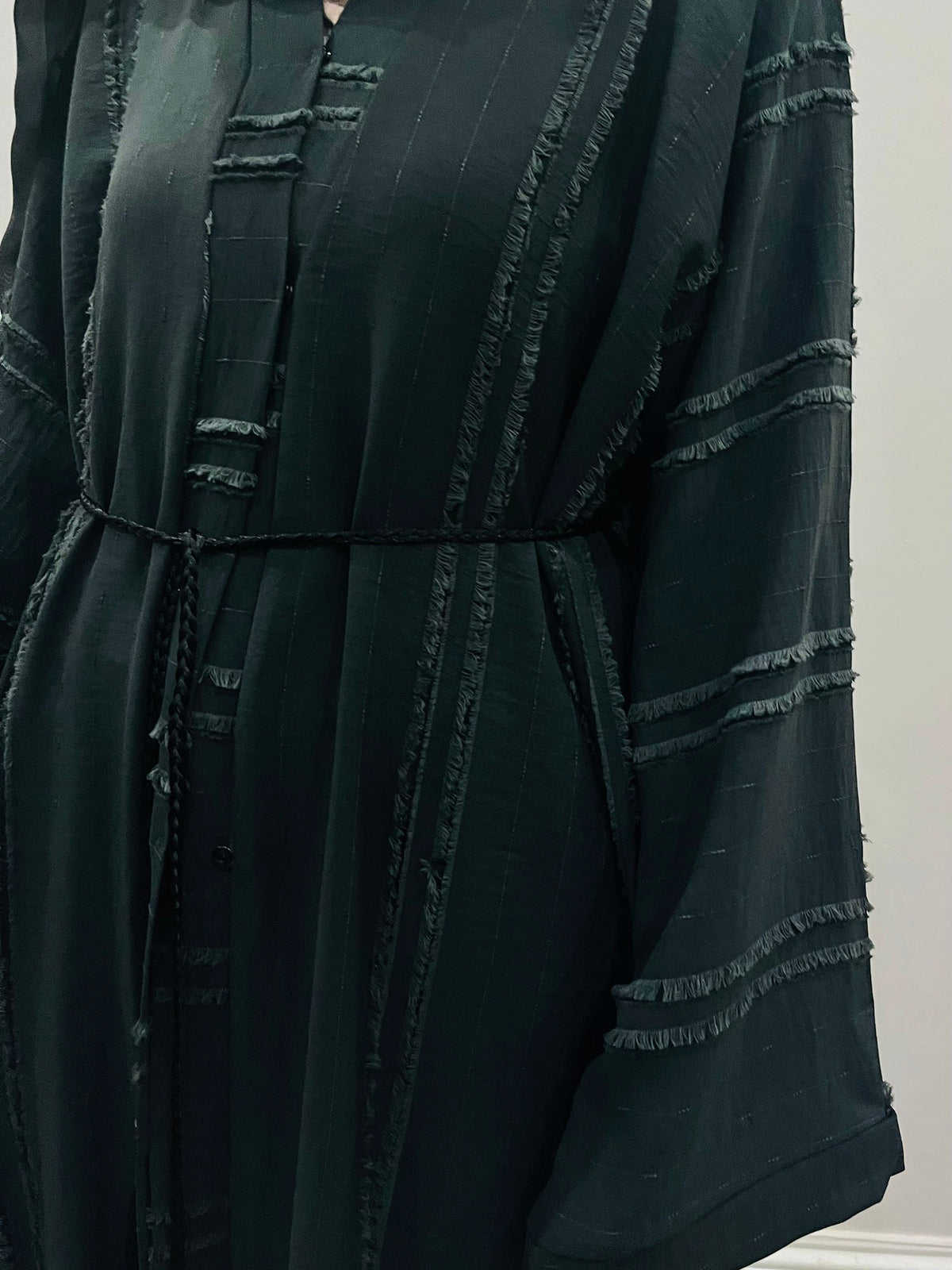
A plain black abaya provides the starting point for a removable accessory. The fastening shown belongs to the garment itself; a brooch is separate.
Decide whether you need decoration or a closure
Those are different jobs. A decorative brooch adds interest to a garment that already fits and provides the coverage you want. A functional closure has to hold an opening reliably through movement. Some accessories may be designed to help with both, but appearance alone does not establish that capability.
If an open abaya does not close the way you need, first consider its construction and the outfit beneath it. A brooch can bring two points together while leaving the rest of the opening free to move. It does not turn every outer layer into a closed dress.
Try the garment without the pin and ask what is actually missing. Perhaps you like the open front and only want a small accent. Perhaps a button needs repair. Perhaps the inner dress does not provide the coverage you intended. Those situations deserve different solutions.
A proper alteration or replacement fastening may be preferable where the garment needs structural work. Explain that need to a suitable professional rather than using a decorative pin to take all the strain of an opening. Jewellery should not have to rescue a poor fit.
Look at the back before falling for the front
Open and close the accessory away from your body, following its intended method. Make sure you can operate it without forcing it and that the point is contained when the fastening is closed. Do not wear a piece with a damaged catch or an exposed sharp end.
Inspect the reverse for rough joints, projecting decoration or an uneven surface that would rest against the garment. Run your eyes around the edges as well as the centre. A smooth-looking front can conceal something quite different behind it.
Consider the space between the pin and the decorative face. An accessory designed for a substantial lapel may not sit neatly on a thin single layer. Conversely, a very small fastening may not accommodate the thicker part of an abaya comfortably.
Check the direction in which the catch sits. You need to be able to close it securely in the position you intend to use, not only while holding the piece horizontally on a table. For an awkward placement, choose another position or another accessory rather than accepting an insecure fastening.
Compare size and weight separately
A broad, openwork design can occupy a noticeable area without looking solid. A small, dense piece may feel surprisingly substantial. Ask for dimensions and weight where those details matter; do not assume that a small photograph represents a lightweight brooch.
Visual size is a styling decision. Weight is also a practical one. The right combination depends on the fabric, its structure at the proposed attachment point and whether that area can bear the accessory without pulling.
Hold the brooch near the abaya before attaching it. Stand far enough from the mirror to see the complete outfit. Does the piece look pleasantly clear, barely visible or more dominant than you expected? You can make that decision without creating a hole in the garment.
A paper shape cut to the stated dimensions can help compare placement before buying online. It will not reproduce the metal, shine or weight, but it can reveal that a seemingly tiny leaf is actually quite large beside your neckline. Keep the paper against the garment by hand rather than using tape that might mark the fabric.
Choose a design with room around it
A simple geometric pin
A circle, bar or open oval can work when you prefer a small change to a plain outfit. Look at the lines already present in the garment. A straight front edge or a defined collar may give the pin a clear setting without needing another motif nearby.
Try the direction of a bar-shaped piece before fastening it. A diagonal position introduces a different line from a horizontal one. Neither is more sophisticated by definition; choose the arrangement that looks deliberate with the abaya rather than simply level with the floor.
A leaf, flower or branching shape
A curved motif can make an understated fabric feel more detailed. Consider which way it appears to grow or point. You might let a leaf follow the front edge, or place a flower where it has enough plain fabric around it to remain visible.
Check the tips and raised parts carefully. A branching shape may catch a scarf that repeatedly moves across it. If the only way to display it is to rearrange your coverage throughout the day, move the brooch lower or keep it for another garment.
A stone or pearl-style detail
One pale or reflective detail can provide enough contrast against a dark abaya. Ask what the materials actually are rather than assuming that a pearl-like bead is a natural pearl or that a clear stone is a particular gem.
Assess the attachment and the setting. A stone that appears loose, a raised claw or a sharp edge is worth resolving before wear. A modest price does not make a defect harmless, and a high price does not replace inspection.
A vintage or inherited piece
A brooch you already own may be more interesting to you than a new accessory chosen to match exactly. Its personal meaning is enough; you do not need to invent a historical origin for the design.
Have an unfamiliar or damaged catch assessed before wearing the piece. A treasured brooch deserves a suitable garment and dependable fastening, not a trial on the most delicate abaya in your wardrobe. Consider whether it is better carried or kept safely than worn in a situation where it might be lost.
Choose the fabric position, not just the visual position
A collar, front facing and single-layer sleeve can provide very different attachment areas. Inspect the inside of the abaya where you would like the brooch to sit. What looks like a substantial edge from the front may be a folded fine fabric rather than a reinforced section.
Do not assume that a seam is automatically strong enough or that every lining should be caught in the pin. The construction needs to guide the choice. If you cannot tell what the accessory would be passing through, ask for advice before attaching a valuable piece.
Sheer cloth, a loose knit, raised embroidery and a smooth, fine surface each need careful handling. Avoid promising yourself that any pin described as delicate will leave no trace. Even a small accessory may not be appropriate for the particular material.
Before making a permanent purchase, ask whether the garment is suitable for a pinned accessory. This is especially useful for an occasion abaya with a fine overlay. You may prefer a different focal point, such as earrings where they suit your covering or a decorative bag that does not contact the fabric.
Try four positions without fastening anything yet
Beside the neckline: this keeps the detail near the face, but it also places it close to scarf folds and movement. Hold the brooch there with the hijab arranged as you would wear it. Check whether the decoration is actually visible.
Along the upper front edge: a plain opening can provide a clear line for a small piece. Keep it clear of any zip, button or tie that needs to work independently. A brooch should not make the main fastening difficult to reach.
Lower on one front panel: this may give a longer scarf more space. Compare the position while standing and seated. A bag held against the same area may rub directly over the accessory, which is a reason to reconsider the pairing.
On a suitable outer jacket or coat: sometimes the brooch belongs on the more structured layer rather than the abaya. Think about whether you will remove that layer at the event. The outfit beneath should still feel complete without the decoration.
A waist placement needs particular care if it is also gathering fabric. That turns a decorative choice into a more demanding fastening job. Use it only where the accessory and garment are intended to work that way; otherwise, a suitable belt or alteration is a clearer solution.
Attach the brooch calmly, with the garment off
Work on a clean, stable surface with enough light to see the point and catch. Keep the accessory in a small dish when you are not holding it. Do not rest an open pin among scarf folds or put it in your mouth while arranging clothing.
Locate the intended area and confirm that you understand the fabric layers. Attach the piece using its own instructions, keeping the point away from your hands and body. Stop if the material resists, distorts or begins to snag; forcing it through is not a useful test.
Close the fastening fully and inspect both sides before putting the abaya on. Check that the point is safely contained and that no unintended inner garment or loose lining has been caught. A concealed fastening still needs to be secure.
Once dressed, let the cloth settle. If the brooch pulls or changes the neckline, remove the garment before repositioning it rather than making hurried adjustments near your skin. Repeatedly piercing neighbouring points can also create damage where a different accessory would be more suitable.
For a complex, valuable or delicate piece, get appropriate advice rather than treating general guidance as a substitute for its fastening instructions. There is no single pinning technique that suits every brooch and every textile.
Check what touches the brooch during the day
Start with the scarf. Turn your head, look down and reach forward. A loose end may pass over a flower or catch at a raised edge. Move the decoration away from that path where possible, keeping your preferred scarf coverage intact.
Then put on your usual bag. The strap may cross the accessory, or the bag may rest against it at the side. Test it with the contents you normally carry because the weight affects the position. Do not repeatedly drag a chain across the brooch to see whether it will catch.
Try any coat or jacket as well. Its lining and lapels may meet the pin when you move. A small accessory can become surprisingly awkward between two close layers. Removing it for the journey may be sensible if you have a secure way to store it and a practical place to put it on later.
For a seated gathering, check where the brooch rests against the chair or table edge. A lower placement that looks attractive while standing may feel uncomfortable when you lean forward. The fitting should reflect the occasion, not just the photograph.
Use one small detail in an everyday outfit
Begin with an abaya, scarf and shoes you already wear comfortably. Hold a plain brooch beside the garment and decide whether it adds something you genuinely enjoy. You do not have to make an ordinary outfit more elaborate simply because it is plain.
A dark brooch on a dark abaya can provide texture rather than a strong colour contrast. A small light detail near the front edge can create a different effect. Compare both with the actual scarf so you can see whether the area around the face already has enough interest.
Keep other accessories familiar during the first wear. Changing the brooch, scarf, bag and jewellery at once makes it harder to identify the source of an awkward interaction. A single addition is easier to assess.
Choose days when the pin suits your activities. It may be a pleasant detail for a quiet visit and less useful when you are carrying a child, using equipment or doing work where loose accessories are unsuitable. Follow the requirements of the setting rather than forcing the piece into every routine.
Give an occasion outfit a clear focal point
With a plain abaya, a more noticeable brooch can become the main decorative choice. Try a simple scarf and restrained jewellery before adding anything else. You may find that the pin supplies all the detail the outfit needs.
With an embroidered abaya, look for a quiet area rather than placing a new motif directly over the existing work. Alternatively, leave the brooch out and let the embroidery remain visible. An accessory does not become necessary because the occasion is important.
Compare metal tones beside the actual garment. Gold-toned and silver-toned pieces can each work with many colours, but their finish and size change the result. A brushed surface, a highly polished one and a cluster of stones are not interchangeable just because they share a colour.
For a wedding or other hosted event, use the invitation and your role to guide the overall outfit. Avoid choosing accessories solely to attract attention or compete with another person’s clothing. A detail you enjoy can be special without a promise that everyone else will notice it.
Our article on accessorising an embellished abaya considers the rest of the outfit. Keep the brooch as one deliberate decision within that whole arrangement.
Do magnets or clips avoid every fabric problem?
No fastening should be assumed harmless simply because it has no exposed pin. A clip still presses on the cloth, and a magnetic accessory has its own handling and product instructions. Check compatibility with the material and the job you need it to do.
For small magnetic pieces, safe storage matters. The UK product safety warning about small powerful magnets explains the serious risk from swallowing them and advises keeping them away from children. They should never be held in the mouth or left loose where a child could reach them.
The NHS advises immediate emergency help if a child may have swallowed a magnet: call 999 or take them to A&E straight away. This is not something to wait and observe at home.
Keep sharp pins, small parts and decorative beads secured as well. Choose an accessory you can manage safely in your household and routine. The convenience of avoiding a pinhole should not distract from other practical risks.
For a scarf rather than an abaya, the fitting questions differ. Our guide to choosing a hijab fastening focuses on that smaller, moving arrangement around the head and neck.
Questions worth asking before buying online
Request a clear reverse view, not only a styled photograph of the front. Ask about the fastening type, overall dimensions, weight and materials. A label such as vintage-inspired or luxury does not answer those practical questions.
Check what comes with the piece. Does it have a separate backing or a removable component? Is there a protective case? What instructions are supplied for use and cleaning? These details matter when the accessory is small enough to lose easily.
If buying for a specific garment, describe the fabric and proposed placement honestly. A seller may be able to explain the intended use of the pin, but should not be expected to guarantee an unseen abaya will tolerate it. Where the garment is particularly delicate, seek advice about the clothing too.
Keep the return and repair information relevant to the purchase. Inspect the accessory before attaching it to a garment, and raise a concern about a damaged catch promptly. Do not try to bend a new fastening back into shape and then assume it is dependable.
For a handmade commission, agree the size, back mechanism, materials and weight expectations as clearly as the decorative design. An attractive sketch does not explain how the finished piece will sit on cloth. Ask how the maker intends it to be worn.
A useful way to compare two brooches
Suppose you are choosing between an open silver-toned leaf and a compact stone-set oval for a plain navy abaya. Keep the scarf, bag and shoes unchanged. Hold each piece near the same suitable position and look at the complete outfit rather than comparing only the accessories in your hand.
The leaf may introduce a more noticeable outline; the oval may look quieter but feel heavier. Those are separate observations. Do not choose the leaf solely because it occupies more space or the oval because its smaller size seems automatically practical.
Now assess each fastening and the likely contact with the scarf. A raised leaf tip may be poorly placed beside a loose drape. The oval may sit more smoothly but pull the fabric. It is possible that neither suits this garment, even though you like both.
Try another suitable placement before buying a different abaya to accommodate the accessory. If the brooch works naturally on a jacket you already own, that can be its role. Every piece does not need to work on every garment to be worth keeping.
Remove the accessory before it becomes part of the laundry
Check for removable jewellery before cleaning or storing the abaya. A brooch left hidden beneath a scarf or inside a folded front can be easy to miss. Put it straight into a secure container rather than on the edge of the laundry basket.
Clean the accessory according to its own materials and instructions, separately from the garment. Do not assume that a jewellery cleaner is suitable for every stone, coating, glue or fabric detail. Avoid spraying products while the piece is attached to clothing.
Follow the abaya’s care label for the garment itself. A pinhole, snag or pulled thread should not be treated with guessed heat or forceful rubbing. Ask for suitable textile advice if a delicate area has been affected.
Store the brooch closed, protected from rubbing against other jewellery and away from children and pets. Keep any detachable backing together with it. A divided box or labelled pouch can be more useful than a crowded bowl in which points, chains and catches become tangled.
When something does not sit right
The fabric droops beneath the brooch: remove it and reassess weight, placement and the garment’s support. Do not keep moving it a few millimetres in search of a place that can hold an unsuitable piece.
The pin turns sideways: check whether the fastening and intended orientation suit that position. An unstable placement is not solved by forcing the catch tighter than designed. Ask the maker or a jeweller about a mechanical concern.
Your scarf keeps catching: move the decoration out of the scarf’s normal path or choose a smoother piece. Do not compromise the coverage you want simply to expose the brooch.
The outfit feels too busy: remove a necklace, bracelet or patterned scarf from the comparison. One brooch does not require a supporting cast of statement accessories. You may also decide the abaya looks best without it.
You are worried about losing a sentimental piece: assess whether the setting and fastening make wearing it a comfortable decision. A photograph or a different piece with personal meaning may suit the day better than spending the occasion checking the catch.
Choosing a brooch as a gift
Think about the garments the recipient actually wears, not only the colours you associate with them. Someone who enjoys fine chiffon may have fewer suitable attachment points for a heavy brooch than someone who regularly wears structured jackets. A photograph of a favourite outfit can help you choose a colour direction, but it will not tell you the fabric’s capacity to support the piece.
The fastening deserves consideration too. A small, stiff catch may be frustrating for someone who prefers straightforward accessories. Where possible, choose a design they can operate comfortably rather than assuming a beautiful front will outweigh an awkward back.
Keep the materials and care information with the gift, together with any exchange arrangements that apply. Avoid fastening it to a delicate scarf purely for presentation; use its box or another suitable secure container. That allows the recipient to decide where it belongs without first having to remove it from fabric.
A personal note can explain what made you think of them without making claims about the motif’s origins or symbolism. You might mention a colour they enjoy or a shape that reminded you of their garden. Personal meaning does not need an invented cultural story to make a gift thoughtful.
Keep the pieces you enjoy wearing
You do not need a brooch in every colour or a separate one for each abaya. One light, manageable accessory that works with several outfits may be more useful than a drawer of pieces chosen only for their appearance in a photograph.
After a successful wear, note the garment and placement that worked. Check the catch before the next outing and reassess the combination when you change the scarf or bag. Small changes elsewhere can affect the way the accessory sits.
The best abaya pin does not make a grand claim about your style. It gives a familiar garment a detail you like, stays where it belongs and allows you to forget about it while enjoying the rest of your day.