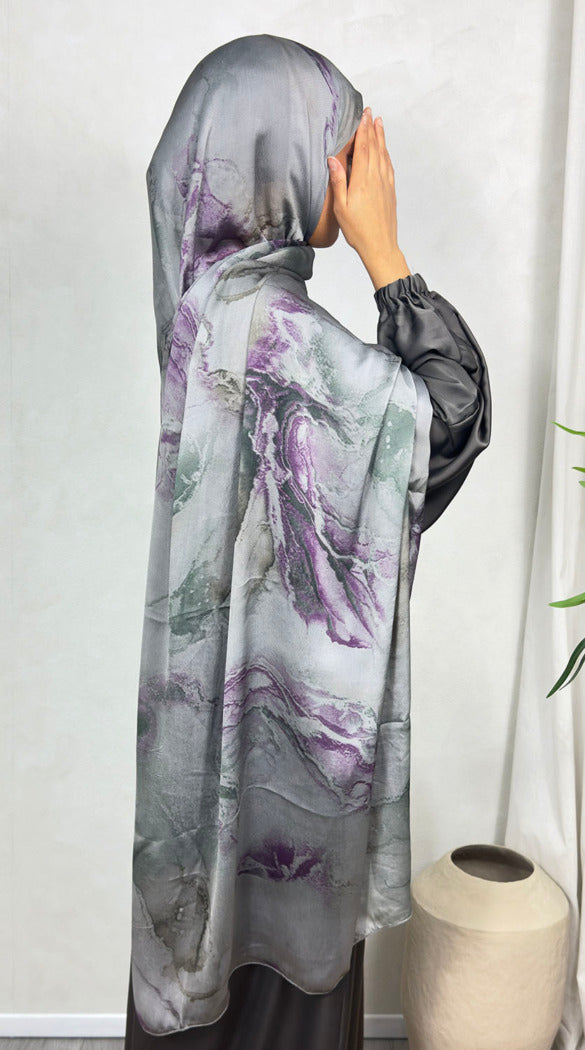
New Simple Abaya Style Can Still Feel Fresh When You Keep the Ease That Made Simple Dressing Work
There is a particular disappointment that comes with an abaya that looks wonderfully fresh on a hanger and becomes hard work the moment you wear it. The sleeve catches when you reach for your bag. The fabric needs constant rearranging. The shape that looked beautifully clean in a photograph suddenly feels stiff once you sit down, walk quickly or add the layers you actually need. Nothing is dramatically wrong with it, yet you keep reaching past it for the older abaya that lets you get on with your day.
That is the useful place to begin when you want a new simple abaya style. Newness is not valuable because a seam moved, a cuff changed or a detail appeared on social media. It is valuable when the design gives you something genuinely better without taking away the quiet ease that made an abaya dependable in the first place. For many women, that ease is a combination of room, coverage, soft movement, sensible sleeves, an uncomplicated neckline and a fabric that behaves predictably. A fresh design should respect those things rather than treating them as old-fashioned.
This is also why “simple” deserves more thought than it usually gets. Simple does not mean empty, severe or interchangeable. A beautifully simple abaya can have a precise shoulder, a fuller hem, a softly structured cuff, restrained embroidery, a narrow stripe, a subtle texture or a carefully placed fastening. What makes it simple is that the elements cooperate. Your eye does not have to process five competing ideas, and your body does not have to manage five separate inconveniences.
If you are still working out which abaya shapes, fabrics and details suit you, our complete abaya guide gives the wider foundation. Here, the question is narrower and more personal: how do you choose something that feels current without sacrificing the ease you already know you need?
Freshness should feel like a small improvement, not a new personality
A wardrobe can make us believe that change has to be obvious before it counts. We see a dramatic sleeve, a new cut or an unfamiliar finish and think that this is what “new” must look like. But the most successful update is often much quieter. It might be an abaya with the same relaxed line you have worn for years, only with a cleaner cuff. It may keep the plain front you trust but introduce a slightly wider hem. It may use a familiar dark neutral in a fabric with more depth, or replace a decorative fastening with one that lies flatter.
Those changes can look modest on paper, yet they matter because they improve the experience of wearing the garment. The point is not to prove that you have noticed every new design. The point is to feel like yourself in something that has been considered properly. If an abaya forces you to alter your posture, rethink every layer or become unusually conscious of your body, the freshness has become a burden.
One useful question is: what am I hoping this new abaya will solve? Perhaps your older everyday pieces feel too heavy in mild weather. Perhaps you want sleeves that stay practical when you wash your hands. Perhaps you have grown tired of details that snag on coats. Perhaps your current silhouettes are comfortable but visually flat. A specific answer immediately makes shopping easier because you can judge design changes by whether they solve a real problem.
This is especially helpful when you are drawn to trend-led images. A photograph can make an exaggerated sleeve or sharply structured overcoat shape look compelling because the image lasts one second. Your day lasts much longer. You bend, carry, sit, layer, eat, travel and pray. An abaya earns its place by surviving that fuller test. Freshness should make the garment feel more natural in your life, not make your life perform for the garment.
There is no contradiction in wanting something new and wanting continuity. In fact, continuity is what stops a wardrobe from becoming a series of experiments. Keep the qualities that already serve you, then update one or two things with intention. That is how a simple abaya can look different without feeling foreign.
Start by naming the ease you do not want to lose
“Comfortable” is too broad to be useful when you are comparing abayas. Two garments can both be described as comfortable while behaving completely differently. It helps to break ease into the things your body actually notices.
For one woman, ease means generous room across the shoulders because she dislikes feeling a seam pull when she reaches forward. For another, it means a sleeve opening that stays out of the way. Someone who drives often may care about how much fabric gathers under her when she sits. A woman who walks through windy streets may prefer a little weight and less uncontrolled volume. If you layer beneath your abaya, ease might mean enough space through the armhole and upper body to accommodate that layer without changing the outer silhouette.
Think about your most-worn abaya and ask why it keeps winning. Do not answer with its colour or the fact that you have owned it for years. Look at the mechanics. Does the shoulder sit in a forgiving place? Does the fabric fall away from the body rather than catching? Is the hem full enough for a natural stride? Can you put it on without planning the rest of the outfit around one awkward feature? Does it still feel composed after you have been sitting for an hour?
Those are design clues. Write them down mentally before you look at anything new. They become your non-negotiables. You can then be adventurous around them rather than accidentally replacing them.
This approach is particularly useful if you love the idea of a simple elegant abaya but have previously bought pieces that felt too formal for ordinary life. Elegance does not require stiffness. A clean line can be created by good proportion rather than rigid fabric; a graceful sleeve can be cut with enough control to remain practical; a subtle trim can add finish without making the whole garment precious. If ease is one of your non-negotiables, elegance has to work with it.
The same applies in the opposite direction. If your favourite old abaya is wonderfully easy but has begun to feel shapeless or tired, do not conclude that ease is the problem. Keep the room you love and look for a better shoulder, more deliberate hem, improved fabric or neater finishing. You are refining a successful formula, not abandoning it.
The silhouette does more work than decoration ever can
Before considering embroidery, pearls, stones, piping or prints, stand back and look at the outline of the garment. The silhouette determines how an abaya occupies space around the body, how it moves and how visually calm it feels. A simple design with an excellent line will usually look more resolved than a heavily decorated garment whose proportions are fighting each other.
A straight or gently A-line shape tends to feel quiet because the eye can read it immediately. A fuller shape creates softness and movement, but the fullness needs to begin in the right place. Too much volume high on the body can feel cumbersome under outerwear; too little through the lower half can restrict stride. A batwing or very dropped construction can feel wonderfully easy through the torso, yet some versions create a great deal of fabric at the arm, which matters if you work at a desk or wear a coat over it.
Do not rely on the front-on product photograph. Look for side and back views, and notice where seams sit. A seam can change a garment more than a decorative motif. Princess-style panels can introduce shape and flow without making an abaya fitted. A dropped shoulder can soften the upper body. A centre-back seam may help the garment hang more cleanly. A tier or skirt-like lower section can add movement, though the join should not create bulk where you do not want it.
Coat-inspired and trench-inspired abayas deserve the same scrutiny. Their appeal often comes from familiar tailoring details: a stronger shoulder, lapel-like lines, storm-flap references, cuffs or a more structured front. Those details can make a simple outfit feel modern, but they should not turn the abaya into a restrictive coat unless that is genuinely the function you need. Decorative belts, sharply shaped waists and heavy hardware can alter both the modest line and the ease of movement. Judge the actual cut, not the label attached to the style.
If a silhouette is new to you, perform a mental movement test before buying. Imagine a full stride, sitting on public transport, lifting a child, reaching to a high shelf and putting on a long coat. A good simple shape should remain understandable through all of those moments. You should not need perfect stillness to make it look right.
Simple is visual quiet, not a ban on detail
Plain abayas are often treated as the only truly simple option, but simplicity is better understood as visual hierarchy. One element can lead while the others support it. A narrow embroidered cuff on an otherwise clean garment can still feel simple. So can a fine vertical stripe, a softly textured fabric or a small pearl detail placed with restraint. The problem begins when every surface asks for attention.
Imagine an abaya with embellished cuffs, contrast piping, decorative buttons, a printed panel and a statement hem. None of those details is automatically wrong, but together they can make the garment harder to style and easier to tire of. A simpler version might retain only the cuff work and let the cut do the rest. It will probably sit more comfortably beside different hijabs, shoes and outer layers because it is not demanding that every other piece match its mood.
Placement matters as much as quantity. Embroidery concentrated at a cuff or near the edge of an open front reads differently from decoration scattered over the whole body. A line of small stones can give light without turning the surface into sparkle. Cord or lace detailing can sharpen an edge, while broad lace panels may change the garment’s transparency and require more thought about what sits underneath. Net details are similar: they can be decorative, but they should never be assumed to provide the same coverage as an opaque base fabric.
There is also a practical side. Raised stones can catch on knitwear, bags or delicate scarves. Pearls need secure attachment. Pom-pom trims add movement and personality but may feel fussy around sleeves or hems if they are generous. Handwork can be beautiful, yet it can also change washing and care. None of this means avoiding detail. It means asking whether the detail gives enough pleasure to justify the attention it requires.
A useful test is to cover the decorative area with your hand and look at the remaining garment. If the underlying cut, fabric and proportion still look good, the detail is enhancing a sound design. If removing the embellishment leaves a garment that feels poorly resolved, the decoration may be doing too much of the work.
Fabric decides whether a clean design feels fluid, crisp or heavy
The same simple pattern can feel entirely different when cut in another fabric. This is one reason names such as “simple”, “plain” or “new design” tell you so little on their own. Fabric determines drape, opacity, temperature, movement, creasing and how strongly seams and details show.
A fluid fabric tends to follow movement and settle quickly. It can make a relatively straight cut look graceful because the material has enough weight to fall rather than stand away from the body. But very fluid cloth can also reveal the outline of layers underneath, especially in lighter colours or thinner weights. A slightly crisper fabric creates more space around the body and can give a coat-inspired design a cleaner edge, though excessive stiffness may make a simple abaya feel formal or bulky.
When you see references to nida or rayon in abaya descriptions, do not assume the material name gives you a complete prediction. Fabrics sold under the same broad name can vary in weave, weight, finish and quality. One nida may feel silky and substantial; another may be lighter or more matte. Rayon-based cloth can range from soft and breathable-feeling to fabrics that crease easily or behave differently after washing. What matters is the specific cloth in front of you.
Texture can be a particularly effective way to make a plain abaya feel fresh. A subtle grain, crepe surface or tonal weave adds depth without introducing another colour or motif. It is often easier to repeat-wear than a strong print because the interest appears when light moves across the fabric rather than announcing itself from a distance.
For online shopping, look beyond the material name. Read the composition if it is provided, study close-up photographs, notice whether the fabric pools or stands at the hem, and look at how it behaves at the elbow and cuff. If a video is available, watch the fabric after the model stops moving: does it settle smoothly, cling, bounce or remain structured? Those small clues are far more useful than assuming every fabric with a familiar label will behave like the one you already own.
Most importantly, think about the conditions in which you will wear it. A beautiful weight can feel reassuring in cooler weather and tiring in heat. A very light cloth can feel lovely indoors but restless outside in wind. The freshest abaya is not the one made from the newest-sounding fabric. It is the one whose material supports the life you expect it to live.
Your movement test should be stricter than your mirror test
A mirror gives you a still image. An abaya is worn in motion. If you want a simple style that becomes a dependable part of your wardrobe, movement deserves its own test.
Start with stride. The hem should allow you to walk naturally without forcing shorter steps. Then sit. Notice whether the fabric pulls across the knees or climbs so much that you spend the next few minutes tugging it back into place. Reach forward and overhead. A sleeve and shoulder can look generous until that movement exposes how little room is actually built into the armhole. If there are cuffs or fastenings, open and close them with the kind of speed you would use in real life.
Then add the things that are absent from a fitting-room photograph: a cross-body bag, a tote, a coat, a cardigan, perhaps the shoes you wear most. Does the bag drag the abaya backwards? Does a textured outer layer catch on decorative work? Does a wider sleeve bunch uncomfortably inside the coat? These are not minor details if they happen every day.
Movement also tells you whether volume is controlled. An umbrella-cut or very full lower section can create a beautiful sweep, but extra fabric needs somewhere to go when you sit, climb stairs or walk in wind. A poncho-like upper shape may feel wonderfully unrestricted but can require more awareness around door handles, desks and layered sleeves. A skirt-like construction can add a feminine sense of movement while still remaining calm if the fullness is distributed well.
The aim is not to make every abaya suitable for every activity. An occasion piece may reasonably ask for more care than an everyday one. But you should know which kind you are buying. Problems arise when a garment marketed or imagined as easy everyday wear behaves like a special-occasion piece once you move.
If you already own the abaya, wear it at home for half an hour before deciding whether it truly works. Make tea, sit, walk upstairs, reach for something, put on your usual outer layer. That small trial reveals more than repeated mirror checks because it lets the garment meet your habits.
Sleeves can modernise an abaya without taking over the whole design
Sleeves are one of the easiest places to introduce freshness because a small construction change is visible without altering the whole body of the abaya. They are also one of the easiest places to create daily irritation.
A softly gathered cuff can add shape while keeping the sleeve controlled. A narrow flare can feel graceful without trailing over everything. A contrast cuff can sharpen a plain design. Fine embroidery at the wrist can provide detail exactly where you see it while wearing the garment. Even a slightly deeper sleeve head can change the overall line.
Before being won over by the look, check the function. Can the sleeve be moved back when you wash your hands? If it has elastic, is the tension comfortable? If it has a button, popper or zip, can you operate it easily? Does an embellished cuff feel heavy? Is a wide opening likely to fall forward during ordinary tasks? If you layer, will the sleeve fit inside your coat without creating a bulky ridge?
Bell and statement sleeves can be lovely for a particular setting, but “new” does not automatically mean “better for daily wear”. Some women are happiest with a straight sleeve that quietly disappears from attention; others enjoy a little movement at the wrist and are willing to manage it. The right answer depends on what you actually do.
There is a modesty consideration too. A sleeve that looks covered when your arms rest at your sides may shift differently when you reach. The useful test is not whether the sleeve is long in a product image, but how the whole construction behaves through movement. A practical cuff, sufficient length and sensible overlap can give you more confidence than dramatic extra fabric.
When the rest of the abaya is simple, a well-designed sleeve can be enough to make it feel current. That is often a better bargain than adding novelty everywhere.
Prints and stripes work best when the shape stays calm
A printed abaya can still belong in a simple wardrobe. The easiest versions usually allow either the pattern or the silhouette to lead rather than asking both to be dramatic.
Small-scale prints tend to create texture from a distance, while large motifs become a major part of the outfit. Vertical or softly spaced stripes can emphasise length and give movement to a plain cut. Irregular stripes feel more relaxed; high-contrast stripes feel stronger. None of these effects is universally better. What matters is whether you want the abaya to be the visual focus or a flexible base for the rest of your outfit.
Colour count matters too. A print containing six distinct colours may technically be “simple” in cut but require more thought each time you choose a hijab. A tonal print or two-colour stripe is usually easier to repeat. If you love a busier pattern, you can still make it practical by noticing whether several of your existing scarves already work with it. Do not buy an abaya that quietly demands a new supporting wardrobe unless you genuinely want that.
Older printed designs can also be useful references. A print associated with a particular year does not become unusable when the calendar changes. The more important question is whether the scale, colour and placement still feel right to you. If they do, the garment does not need to apologise for being “old”. Likewise, a newly popular print is not automatically timeless. Date labels are poor substitutes for personal judgement.
If pattern makes you nervous, start with a small area rather than an all-over design: a printed cuff, a narrow front panel, a tonal border or a scarf that introduces the pattern while the abaya remains plain. The relationship between plain and patterned pieces can create freshness without sacrificing the calm that made you choose a simple abaya in the first place.
Coat-inspired details need to earn their place
Overcoat, trench and jacket references can make an abaya feel immediately contemporary because they borrow familiar tailoring language. A sharper front edge, cuff tab, topstitching, storm-flap-inspired panel or structured collar line can make a plain garment look intentional. But tailoring details are useful only when they support the garment rather than turning it into an awkward imitation of another category.
Ask what each detail is doing. A concealed fastening can keep the front clean. A structured cuff can control a generous sleeve. A back pleat can increase movement. A slightly firmer fabric can help a long line hang neatly. Those choices have a practical result.
By contrast, decorative belts can create a fitted impression you may not want, and heavy buckles or hardware can make the front weighty. A lapel-like opening may require careful layering for coverage. Double-breasted styling can add bulk. A very short coat-style overlay can divide the body visually in a way that changes the modest, elongated line you expected from an abaya.
If you like the confidence of tailored clothes, look for the spirit rather than every literal feature. You may only need a clean shoulder and precise cuff. You may enjoy a long open front worn over an opaque base, provided the complete outfit gives you the coverage you intend. You may prefer a closed abaya with subtle topstitching that hints at outerwear without behaving like a trench coat.
Streetwear-inspired abayas create a similar choice. Sportier seaming, larger pockets or relaxed proportions can feel modern and useful. The best versions still understand length, opacity and how the garment moves around the body. “Streetwear” should describe an aesthetic influence, not become permission for a design to forget why you chose an abaya.
Shorter overlays and layered shapes need a complete-outfit test
Searches for short abaya styles, upper-style abayas and jacket-style abaya suits often point to garments that are not functioning as a single full-length outer piece in the usual sense. They may be overlays, coordinated sets or fashion pieces borrowing the abaya name. That distinction matters because you cannot judge their coverage in isolation.
If the upper layer ends around the knee, thigh or calf, what is underneath becomes part of the design. A long skirt, wide-leg trouser or full-length dress may complete the silhouette, but the proportions and opacity need to work together. The upper layer should not be treated as though it provides coverage that only the full outfit actually gives.
Layering can be a beautiful way to make a simple wardrobe feel fresh because it lets you change proportion without adding heavy embellishment. A clean longline overlay over a monochrome base can feel very modern. A shorter structured layer over a fluid full-length dress can create contrast. A poncho-like top can add movement to a straight base.
But layered outfits can also become physically busy. Check whether the fabrics grip each other, whether hems twist, whether a shorter layer rides backwards under a shoulder bag and whether several sleeve layers bunch at the wrist. If your idea of ease is being able to dress quickly, a three-part look that needs constant alignment may not be your best version of simplicity.
Use the same principle throughout this article: know what you are trying to preserve. If you love the uncomplicated feeling of a one-piece closed abaya, a layered trend does not have to replace it. You can borrow one idea — perhaps the cleaner shoulder or contrast texture — and keep the single-garment ease.
Volume is beautiful when it has direction
Fullness can make a simple abaya feel luxurious without any decoration at all. The secret is not merely “more fabric”; it is where the fabric is added and how it returns to rest after you move.
An umbrella-inspired cut typically creates width towards the hem, giving a sweeping lower silhouette. A skirt-like construction can introduce similar movement through panels or gathers. Both can feel graceful because the body remains relatively quiet while the lower section moves. Yet if the fabric is too light for the amount of volume, wind can take control. If it is too heavy, the same fullness can become tiring.
Look for direction in the seams. Panels that open gradually towards the hem usually create a different effect from gathers beginning high on the body. A godet or inserted panel can add stride room without adding equal volume everywhere. A back pleat can give movement precisely where it is needed. These are small construction decisions, but they determine whether fullness feels elegant or chaotic.
Height is sometimes discussed as though it dictates who may wear volume. Proportion matters, but there is no single rule that says a shorter woman must avoid a full abaya. The more useful questions are where the fullness begins, whether the length is correct, how much visual contrast the design contains and whether you feel physically overwhelmed by the fabric. Correct hemming can transform a voluminous garment because excess length exaggerates bulk and creates safety problems.
This is also where a simple design can outlast a heavily decorated one. When the pleasure comes from movement, the abaya does not need a second source of drama. A beautifully cut hem can be the detail.
Dress for the Tuesday you actually have, not the photograph you saved
Inspiration images are useful because they show possibilities, but they remove almost all friction from clothing. There is no rush for the bus, no wet pavement, no office chair, no child asking to be carried, no supermarket trolley, no coat being pulled on over a wide sleeve. A good wardrobe has to put those realities back into the picture.
Think of an ordinary Tuesday. What time do you get dressed? How long will you stay in the abaya? Are you indoors most of the day or moving between environments? Do you need pockets? Do you take public transport? Will you be removing outerwear and putting it back on? Do you need the garment to recover quickly after sitting?
Now compare that day with the new design you are considering. A stoned cuff may be lovely but irritating at a keyboard. A very pale, floor-skimming hem may be more care than you want in rainy weather. A long open style may work beautifully if you already have opaque bases you enjoy, while becoming an unnecessary project if you do not. A crisp overcoat-inspired piece may make sense for a short outing and feel restrictive during a full day of sitting.
The point is not to drain joy from fashion by making everything practical. It is to place joy where it can survive. If you love a dramatic piece enough to reserve it for certain occasions, that is a successful purchase. The mistake is buying it as an everyday solution and then feeling guilty because it never leaves the wardrobe.
Your everyday simple abaya does not need to be boring to be dependable. It can have a beautiful line, a colour you love, a satisfying texture, a thoughtful cuff or an unusual seam. But its design should understand that you have somewhere to be.
Your hijab and abaya should cooperate rather than compete
An abaya and hijab are different garments with different functions, but they meet visually around the face, shoulders and upper body. That means a new abaya can change which scarf shapes, fabrics and colours feel easiest even when the scarf itself has not changed.
A highly detailed neckline usually benefits from a quieter scarf arrangement if you want the detail to remain visible. A very fluid abaya can pair beautifully with a scarf that has a little more grip or structure, while an already structured coat-style abaya may feel softer with a fluid hijab. These are aesthetic choices, not rules, but thinking in terms of balance is more useful than trying to match every element exactly.
Colour matching is often where simplicity becomes unnecessarily complicated. You do not need the hijab to reproduce the abaya colour perfectly. Tonal dressing can use neighbouring shades; contrast can be deliberate; a neutral can give a strong abaya room to breathe. If the abaya has a print, choosing one quieter colour from the pattern can create coherence without looking overly coordinated.
Practicality matters here too. Be aware of surfaces that catch. A heavily beaded shoulder or rough decorative trim can snag a delicate scarf. A slippery scarf and very smooth open abaya may both move more than you enjoy. A high, bulky neckline may compete physically with wrapped fabric around the neck. The most elegant combination is often the one that leaves you alone once you have dressed.
Do not collapse “hijab style” and “abaya style” into one thing. You may cover your hair in many different ways depending on your practice, preference and needs. The abaya should support that rather than dictate a single look. A fresh wardrobe feels more useful when pieces cooperate across several combinations.
Modesty is tested by the whole garment, not by the word “abaya”
The name on a product page cannot do the work of the garment itself. An item described as an abaya may be opaque or sheer, loose or shaped, closed or open, full-length or an upper layer. If modest coverage is part of why you wear an abaya, judge the actual design rather than assuming the category label guarantees the result you want.
Opacity is an obvious starting point, but it changes with colour, light and tension. A fabric that looks opaque on the hanger may become more revealing where it pulls or under bright backlighting. Open designs require an opaque, appropriate base if you want full coverage. Net panels, lace inserts and cutwork are decorative openings; they do not provide the same coverage as solid cloth.
Looseness is also about movement. A garment can appear roomy while you stand still and then draw across the body when you sit or reach. That is why the movement test matters for modesty as well as comfort. Length needs similar attention. A hem that is technically long enough but must be lifted constantly to avoid tripping may expose more than a correctly hemmed garment that you can walk in naturally.
People also search broad questions about “wearing abaya in Islam”. Those questions deserve more care than a fashion article can provide. Muslim women follow religious guidance through trusted scholarship, family traditions and personal practice, and an abaya is not the only garment name used across Muslim communities. What this article can responsibly say is that if you choose an abaya as part of modest dress, the useful clothing questions are concrete: does it give the coverage, opacity, looseness and practical confidence you intend?
That approach also protects you from trend language. A new silhouette can be attractive without being right for your own modesty standard. You do not have to persuade yourself into a design merely because it is currently popular.
Do not let a year label make your wardrobe feel obsolete
Fashion searches often attach years to designs: 2020, 2021, 2022 and so on. Those labels can be useful when someone is looking for archived inspiration, but they are a poor way to decide whether an abaya deserves space in your wardrobe today.
Look at what actually changed across the images. Perhaps one period favoured stronger sleeves, another tonal embroidery, another coat-like shapes or wider hems. Once you separate the feature from the date, you can judge it on its own merits. A sleeve proportion you loved several years ago may still suit you perfectly. A print that was everywhere for one season may now feel more personal because fewer people are wearing it.
This is particularly important with simple clothing because the most wearable features often return under new names. A clean straight cut, a soft A-line, a controlled cuff, a long open front and tonal detail are not inventions of a single year. Their proportions shift, fabrics change and styling changes, but the underlying ideas remain useful.
If you want your wardrobe to feel fresh, you can update the context rather than discard the garment. Pair an older plain abaya with a different texture of hijab. Change the footwear. Add a long coat with a cleaner line. Have the hem corrected if your preferred shoe height has changed. Replace a tired belt or fastening if the construction allows. Small adjustments can restore intention.
There is also relief in refusing the pressure to chase “trending abaya styles” as a shopping schedule. Trends are a source of ideas, not expiry dates. The pieces you wear most are allowed to survive several cycles of novelty.
Embroidery, pearls and stones feel freshest when they have a reason
Decoration becomes easier to choose when you stop asking whether it is fashionable and ask what it contributes. Embroidery can soften a strict line, bring colour to a neutral fabric or highlight beautiful construction. Pearls can add a quiet point of light. Stones can make an occasion-leaning abaya feel more special. Cord or lace can define an edge. Each has a different visual and practical effect.
Scale is crucial. Tiny tonal embroidery can almost read as texture; large contrast motifs become the central story. A few pearls near a cuff behave differently from dense pearl work across the front. A narrow stone line may catch light delicately, while heavy embellishment changes the weight and care of the garment.
Location should also relate to use. Cuffs touch desks, bags and surfaces constantly. Shoulder embellishment can sit under bag straps. Hem details encounter pavements. Front decoration may rub against seatbelts. An attractive placement in a photograph can be vulnerable in daily life.
For a simple abaya, restraint often creates more longevity because the detail can be appreciated without dictating every styling decision. It also makes repairs less catastrophic. If one small embellishment is lost, the garment may still look balanced; if the entire visual identity depends on a dense decorative area, damage is harder to ignore.
Occasion pieces can reasonably be different. You may deliberately choose more shine, more handwork or a more delicate fabric because the garment does not need to survive weekly errands. The key is naming the role correctly. Simplicity is not a moral ranking where less decoration is always superior. It is a design choice, and the best choice is the one that matches how you expect to wear the garment.
Brand names and inspiration references are clues, not quality guarantees
Sometimes the search for a new abaya begins with a name: a designer, a label, a celebrity look, a social-media account or even a phrase remembered from a film or post. That reference can be useful because it gives you a visual starting point. It does not remove the need to examine the garment.
Rather than assuming a name guarantees a certain level of quality, translate the reference into features. Are you responding to the restrained colour? The long clean line? The contrast piping? A dramatic cuff? The way the fabric falls? A sharper outerwear influence? Once you know the feature, you can compare it across garments without becoming trapped by the reference.
This is also a safer way to approach unfamiliar labels or names you see in search results. Without reliable information about a specific maker, it would be careless to assume fabric quality, ethical standards, fit or authenticity. Use verified product information when buying, and judge what is actually stated and shown.
The same principle applies to “designer abaya” as a category. Design quality is not the amount of decoration or the prestige suggested by a name. It appears in proportion, finishing, fabric choice, seam placement, movement and the thought given to how the garment will be worn. A quiet plain abaya can be exceptionally well designed. A visually elaborate one can be poorly resolved.
If a reference helps you notice what you love, it has done its job. You can then return to your own wardrobe and ask whether that feature makes sense for you.
Online photographs are evidence, but you have to read them carefully
Buying an abaya online asks you to infer a three-dimensional, moving garment from a small set of images and words. The way to reduce disappointment is not to become suspicious of every photograph; it is to learn what each image can and cannot tell you.
A front photograph shows overall proportion, but it may hide side volume. A walking photograph shows movement, but the fabric may be deliberately lifted or caught by air. A close-up reveals texture and finishing, but it tells you little about weight. A back view can expose seam placement and how the shoulder sits. Video is useful for drape, provided you watch ordinary transitions as well as posed turns.
Measurements matter more than the size label. Check garment length, chest or width information where provided, sleeve length and any notes about the cut. Compare with an abaya you already own and like rather than with your body alone. Garment-to-garment comparison is often more informative because you already know how the reference piece feels.
Read descriptions for practical facts: fabric composition if supplied, lining, fastening, pockets, care instructions and whether an item is a single garment or a set. Do not fill gaps with assumptions. If the listing does not say a pale fabric is lined, for example, do not assume it is. If you need a particular feature and it is unclear, seek confirmation before relying on it.
When you are ready to look at current options, you can browse abayas and apply the same checks to whatever is actually available at the time. The collection will change; the evaluation method should not.
Build a repeatable outfit before calling an abaya versatile
“Versatile” is another word that can become meaningless unless you test it. A garment is not versatile because it is neutral. It is versatile if it works across several combinations you genuinely wear.
Try the three-outfit test. Before buying, imagine three complete outfits using things you already own. They do not have to be radically different. One might be the abaya with your everyday neutral hijab and comfortable shoes. Another may use a tonal scarf and smarter shoe. A third may add the outer layer you rely on in colder weather. If you cannot make three combinations without inventing new purchases, the abaya may be less flexible than it appears.
For printed designs, the test may depend on scarf colours. For coat-inspired pieces, it may depend on whether the abaya can sit under your existing coat. For embellished styles, it may depend on whether your usual bag catches. For open styles, it depends heavily on the bases you already have.
This exercise also reveals whether you are buying a role you already own. If three other abayas perform exactly the same function, the new one needs a meaningful difference: perhaps a lighter fabric, more practical sleeve, different level of formality or colour that expands your combinations. “Slightly newer” is not always enough.
A smaller wardrobe of pieces with clear roles often feels fresher than a crowded wardrobe full of near-duplicates. You see the garments more clearly, remember why you chose them and actually wear the details that excited you.
Let your older abayas teach you what not to buy again
Before adding something new, look at the abayas you rarely wear. They contain some of the best shopping information you own.
Pick up one neglected piece and identify the first moment it becomes inconvenient. Is it when you put it on because the fastening is fiddly? When you choose a hijab because the colour is harder than expected? When you walk because the hem is narrow? When you sit because the fabric creases sharply? When you wash it because the care feels too demanding? When you layer a coat because the sleeve is too full?
Then separate fixable problems from design mismatches. A slightly long hem may be altered. A missing fastening may be repaired. A garment that is fundamentally too stiff, too sheer for your intended use or too restrictive is a different issue. That distinction keeps you from blaming yourself for not “making it work”. Sometimes the garment simply does not fit your life.
Your most-worn pieces deserve the same analysis. Look at what has survived years of use. Perhaps it is a plain design with excellent fabric. Perhaps it has pockets placed exactly where your hands expect them. Perhaps the cuff looks ordinary but never annoys you. Perhaps the line is generous without being overwhelming. Those quiet successes are worth carrying into a new purchase.
This is how an older style can make a newer one better. You are not choosing between old and new as opposing camps. You are using experience to edit novelty.
Care requirements are part of the design, even when you cannot see them
A simple abaya that only looks good after complicated maintenance may not feel simple in your wardrobe. Care is invisible in the product photograph, but it shapes how often you wear the garment and how long its freshness lasts.
Embellishment is the obvious example. Stones, pearls, embroidery and delicate trims may need gentler washing or handling. But plain fabrics vary too. Some crease deeply, some mark easily with water, some attract lint, some need careful steaming and some recover quickly after being hung. A fabric that looks immaculate for five minutes but demands constant attention may be perfect for an occasion and frustrating for a commute.
Read the care label or instructions and decide whether they match your routine. If you avoid dry-clean-only clothing, that is not a minor preference; it is a buying criterion. If you wash abayas frequently, secure seams and durable finishes matter. If you travel, crease recovery may matter more than decorative detail.
Storage also affects voluminous or embellished designs. Very heavy pieces can stretch if hung incorrectly. Raised work can catch against neighbouring garments. Structured shoulders may need enough space not to collapse. Again, none of this is a reason to avoid a beautiful design. It is simply part of the cost of living with it.
Freshness lasts when the garment can return to its intended shape without turning every wear into a project.
A calm decision is usually better than a trend-driven one
By the time you have considered silhouette, fabric, movement, sleeves, detail, layering and care, choosing an abaya can sound complicated. In practice, the goal is the opposite: to reduce noise.
Start with five questions. First, what role will this abaya play — everyday, work, social, occasion or something else? Second, which quality from your favourite existing abaya must it preserve? Third, what single thing do you want to feel new? Fourth, can you move through your real day in it? Fifth, can you style it at least three ways with what you already own?
If those answers are clear, many distracting options disappear. You can admire a dramatic printed piece without mistaking it for your everyday solution. You can appreciate a heavily stoned design without persuading yourself that it is “versatile”. You can enjoy a new coat-style silhouette while recognising that your commute needs a softer one.
There is a quiet confidence in buying this way because you are no longer asking a trend to tell you who you are. You are allowing design to serve a life you already understand. That does not make fashion less enjoyable. It makes the enjoyment more durable.
A new simple abaya style feels freshest when the update is visible enough to delight you and subtle enough to let you forget about it once your day begins. Keep the ease that has earned your trust. Change the part that genuinely deserves changing. The result is not merely “new”. It is useful, personal and far more likely to become the abaya you reach for next year as well.
Questions women often ask about choosing a fresh simple abaya
What makes a simple abaya look modern rather than plain?
A simple abaya usually looks modern because of proportion and finishing rather than the number of details. A cleaner shoulder, well-controlled sleeve, considered hem width, subtle texture or precise fastening can create freshness without heavy decoration. The most convincing designs have a clear visual hierarchy: one element leads and the rest support it. If every seam, cuff and surface is competing for attention, the garment may feel busy even when the base colour is plain.
How can I tell whether a new abaya will still be comfortable?
Compare its construction with an abaya you already wear often. Look at shoulder room, armhole depth, sleeve control, hem width and fabric weight. Then think beyond standing still: can you take a full stride, sit comfortably, reach, layer a coat and carry your usual bag? Online, use measurements, side and back photographs and video where available. Comfort is easier to predict when you define the exact movements and situations that matter to you.
Are plain abayas the only simple abaya style?
No. Simplicity is not the same as having zero detail. A tonal stripe, restrained embroidery, a textured fabric, a neat pearl accent or a carefully shaped cuff can all sit within a simple design. What matters is whether the details cooperate and whether the garment remains easy to style and wear. A printed abaya with a calm cut can sometimes feel simpler than a plain abaya with several competing construction features.
Do coat-style abayas work for everyday wear?
They can, especially when the tailoring references are functional rather than decorative. A clean front, controlled cuff, useful pleat or slightly structured fabric can be practical. Check that lapel-like openings, belts, hardware and double layers do not create coverage or comfort problems for you. Also test how the garment behaves under any outer coat you regularly wear. A coat-inspired look should not require you to stand still for the shape to work.
How should I choose between a printed abaya and a plain one?
Think about the role you want the garment to play. A plain or subtly textured abaya usually gives you more freedom to change hijab colours and accessories, while a print can provide an outfit’s main visual interest with very little extra styling. For a printed design, check whether several scarves you already own work with it. If the pattern forces you to buy a new supporting wardrobe, it may be less practical than it first appears.
Does an older abaya design automatically look dated?
No. Date labels are useful for finding archived inspiration, but many abaya ideas recur: straight cuts, A-lines, fuller hems, tonal embroidery, open fronts and controlled cuffs. Judge the specific proportion, fabric and detail rather than the year attached to an image. An older abaya that still fits well and feels easy can often look intentional with updated styling or a small alteration, while a brand-new trend can feel dated quickly if it never suited you.
What should I check if I want an abaya for modest everyday dressing?
Look at the complete garment rather than relying on the word “abaya”. Check opacity in realistic light, looseness through movement, sufficient length for a safe natural stride, sleeve coverage and any openings, lace or net panels. Open styles need an appropriate opaque base if you want full coverage. Religious practice is personal and may involve guidance from trusted scholarship, but the clothing checks themselves can be concrete: coverage, opacity, movement and confidence.
How do I stop buying abayas that look good online but stay unworn?
Use your own wardrobe as evidence. Identify why your most-worn abaya succeeds and why neglected ones fail. Set one or two non-negotiables, such as shoulder room or practical cuffs, and decide what you actually want the new garment to improve. Then imagine three outfits using clothes you already own and run a real-life movement test in your head. If the design only works in the product photograph, it is probably not solving your everyday need.