How Can Amani's Maxi Jacket in Dark Brown Elevate Your Modest Wardrobe?
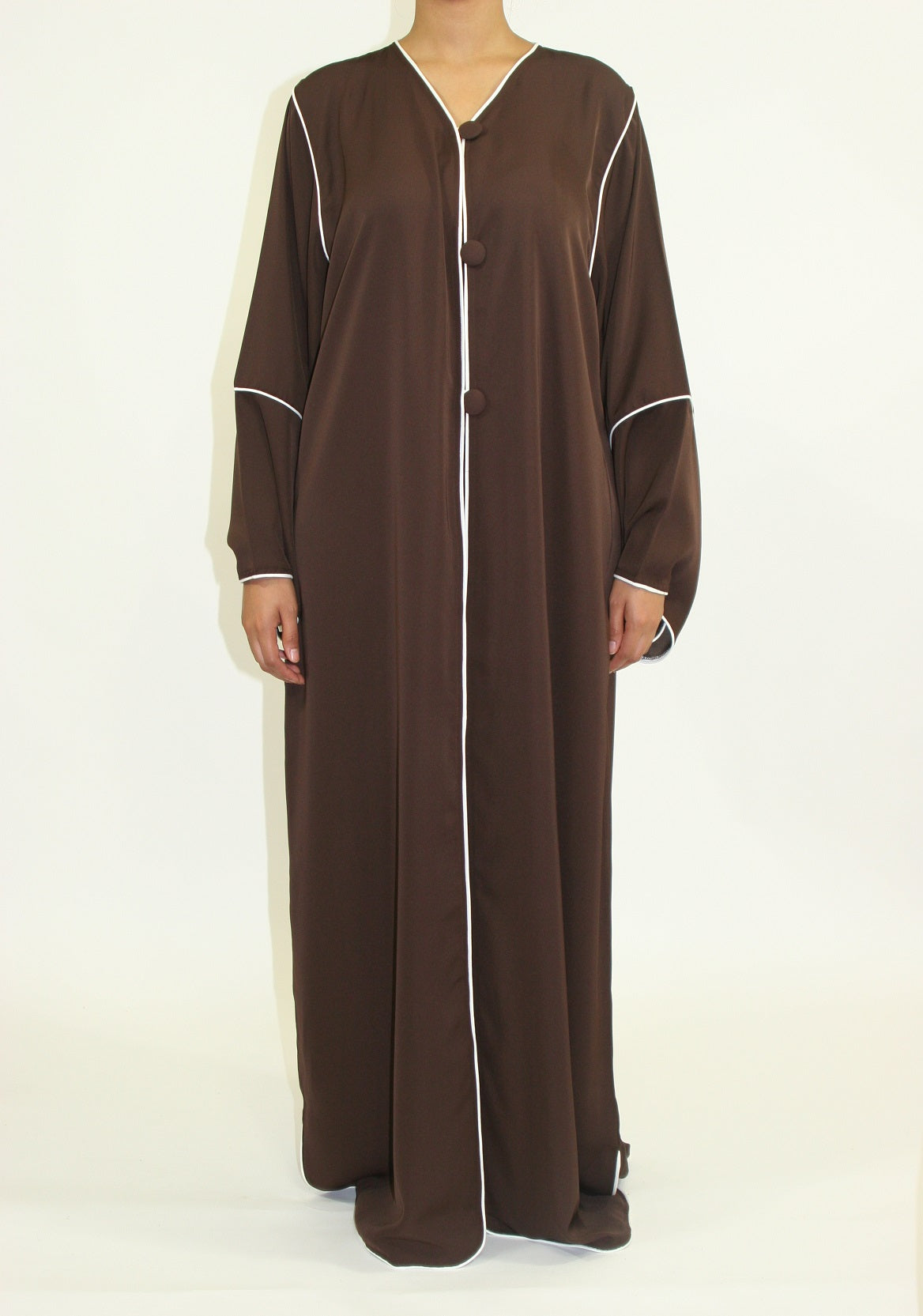
Amani's Maxi Jacket in Dark Brown adds a long, open layer to an outfit, with black satin piping, chest buttons and white piping giving the front a distinctive outline. Those details make styling easier: black, white and brown already have a place in the garment, so you can build a complete look by repeating one of them in the clothes beneath.
The current Dark Brown Long Sleeve Maxi Jacket is described as a soft, lightweight piece with an open front and an A-line silhouette. Its role is to layer over a dress, abaya or separates. Start with a base outfit you enjoy wearing, then use the jacket's edging to decide where you want contrast and where you want a quieter continuation of colour.
A black dress brings the satin piping into the overall outfit. A cream base makes the brown more visible. Denim gives the same jacket a more relaxed setting. Each version can work with familiar shoes and a simple scarf, leaving the long shape and contrasting edges to provide the detail.
Use the piping as your starting point
The black satin edging connects this brown jacket naturally with black clothes and accessories. If you already own a plain black abaya, dress or trouser outfit, try that first. The black beneath the opening relates to the trim, while the brown remains visible through the outer panels.
The white piping gives you a lighter reference. You might repeat it with a pale scarf, a light top beneath the opening or a small detail in your shoes. Pick one place to begin. A narrow light detail in the jacket can connect the outfit without requiring an entirely white set of accessories.
The chest buttons add another point of interest near the upper front. The current listing describes the jacket as open-front with nothing to fasten, so style it as a freely moving layer. Let the buttons and piping be visible where your scarf arrangement allows, rather than trying to draw the front together into a closed shape.
Look at the jacket from a little distance with your arms relaxed. The edging helps you see the front's line against the base outfit. A dark inner may make that line feel subtle; a light inner makes the opening clearer. Choose the contrast you prefer, then keep the other details simple while you assess it.
If you like a printed scarf, place it beside the piping before building the rest of the outfit. A scarf that repeats a little black, brown or pale neutral can connect well with the jacket. Keeping the base plain gives that pattern room to be seen.
Begin with an inner outfit that works on its own
The jacket's open front makes the clothes underneath part of the finished look. Put the base outfit on first, with the coverage and proportions you want. Sit, reach and walk before adding the jacket, particularly if the base is a top and trousers rather than a single dress.
With separates, check where the top meets the waistband. A longer tunic can create a continuous centre beneath the jacket, while a blouse with enough length for your preferred coverage can give a different outline. Choose the actual top you want to wear rather than assuming the jacket will remain in one position across it.
With a dress or abaya, look at the neckline and sleeves as well as the length. A raised collar, large cuff or full sleeve can change how the jacket sits. Try the two garments together and see whether the inner fabric moves comfortably beneath the outer.
Pay attention to seams and pockets on the base. If one jacket panel keeps catching around the hip, see whether a pocket edge or bulky waistband is beneath it. A different base arrangement may let the jacket fall more easily without changing its size.
The general jacket layering guide explains the wider fit considerations. For this jacket, the particular styling opportunity is the long brown frame around an inner outfit, with the black and white edging connecting the two.
Outfit one: a black base for a clear, simple look
Try the jacket over a plain black maxi dress or a black abaya that fits comfortably beneath it. Add a black scarf and black shoes to begin. This gives you an easy reference outfit in which the brown panels and light piping are the main contrast.
Check the two black surfaces beside each other. A softer matte base can make the satin trim more noticeable, while a base with its own sheen creates another reflective area. View the combination in daylight and decide which finish you enjoy. The fabrics can be different while still looking coordinated.
A plain black bag continues the relationship with the edging. Choose one that holds what you need and sits comfortably with the jacket. If a shoulder strap draws one panel backwards, adjust the carrying position and let the front settle before deciding whether the bag works.
For a daytime version, use familiar flat shoes and a straightforward scarf arrangement. For dinner, you might keep the same clothes and exchange the everyday bag for a smaller one. A little metal hardware can be enough extra detail beside the chest buttons.
This is also a useful starting point if you have previously found black and brown difficult to combine. The jacket already includes both colours. Repeating the black trim in the base makes their relationship clear without searching for another brown that matches exactly.
Outfit two: cream beneath the brown
A cream dress or coordinated cream separates create a lighter centre through the opening. The brown jacket frames that light area, while the white piping contributes another pale detail. Compare the exact cream with the garment in daylight to decide whether you like the combination.
Begin with black shoes or a black bag to repeat the satin edging. That dark accessory gives the cream and brown a clear connection to the trim. You can then choose a pale scarf to continue the lighter centre, or a darker scarf for a more defined frame around the face.
Check the cream base in the lighting where you expect to wear it, with the intended underlayers. Look at the seams and neckline while seated as well as standing. A light inner is deliberately visible through this open jacket, so choose one you are happy to show as part of the outfit.
For a family lunch, a cream dress, the brown jacket, simple black flats and a plain pale scarf can be enough. If you prefer a warmer accessory, try a brown bag you already own and compare it with the jacket. A visibly deeper or lighter brown may work more clearly than an almost-match.
Avoid adding several competing pale shades while making the first comparison. Put the cream base and chosen scarf together, then add the bag. If one item makes the outfit feel disconnected, exchange that item before changing the whole combination.
Outfit three: a tunic and jeans for relaxed days
The jacket can sit over jeans and a longer top for an ordinary outing. Start with jeans you already find comfortable and a tunic that gives the coverage you want when the front opens. The long outer adds another line around the separate top and trousers.
A plain black tunic brings the satin piping into the centre of the outfit. A pale top gives more contrast, particularly with dark denim. Try the two possibilities if you own them, keeping the shoes unchanged so you can see what the different top does.
The denim wash changes the look as much as the colour. A dark, relatively plain wash keeps the jacket's trim prominent. A lighter wash can make the combination feel more relaxed. Choose according to the denim you enjoy wearing and the amount of contrast you want beside the brown.
Trainers or comfortable flats can finish the outfit. Assess the jacket's length in the actual pair you choose, and walk with the jeans and jacket together. Watch how the hems move around the shoes, particularly if the jeans are wide or long.
Use a practical bag and keep the scarf arrangement familiar. A patterned scarf can work if the tunic and denim remain straightforward, but a plain scarf may make the first version easier to assess. The jacket's piping already supplies a deliberate finishing detail.
For a busy day, try the outfit with the bag filled. A large tote can affect how an open jacket hangs at the shoulder, while a crossbody strap creates a different line across the front. Choose the carrying method that feels comfortable for the route and leaves the garment easy to wear.
Outfit four: trousers and a blouse for work
For a workplace where this style of layering suits the dress expectations, use the maxi jacket over a plain blouse and trousers. Black trousers give you a direct link to the piping. A cream blouse introduces light near the face and through the opening.
Choose the blouse's length and cut for the coverage you prefer while seated, reaching or moving around the room. The open jacket will shift during those actions. Try the base outfit on its own first so you know how it behaves when the outer panels fall to the sides.
Look at the blouse's sleeves beneath the jacket. A large cuff or gathered upper sleeve may need more space than a simple sleeve. Put both pieces on, reach towards a desk and see whether anything twists or bunches. A smooth-looking front should be accompanied by comfortable arms and shoulders.
A plain black work bag can connect with the trim while carrying what the day requires. Add loafers, flats or another suitable pair of closed shoes that works with the trousers and jacket length. Keep the footwear practical for the commute as well as the room.
Try a pale scarf with the cream blouse for a related upper colour, or a black scarf for a stronger outline. If the blouse already has a prominent collar, use a scarf arrangement that sits comfortably beside it. The jacket's chest detail can remain visible without needing a necklace added over the top.
Spend a few minutes seated in the complete combination. Check that the long panels lie comfortably beside you and that the jacket does not become trapped beneath the chair. Stand and let it settle naturally. That small trial helps you choose the outfit for the way you will spend the working day.
Outfit five: a quieter evening layer
For dinner or a family gathering, place the jacket over a plain long dress. Black provides the simplest connection to the trim; cream creates a lighter contrast. If you want colour beneath it, try a dress in a shade you already enjoy beside brown, then compare it with both the black and white details.
A smooth dress can let the edging remain the main decoration. If the dress is already heavily beaded or printed, view the garments together before choosing accessories. You may enjoy the combination, or decide that the jacket looks clearer over a calmer base.
A small bag with a simple clasp can provide the finishing touch. Gold-toned or silver-toned hardware can both be considered: hold the accessory beside the jacket and choose the effect you prefer. The existing buttons and piping help the outfit feel considered even when jewellery is minimal.
Choose shoes that work for the journey and the time spent standing. A lower shoe can be perfectly appropriate for an evening outfit when the hems are right. If you change shoes during the occasion, check the jacket and dress with both pairs before the day.
Try the outfit while reaching across a table. Notice where the scarf ends and cuffs fall, and whether any jewellery catches against the trim. Once the combination works, keep the arrangement simple enough that you can enjoy the meal without repeatedly moving fabric away from your hands.
Choose a hijab that works with the neckline and edging
A black scarf is an easy first choice because it repeats the satin trim. A pale scarf brings the white piping into the upper part of the outfit. A brown scarf can create a closer colour relationship, provided you like the actual shades together.
Try the scarf while wearing the jacket and base, rather than holding it beside the jacket on a hanger. The neckline of the inner garment, the chest buttons and the scarf's drape all occupy the same area. Seeing them together helps you choose where you want the scarf ends to sit.
For a longer front drape, let the fabric fall freely and see how much of the jacket's detail remains visible. For a more contained arrangement, check that the neckline still provides the coverage you want. Both can look intentional; use comfort and your preferred coverage to decide.
If you choose a printed scarf, select a base outfit with fewer additional patterns. A small repeat of brown or black in the print can connect it to the jacket. You can then use plain shoes and a simple bag so each part of the outfit has a clear role.
The brown abaya colour guide considers the wider range of brown shades. Here, the jacket's existing black and white details give you two especially useful references for choosing a scarf and accessories.
Balance the three lengths: jacket, base and shoes
When a jacket is full length, its relationship with the clothes beneath becomes part of the design. Try the intended shoes and look at the longest point of the jacket alongside the dress, skirt or trousers. Walk and turn before judging the proportions.
With a long dress, you may prefer the two hems to sit close together, or enjoy a deliberate difference. Check how they move independently. If one repeatedly catches against the other, look at the fabric interaction and the way the garments are sitting before assuming length is the only issue.
With trousers, the jacket creates a long frame around a visible centre. A plain top can keep that centre clear. If the top, jacket and trousers all introduce strong horizontal details, try simplifying one piece and compare the whole outfit again.
With a skirt, pay attention to the waistband and any gathering beneath the jacket. A full waistband may push the open panels outward. You may prefer that volume, or find a smoother base more comfortable. The useful test is how the jacket falls when you sit and stand.
If an alteration is needed, bring the jacket, main base outfit and intended shoes to the fitting. Explain how you want the long line and piping to look when finished. Ask how the proposed adjustment will affect the edging before work begins, especially if the trim runs close to the area being altered.
Give the jacket a clear role across the seasons
The current listing describes a soft, lightweight layer. Plan it around the temperature and setting in which you will wear it. For a comfortable indoor gathering, it may provide the additional layer you want over a dress. For a colder journey, include a suitable outer coat in the outfit plan.
Try any warmer base layer with the jacket before relying on it. A fine knit and a bulky jumper occupy different amounts of room through the shoulders and sleeves. Choose the combination that gives you comfortable movement and the shape you prefer.
When adding a coat, check both sets of sleeves together. A coat that fits over the jacket's body may still be too narrow through the arms. Also look at the collar beside the scarf and the jacket's upper detail, then sit and stand with all the layers on.
For milder days, use a base that feels comfortable for the setting and keep the accessories straightforward. A pale top or scarf can change the visual mood of the brown without requiring a different jacket. Your choice of layers should follow the actual conditions and the time you will spend indoors or outside.
Choose the right fit for your existing clothes
Compare the current product measurements with a jacket or outer layer you already understand. Use the same measuring route, and consider the clothes you intend to wear underneath. A familiar length label is useful context, while the actual garment dimensions help you judge the fit.
Begin at the shoulders and upper arms. Reach forward, bend your elbows and let your arms return to your sides. Check whether the jacket settles comfortably over the base, or whether an inner seam or sleeve keeps catching beneath it.
Then look at the open front and lower shape. The A-line cut should be assessed as it hangs naturally on you. Let the panels fall without holding them together, and decide whether you enjoy the amount of base outfit visible through the opening.
Check the sleeves with a watch or bracelet if you usually wear one. The jacket's cuff and the inner cuff should sit comfortably together. If you keep pushing both back, identify which sleeve is causing the problem rather than adjusting the whole outfit repeatedly.
When ordering online, ask for a missing measurement that would affect your decision. Sleeve length, upper-arm room and the width over the base can matter as much as total length. Resolve any fit question before making an alteration or assigning the jacket a permanent place in the wardrobe.
Care for the edging as part of the garment
Follow the care label supplied with this jacket. Its main fabric, satin piping, contrasting trim and buttons belong to one finished garment, so use the instructions that apply to that combination. Keep the label information available for any cleaner you use.
Inspect the chest buttons and edging before cleaning. If something is loose, note the area and seek suitable repair advice. Avoid pulling at a thread to test it, particularly near the contrast piping where an alteration to the edge would be visible.
Use only permitted heat and finishing methods. Take extra care when assessing a crease near the satin trim, and give yourself time to obtain guidance if the instructions are unclear. Preparing the jacket in advance makes it easier to choose the right method calmly.
Store it clean and fully dry with support appropriate to its weight and construction. Keep rough bag hardware and exposed jewellery away from the trim. Check the hem and cuffs after wearing so any mark can be addressed before the jacket is put away for the next outing.
Make one useful change when an outfit feels unfinished
If the combination looks busy even though you have used neutral colours, look at the number of visible lines. A striped top, a patterned scarf and the jacket's piping may each be drawing the eye in a different direction. Try a plain top first, keeping the scarf and jacket unchanged. That comparison shows whether the centre needed simplifying.
If the chest detail seems crowded, remove a necklace or rearrange a scarf end before changing the base outfit. The buttons, piping and scarf can sit together attractively when each has a little space. A small adjustment around the neckline may be enough to reveal the part of the jacket you particularly like.
If the brown seems lost beside a dark base, try a pale scarf or lighter bag. You can create a clearer contrast at one point while retaining comfortable clothes underneath. Compare that single change in the same light, then decide whether you want more contrast through the centre as well.
If a bag makes the front look uneven, take it off and let the jacket settle. See whether the piping returns to the line you liked. A different strap length or carrying position may resolve the issue more simply than repeatedly pulling the jacket forward.
Keep the successful version specific: the actual top, scarf, bag and shoes. Once those pieces work together, the jacket becomes an easy addition to a known outfit rather than a reason to begin styling from the start every time.
Build a small set of outfits you can repeat
Lay out the jacket beside the clothes you already own and choose two bases: one for an ordinary day and one for a more dressed-up occasion. A black dress and a tunic-and-jeans outfit, for example, give the same jacket two clear roles without needing a large new wardrobe.
| Base outfit | Detail to repeat | Possible finish |
|---|---|---|
| Plain black dress | Black satin piping | Black scarf, familiar shoes and a simple bag |
| Cream dress or separates | Light piping and dark edging | Pale scarf with one black accessory |
| Long tunic and jeans | One trim colour in the top or scarf | Comfortable flats or trainers and a practical bag |
| Blouse and trousers | Black through the trouser, trim and footwear | A work bag and a scarf that sits comfortably at the collar |
Photograph the combinations you like in the same light if that helps you remember them. Note which shoes work with the hem and which bag leaves the open front comfortable. Those small details make a repeat outfit easier to assemble than a general idea such as “brown with neutrals”.
Amani's Maxi Jacket in Dark Brown can bring an ordinary base outfit together through its long shape and contrasting edges. Let the black piping connect the darker pieces, use the white detail as a reference for lighter accents, and keep the open front relaxed. The strongest look is the one you can put on with familiar clothes and wear comfortably through the day.