Complimentary UK delivery on orders over £120 Crafted for the modern modest wardrobe Easy 14-day returns · Worldwide shipping New season abayas now in
Wishlist
Curaçao ANG
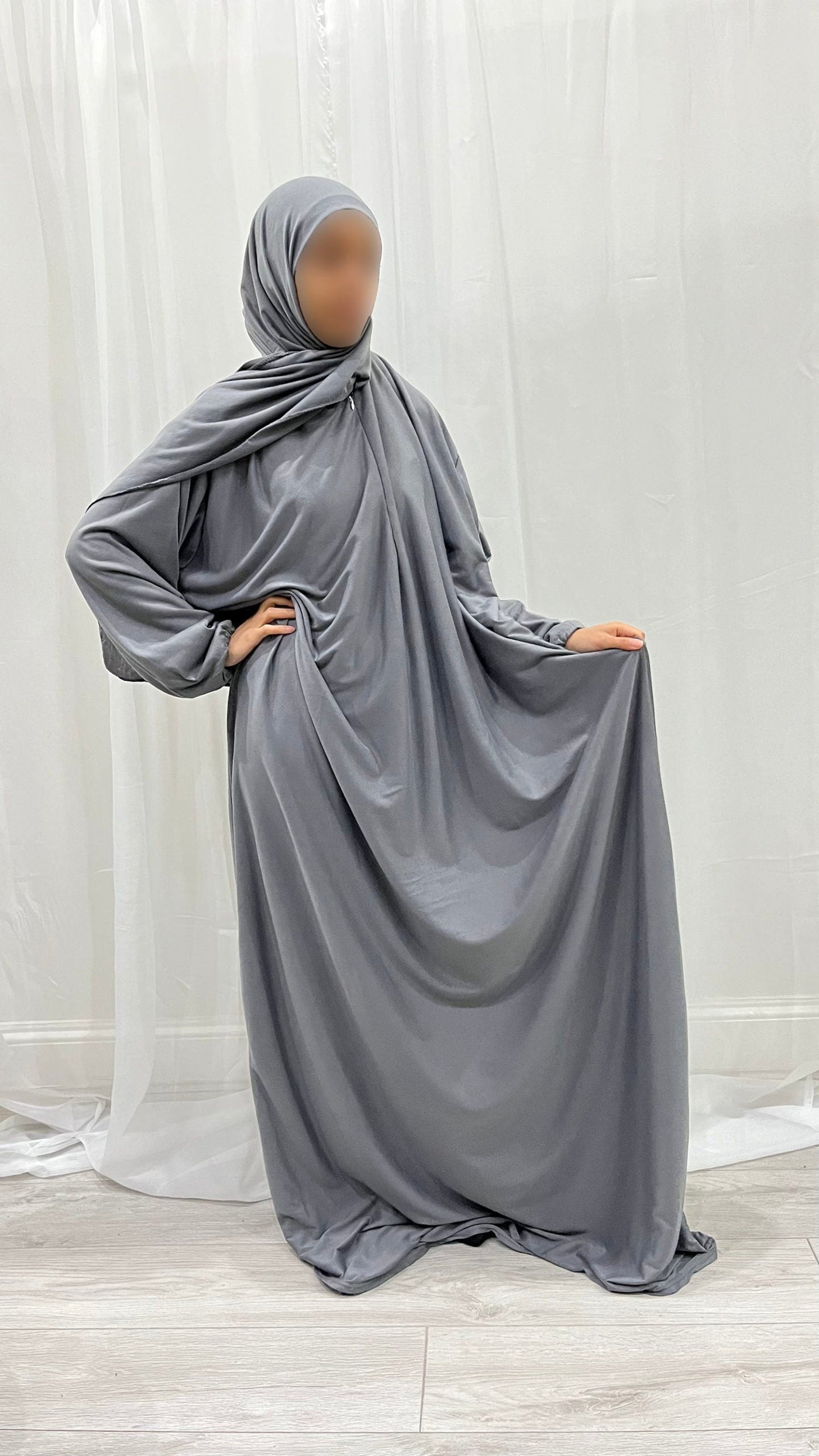
Grey one-piece cotton stretch prayer dress with an attached head covering for home prayer
Prayer Wear

Complete Prayer Wear Guide for Muslim Women

Amani's Editorial89 min readUpdated August 08, 2026

Sister, prayer wear should make the moment before salah feel simpler, not more complicated. You should not have to stand beside the prayer mat pulling at a sleeve, wondering whether a pale fabric is transparent, searching for a scarf that will stay in place, or changing three times because the garment that looked generous while standing becomes difficult when you bow. Good prayer clothing gives the coverage and freedom of movement you intend, then becomes quiet enough for your attention to move away from the garment.

That sounds straightforward, yet the words used online can make the choice confusing. One shop may call a garment a Muslim prayer dress, while another may use prayer abaya, salah dress, namaz dress, prayer jilbab, telekung, mukena or prayer set. Prayer dresses themselves come in two main constructions: a one-piece prayer dress with the head and body covering connected, and a two-piece prayer dress with a separate upper covering and skirt. Some ordinary abayas are also presented beside a prayer mat even though they were designed as everyday outerwear. The name alone does not tell you how the garment is constructed or how it behaves in movement.

This complete prayer wear guide for Muslim women is designed to give you practical clarity. It explains the different garment types, what each one is for, how to test movement, how to judge opacity, how fabrics affect comfort, how to use measurements online, and how to choose for home, a private prayer space, work, study, travel and masjid visits. It also covers pregnancy, nursing, changing bodies, sensory needs, mobility, washing, storage and the small problems that can make a prayer garment feel harder to use than it should.

Amani's makes an important distinction in this guide. A dedicated prayer dress may be one piece or two pieces. A one-piece prayer dress connects the head and body covering, while a two-piece prayer dress usually combines a separate long upper covering with a skirt. Both are simple garments for prayer at home or in another private prayer space. They are not outdoor fashion outfits, are not designed for going out and do not need accessories. Broader prayer wear can include prayer abayas, jilbabs, khimars and other garments designed for outdoor or mixed use. Keeping those roles clear helps you buy what you actually need rather than expecting one product to do every job.

Amani's is a clothing brand, not a source of religious rulings. This article gives garment guidance, not a fatwa. Questions about the requirements of salah, the parts of the body that must be covered, exceptional circumstances, or the validity of prayer should be taken to a trusted qualified scholar who can understand your situation. Here, we will stay within the practical clothing questions: does the garment give the coverage you intend, remain secure through movement, feel comfortable, and support a calm prayer routine?

You do not need the most expensive garment, a perfectly coordinated prayer corner or a wardrobe full of colours. One dependable prayer dress kept where you need it can be enough to remove repeated difficulty. The best choice is not the one that photographs most beautifully. It is the one you can put on easily, move in safely, wash realistically and trust without checking every seam.

What prayer wear means in everyday life

Prayer wear is clothing selected or designed to provide easy, dependable coverage for salah. The category can include a one-piece prayer dress, a two-piece prayer dress, a prayer abaya, a jilbab, a khimar worn with a suitable lower garment, or an ordinary modest outfit that already provides the coverage the wearer intends. The correct choice depends on the setting and on the woman's own practice.

For many women, dedicated prayer clothing solves a practical transition. At home she may be wearing comfortable clothes that are not the outfit she chooses for prayer. A one-piece prayer dress allows her to cover quickly without coordinating separate pieces, while a two-piece prayer dress can offer more flexibility in fit and laundering. At work or university, she may keep either construction in a clean bag or locker. During travel, she may carry a prayer dress to use in a private prayer space. At the masjid, she may already be wearing an abaya, jilbab or other outdoor modest clothing and need no separate prayer dress.

The purpose is not to make prayer dependent on owning a special product. Many women pray in the modest clothing they are already wearing. Dedicated prayer wear is simply a practical tool. It can reduce decisions, protect a clean garment for worship, help a new Muslim feel prepared, or support a woman whose body, health or routine has changed.

A product label should never replace inspection. The words prayer dress do not guarantee opacity, correct length, secure sleeves or a comfortable face opening. Look at the actual construction. Ask what happens in standing, bowing, prostration and sitting. Consider whether the garment stays in place when the head moves and whether the fabric becomes transparent under bright light.

A useful garment should lower the amount of attention clothing demands. It should not create a new standard of perfection or make a woman feel that her ordinary prayer clothing is inadequate. Prayer wear serves the woman and the routine. It is not a scorecard for faith, elegance or belonging.

A clothing guide, not a ruling on prayer

Prayer clothing sits close to religious practice, so it is important to keep different kinds of guidance in their proper place. A retailer can explain fabric, construction, sizing, opacity, care and movement. A retailer should not present product descriptions as religious authority or use fear to force a sale.

This guide can help you notice that a sleeve slides back, a neckline opens when you bow, a skirt is too narrow for a comfortable prostration, or a pale fabric needs an opaque layer. Those are observable garment facts. The religious meaning of a particular circumstance, the minimum requirements of dress in prayer, and questions about hardship or necessity belong with qualified scholarship.

Different Muslim communities may use different terms and may follow different scholarly guidance. A caring article should not flatten those differences into one confident sentence. When a question affects the validity of worship, ask someone qualified rather than relying on an influencer, a product page or a search snippet.

At the same time, you are allowed to solve practical clothing problems without turning every loose thread into a spiritual crisis. If an undercap causes a headache, choose another method. If a dress is transparent, change the layer or fabric. If a hem is dangerous on stairs, shorten it. Practical care can make worship easier without making claims about anyone's heart.

Amani's will therefore describe what garments do and where they are intended to be used. The guide will repeatedly recommend movement tests, measurements and appropriate professional or scholarly help where needed. That boundary protects the reader and keeps the clothing advice honest.

Start with the prayer routine you actually have

Before choosing a garment, picture the places in which you pray during an ordinary week. Do not begin with a beautiful image of a perfectly arranged room. Begin with the real transition: the alarm before Fajr, a short break at work, the corner of a university prayer room, a hotel room, a family visit, or the quiet minutes after the children settle.

Write down the settings that happen most often. At home, you may want a one-piece prayer dress kept on a hook near the prayer space, or a two-piece prayer dress folded together on a nearby shelf. At work, you may need a compact two-piece prayer dress that fits inside a clean pouch. For the masjid, your outdoor abaya or jilbab may already be suitable. During travel, you may value a prayer dress that folds small and can be put on privately without complicated wrapping.

Then identify the repeated difficulty. Perhaps the scarf slips during sujood. Perhaps sleeves rise above the wrist. Perhaps you overheat in a thick synthetic dress. Perhaps the one-size garment is too short at the front or too tight around the face. Perhaps you own several prayer garments but none are kept where you need them.

The problem may be organisation rather than shopping. A dependable garment can still fail the routine if it is always in the wash, buried in a drawer or kept on another floor. Two modestly priced garments in useful locations may support you better than one delicate piece that is treated too carefully to use.

Your routine can change. Pregnancy, illness, a new job, a move, caring responsibilities or travel may make the old system impractical. Updating prayer wear is not evidence that you have become inconsistent. It is clothing responding to a real life.

Dedicated prayer wear or everyday modest clothing

Some women prefer a garment used only for prayer. Others pray in the clothing they are already wearing. Both systems can be practical when the clothing provides the coverage and cleanliness the wearer intends.

Dedicated prayer wear offers speed and predictability. The garment is designed as a complete one-piece prayer dress or a coordinated two-piece prayer dress, so there is less matching. It can remain near the prayer mat and become part of a familiar routine. This is especially helpful at home when ordinary clothes vary through the day.

Everyday modest clothing removes the need to change. A woman wearing a secure abaya, jilbab, khimar or long loose outfit may already feel ready. This can be easier at work, during errands or at the masjid. The important question is not whether the label says prayer wear. It is whether the complete outfit behaves as intended.

A dedicated prayer dress should not be turned into an outdoor outfit simply because it is full length. At Amani's, prayer dresses include both one-piece and two-piece designs for prayer at home or in a private prayer space. Neither construction needs a belt, handbag, jewellery or styling accessories. Their simplicity is part of their purpose.

A broader prayer abaya or jilbab may be made for outdoor modest wear as well as prayer, but the product description should say so clearly. Do not assume that every garment photographed near a prayer mat has the same role. Read the construction and intended use.

You may use both systems. Keep a one-piece or two-piece prayer dress at home and rely on a normal outdoor modest outfit elsewhere. The best arrangement is the one that removes friction without creating unnecessary buying.

Movement is the real test of prayer clothing

A prayer garment cannot be judged only while the wearer stands still. Salah includes changes in posture, and each change can affect the neckline, sleeves, hem, head covering and amount of fabric around the body.

Begin with standing. Turn the head gently, raise the hands as you normally would, and notice whether the face opening shifts or the sleeves slide. Bow and check whether the neckline remains secure, the back of the garment stays covered, and the fabric has enough width through the shoulders and hips.

Move into prostration slowly. The garment should allow the knees and hips to move without the skirt pulling sharply. The front length should not gather beneath the hands in a dangerous way. The head covering should not fall forward so heavily that it obstructs breathing or vision.

Sit as you normally do and check the hem, waist and leg room. A two-piece prayer dress needs enough overlap between the upper covering and skirt. A one-piece prayer dress should not pull at the neck when the body lowers. If the garment uses elastic, make sure it remains comfortable rather than tightening with every movement.

Repeat the test after wearing the garment for several minutes. Some fabrics begin to cling, twist or slide only after movement. Add the base clothing you normally wear underneath because friction changes the result.

A movement test is not about searching anxiously for flaws. It is a practical fitting method. When a problem appears, name it precisely. The face opening is too loose. The skirt is too narrow. The sleeve is too short. The fabric is static. Precise language leads to a precise solution.

Prayer wear terms and what they usually describe

Prayer clothing names vary by language, region and retailer. The same word can describe different constructions, so use terminology as a starting point rather than a guarantee.

Prayer dress

At Amani's, a prayer dress is a simple garment for prayer at home or in a private prayer space. It may be a one-piece prayer dress or a two-piece prayer dress. Both constructions provide coordinated head and body coverage, are not outdoor fashion outfits and do not require accessories.

One-piece prayer dress

This is a single connected prayer dress that covers the head and body. It is designed to go on quickly and removes the need to coordinate a separate upper covering and skirt.

Two-piece prayer dress

A two-piece prayer dress, sometimes described by retailers as a two-piece prayer set, usually includes a long head covering or khimar-style upper piece with a skirt. It can offer more flexibility in length, proportion and washing, but the overlap must remain secure through movement.

Prayer abaya

This term may describe a loose abaya intended to be easy for prayer. Some versions have a hood or attached covering. Others are ordinary abayas marketed for the setting. Check whether it is designed for home, private use, outdoor wear or several roles.

Salah dress or namaz dress

These are alternative search terms for prayer clothing. They do not specify whether the product is one piece or two pieces.

Khimar and skirt set

This uses a shaped head covering with a separate long skirt. Khimar length, face opening, ties and skirt width vary.

Telekung or mukena

These terms are commonly used in parts of Southeast Asia for coordinated prayer garments, often a head covering and skirt. Construction differs by culture and maker. Use the retailer's measurements rather than assuming a universal design.

For a broader explanation of Islamic clothing terms, the published guide on the difference between abaya, jilbab, hijab, khimar, niqab and burqa can help, especially when you want a clearer comparison of what each garment is designed to cover and how the pieces differ in everyday use.

The one-piece prayer dress for home and private prayer

A one-piece prayer dress is the simplest dedicated option for many women at home. The head covering and body garment are connected, so there is no separate scarf to wrap and no skirt waistband to manage. It can be lifted over the head, arranged around the face and worn within seconds.

Its role should remain clear. This is a home or private-space prayer garment, not an outfit for going out. It does not need styling accessories. The value lies in dependable coverage, easy movement and a calm routine.

Check how the attached head section is constructed. Some have elastic around the face, some use ties, and some rely on the shape of the opening. The fit should feel secure without pressing painfully on the forehead, ears or jaw. Glasses should sit comfortably if you wear them.

The body should have enough width for bowing and prostration. A very narrow column can pull around the knees and hips. A very wide garment may be comfortable and become difficult if excess fabric gathers beneath the hands. The right amount of fullness allows movement without feeling uncontrolled.

Length matters at both front and back. The garment should cover according to your intended standard while staying safe. A hem that is too long can fold under the feet. A front that is too short can rise during movement. Compare exact measurements with your height and with a garment you already trust.

Because the dress is one connected piece, washing and drying require space. A soft medium-weight fabric often gives a useful balance between opacity and manageability. Keep one on a clean hook or folded near the prayer area so its practical advantage is not lost.

Grey one-piece cotton stretch prayer dress with an attached head covering for home prayer

The two-piece prayer dress and the importance of secure overlap

A two-piece prayer dress separates the head-and-upper-body covering from the skirt. This can be useful when a one-size one-piece prayer dress does not suit the wearer's proportions. The skirt length and upper covering can be assessed separately, and each piece is easier to wash, dry or replace.

The main practical question is overlap. Stand with both pieces on, then raise the arms, bow and sit. The upper piece should remain long enough to cover the waistband and body according to your intended standard. The skirt should sit securely without sliding or creating pressure.

Elastic waistbands vary. A soft wide elastic often distributes pressure better than a narrow band. Drawstrings provide adjustment but can create a knot beneath the upper layer. Women with abdominal sensitivity, pregnancy or a medical device may prefer a different fastening.

The top may resemble a long khimar. Check front and back lengths, face opening, tie placement and the amount of fabric over the shoulders. A very long front gives generous coverage but can fall into the space where the hands are placed. Learn how the specific garment settles during movement.

A two-piece prayer dress is a dedicated home or private-space prayer garment, not an invitation to style the pieces as an outdoor outfit. Keep its prayer role simple. No accessories are needed.

Choose a two-piece prayer dress when separate sizing solves a real problem, when you prefer easier laundering, or when a one-piece prayer dress feels heavy around the neck. Choose a one-piece prayer dress when speed and connected security matter more. Neither construction is automatically better for every woman.

Fuchsia floral two-piece prayer dress showing a long head covering and coordinating skirt

Attached head coverings, face openings and comfort around the chin

An attached head covering removes the need for a separate hijab, but it makes face fit one of the most important parts of the garment. A body that fits perfectly can remain unused when the opening is painful, loose or difficult to arrange.

Check the full edge around the forehead, cheeks and chin. Elastic should hold without leaving deep pressure marks or causing a headache. A loose opening may shift when the head lowers. Ties can offer control, though they should not create a painful knot or pull against the ears.

Women who wear glasses should test the garment with them. The opening should not press the frames or pull them out of position. Hearing aids, cochlear devices and other equipment may also need room. Choose a design that gives access without forcing the device.

Chin coverage differs between products. Photographs taken directly from the front may not show the side profile. Look for side and movement images, or ask customer service for the exact construction. Where a religious question is involved, seek qualified guidance; the clothing question is whether the design matches the coverage you intend.

Fine hair, textured hair, braids and different head shapes also affect fit. An undercap is not mandatory as a product accessory, and many women do not need one beneath a dedicated prayer dress. If you use one for comfort or hair control, keep it soft and avoid unnecessary tightness.

A good opening allows you to breathe, speak and turn the head naturally. If you spend the whole prayer pulling fabric away from the mouth or pushing it back onto the chin, the design is not supporting you.

Prayer abayas and broader prayer wear beyond the home dress

Prayer wear is broader than one-piece and two-piece home prayer dresses. Some women use loose prayer abayas, jilbabs or abaya-and-khimar combinations in settings where an outdoor modest garment is appropriate. These pieces should be assessed according to their own construction and intended use.

A hooded prayer abaya may provide quick head and body coverage while offering pockets and a more controlled outdoor silhouette. An abaya-and-khimar set separates the head covering from the body garment. A jilbab may combine fuller outer coverage with practical sleeves. Product names vary, so read whether the piece is suitable for home, masjid, travel or outdoor wear.

Do not assume that a one-piece or two-piece home prayer dress becomes a prayer abaya simply because it is full length. A home prayer dress is deliberately simple and private. Outdoor garments need to handle footwear, coats, bags, weather and public movement. Those demands change the fabric, hem, fastenings and durability required.

For a masjid visit, many women simply wear the abaya, jilbab or modest outfit they already use outside. A separate garment can be carried when useful, but it should not create more difficulty than it removes.

The Amani's prayer wear collection includes different constructions. Use the product title and description to identify the role rather than treating every item as interchangeable.

Burgundy double hooded prayer abaya with pockets as a broader prayer wear option

Home prayer wear that is ready without becoming decorative clutter

The home is where a dedicated prayer dress often makes the most sense. A one-piece prayer dress can hang near the prayer space, while a two-piece prayer dress can be folded together on a nearby shelf or kept in a breathable basket. Either construction should be simple enough to use when you are tired, busy or moving between responsibilities.

Choose a clean, accessible location. A hook on the inside of a wardrobe, a breathable basket or a shelf near the prayer mat can work. Avoid storing the garment on the floor or in a damp bathroom. If several family members use the same space, each garment can have a clear place.

You do not need matching accessories, a decorative belt or a special handbag. The prayer dress is complete in its simplicity. A prayer mat and the garment may be all that the clothing routine requires.

Keep a second garment only when the washing rhythm makes it useful. One can be in use while the other dries. More colours are not necessarily more practical. A small rotation of trusted pieces often supports the routine better than a crowded rail.

Think about household movement. If you care for a baby, choose fabric that can be washed easily. If children pull at clothing, secure seams and an uncomplicated hem matter. If you move between floors, a second garment upstairs may remove a repeated barrier.

A familiar garment can become emotionally reassuring. That does not mean it must remain unchanged forever. Replace stretched elastic, repair a hem and retire fabric that has become transparent or uncomfortable. Readiness includes maintenance.

Prayer wear for work, university and a private prayer space

Away from home, the best system is usually compact, easy to put on after wudu and appropriate to the available space. Some women pray in their normal modest work or university outfit. Others keep a one-piece or two-piece prayer dress in a locker, drawer or clean pouch.

A two-piece prayer dress can fold smaller than some full one-piece prayer dresses, while a light one-piece prayer dress removes the need to coordinate separate pieces. The correct choice depends on your bag, changing privacy and the clothing you wear underneath.

Keep the garment in a breathable, washable pouch rather than loose beside shoes, food or stationery. Let it air when you return home. A permanently sealed synthetic garment can develop odour even when it looks clean.

Check the prayer space before choosing a very full style. A small room shared with others may make controlled fabric easier. Avoid hems and scarf panels that spread into another person's space or create a trip risk.

Workplace safety requirements still apply. Loose sleeves, long fabric and head coverings may need securing around machinery, laboratories, catering, healthcare or childcare tasks. The prayer garment is used in the prayer space, then removed before returning to a setting where it creates a hazard.

Where workplace arrangements are difficult, discuss practical needs through the appropriate channel. A clothing guide cannot provide case-specific employment or legal advice, but a precise request is often more useful than a general one: a clean private space, a few minutes at an appropriate time, or safe storage for a garment.

Masjid clothing and when a separate prayer dress is unnecessary

For a masjid visit, many women arrive in outdoor modest clothing that is already suitable for prayer according to their intended practice. An abaya, jilbab, khimar or long loose outfit may remove the need for a separate home prayer dress.

Remember the role distinction. Neither a one-piece nor a two-piece home prayer dress is intended as an outdoor outfit. Do not add accessories and turn either construction into masjid fashion. Choose an outdoor garment made for public movement, weather and footwear when you are leaving the house.

At the masjid, test the hem around shoe areas, stairs and crowded rows. Very long fabric can collect dirt or become caught under another person. A controlled length that allows natural walking is practical and dignified.

Head coverings should remain secure without painful pins or constant correction. A shaped khimar can provide easy coverage. A wrapped hijab can work when the base outfit and styling are reliable. There is no need to adopt a new style solely because you are entering the masjid.

Bring only what helps. A spare pin, small pouch or lightweight garment may be useful, but an overfilled bag can become another distraction. Keep belongings close and follow the arrangements of the space.

New Muslims may feel especially visible on a first visit. Choose a familiar garment and ask a trusted sister for practical guidance. The published article about feeling ready for a first masjid visit may offer additional emotional support, while religious questions should go to a qualified person in the community.

Travel prayer wear that is carried, not worn as an outdoor prayer dress

Travel creates a need for compact, clean and easy clothing, but it does not change the intended role of a home prayer dress. A one-piece or two-piece prayer dress can be packed and used in a private prayer space or hotel room. Neither should be treated as an outdoor travel outfit.

Choose fabric that folds without becoming permanently creased and dries within the time available. A medium-light jersey or crepe may pack well. Cotton can feel comfortable and may take longer to dry. Test the garment after it has been folded for several hours.

Use a breathable pouch and keep it separate from shoes and laundry. A simple drawstring cotton bag can work better than sealed plastic for repeated use. Carry a second bag for the garment after wear if the journey is long.

At airports, stations or service areas, the available prayer space may be small. Controlled fabric and a secure face opening are useful. Make sure the hem does not trail across wet or heavily used floors. A travel garment should help you move calmly, not require a complete changing-room setup.

If you are already wearing an outdoor abaya or jilbab that provides the coverage you intend, you may not need to change. Packing a prayer dress is an option, not a requirement created by shopping culture.

For Hajj, Umrah or other religious travel, seek qualified guidance about the worship and dress requirements. From a garment perspective, prioritise breathability, easy washing, secure movement and a manageable number of pieces.

Ramadan, night prayer and a garment that supports repeated use

During Ramadan, a prayer garment may be used more frequently and at different times of day. The best preparation is not necessarily buying something new. It is checking that the existing garment is clean, comfortable and available when the household rhythm changes.

A home prayer dress can remain near the prayer space for quick use. If the garment is worn several times between washes, allow it to air fully. Wash according to fabric and personal need rather than waiting for visible dirt.

Night prayer can make warmth feel different. A room may be cool at first and become warm through movement. Use a breathable garment and a separate room layer that can be removed before prayer rather than choosing an unnecessarily heavy dress.

Avoid creating a decorative standard that makes the prayer corner difficult to maintain. A clean garment, clear floor space and gentle organisation matter more than a coordinated seasonal display.

If you attend the masjid, use outdoor modest clothing made for leaving the home. Keep the home prayer dress for home or a private space. This simple boundary protects the garment's purpose and prevents styling confusion.

Ramadan can also bring fatigue. A one-piece garment with a dependable face opening reduces decisions. Keep repairs, washing and storage simple so the clothing routine supports the month rather than becoming another task to perform perfectly.

Prayer wear for new Muslims and women beginning again

A new Muslim may meet prayer clothing at the same time as she is learning movements, Arabic words, times and community expectations. Too many product choices can make a simple need feel enormous.

Begin with one easy garment for home. A one-piece prayer dress removes the need to wrap a separate scarf and coordinate a skirt. Choose a colour you feel comfortable seeing yourself in, a face opening that does not hurt and a fabric you can wash normally.

Practise putting it on when you are not rushed. Move through standing, bowing, prostration and sitting. Notice the physical issue without attaching a judgement to it. The sleeve rises. The hem is long. The fabric slips. These are clothing problems, not evidence that you are failing.

Do not buy several garments before learning which construction suits you. One successful week will teach you more than a large first order. You may discover that a two-piece prayer dress fits your proportions better, that jersey feels too warm, or that a shaped face opening is easier than ties.

Use compassionate support. A trusted sister can show you how the garment sits and help with practical adjustments. Religious teaching should come from qualified sources, not from a retailer or social media comment section.

A woman returning to prayer after a difficult season may also need gentleness. Wash the garment, place it somewhere accessible and begin with the next prayer rather than waiting for a perfect new setup. Clothing can remove one small barrier, but it should never be used to shame the person who is trying to return.

The complete standing, bowing and prostration garment test

Use this test before removing tags. Wear the normal base clothing, place the prayer garment over it, and stand near a mirror or ask a trusted woman to check the fit privately.

  • Standing: turn the head, raise the hands, and check face opening, sleeve length and hem safety.
  • Bowing: notice whether the neckline opens, the back pulls, or the fabric becomes transparent across tension points.
  • Returning upright: check whether the garment settles naturally or needs to be pulled back into place.
  • Prostration: make sure the skirt has enough width, the front does not obstruct the hands, and the attached head covering does not fall over the face.
  • Sitting: check waistband pressure, overlap in a two-piece prayer dress, and whether the hem gathers beneath the legs.
  • Repeated movement: complete the sequence several times because static, twisting and slipping can appear gradually.

Test in ordinary daylight and under the strongest indoor light you commonly use. A dark garment may appear opaque in one room and reveal shape near a bright window. Pale colours deserve extra attention.

Listen to the fabric. Very noisy synthetic material can become distracting for a sensory-sensitive wearer. Feel the seams around the forehead and wrists. Check whether elastic becomes uncomfortable after ten minutes.

Keep tags attached and avoid perfume or makeup during the test. If the garment fails a core need, return or exchange it rather than promising yourself that repeated discomfort will become normal.

Neckline, chin and head security without painful tightness

The upper part of prayer wear carries much of the garment's stability. When it is badly fitted, the wearer may spend the prayer pulling fabric forward, pushing it back or trying to relieve pressure.

A separate khimar should sit securely around the face and extend over the neckline. Ties can be placed beneath or behind the head depending on the design. They should not be pulled tighter than needed. A secure shape is better than painful tension.

An attached covering should allow the dress to move without dragging against the jaw. If the body fabric is heavy, the connection at the neck needs enough ease. A short opening can pull down when you bow. A very wide opening can shift.

Check the back of the neck as well as the front. Some garments appear high from the front but open when the head lowers. Side photographs and movement tests show more than a front studio image.

Hair volume affects fit. Do not create an uncomfortable high shape simply to fill the garment. Arrange hair in a way that is gentle and compatible with your own practice. Persistent scalp pain or hair loss deserves appropriate professional care.

Comfort is not carelessness. A garment that fits properly is more likely to remain secure than one held through excessive tightness. The goal is dependable placement through natural movement.

Sleeves, wrists and arm movement

Prayer dress sleeves need enough length and width to remain comfortable as the arms move. A sleeve that reaches the wrist while the arms hang down may slide far back when the hands are raised.

Elasticated cuffs can help, but the elastic should not cut into the skin or leave the hand numb. A soft gathered cuff distributes pressure. A narrow tight band may become painful during repeated wear.

Wide sleeves provide air flow and can expose more of the arm when the hands lift. Some designs use an inner cuff or a narrower opening. Test the actual movement rather than choosing from appearance.

Measure sleeve length from the shoulder or neckline according to the retailer's method. Dropped shoulders change the measurement. Compare with a garment whose sleeves remain where you want them.

Women with limited arm movement may need a front-opening or especially wide design that can be put on without lifting the arms high. A pull-on garment is only simple when the wearer's body can use that motion comfortably.

If a good garment is slightly short, a professional alteration or soft wrist layer may help. Do not use an uncomfortable fix that creates a new distraction. When the sleeve construction is fundamentally wrong, another style is the better answer.

Hem length, foot coverage and safety

Long prayer garments need to provide the coverage intended without becoming a trip hazard. The correct length depends on the design, the wearer and the guidance she follows.

Measure from the shoulder or the point specified by the retailer to the floor while barefoot if that matches how you will use the garment. Compare front and back lengths. A rounded or longer back hem may behave differently in prostration.

Stand on the fabric deliberately during fitting to see where it gathers. If the hem repeatedly folds under the feet, it is too long for safe movement. A simple alteration can protect an otherwise useful garment.

Very short front lengths can rise further when the arms move or the body bows. A one-size product photographed on one model cannot show how it fits every height. Exact measurements are essential.

In shared prayer rooms, control the amount of fabric spreading around you. A full skirt should allow movement without extending far into another person's space.

Questions about religious foot coverage are not for a clothing retailer to settle. Seek qualified guidance. The garment decision remains practical: choose a length and construction that match the standard you intend and allow safe, natural movement.

Opacity in daylight, stretched fabric and movement

Opacity is one of the most important qualities in prayer wear because fabric can look solid on a hanger and change when it is stretched, backlit or wet.

Test near a bright window with a contrasting base layer. Look at sleeves, knees, seat and any area under tension. Pale colours often need more careful checking, but dark thin fabric can also reveal shape.

A fabric may be opaque while standing and become less so when the knees bend or the back stretches. This is why movement and light need to be tested together.

Lining can improve opacity and add heat. A fully lined prayer garment may feel heavy for home use. A denser single layer may be more comfortable than a sheer outer layer over several bases.

Do not rely only on camera flash. Ordinary daylight is the environment most women can test reliably. Product reviews can help when they mention exact colours and lighting, but your own base clothing still affects the result.

If a garment is slightly sheer, an opaque underdress may solve the issue. If that extra layer makes prayer uncomfortably hot or difficult, choose another fabric. The best solution is the minimum number of comfortable layers that gives the intended result.

Prayer wear sizing: measurements matter more than one size

Many prayer garments are sold as one size because the body is cut generously. One size does not mean universal fit. Height, shoulder width, arm length, face shape and preferred fullness still matter.

Ask for exact garment measurements: shoulder or neckline to hem, flat chest width, sleeve length, upper-arm width, face-opening circumference, khimar front and back length, skirt waist range and skirt length.

Garment measurements are not body measurements. A loose dress needs ease beyond the body. Compare the new product with a prayer garment, abaya or long dress that already moves well.

Stretch fabric expands and may reveal shape when continually under tension. It should support movement, not compensate for insufficient width. A one-size stretch garment can still be too narrow through the upper arms or hips.

Model height is a clue, not proof. Studio samples may be arranged, pinned or worn over different base clothing. Use numbers rather than assuming the hem will fall in the same place.

When no measurements are listed, ask customer service. A clear retailer should be able to explain the garment. If the information remains unavailable, understand that you are taking a greater return risk.

Petite and tall prayer wear without forcing one standard length

Petite women often face excess fabric at the hem, sleeves and upper body. Tall women may find that one-size prayer dresses finish too short, pull at the neck or leave the wrists uncovered during movement.

For petite women

Choose a garment with a plain hem that can be shortened easily. Check that the face opening and shoulder area are not oversized. A two-piece prayer dress may allow the skirt to be altered without changing the khimar. Controlled fullness can feel easier in a small prayer space.

For tall women

Look for dedicated length options or exact long measurements. Sizing up may add width without enough length. Check sleeve length and the front rise during bowing. A two-piece prayer dress can offer better separation between upper and lower proportions.

Height alone is not enough. Torso length, leg length and shoulder position change fit. Measure a trusted garment and record the numbers. This personal reference is more reliable than a generic chart.

An alteration is worthwhile when the basic design, face fit and body ease are good. It is less useful when several proportions are wrong. Do not turn a poorly fitting garment into a permanent project because it was labelled one size.

Plus-size prayer wear with genuine ease, not only stretch

Plus-size prayer wear should be designed with room through the upper arms, bust, hips, seat and knees. Adding stretch to a narrow pattern is not the same as creating generous fit.

Check flat garment width and compare it with a trusted loose piece. Sit and move because fabric that appears roomy from the front may pull across the back. Armholes deserve particular attention; a full body can still be paired with restrictive sleeves.

A-line and umbrella cuts can provide useful lower-body room. Extremely heavy fullness may feel tiring or gather during prostration. A well-balanced cut gives space where movement needs it without making the entire garment difficult to control.

Two-piece prayer dresses can help when upper and lower body proportions differ. The skirt waistband should offer a realistic range and remain comfortable while sitting. A long upper piece needs enough overlap without pulling across the shoulders.

Plus-size women deserve colour, print and softness. Prayer wear does not need to become a shapeless dark uniform. Opacity and fit should be available across the full range.

The garment is responsible for accommodating the body. When it pulls, rides or feels painful, use that evidence. Do not turn poor grading into a judgement about yourself.

Pregnancy, nursing and postpartum prayer clothing

Pregnancy changes front length, body width, temperature and balance. A prayer garment that worked earlier may rise at the front, pull across the body or feel warmer.

Choose generous A-line or umbrella shapes and check the front hem throughout pregnancy. A two-piece prayer dress with a soft adjustable waistband may offer flexibility, but waist pressure can become uncomfortable. A one-piece prayer dress removes the waistband and may feel heavier at the neck.

After birth, nursing access can matter when prayer sits within a feeding routine. A front zip or opening can be practical in a broader prayer abaya or home garment when it remains secure. Test the fastening and make sure it does not scratch or open unintentionally.

Postpartum bodies need softness, easy washing and freedom from pressure. A garment does not need to make the body look recovered. It needs to support worship and ordinary care.

Keep spare clothing nearby because feeding and baby care create spills. Two washable garments may be useful during this season. Expensive delicate fabric is not automatically more supportive.

Pregnancy and postpartum health questions belong with appropriate healthcare professionals, and religious questions belong with qualified scholars. Clothing can adapt to the body without claiming to solve either kind of issue.

Mobility, disability and sensory needs in prayer wear

A prayer garment is only easy when its method of dressing matches the wearer's body. Pulling a long connected dress over the head may be difficult for limited shoulder movement, pain, weakness or balance changes.

Front openings, wider necks, magnetic fastenings or separate pieces may improve independence. Magnets require appropriate caution around some medical devices, so seek relevant professional advice. The simplest design is the one that the wearer can use safely.

Wheelchair users should assess seated length and fabric near wheels, controls and footplates. A very long skirt can create a hazard. A shorter controlled garment or two-piece system may provide better practical coverage in the seated position.

Sensory needs include fabric texture, sound, seams, labels, elastic and temperature. Crinkle material can feel noisy near the ears. Rough overlocking around a face opening can irritate skin. Tight cuffs can become unbearable even when they look secure.

Women with stomas, braces or other equipment may need space, access or reduced waistband pressure. Test the garment with the equipment in place. A separate khimar and loose skirt may work better than a connected garment for one person, while another may prefer no waistband at all.

Adaptation is not a lesser version of prayer wear. A garment that supports the body kindly is more useful than a conventional design that creates pain or dependence.

Choose prayer wear fabric by behaviour, not marketing words

Fabric controls opacity, heat, drape, stretch, static, washing and the amount of attention a garment demands. Words such as premium, luxury and soft are impressions, not enough information.

Ask what the garment needs to do in your setting. Home prayer wear may be used several times a day and needs easy washing. A travel prayer dress should fold small and dry efficiently. A garment kept at work needs to tolerate storage in a pouch. A masjid abaya must handle outerwear and public movement.

Composition gives clues but not the whole answer. Cotton jersey behaves differently from cotton poplin. Polyester crepe can be light or heavy. Viscose can feel fluid and become delicate when wet. Weight, knit or weave, finish and cut all matter.

Opacity should be tested in the specific colour. Cream and soft yellow may behave differently from navy in the same fabric. Stretch can open the knit under tension.

Choose care that fits your routine. A garment worn frequently should not require a process you will avoid. Machine-washable does not mean indestructible; use the temperature and cycle on the label.

The strongest fabric choice is often ordinary rather than dramatic: comfortable against the face, opaque in movement, easy to wash and light enough for the room where you pray.

Cotton prayer wear: softness, breathability and realistic care

Cotton is often chosen for home prayer wear because it feels familiar and can absorb moisture. The exact experience depends on whether the fabric is woven, knitted or blended.

Cotton jersey stretches and moves easily. It can be comfortable around the face and body, but thin jersey may cling or become transparent under tension. A medium-weight cotton stretch fabric often provides a better balance.

Woven cotton can feel cool and structured. Poplin may crease and make a soft sound in movement. Voile and lawn are usually too light to rely on without an opaque layer.

Cotton blends can improve drying time, recovery and crease resistance. A blend is not automatically lower quality. Read the percentages and judge the behaviour.

Cotton can shrink under high heat. Wash cool when the label instructs and reshape the face opening and hem before drying. Heavy wet cotton should be supported so it does not stretch from one point.

For a garment used at home, some creasing is not a failure. Comfort and dependable coverage matter more than a perfectly pressed appearance. Steam or iron only according to the care label.

Jersey prayer dresses: easy movement with attention to cling

Jersey is a knitted fabric, so it stretches and follows movement. This can make it comfortable for bowing and sitting. It can also cling to the body or base clothing when the cut is too narrow.

Light jersey folds small and works well for a bag, but opacity needs careful testing. Medium jersey usually falls more smoothly. Heavy jersey can feel warm and place more weight around an attached head covering.

Check recovery by stretching a small area gently and seeing whether it returns. Poor recovery can leave the knees, elbows and face opening loose over time.

Jersey and synthetic base layers can create static. A smooth, breathable base and enough garment ease help. Avoid expecting the fabric's stretch to replace correct sizing.

Floral and printed jersey can make a one-piece or two-piece prayer dress feel warm and personal without requiring accessories. The print should not distract from the garment's practical role. Choose it because you enjoy using it, not because a coordinated image has made a simple garment feel incomplete.

Wash jersey gently and avoid high heat. Fold heavy pieces rather than hanging them from a narrow point for long periods.

Crepe, viscose and synthetic prayer wear fabrics

Crepe is a broad fabric family with a lightly textured surface. It can drape well and resist creasing, which makes some crepes useful for prayer abayas and travel prayer dresses. Weight and composition vary widely.

Polyester fabrics can be durable, quick drying and opaque. They may hold heat and static, especially in warm rooms or with synthetic underlayers. A loose cut improves air movement but does not change the fibre itself.

Viscose and modal can feel soft and fluid. They may drape closely, stretch when wet or require careful drying. Light colours can be transparent. Read the label rather than assuming every soft fabric is breathable or easy care.

A smooth fabric around the face can feel gentle and may slip more. Elastic or shaping should provide security without tightness. Textured crepe may stay in place more easily and feel rough to a sensitive wearer.

For home prayer, choose the fabric you can tolerate at the warmest point of the day. For travel, weigh foldability against heat. For an outdoor prayer abaya, consider durability and how the fabric behaves beneath a coat.

No single fibre wins every category. The correct choice is a combination of fabric, weight, cut and setting.

Heat, breathability and the minimum useful number of layers

Prayer wear can become uncomfortable when a sheer garment requires several underlayers or when an attached head covering traps heat around the neck.

Begin with opacity. One reliable opaque layer is often cooler than a light transparent dress over a full top, skirt and separate scarf. Choose the construction that solves coverage with the fewest comfortable pieces.

At home, use a breathable base or only the clothing already worn beneath the prayer dress. An undercap is not a decorative requirement. Use one only when it serves hair control or comfort.

In winter, the room may be cold before movement. Add a removable warm layer before prayer rather than buying a heavy garment that becomes uncomfortable year-round. Keep the prayer dress itself versatile when possible.

Women experiencing hot flushes or temperature sensitivity may prefer loose sleeves, lighter face fabric and a two-piece prayer dress that allows the individual pieces to be changed separately. Keep a second lightweight option for warm days.

If you feel dizzy, overheated or unwell, respond to your health and seek appropriate help. A clothing routine should never encourage harmful endurance.

Static, cling and fabric that twists during prayer

Static can make a loose prayer dress wrap around the legs or attach to the clothing beneath it. The garment may be correctly sized and still feel exposing or difficult.

Synthetic fibres, dry heated rooms, carpet, tights and certain base layers increase friction. Test the full combination you wear at home rather than the dress alone.

A cotton-rich base, smooth slip or different underlayer can change the behaviour. Anti-static products may help when used according to instructions and patch tested on an unseen area. Do not apply a product blindly to delicate fabric.

Twisting often comes from uneven seams, a skirt that is too narrow, or two layers gripping each other. Check whether the side seams remain straight after movement. A garment that repeatedly rotates may have a construction issue.

Moisturised skin can reduce some dry friction, while excess body lotion or oil may mark satin and fine fabric. Let products absorb before dressing.

Name the cause before replacing the garment. A different base may solve static. A larger size may solve tension. A badly cut dress may need to be returned. Each problem requires a different response.

Colour and print in prayer wear without turning it into an outfit performance

Prayer clothing can be black, neutral, colourful or printed. The practical qualities remain the same: opacity, security, movement, comfort and care.

A dark colour can feel calming and usually hides small marks. Pale colours can feel soft and may need stronger opacity testing. Prints can disguise creasing and make a garment feel cheerful in the home.

A prayer dress does not need accessories to become complete. Do not add a belt, jewellery or decorative styling because the product photograph makes simplicity feel unfinished. The garment's role is prayer at home or in a private space.

Choose colour for the wearer, not for comparison. A woman may feel most settled in navy, burgundy, grey, floral yellow or a soft pastel. Enjoyment does not make the garment less practical.

Check colourfastness. Strong dyes can transfer during the first wash. Wash new dark garments separately according to the label. Pale fabric can show makeup or hair product around the face opening, so choose easy care.

The best colour is one you are willing to reach for repeatedly. A beautiful shade that is transparent, difficult to wash or emotionally uncomfortable will not serve the routine.

Washing prayer wear without shortening its useful life

Read the care label before the first wash. Prayer garments can contain cotton, elastane, polyester, viscose, elastic and decorative prints that respond differently to heat.

Close zips or fastenings where instructed, turn prints inside out and place delicate ties in a mesh bag. Wash dark and pale colours separately, especially at first. Use a gentle detergent in an appropriate amount.

High heat can shrink cotton, weaken elastane and distort face openings. Follow the stated temperature rather than assuming a home garment can tolerate any cycle.

Support the garment when wet. A heavy one-piece dress can stretch if hung from the head section. Dry flat or across a wide support when the label recommends it. Ensure every layer is fully dry before folding.

Wash according to use, fabric and personal hygiene rather than a rigid schedule. Air the garment after wearing. Spot clean only when the fabric allows and the mark can be removed without creating a ring.

Repair loose seams and elastic early. A small opening around the head or cuff can grow through washing. Care is not about preserving a garment as untouched; it is about keeping it ready and trustworthy.

Storage that keeps prayer wear clean and genuinely ready

The storage place should make the garment easy to reach and allow air. A clean hook, breathable basket, wardrobe shelf or cotton pouch can work.

Do not leave prayer wear compressed in a travel bag for weeks. Air it, wash when needed and return it to a dry place. Avoid direct sunlight that may fade one side of the garment.

Heavy one-piece dresses should not hang from a narrow elastic face opening. Use a broad hanger or fold them. Separate delicate ties from hooks and jewellery that can snag.

At work or university, choose a pouch that can be washed. Keep it away from food spills and shoes. Add a small label if the garment is stored in a shared cupboard.

A second garment can be stored in another useful location, but avoid creating multiple forgotten piles. Review the system. If one dress is never used because it is upstairs, move it. Organisation should respond to actual behaviour.

Keep the prayer mat and clothing area uncluttered enough for easy use. Readiness is practical, not decorative.

Quality checks before keeping a prayer garment

Quality appears in the places that carry movement: face opening, underarms, cuffs, side seams, skirt waistband and hem.

Check stitching for skipped areas, loose threads and puckering. A loose thread can be trimmed, but repeated unfinished seams suggest poor construction. Pull gently at stress points without damaging the garment.

Elastic should stretch and return. It should be enclosed smoothly rather than twisting. Ties need secure attachment. Zips should move without catching fabric or scratching the skin.

Look through the fabric in light and under tension. Check print consistency and dye marks. A pale product should not depend on photography that hides sheerness.

The hem should be even and appropriate to the fabric. A twisted hem can make the entire dress rotate. Very narrow hems on heavy material may not hang cleanly.

Quality also means suitability. A beautifully sewn garment that is too hot, too short or impossible to wash is poor value for your routine. The best product invites use rather than making you protect it from ordinary life.

How to buy prayer wear online with less guesswork

Online photographs show colour and general shape, but they cannot tell you how the garment fits your face, height and movement. Read the full product information before choosing.

  • Exact body, sleeve, hem and face-opening measurements.
  • Whether the product is one piece or two pieces.
  • Whether the head covering is attached.
  • Fabric composition and stretch.
  • Opacity and lining information.
  • Model height and worn size.
  • Intended use, especially home prayer versus outdoor prayer wear.
  • Care instructions and return terms.
  • Everything included in the purchase.

Compare measurements with a trusted garment. Read reviews for specific facts such as heat, sheerness, face fit, actual colour and length. A review saying beautiful is encouraging but not enough for sizing.

Contact customer service with one clear question at a time. Ask for the flat chest width, shoulder-to-hem length or face opening. Clear evidence is better than a general assurance that the garment fits everyone.

When it arrives, keep tags attached. Test the complete movement sequence in daylight. Do not apply perfume, makeup or alterations before deciding.

The guide to choosing comfortable everyday prayer wear offers a shorter buying pathway when you want to compare fit, fabric, warmth and everyday ease before deciding which prayer garment suits your routine.

Common prayer wear problems and the first practical fix

The face opening slips

Check whether the elastic has stretched, the opening is too large or the body weight is pulling at the head section. Use ties as designed or choose another face construction. Do not solve slipping through painful tightness.

The dress is transparent

Test a suitable opaque base. If the extra layer creates too much heat, return the garment or choose a denser fabric. Pale colour may behave differently from dark colour.

The skirt pulls in prostration

The cut may be too narrow or the size too small. Stretch is not enough when the fabric remains under tension. Choose greater width or an umbrella shape.

The sleeves rise

Check sleeve length and cuff design. A soft secure cuff or alteration can help. Very tight elastic is not the only answer.

The hem gathers under the feet

Shorten the garment professionally when the rest of the fit is good. Do not accept a repeated trip risk.

The garment feels too hot

Reduce base layers, choose an opaque single layer, and switch to a lighter fabric. Consider a two-piece prayer dress if the attached head section of a one-piece design feels heavy.

Static wraps the fabric around the legs

Change the underlayer, address dry friction and use a suitable anti-static method according to instructions. Check that the garment also has enough width.

The one-size garment does not fit

One size is a retailer category, not a promise. Use measurements and choose a sized prayer dress or a two-piece prayer dress when that construction fits better. The mismatch is not your body's fault.

Prayer wear on a budget: spend where the routine works hardest

A useful prayer wardrobe can be very small. Begin with the setting that creates the most difficulty. For many women that is one home prayer dress. For another it is a compact prayer dress kept at work.

Choose a washable, dependable fabric before paying for decoration. The cost per use of a simple garment worn daily can be excellent. A delicate design that stays folded offers little value.

Do not buy several colours before testing one. Wear and wash the first garment. Check whether the face opening stretches, the fabric pills and the hem keeps its shape.

Repair and alter when the basic quality is good. Shortening a hem or replacing elastic can cost less than another purchase. Do not invest repeatedly in a garment with several structural problems.

A second garment is useful when it solves washing, location or travel. It is not required because a collection offers many shades. Keep the buying decision connected to a real gap.

Sales are helpful only when the size, fabric and role are already correct. A low price does not make a transparent or painful garment practical.

A small prayer wear system for home, bag and travel

Instead of collecting prayer outfits, build a simple system around locations.

  • Home: one dependable one-piece or two-piece prayer dress kept near the prayer area.
  • Washing rotation: one second garment only when frequent use makes it helpful.
  • Work or study: a compact one-piece or two-piece prayer dress in a breathable pouch, if normal clothing is not already suitable.
  • Travel: the work prayer dress or another lightweight one-piece or two-piece prayer dress carried for use in a private prayer space.
  • Masjid: an outdoor abaya, jilbab, khimar or modest outfit designed for leaving the home.

One garment may fill more than one role. The prayer dress kept for work may also be carried for travel. The masjid abaya may be part of the ordinary wardrobe. A one-piece or two-piece home prayer dress remains a private garment and does not need to become an outdoor outfit.

Record measurements and fabric preferences after several wears. This becomes a personal buying guide. You may learn that you need a 145-centimetre length, a soft oval face opening and medium cotton jersey. Specific knowledge prevents repeated mistakes.

Review the system each season. Heat, washing time and location can change. Replace only the piece that has stopped serving its role.

Giving prayer wear as a thoughtful gift

Prayer wear can be a meaningful gift for Ramadan, Eid, a new home, a new Muslim or a family member, but fit and personal practice make surprise buying difficult.

Ask for height, preferred garment length, usual colours and fabric sensitivities. Face opening and body width matter. One size should not be assumed to fit because the garment looks generous.

Respect the recipient's stage and choice. Do not use the gift to pressure a woman or imply that her current clothing is inadequate. A gift should offer care, not correction.

Choose a simple one-piece or two-piece home prayer dress when you know that is wanted. It does not need accessories. A breathable pouch can be practical, but decorative additions are not required to make the garment meaningful.

Include the receipt or make exchange easy. The most respectful gift allows the wearer to choose the fit that works.

For a new Muslim, pair clothing with kindness and an offer of practical help, not a long list of expectations. Religious learning should remain with qualified teachers and trusted support.

A quick prayer wear decision map

You want the simplest home option

Choose a one-piece prayer dress when you want the head and body covering connected. Look for a secure face opening, opaque fabric and enough width. Keep it at home or in a private prayer space. It does not need accessories and is not for going out.

You need separate sizing

Choose a two-piece prayer dress and test the overlap, waistband comfort, upper-covering length and skirt movement.

You already wear an abaya or jilbab outside

Your existing outfit may be sufficient for the setting according to your intended practice. Check movement and seek qualified guidance where needed. Do not buy a separate product without a defined reason.

You need a work or university garment

Choose a compact washable one-piece or two-piece prayer dress, store it in a breathable pouch and test it in the available space.

You are travelling

Carry a light garment for use in a private prayer space, or rely on suitable clothing already worn. Do not use the home prayer dress as an outdoor travel outfit.

You overheat easily

Prioritise one-layer opacity, lighter face fabric and minimal base layers. Test the warmest room in which you pray.

You have limited mobility

Choose a dressing method you can use safely, such as separate pieces or a front opening. Test in the position in which you pray.

The final prayer wear buying checklist

  • Role: home or private-space prayer dress, work or travel prayer dress, or outdoor prayer wear.
  • Construction: one-piece prayer dress, two-piece prayer dress, prayer abaya or another clearly described prayer-wear design.
  • Movement: standing, bowing, prostration, sitting and repeated transitions.
  • Face fit: secure without pain, compatible with glasses or devices.
  • Sleeves: long enough in movement with comfortable cuffs.
  • Length: enough coverage without fabric gathering dangerously beneath the feet.
  • Opacity: tested in daylight and under tension.
  • Width: genuine ease rather than reliance on stretch.
  • Fabric: suitable for temperature, skin, static and washing.
  • Measurements: compared with a trusted garment.
  • Care: realistic for the frequency of use.
  • Storage: a clean, breathable place where the garment will actually be reached.
  • Return terms: understood before tags are removed.
  • Religious questions: taken to a qualified scholar, not answered by a product label.

When the evidence is strong, allow yourself to choose. Endless comparison can create its own difficulty. No garment is perfect for every body and every setting. You are looking for a trustworthy match for a specific role.

Elasticated, tie-back and pull-on face openings

The face opening controls more than appearance. It affects how quickly the garment can be put on, whether the attached covering stays in place when the head lowers, and whether pressure builds around the jaw, ears or temples. I assess the opening before I look at colour or decorative trim because a beautiful prayer dress becomes difficult to use when the head section needs constant correction.

An elasticated opening can feel secure and simple, but the elastic must recover without gripping harshly. I stretch it gently with my hands, then let it return. I check whether the seam is smooth and whether the elastic sits evenly rather than gathering tightly beneath the chin. A very small opening may pull the garment backward during prostration, while a tired opening can slide forward. Elastic is a replaceable component, yet the channel and stitching need to allow a clean repair.

A tie-back opening gives more adjustment. It can suit women whose head size, hairstyle or undercap changes, but the ties should not need to be pulled hard. I test where the knot rests when the head touches the floor and whether it conflicts with glasses, hearing aids or a sensitive scalp. Long ties should remain contained so they do not fall forward or become tangled inside another layer.

A pull-on opening without ties or elastic depends on pattern shape and fabric recovery. It can feel wonderfully quiet when cut well. I look for enough room to pass over the head without stretching the neckline and enough structure to remain around the face afterward. The best opening is not the tightest one. It is the one that stays stable through movement while allowing the wearer to breathe, hear, see and forget about it.

Prayer wear with glasses, hearing aids and necessary headwear

Glasses and hearing devices change the practical shape of the head area. A face opening that appears comfortable without them may press the arms of glasses into the temples or move a hearing aid when the garment is pulled on. I test the complete setup, not only the dress by itself.

For glasses, I put the prayer garment on using the method the wearer will use every day. Some women prefer to remove the glasses, pull the garment over the head and replace them. Others need a wide opening that passes over the frames. I check whether the fabric pushes the frames upward, narrows side vision or becomes caught beneath the arms. The glasses should remain secure when looking down and when returning to standing.

For hearing aids or cochlear equipment, pressure and friction need particular care. Ties, elastic and inner seams should not dislodge the device or cover a microphone in a way that reduces useful hearing. Device-specific advice belongs with the relevant audiology professional, but the clothing test is still practical: put the garment on slowly, move through the intended positions and confirm that the device stays comfortable and functional.

Some women also wear medical head coverings, protective dressings or other necessary headwear. The prayer garment should accommodate the real need without painful compression. I would rather choose a more adjustable construction than ask a woman to force a standard opening around equipment her health depends on. A product page that gives the relaxed face-opening measurement, stretch range and fastening method makes this decision far easier.

Headaches, scalp sensitivity and hair volume

Prayer wear should not require a tight hairstyle or an undercap that causes pain. When pressure appears, I separate the possible causes: the face opening, the tie position, the undercap, the weight of the attached head covering, or the way the hair has been gathered. Solving the wrong cause usually leads to buying another garment without removing the discomfort.

A high or heavy hair bundle can pull the fabric backward and make the opening feel smaller. A very low bundle may sit beneath a knot or press against the floor. I test a simple, secure hairstyle that does not strain the scalp and then reassess the garment. Hair texture, length and protective styles vary, so a construction that feels effortless for one sister may need more depth or adjustment for another.

Scalp sensitivity can also be affected by rough seams, fragrance, heat and repeated friction. I inspect the inner head section with my fingertips. A seam that feels minor in the hand may become distracting across the forehead. Washing a new washable garment according to its label may soften finishing residue, but a persistent rash, severe headache or scalp problem needs appropriate medical advice rather than endless clothing experiments.

I do not treat pain as proof that the garment is secure. Security comes from pattern, overlap and stable construction. The wearer should be able to turn her head, lower it and rise without the opening sliding, yet she should not finish prayer with marks around the face or pressure behind the ears. Comfort is not an optional luxury in a garment intended for repeated use.

Wudu moisture around cuffs and face openings

Prayer clothing is often put on soon after wudu, which means damp hands, forearms, hairline or feet may meet the fabric. A small amount of clean water is not automatically a laundry problem, but repeated dampness can create stiffness, odour or slow-drying areas when the garment is folded immediately after use.

I pay particular attention to cuffs. Elasticated sleeves may stay above the forearm during wudu and then be pulled down while the skin is still wet. The gathered seam can hold moisture longer than the open sleeve. After prayer, I feel the cuff and leave it exposed to air before storing. A cuff that remains damp inside a closed basket will not stay fresh simply because the rest of the dress looks dry.

The face opening can collect moisture from the hairline and skin. Jersey and double-layered sections may dry slowly where seams overlap. I hang or spread the head section so air reaches both sides. I do not fold the attached hijab into the body of the dress until it is dry.

At work or while travelling, a breathable pouch is safer than a sealed plastic bag for a garment that may still hold moisture. The garment should be removed and aired as soon as practical. This small habit protects fabric and comfort without turning every splash into a full wash. When there is visible soil, odour or another hygiene concern, the care label guides the proper cleaning method.

One-size prayer wear and real body variation

The words one size describe a sales format, not a universal fit. Two women can share a dress size and need different prayer-wear proportions because height, shoulder width, bust, hip, arm length, mobility and preferred ease all affect how the garment moves. I treat one-size products as garments with specific measurements, not as promises that every body will experience the same coverage.

I begin with length, width and sleeve measurement. Then I ask where those numbers were taken. Shoulder-to-hem length differs from head-to-hem length. A flat width may describe half the garment or the full circumference. A batwing cut may be generous through the body but narrow at the wrist. The attached head section can also reduce usable length when the wearer is taller or has a fuller upper body.

Movement reveals what the size chart cannot. A garment may appear wide enough while standing and still pull across the back when the arms extend. A skirt may fit the waist but become narrow at the knees during prostration. A face opening may stretch over the head and then feel tight. I compare the product measurements with a prayer garment that already works and leave room for ease rather than matching the body exactly.

When one size is not suitable, the body has not failed the garment. The product simply needs a different range, cut or alteration. Clear retailers should state dimensions, fabric stretch and model information without using flattering language as a substitute for measurements. A sister deserves enough information to choose calmly, especially when returns, disability or limited budget make trial and error difficult.

A private movement recording can reveal hidden fit problems

A mirror shows one angle at one moment. Prayer clothing moves through several positions, and some problems appear only from the side or back. A short private recording can help the wearer inspect the garment without relying on another person, provided the recording is made and stored in a way that protects her privacy.

I place the camera at a useful distance, wear the intended underlayers and move slowly through standing, bowing, prostration and sitting. The purpose is not to record the prayer itself or create content. It is a garment test before the item becomes part of the routine. I look for a neckline that opens, a back panel that pulls, a skirt that rises, sleeves that slide and fabric that becomes sheer under tension.

I also test transitions. Some garments look secure in each position but shift while moving between them. An attached hijab may pull backward as the body lowers, then remain displaced when standing again. A two-piece set may separate briefly at the back. A long hem may catch beneath the foot during the rise. These are pattern and fit observations that a front-facing mirror can miss.

After the test, I delete the recording when it is no longer needed and keep only written measurements or notes. A trusted woman can help when recording is not appropriate or accessible. The important point is to assess the full garment honestly before removing tags, altering it or depending on it away from home.

Seated prayer clothing and limited movement

Some women pray seated because of disability, pain, injury, pregnancy, age or another circumstance. The religious details belong with qualified guidance, but the clothing considerations can be assessed directly. A garment that works on the floor may bunch beneath the body, pull at the neck or become trapped around chair parts when used seated.

I test the garment on the actual chair or mobility equipment. I check whether the back panel is long enough without gathering into an uncomfortable ridge, whether the front hem reaches wheels or footplates, and whether sleeves catch on armrests. A two-piece skirt may twist when transferring into the chair, while a one-piece garment may place extra fabric beneath the hips. Neither construction is automatically better.

Easy access matters. Overhead garments can be difficult with limited shoulder movement. A front-opening prayer layer, pull-on khimar with a suitable skirt, or adapted two-piece set may be more manageable. Fastenings should be large enough for the wearer’s hands and placed where they can be reached without strain. Assistance from another person should not require unsafe lifting or complicated rearrangement.

I also consider temperature and pressure. Fabric folded beneath the body can become warm and uncomfortable during a longer period of sitting. Smooth seams, lighter layers and an adjusted back length may help. The best design respects the way the woman actually moves rather than assuming every body approaches prayer clothing from the same standing position.

Prayer wear during recovery from surgery or illness

Recovery can change what the body can lift, tolerate and reach. An overhead prayer dress that was once effortless may become painful after shoulder, abdominal or breast surgery. A waistband may press on a healing area. Heavy fabric may increase fatigue. Clothing should adapt to recovery rather than turning an ordinary garment into another obstacle.

I begin with the clinical restrictions. The healthcare professional decides what movement, wound access, compression and fabric contact are safe. Within those limits, I look for front openings, soft seams, generous sleeves and pieces that can be put on while seated. A two-piece arrangement may allow one area to be managed separately, while a very loose one-piece may reduce fastenings. The choice depends on the procedure and the person.

Medical devices, dressings and lines need clear space. I do not place tight elastic, pins or rough embellishment over them. If the garment must be altered, I use temporary solutions only when they are secure and do not interfere with treatment. A tailor can add a discreet opening or adapt a sleeve once the medical requirement is understood.

Low energy also changes laundry. A lightweight, machine-washable garment may be more useful than a delicate piece that needs hand washing and long drying. Keeping one clean, accessible backup can remove pressure during appointments or difficult days. Religious questions related to illness should be taken to a qualified scholar, while the garment should remain honest about the body’s current needs.

Sensory-safe prayer wear

Texture, pressure, heat, sound and unpredictable movement can make prayer clothing overwhelming for women with sensory sensitivities or neurodivergence. A seam beneath the chin, elastic around the wrist or fabric brushing the lips may demand so much attention that the garment no longer supports calm focus. These reactions are real design information, not fussiness.

I test the fabric against the neck, inner arm and face before judging its drape. I turn the garment inside out and inspect labels, overlocked seams, elastic channels and decorative backing. Tags can sometimes be removed safely, but cutting them carelessly may leave a sharper edge or damage the seam. Flat seams, soft jersey, lightweight woven fabric or a familiar washed cotton blend may be easier, depending on the wearer.

Predictability matters as much as softness. One sister may prefer a close, stable face opening because loose fabric feels distracting. Another may need minimal contact and no ties. I keep one sensory-safe garment whose fit and washing behaviour are already known, especially for low-energy days, travel or a busy prayer space.

Fragrance also belongs in the test. Strong detergent, fabric conditioner or storage scent can make a clean garment unusable. I use products that suit the wearer, rinse thoroughly and seek medical advice for persistent skin or breathing reactions. A sensory-safe garment does not need to look different. It needs to remove avoidable noise from the body’s experience.

Heat sensitivity, menopause and changing comfort

Comfort can change even when the wardrobe has not. Menopause, medication, illness, pregnancy, stress and individual temperature regulation can make a previously comfortable prayer dress feel suddenly heavy or hot. I do not assume the woman has become less patient. I reassess fabric, layers, room temperature and the speed with which heat can escape.

A lighter garment is useful only when it remains opaque and stable. I look for a loose cut, breathable-feeling construction and the fewest necessary layers. A very thin synthetic dress over heavy indoor clothes may feel hotter than one medium-weight garment over a lighter base. The total system matters more than a single marketing word such as cooling.

The head section deserves particular attention because several layers may gather around the neck and ears. A tie-back design, lighter underlayer or wider opening may improve comfort. I keep water and ventilation needs in mind outside the garment, while symptoms such as severe flushing, dizziness or unexplained heat intolerance belong with an appropriate clinician.

A wardrobe can be updated without discarding everything. One lighter prayer garment, a changed underlayer and better storage near a cooler room may solve the repeated problem. The aim is not to chase a perfect fabric. It is to recognise that bodies change and that practical clothing should respond without shame.

Winter layering beneath prayer wear without losing movement

A cold British home can make a lightweight prayer dress feel impractical, while a heavily lined garment may become too warm once heating rises. I prefer flexible layers beneath a prayer garment rather than expecting one dress to solve every winter temperature. The layers must still allow the outer garment to fall freely and remain secure through movement.

I test the prayer dress over the exact base clothing used at Fajr or during a cold evening. Thick jumpers can make sleeves tight, lift the shoulder line and shorten the apparent hem. Wide cuffs may catch beneath narrow prayer sleeves. A soft long-sleeved base and warm socks may add comfort with less bulk than one heavy knit. The choice should reflect the coverage guidance the wearer follows and the temperature of the room.

Fleece, brushed fabrics and synthetic layers can increase static. I check whether the prayer dress clings to the legs or twists during movement. A smoother compatible base layer, correct humidity and avoiding over-drying may help. I do not add fabric conditioner automatically because it can affect some stretch fabrics and may create fragrance sensitivity.

Storage also matters in winter. A garment kept against a cold damp wall can feel unpleasant and develop odour. I keep it dry, aired and easy to reach. A warm prayer setup should reduce hesitation without becoming so heavy that the wearer struggles to rise, move or wash it.

Summer prayer wear, opacity and airflow

Summer comfort is not created by thinness alone. A very thin prayer dress may need several underlayers, cling with perspiration or become transparent in strong daylight. I look for a fabric and cut that balance opacity with airflow so the complete outfit remains comfortable.

I test pale and lightweight garments near a window with a contrasting layer beneath. Then I move, because fabric that looks opaque while hanging can become sheer across shoulders, knees or hips. I check the attached head covering as well. A double front panel may provide useful coverage without making the entire garment double layered.

Loose width creates space for air, but excessive fabric can become heavy and trap heat where it folds. Sleeve shape, neckline construction and head layers all influence temperature. A simple pull-on opening without a thick undercap may suit some women, while others need an undercap for security. The most breathable setup is the one that remains stable without unnecessary layers.

During hot weather, health comes first. Clothing should not hide dizziness, weakness or signs of heat illness. Ventilation, hydration outside fasting circumstances, cooler prayer spaces and medical advice where needed sit beyond the garment. The practical aim is a dependable dress that feels lighter because its construction works, not because the product page uses an unsupported promise.

Drying full-length prayer wear in damp British weather

A full-length prayer dress can hold far more water than a scarf, particularly when it is jersey, gathered or double layered around the head. In damp weather, the risk is not only slow drying. Weight can stretch the attached hijab, elastic and shoulder seams, while poor airflow leaves a musty smell in cuffs and folds.

I read the care label before washing so the drying space is ready. A light woven dress may hang from a wide smooth hanger. Heavy jersey may need support across a drying rack or clean towels before hanging. I align the face opening, sleeves and hem while damp and make sure the body is not pulling from one narrow seam.

Indoors, I leave space around the garment, ventilate the room and use an extractor or dehumidifier safely when available. I do not drape the dress directly over a radiator or close it inside a small bathroom with no airflow. Heat can damage elastic and create hard creases, while trapped moisture affects both clothing and the home.

Before storage, I check the slowest areas: gathered cuffs, the seam joining the attached hijab, waist elastic in a two-piece set and any layered hem. A garment can feel dry on the outside and remain damp within a fold. Planning one clean backup removes the temptation to wear or store it too soon.

Shared prayer garments and hygiene

Prayer garments are sometimes shared in mosques, workplaces, family homes or guest spaces. Sharing can be generous and practical, but the garment sits close to the face and may pass between women with different skincare, hair products, health needs and sensitivities. A clear care system protects dignity better than assuming a garment is clean because it has been folded neatly.

I would label clean and used storage separately. A worn garment should not be returned directly to the clean rail. The face opening, cuffs and hem need regular inspection and washing according to the label. A washable pull-on garment may be more suitable for shared use than a delicate piece that cannot be cleaned frequently.

Sizing also matters. One shared dress cannot safely fit every height and body. A small selection of lengths or adjustable two-piece sets reduces tripping and pulling. Pins should not be left attached, and any ties or elastic should be checked for damage before the garment is offered again.

Women should remain free to use their own garment, and hygiene concerns should be handled without embarrassment. A simple sign explaining where clean and used pieces belong can prevent confusion. Where infection control or a specific health issue is involved, the organisation should follow current professional guidance rather than relying on a general clothing article.

A weekly wash rotation that keeps prayer wear ready

A prayer garment supports the routine only when it is clean, dry and available. I prefer a small rotation with a predictable wash rhythm over several garments that are all waiting in the same laundry basket. The exact frequency depends on use, underclothes, perspiration, floor contact and the fabric.

I inspect after wear rather than following a rigid number. The face opening, cuffs, knees and hem reveal more than the centre of the dress. Light wudu moisture may need airing, while makeup transfer, odour or visible soil needs proper washing. I choose a wash day that leaves enough drying time and keep one dependable backup available.

For a two-piece set, the upper covering may need washing more often than the skirt because it sits near the face. I do not force both pieces through unnecessary washing simply to keep the set together. I record which piece is being cleaned and reunite them after both are fully dry.

A simple rhythm could include airing after every use, checking twice a week, washing when evidence requires it and completing a deeper inspection monthly for elastic, seams and opacity. The numbers are not rules. The purpose is to prevent the garment becoming either neglected or over-washed through anxiety.

Repairing face openings, cuffs and hems before they fail

The most useful parts of prayer wear are often the first to weaken. Face-opening elastic stretches, cuffs lose recovery and long hems catch beneath feet or furniture. Small repairs protect the routine and usually cost less than replacing an otherwise sound garment.

For elastic, I inspect how it is enclosed. A simple channel may allow replacement without disturbing the whole head section. I measure against a comfortable garment rather than cutting the new elastic as short as possible. The opening must remain secure without pressure. Complex gathered shapes or attached panels are safer with a tailor who can preserve the pattern.

A loose hem should be repaired before washing because machine movement can pull the thread farther. I check whether repeated damage is caused by excess length. Shortening the garment to the correct shoes or floor use may be more effective than sewing the same section repeatedly. A two-piece skirt may also need the waistband adjusted so the hem sits consistently.

Cuffs need enough recovery to remain useful without restricting circulation. Replacing elastic, adding a soft inner cuff or repairing a seam can restore function. I do not use safety pins as a permanent repair near the face or wrist. A garment intended to make prayer preparation simple should not depend on hidden sharp objects.

Makeup, skincare and fragrance transfer

The face opening of a prayer dress often touches sunscreen, moisturiser, foundation and hair products. These marks are ordinary signs of use, but they become harder to remove when they build through repeated wear or meet heat. I let skincare settle before dressing and keep the garment away from direct perfume spray.

When transfer appears, I identify the product and follow the care label. I blot rather than rub, especially on chiffon, satin and fine jersey. A makeup remover designed for skin may contain oil, fragrance or colour and is not automatically safe for fabric. I test any treatment on an unseen area and avoid ironing until the mark is gone.

Regular gentle cleaning of the head section may prevent the entire garment needing a stronger wash. On a detachable or two-piece design, this is easier because the upper covering can be cleaned separately. A washable undercap can also protect the prayer garment when it remains comfortable and does not create unnecessary heat or pressure.

Strong fragrance is not proof of cleanliness. For women with asthma, migraine or sensory sensitivity, it can make shared or gifted prayer wear difficult to use. A clean, thoroughly rinsed garment with a neutral scent is a more considerate starting point.

Reading prayer-wear product photography critically

Product photographs are useful, but they are designed to present the garment at its best. A front-facing image may hide the back length, face fastening, sleeve opening, skirt waistband or the point where two pieces overlap. I read the photographs as evidence and note what is missing.

I look for front, side and back views, then close images of the face opening, cuffs, hem, fabric surface and any ties. I check whether the model is wearing an undercap, inner dress or separate hijab that is not included. Studio lighting can make a fabric appear more opaque or lighter in colour, so composition and lining information still matter.

Movement photographs can help when they show the actual garment rather than dramatic fabric held away from the body. I want to see how the dress sits with arms raised, how wide the skirt opens and whether the head section remains connected. A seated or side image can reveal proportions that a straight pose hides.

When the essential construction cannot be seen, I ask the retailer. A clear answer about pieces, measurements and fastening is more valuable than another styled photograph. I do not assume that a prayer mat, belt, underdress or scarf shown beside the garment is included unless the product description confirms it.

The indoor try-on and return window

A prayer garment should be tested carefully while it remains eligible for return. I read the current policy before ordering, keep packaging and tags, and use a clean indoor floor or prayer mat. The test should be realistic enough to reveal fit without turning the garment into a used item.

I wear the intended base clothing, put on the complete set and move through the positions slowly. I check opacity near daylight, sleeve security, face pressure, back overlap, hem safety and whether the garment can be removed without pulling seams. I also sit for several minutes because heat and pressure may appear after the first impression.

For a two-piece set, I test the waistband and upper covering separately as well as together. I confirm that the pieces are the same colour and fabric where that was promised. For a one-piece dress, I inspect the seam joining the attached hijab and body. Loose thread, uneven elastic or a twisted panel should be documented promptly.

I photograph genuine faults and contact the retailer with the order number and precise problem. A poor fit is different from a manufacturing fault, but both need clear language. Returning an unsuitable garment is not failure. It is part of using evidence rather than forcing the body into a product that cannot serve the routine.

Second-hand and donated prayer wear

Second-hand and donated prayer clothing can make a beginning more affordable and prevent useful garments from being wasted. I assess it with the same care as a new purchase, plus attention to hygiene, elastic age and hidden wear.

I inspect the face opening, underarms, cuffs, knees, hem and seams in good light. I check for fragrance, damp odour, makeup, thinning fabric and repairs. Stretch the elastic gently and let it return. A garment can look beautiful while the head opening or waistband is close to failing.

I wash or professionally clean the piece according to its label before use, unless the source and condition make another approach appropriate. Strong perfume may take several suitable washes to reduce and can be difficult for sensitive wearers. A missing care label makes the decision more cautious, especially with delicate or embellished fabric.

Donation should preserve dignity. Clean, usable pieces with honest size and condition information are generous. Damaged or unhygienic garments should not be passed to another woman as though gratitude must overcome the problem. A donated dress may still need hemming or elastic replacement, and the cost of that adjustment should be considered openly.

Tailoring and altering prayer wear

A nearly suitable prayer garment can often be improved through alteration. Hemming, replacing elastic, closing a gap, adjusting a waistband or changing a sleeve may turn an unused item into a dependable one. The alteration must preserve movement and the intended coverage rather than only improving the standing appearance.

I pin the hem while the wearer has on the shoes or stands on the surface most relevant to use. Then she walks, sits and moves before the final length is marked. A front and back may need different treatment for wheelchair use, pregnancy or posture. Removing too much length is harder to correct than making a careful second adjustment.

For face openings and attached hijabs, I choose a tailor who understands the construction. Tightening the opening without considering chin depth, head movement and seam tension can make the garment painful. A two-piece upper covering also needs enough overlap after any shortening.

I include alteration cost in the buying decision. A lower-priced one-size garment may become expensive after several changes, while a more suitable size range may need none. Alteration is valuable when it solves a clear problem, not when it attempts to rebuild a fundamentally unsuitable pattern.

One reliable backup without overbuying

A backup prayer garment can protect the routine while the main one is washed, drying or unexpectedly marked. That does not mean a woman needs a large collection. I look for the smallest rotation that fits washing time, household space and frequency of use.

The backup should be genuinely usable, not the garment repeatedly avoided because it is too short, hot or uncomfortable. It can be simpler and less decorative, but the movement, opacity and fit checks remain the same. A compact two-piece set may serve work and travel, while a one-piece dress remains at home.

I wait until the first garment has been washed and used enough to prove its strengths before buying an identical second one. Fabric can change after care, and a colour variation may behave differently. Evidence protects the budget better than urgency.

When the wardrobe already contains several prayer garments, I identify why each exists. Keep, repair, reassign or donate with honesty. The goal is not to own the perfect number. It is to have clean, dependable clothing available without creating a crowded system that is difficult to wash and store.

A workplace or university prayer-wear kit

A prayer-wear kit away from home should be compact, clean and easy to manage in the space available. I begin by checking whether everyday clothing is already suitable. A dedicated garment is useful only when it solves a real transition.

For a locker or desk, I choose a lightweight, opaque and familiar garment in a breathable pouch. The pouch should be clearly separate from shoes, food and used clothing. A pull-on khimar with a suitable skirt, a two-piece prayer set or a compact one-piece dress may work. The best format depends on privacy, changing space and how much the wearer can carry.

I test the garment in a room similar in size to the actual prayer area. Long fabric can be difficult in a narrow toilet cubicle, and changing there may not be hygienic or dignified. Where possible, identify a suitable private space and discuss practical arrangements with the institution.

After use, I do not seal a damp garment for the rest of the week. I take it home for airing and washing, or maintain a clear clean-and-used rotation. A small card inside the kit can list what belongs there so pins, undercaps or separate skirts are not forgotten.

Prayer wear in hotels and temporary spaces

Hotels and temporary accommodation change the usual storage and cleanliness routine. I pack a prayer garment that is familiar, quick to put on and easy to dry. The trip is not the right time to discover that a new face opening causes pain or that the skirt waistband slips.

I keep the garment in hand luggage when practical and separate it from shoes and toiletries. On arrival, I identify a clean place to store it and check the floor area. A compact mat or clean barrier may help with the environment, but religious questions related to the setting belong with qualified guidance.

After use, I air the garment rather than placing it immediately back into a suitcase. Hotel bathrooms can remain humid, so a bedroom rail with safe airflow may be better. I avoid hanging long fabric from sprinklers, lamps or unstable fixtures.

For a two-piece set, I count both pieces before leaving. For a one-piece dress, I inspect the attached head section before packing it damp. A simple travel routine protects the garment and reduces the sense that prayer preparation must be rebuilt in every new room.

Airports, stations and public prayer spaces

Public prayer spaces may be busy, unfamiliar and limited in storage. I choose clothing that can be managed without spreading across a dirty floor or requiring several loose accessories. A secure pull-on design and a washable pouch reduce the number of things that can be misplaced.

The travel outfit may already provide the coverage the wearer intends, in which case a separate garment adds weight without benefit. When a prayer set is carried, I keep it accessible rather than at the bottom of checked luggage. I also consider security checks, identity procedures and the need to move quickly between gates or platforms.

Hem safety matters in crowded spaces. A garment that is generous at home may catch on luggage wheels, doors or escalators when carried or changed nearby. The prayer garment should remain inside the chosen space rather than becoming travel outerwear by default.

After use, I place it in the correct pouch and air it at the next safe opportunity. Current airport facilities, security rules and prayer-space availability should be checked directly because they can change. The clothing plan supports travel, but it cannot replace accurate journey information.

Small homes, shared households and prayer-wear storage

A prayer garment does not need a dedicated room, decorative rail or large wardrobe. It needs a clean, dry and predictable place. In a small or shared home, that may be a hook inside a wardrobe, a covered basket on a shelf or a breathable bag near the place normally used for prayer.

I keep the garment away from shoes, cooking fumes, damp coats and bathroom moisture. It should be reachable without crossing a private household space at the last moment. For a two-piece set, I store the pieces together so the upper covering does not disappear into ordinary scarves.

Shared households may include family members who do not understand the routine. A simple storage system reduces the need for repeated explanation. The garment can be kept privately without turning it into a visible source of tension. Where visitors or household access affect privacy, a quick separate covering near the room may be useful, but a prayer dress should not be treated automatically as outdoor clothing.

I review the space when the garment repeatedly ends up on the floor or damp in a basket. The problem may be the storage design rather than carelessness. A system succeeds when it fits the real home and can be reset after every use.

When a prayer dress is not the right purchase

A dedicated prayer dress is useful, but it is not the answer to every clothing problem. A woman who already wears a secure abaya, jilbab, khimar and suitable lower garment may not need another layer. A woman with limited shoulder movement may find an overhead dress difficult. A workplace without private changing space may make a compact separate covering more practical.

I identify the repeated difficulty first. When sleeves rise, an adapted cuff may solve it. When the neckline opens, a suitable khimar or base layer may be enough. When the existing outfit is opaque and comfortable, organisation rather than shopping may be the missing step. A product should follow the problem, not create the problem it claims to solve.

Budget and care can also make a dress unsuitable. A delicate, hand-wash-only garment may not support daily use in a household with limited drying space. A one-size cut may not provide the needed length or ease. Returning or declining the product is wiser than using faith-related language to pressure a purchase.

Religious guidance determines the clothing principles the woman follows. Within that boundary, the practical choice can be a one-piece dress, two-piece set, khimar and skirt, suitable everyday clothing or another adapted solution. The best result is readiness and ease, not ownership of a particular product name.

A seven-day real-life prayer-wear trial

After the indoor return test and once the garment is kept, I use a seven-day trial to see whether it belongs in the routine. This is not a religious test or a demand to wear the garment at every prayer. It is a practical review of access, movement, care and comfort across an ordinary week.

On the first days, I note how long it takes to put on, whether the face opening stays stable and whether any sleeve or hem needs correction. I test the garment at the times it is genuinely intended for, including early morning, after a workday or in a cooler room. Comfort can change with fatigue and temperature.

Midweek, I inspect the fabric and storage. Is the garment being left damp? Does the two-piece set remain together? Does the waistband twist? Has makeup transferred? I correct the system before blaming the garment. A hook, different pouch or wash schedule may be the real solution.

At the end of the week, I decide: dependable as it is, needs alteration, suitable only for a particular setting, or not useful enough to keep in active rotation. Written evidence makes the next purchase calmer. A prayer garment earns its place through repeated ease, not through the hope attached to the delivery.

Waistbands in two-piece prayer sets

The waistband of a two-piece prayer set carries the lower garment through every movement. It should stay secure without cutting into the body, rolling or sliding beneath the upper covering. I test it for comfort while standing and sitting because pressure can feel very different once the abdomen folds or the body leans forward.

A fully elasticated waistband is simple, but its relaxed and stretched measurements should be clear. Very strong elastic may fit a wide stated range while feeling harsh at the smaller end. A drawstring adds adjustment, yet the knot should lie flat and remain reachable. Exposed ties need enough length to secure without hanging into the garment or becoming caught beneath the knees.

I check the skirt position after each movement. When the waistband slips downward, the hem can become unsafe and the overlap with the upper covering can reduce. When it rides upward, foot coverage and length change. A deeper waistband may distribute pressure more gently, while a narrow band can twist. The right design depends on body shape, sensitivity and how the set is put on.

Pregnancy, bloating, postpartum recovery and health conditions can change waistband tolerance. An adjustable set may remain useful through change, but pain or medical concerns need appropriate advice. I do not recommend sizing by stretch alone. The skirt must have enough width through hips and knees as well as a waistband that feels secure.

Sleeve construction and secure wrists

Sleeves need to allow wudu preparation, arm movement and secure coverage without becoming another fastening project. I compare open cuffs, elasticated cuffs, jersey inner cuffs and adjustable designs by what they do in the wearer’s real routine.

An elasticated cuff can remain in place during movement and be pushed up for washing the forearms. I check that the elastic does not leave deep marks or become trapped around the widest part of the forearm. A soft inner jersey cuff may feel gentler and reduce slipping, but it adds warmth and needs enough stretch to recover after repeated use.

A wide open sleeve gives airflow and ease, yet it may slide during movement or fall into water. Some women use a temporary sleeve band while preparing for prayer, then remove it. Any accessory should be smooth, secure and kept away from children. Sharp pins are not a sensible cuff solution.

I raise both arms, reach forward and place the hands on the floor during the garment test. The sleeve should move without pulling the shoulder or opening a gap elsewhere. When a cuff repeatedly fails, altering the sleeve can be more effective than buying an entirely new prayer dress.

Prayer wear while caring for children

Parents and carers may need to put on prayer clothing while a baby cries, a toddler moves through the room or an older child asks for help. The garment should be simple enough to manage without loose pins, long unsecured ties or a hem that becomes dangerous when attention is divided.

I keep the prayer dress in a clean reachable place that children cannot pull onto the floor. Magnets, pins and small accessories stay in a closed container, not attached to the garment. A pull-on design or two-piece set with clear pieces may reduce preparation, provided the skirt and upper covering can be found together.

Fabric choice should reflect washing reality. Spills, sticky hands and floor contact may mean the garment needs more frequent cleaning. A washable, quick-drying piece can serve better than delicate decoration. Pockets are not essential, but a secure small pocket may help hold a tissue before prayer and should be emptied afterward.

Children can learn gentle care without carrying adult pressure. They can help return the garment to its hook or understand that it should remain clean. Prayer wear does not need to become a forbidden object in the home. It can be part of an orderly, calm routine that children see without being asked to manage the parent’s responsibility.

Low vision, hand pain and easy fastening

Tiny hooks, colour-matched ties and narrow openings can make prayer wear difficult for women with low vision, arthritis, tremor or reduced hand strength. Accessibility begins with noticing what the hands and eyes must do each time the garment is used.

I look for a clear front and back, easy-to-feel seams and fastenings that do not require fine pinching. A pull-on garment may remove fastenings, while a front-opening design may reduce shoulder movement. Larger soft ties, safe magnetic closures where medically appropriate, or colour contrast inside the garment can help the wearer orient it.

The solution should not introduce a new hazard. Magnets are small objects and may be unsuitable near certain medical devices. Hook-and-loop tape can snag delicate fabric and create noise or roughness. Large buttons need secure stitching. Device and health questions belong with the appropriate professional.

I practise the full process in the location where the garment will be stored. Can it be reached, identified, put on and adjusted without rushing? A tailor may add a tactile marker at the back neck or replace a difficult fastening. Small accessible details can preserve independence and make a familiar garment useful again.

Choosing between one-piece, two-piece and separate prayer layers

When several constructions appear suitable, I compare the job each one needs to do. A one-piece prayer dress reduces matching and can be ready in seconds. A two-piece set offers separate sizing and washing. A khimar with a suitable skirt or everyday garment can make use of pieces already owned. None of these formats is automatically more sincere or more useful for every woman.

Construction Practical strength Detail to test May suit
One-piece prayer dress Fast, integrated head and body coverage Weight on the attached head section, overall length and drying Home use and a low-decision routine
Two-piece prayer set Flexible length, separate washing and replaceable pieces Waistband comfort and overlap during movement Different upper and lower proportions, work or travel
Khimar with skirt Pieces can be used in more than one prayer setup Stable overlap, skirt width and face-opening fit Women who already own suitable separates
Suitable everyday modest clothing No clothing change may be needed Opacity, secure sleeves, neckline and movement Women whose daily outfit already serves the intended purpose

I use the table as a starting point, then return to the body and routine. A one-piece garment may be simple to wear and difficult to wash in a small home. A two-piece set may fit beautifully and become useless when the skirt is repeatedly misplaced. Separate layers may save money and require more coordination. The strongest advantage only matters when the household can maintain it.

I also consider where the garment will live. Home storage allows more fabric than a work locker or travel bag. A woman with limited shoulder movement may need an opening rather than an overhead design. A tall woman may find separate skirt length easier to solve. A sister with sensory sensitivity may prefer one familiar fabric rather than several layers touching in different places.

The final question is simple: which construction removes the repeated difficulty without creating a larger one? That answer is more dependable than choosing by product name or by the outfit that looks most complete in a photograph.

A practical prayer wear glossary

Prayer dress

A simple home or private-space prayer garment available in one-piece and two-piece designs. It is not an outdoor outfit and needs no accessories.

Prayer set

An alternative retail term often used for a two-piece prayer dress consisting of a long upper covering and skirt.

Prayer abaya

A loose abaya described for prayer use. Intended setting and head coverage vary by product.

Attached hijab

A head covering sewn or connected to the body garment.

Khimar

A shaped head covering that drapes over the shoulders, chest and back in different lengths.

Isdal

A term used for loose prayer garments in some Arabic-speaking communities. Construction varies.

Telekung or mukena

Regional terms used in parts of Southeast Asia for prayer garments, often a head covering and skirt.

Opacity

The extent to which light, colour or shape can be seen through a fabric.

Ease

The additional room in a garment beyond body measurements that allows movement and the intended loose fall.

Face opening

The shaped or elasticated opening around the face in an attached covering or khimar.

One size

A single commercial size intended for a range of bodies. It is not universal, so measurements remain necessary.

Frequently asked questions about prayer wear

What is a Muslim prayer dress?

A Muslim prayer dress is a garment designed to provide quick, dependable coverage for salah at home or in a private prayer space. It may be a one-piece prayer dress, with the head and body covering connected, or a two-piece prayer dress, with a separate upper covering and skirt. Neither construction is an outdoor fashion outfit, and neither needs accessories. The exact religious requirements of prayer clothing should be discussed with a qualified scholar. From a garment perspective, check opacity, face fit, sleeve security, width, length and movement.

Is a prayer dress only for home?

The dedicated one-piece and two-piece prayer dresses described in this guide are for prayer at home or in another private prayer space. They are not designed as outfits for going out, and adding accessories does not change their role. Broader prayer wear can include outdoor abayas, jilbabs and khimars that are designed for public use and may also be suitable for prayer. Read each product's intended use rather than treating every long garment as interchangeable.

Does a prayer dress need accessories?

No. A home prayer dress is complete as a practical prayer garment and does not need a belt, jewellery, handbag or decorative styling. Its value is simplicity, coverage and easy movement. An undercap or base layer may be used only when it solves a practical comfort or opacity need. Do not let styled product photography make a simple garment feel incomplete.

What is the difference between a one-piece prayer dress and a two-piece prayer dress?

A one-piece prayer dress connects the head covering and body garment, making it quick to put on without coordinating separate pieces. A two-piece prayer dress usually combines a long khimar-style upper covering with a skirt, which can offer more flexibility in proportion, length and laundering. The overlap and waistband must remain comfortable and secure through movement. Choose the construction that fits your body and routine rather than assuming one is universally better.

Can I wear a prayer dress outside?

A dedicated one-piece or two-piece home prayer dress should not be used as an outdoor fashion outfit. Both constructions are designed for prayer at home or in a private space and do not need accessories. For the masjid, errands or travel outside the home, choose an abaya, jilbab, khimar or other modest garment designed for public movement, weather, footwear and outerwear.

How should a prayer dress fit?

It should have enough ease to fall without remaining stretched across the body and enough width for bowing, prostration and sitting. The face opening should stay secure without pain, sleeves should remain long in movement, and the hem should provide the intended coverage without becoming a trip risk. Compare exact garment measurements with a trusted loose garment because one-size labels are not universal.

How do I test whether prayer wear is opaque?

Wear a contrasting base layer and stand near a bright window. Check sleeves, knees, seat and other areas under tension while standing, bowing and sitting. Pale colours deserve special attention, but dark thin fabrics can also become transparent. If an opaque underlayer solves the issue comfortably, it may be useful. When extra layers create too much heat, choose a denser fabric instead.

Which fabric is best for a prayer dress?

There is no single best fabric. Medium cotton jersey can feel soft and flexible. Crepe can drape well and resist creasing. Polyester may dry quickly but feel warmer or create static. Viscose can feel fluid and need gentle care. Choose according to opacity, temperature, stretch, sensory comfort and washing. The cut and weight matter as much as the fibre name.

Is cotton prayer wear better for hot weather?

Cotton can feel breathable and absorb moisture, especially in a loose medium-weight construction. Thin cotton may be transparent, while heavy cotton can hold moisture and dry slowly. A cotton blend may improve recovery and drying time. Test the complete garment and number of layers in the warmest room where you pray. One opaque layer is often more comfortable than several sheer layers.

How long should a prayer dress be?

Length should match the coverage you intend while allowing safe movement. Measure from the point specified by the retailer and compare with a trusted garment. Check front and back lengths, then move through bowing, prostration and sitting. A hem that repeatedly gathers beneath the feet should be shortened. Religious questions about specific coverage should be taken to a qualified scholar.

Are one-size prayer dresses suitable for everyone?

No. One size is a commercial category, not a universal fit promise. Height, body width, arm length, face shape and preferred fullness differ. Ask for exact garment, sleeve and face-opening measurements. Petite, tall and plus-size women may need dedicated lengths, sized options, alterations or a two-piece prayer dress with separately assessed proportions.

What prayer wear works for plus-size women?

Look for genuine garment width through the bust, upper arms, hips, seat and knees rather than depending only on stretch. A-line or umbrella cuts can provide movement, while a two-piece prayer dress may allow the upper covering and skirt proportions to be assessed separately. Test sitting and prostration. The garment should accommodate the body; poor grading is not the wearer's fault.

What prayer wear is easiest during pregnancy?

A loose one-piece prayer dress removes waistband pressure, while a two-piece prayer dress may provide adjustable skirt sizing. Check front length as pregnancy progresses and choose breathable, washable fabric. After birth, nursing access and soft waistbands may matter. Health questions belong with appropriate professionals, and religious questions with qualified scholars.

How do I keep prayer wear at work or university?

Fold it in a breathable washable pouch and store it away from shoes, food and damp areas. Let it air at home and wash according to use. Choose a compact garment that can be put on in the available private space. If your ordinary modest clothing already provides the coverage you intend, a separate prayer dress may not be necessary.

What prayer wear should I pack for travel?

Pack a lightweight, opaque garment for use in a private prayer space, or rely on suitable modest clothing already worn. A home prayer dress can be carried and used privately, but it should not become an outdoor travel outfit. Choose fabric that folds well, dries within the journey and fits inside a breathable pouch.

How often should I wash a prayer dress?

Wash according to frequency of use, fabric, personal hygiene and the care label. Allow the garment to air after wearing and wash it before odour or residue builds. High heat can shrink cotton or damage elastic. Ensure it is fully dry before folding. There is no need to overwash a clean garment simply because it is used for prayer.

How many prayer garments do I need?

Many women can begin with one dependable home prayer dress. A second may be useful for washing rotation, another floor of the home, work or travel. Buy by role rather than by colour. A small system that is clean, accessible and well fitted is more useful than several garments that do not solve the routine.

Where can I buy prayer wear at Amani's?

Browse the Amani's prayer wear collection after deciding whether you need a one-piece prayer dress, a two-piece prayer dress or broader outdoor prayer wear such as a prayer abaya or khimar combination. Read the product construction, measurements, fabric, intended use and care before choosing colour. Keep tags attached while you complete the movement and opacity tests at home.

Turn this guide into your personal prayer wear plan

Begin with one sentence that names the real difficulty. My home prayer dress is too hot. The face opening slips. My work prayer dress is always in the wash. The one-size length is unsafe. Clear language makes the next action obvious.

Check what you already own. Test another base layer, move the garment to a more useful location, repair elastic or measure a trusted piece. The solution may not require a purchase.

When a purchase is needed, write a short brief: role, construction, minimum width, preferred length, face fit, fabric, colour, care limit and budget. For example: one-piece home prayer dress, medium cotton stretch, opaque in grey, long enough for my height, soft face opening, machine washable.

Compare evidence rather than marketing. Use measurements, composition, intended use and return terms. Save two or three options and choose the one that best matches the brief.

Test the garment at home with tags attached. Complete the full movement sequence, use daylight and wear normal base clothing. Return it when a core requirement fails.

After several weeks, record what worked. The most useful knowledge may be a specific length, fabric weight or face-opening shape. That evidence will make every later decision calmer.

A final word for the sister beside her prayer mat

Sister, prayer wear does not need to be impressive. It needs to help you move from the life around you into salah without a clothing problem demanding the centre of your attention.

A dependable garment may be a plain grey one-piece prayer dress kept at home. It may be a floral two-piece prayer dress folded in a work drawer for use in a private prayer space. It may be the outdoor abaya and khimar you already wear to the masjid. The garments can differ because the settings differ.

Keep the roles clear. A dedicated prayer dress may be one piece or two pieces, and both constructions are for home or a private prayer space. They are not for going out and do not need accessories. Broader prayer wear includes prayer abayas, jilbabs, khimars and other garments designed for outdoor or mixed use. Product names should never blur that distinction.

Use evidence. Check the face opening, sleeves, hem, width, opacity, fabric and movement. Compare measurements. Wash according to the label. Store the garment where it can actually support you. Repair small problems before they become reasons to stop using it.

When a garment hurts, slips or pulls, do not turn the problem into a story about your sincerity. Change the size, fabric, construction or system. Clothing is allowed to be practical.

Take religious questions to a qualified scholar and health concerns to the appropriate professional. Let the retailer remain honest about its role: giving clear information about garments and helping women choose with confidence.

When you are ready, explore the Amani's prayer wear collection with your real routine in mind. Choose one piece that removes a genuine difficulty, place it where you need it, and allow simplicity to do its work.

Shop related collectionsAbayas Prayer Wear Hijabs
A
From the editors

Amani's Editorial

Written and reviewed by the Amani's styling team, women who live in modest fashion every day. We test fit, fabric and feel so every guide is honest, practical and genuinely helpful.