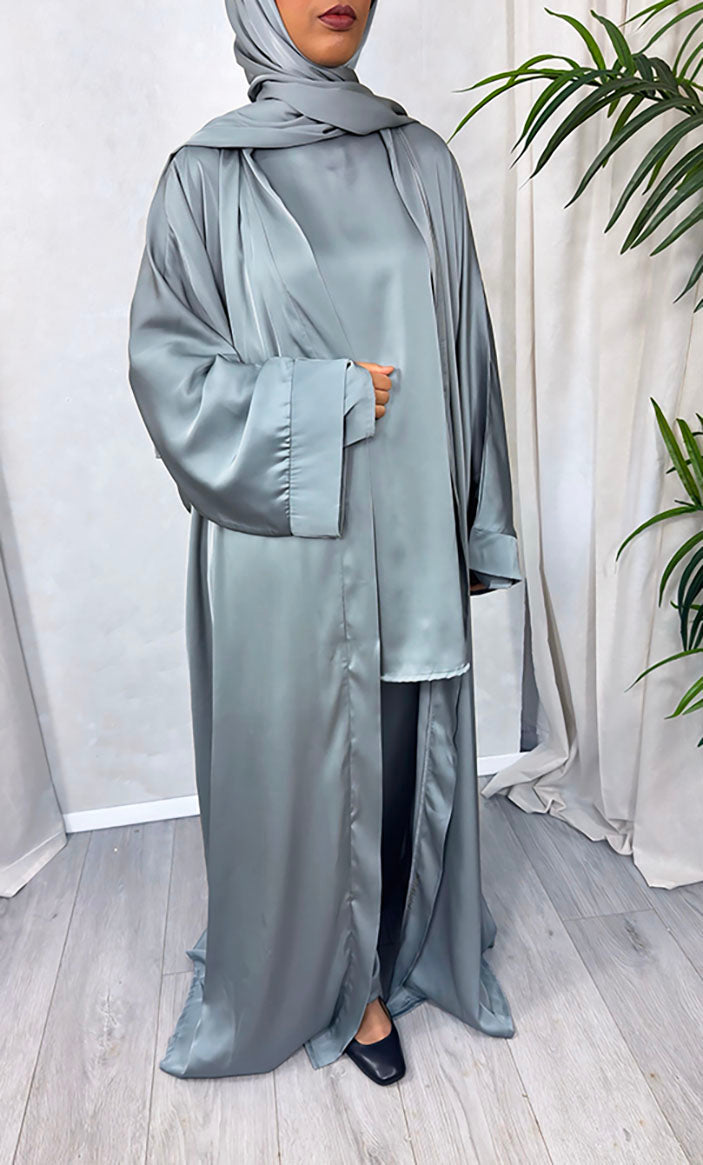
What Should You Check in Budget Abayas Before a Low Price Turns Into Thin Fabric, Weak Stitching or Poor Fit?
Bismillah. Let us begin with something important: needing an affordable abaya is not embarrassing.
A sister may search for budget abayas because her money has to stretch, because she is a student, because she is a mother managing household costs, because she is a revert building a modest wardrobe from the beginning, because she needs prayer clothing quickly, or because she simply wants to spend wisely. None of that is shameful. Islam does not ask a woman to prove sincerity through expensive clothing. A modest wardrobe can begin with one simple, affordable piece chosen with care.
But there is a difference between a fair-priced abaya and a garment that disappoints because the quality is weak. That difference matters. A low price can be a blessing when the garment still covers well, washes well, fits properly and helps a sister feel dignified. A low price can become frustrating when the material is too light for comfort, the stitching comes loose, the sleeves are awkward, the colour is nothing like the photo, the sizing is confusing, or the return process is difficult. The problem is not affordability. The problem is disappointment disguised as a bargain.
This guide is written to protect sisters, not pressure them. We are not here to make anyone feel bad for comparing prices. We are not here to say every affordable abaya is poor or every higher priced abaya is perfect. We are here to help you slow down before buying, look beyond the photo, and ask the questions that save money, time and heartache. Modest clothing should support your worship, your routine, your confidence and your peace. It should not leave you feeling uncomfortable, uncertain or regretful.
If you have ever opened a parcel and felt your heart drop, this is for you. If you have bought an abaya that looked beautiful online but felt thin, shiny, narrow or badly sewn in real life, this is for you. If you are new to modest fashion and do not yet know what quality signs to look for, you are welcome here. If you want to shop carefully without overspending, take a breath. We will go through it gently, practically and honestly.
Affordable does not mean bad, and expensive does not always mean good
The first thing to understand is that price alone does not tell the full story. Some affordable abayas are genuinely useful, especially if they are simple, well cut and made from reliable fabric. Some expensive abayas can still disappoint if the fit is poor, the fabric is impractical or the photos hide important details. A wise shopper does not judge by price alone. She asks what value the garment gives in real life.
Value means more than saving money at checkout. A budget abaya that you wear once and never again is not truly good value. An abaya that costs a little more but becomes your weekly favourite may actually be better value. Value includes how often you wear it, how secure it feels, how easily it washes, whether it suits your height, whether it helps you pray, and whether it makes getting dressed easier.
Think of it this way. If an abaya costs less but needs a new underdress, a new hijab, extra fixing, tailoring and replacement after two washes, the real cost becomes higher. If another abaya costs more but works with what you already own, covers properly and lasts longer, it may be the calmer choice. The price tag is only the beginning of the story.
For sisters on a tight budget, this can feel difficult. You may want the lowest price because every pound matters. That is understandable. The goal is not to push you into spending more than you can afford. The goal is to help you spend once with more confidence rather than buying repeatedly because each bargain disappoints.
There is also emotional value. A good modest garment helps you leave the house with ease. It reduces the need to keep adjusting. It helps you feel ready when you pray outside. It makes ordinary days less stressful. That kind of value matters deeply, especially for sisters who are still growing in confidence.
So instead of asking only, “Is this cheap?” ask, “Will this serve me?” That question is wiser. It respects your budget and your dignity at the same time.
Fabric opacity is the first test
One of the biggest problems with very low-priced abayas is fabric that looks acceptable online but feels too light in real life. This matters because an abaya is not only a dress. For many sisters, it is part of how they cover. If the fabric does not provide enough opacity, the garment may not serve the purpose you bought it for.
Photos can be misleading. Studio lighting, dark backgrounds, editing and model poses can make fabric look thicker than it is. A black abaya may seem fully covered indoors but feel less secure in bright daylight. A pale abaya may look soft and elegant online but need a full slip underneath. A chiffon or lightweight fabric may flow beautifully but require careful layering. None of these fabrics are automatically wrong, but the product page should make the reality clear.
When checking an abaya online, look for fabric descriptions. Does the listing mention whether it is lined? Does it say opaque? Does it show close-up texture? Are there photos in natural light? Does the model wear an underdress? If the page gives almost no fabric information, be cautious. Lack of detail does not always mean poor quality, but it means you have less protection as a buyer.

A good abaya should give you confidence in movement and light. It should not make you nervous when you stand near a window or step outside. If a fabric is intentionally light, the listing should make clear what underlayers are needed. Honest product guidance matters because sisters are not buying fabric alone. They are buying coverage, comfort and trust.
When your abaya arrives, test it before wearing it outside. Stand near natural light. Check whether your underlayer shows more than you expected. Move around. Sit down. Raise your arms. If the fabric feels too light for your comfort, do not ignore that just because the price was low. A low-priced garment that makes you feel uncertain is not serving you.
Opacity is not about being difficult. It is about honouring the purpose of modest clothing. A sister should not have to discover after purchase that the abaya does not cover as expected. That is why fabric is the first test.
Stitching, seams and hems reveal more than photos
Another place budget abayas often reveal their quality is in the stitching. A beautiful product photo may hide uneven seams, loose threads, weak hems, poorly attached buttons or rushed finishing. These details may seem small, but they affect how the abaya looks, feels and lasts. Modest clothing is worn in real life, not only photographed. It needs to survive movement, washing and repeated wear.
Look closely at product images if close-ups are available. Are the hems neat? Do the sleeves sit evenly? Are buttons aligned? Is the front opening straight? Does the fabric pull near seams? Does the abaya hang smoothly, or does it twist? A garment can be simple and still well made. Quality does not always mean heavy decoration. Often it means clean construction.
Weak stitching is especially frustrating on everyday abayas. If the underarm seam opens after a few wears, the abaya becomes stressful. If the hem comes undone, it drags. If buttons fall off, the front may not stay secure. If sleeve seams are rough, the garment can irritate you. These issues may not appear in a listing, so reviews and honest store policies become important.
When your abaya arrives, inspect it before removing tags. Turn it gently inside out. Look at seams, cuffs, buttons, zips, hems and any embroidery or trim. A few loose threads can happen, but many loose threads or uneven construction may be a warning sign. Check whether the garment hangs straight when worn. If one side pulls or the hem sits unevenly, it may affect confidence.
Do not feel embarrassed for checking. You are not being fussy. You are buying clothing that should help you feel dignified. If a garment is poorly made, returning it when possible is sensible. Keeping it only because it was low priced can lead to more waste if you never wear it.
| Quality area | What to check | Why it matters |
|---|---|---|
| Hems | Even stitching and no loose ends | Prevents dragging, fraying and messy appearance |
| Sleeves | Secure seams and comfortable cuffs | Supports daily movement and arm coverage |
| Buttons or zips | Firm attachment and straight placement | Keeps the abaya secure and wearable |
| Side seams | No pulling, twisting or weak joins | Helps the abaya fall modestly |
| Fabric finish | No obvious snags, marks or rough areas | Shows care in production and handling |
Good stitching is quiet. You may not notice it immediately, but you feel its benefit every time the abaya wears smoothly. Poor stitching becomes loud because it creates problems. That is why construction matters, even in simple modest wear.
Sizing and length can turn a bargain into regret
An abaya can be affordable, well coloured and pretty in photos, but if the size is wrong, it will not serve you. Sizing is one of the biggest reasons sisters regret buying budget abayas online. Some listings use vague size terms. Some claim one size fits all when it clearly does not. Some give garment length without model height. Some use international sizing without explaining measurements. When sizing is unclear, the buyer carries the risk.
Length matters because abayas are full length garments. If an abaya is too long, it may drag, collect dirt, tear at the hem or become unsafe on stairs. If it is too short, you may not feel comfortable. If sleeves are too short, wrist coverage becomes an issue. If the body is too narrow, the fabric may not move the way you need. These are not small problems. They affect modesty and comfort.
Before buying, check whether the store provides length in inches or centimetres, bust width, hip width, sleeve length and model height. If only a generic size is listed, ask whether that is enough information for you. Some sisters can estimate confidently because they know their measurements. Others may need clearer guidance. If you are new to abayas, measurements are especially important.
A helpful habit is to measure an abaya or dress you already like. Measure shoulder to hem, sleeve length, bust width and comfortable floor length with your usual shoes. Keep these notes on your phone. When a listing gives measurements, compare them. This one habit can save you from many returns.

A full length abaya set can look elegant when the proportions are right. But height, footwear and body shape change how the garment sits. Do not assume the model’s fit will be your fit. That is not a criticism of your body. It is simply how clothing works.
For petite sisters, be careful with long one size abayas. For taller sisters, check that the length does not become too short. For curvier sisters, check width and fabric drape. For sisters between sizes, ask whether the cut allows movement or whether sizing up would make the length difficult. A wise purchase considers the whole person, not only the number on the label.
Product photos can hide the truth if you do not know what to look for
Photos are powerful. They can make a weak quality abaya look better than it is and a good abaya look less impressive than it feels in real life. When buying budget abayas online, you need to learn how to read photos carefully. This protects you from being carried away by styling, lighting and poses.
Start with the number of photos. A listing with one image gives you very little information. A good listing should ideally show front, side, back or angled views, fabric details, sleeve shape, length and how the garment moves. If the abaya is open, it should show the underlayer. If the sleeves are wide, it should show them clearly. If the fabric has texture, there should be a close-up.
Look at the model’s pose. Is she always holding the abaya closed? Are her arms always positioned to hide the sides? Is the bag covering the front? Is the photo cropped before the hem? Are the sleeves hidden? These choices may be innocent, but they may also hide fit issues. A modest garment should be shown honestly.
Lighting matters too. Very bright lighting can soften fabric flaws. Dark lighting can hide fabric lightness. Filters can change colour. A beige abaya may look warm in one photo and grey in another. A black abaya may look matte online but shiny in real life. If colour matters to you, look for multiple photos or customer images where available.
Be careful with heavily edited or borrowed images. If several stores use the same photo for different products at very different prices, ask whether you are seeing the actual garment. Some marketplace listings use supplier images that do not reflect the final product quality. This does not mean every marketplace listing is bad, but it means you need caution.
A trustworthy photo set gives information, not only attraction. It helps you decide. It does not rely on mystery. When photos leave too many questions unanswered, the low price may not be worth the risk.
Returns, delivery and customer support are part of the real price
When comparing budget abayas, many sisters focus only on the product price and forget the cost of things going wrong. What happens if the abaya is too short? What happens if the colour is wrong? What happens if the fabric is too light for your needs? What happens if stitching fails? What happens if the parcel arrives late or the return address is unclear? Returns and support are part of the real buying decision.
A slightly cheaper abaya from a seller with poor return options may become expensive if you cannot send it back. A slightly higher priced abaya from a seller with clearer policies may feel safer because you know what to do if it does not suit you. This matters especially when shopping online, where you cannot touch fabric or try the garment before purchase.
Before buying, check the return window, return conditions, delivery time, contact details and whether sale items can be returned. Read policies before checkout, not after disappointment. If a store makes returns difficult to understand, be careful. Clear policies are part of trust.
Customer support also matters. If you ask about length, fabric or sizing, does the store answer properly? Are the answers specific or vague? A helpful response before purchase can prevent a return later. A seller who cannot explain the garment may not be the best choice for a sister who needs confidence.
International marketplace orders can be tempting because prices are low, but delivery times, customs, returns and sizing differences can make the process stressful. Again, this does not mean you must never buy from marketplaces. It means you should understand the risk. If the abaya is for an urgent event, prayer need or Eid, long uncertain delivery may not be wise.
Real price includes product cost, delivery cost, return risk, time, stress and whether you end up buying a replacement. A calm purchase is sometimes worth more than the cheapest checkout total.
How to shop on a budget without feeling ashamed
Let us pause here because this matters. Some sisters feel embarrassed when they search for affordable abayas. They worry that wanting affordability means they do not value modest clothing. They worry that they are not serious enough because they cannot buy premium pieces. They may compare themselves to influencers, friends or sisters at the masjid who seem to own endless beautiful outfits. Please do not let that comparison settle in your heart.
Being careful with money is not shameful. Many households are under pressure. Many sisters have responsibilities that come before clothing. Many reverts are building everything from scratch. Many mothers prioritise children first. Many students are managing limited income. Allah knows your circumstances. A sincere modest step does not become less sincere because the abaya was affordable.
The goal is not to spend more for the sake of it. The goal is to spend wisely. If your budget is small, focus on one useful abaya rather than several risky bargains. Choose a colour that matches what you already own. Choose a cut that can be worn repeatedly. Choose fabric that does not need too many extra layers. Choose something you can pray in, walk in and wash without fear.
Build slowly. You do not need a wardrobe full of abayas in one month. One good everyday abaya, one reliable hijab and one prayer-friendly outfit can be a beautiful beginning. Add pieces as your needs become clear. Buying slowly often leads to better choices because you learn what suits you.

A thoughtful piece in a wearable colour may serve better than several random low priced items. Think about cost per wear. If you wear an abaya often and feel good in it, it earns its place. If it stays unworn because the fabric, length or colour is wrong, even a low price becomes waste.
Budget shopping with dignity means you ask better questions, not that you spend beyond your means. You are allowed to want quality. You are allowed to compare. You are allowed to wait. You are allowed to choose carefully.
Red flags to watch for before buying budget abayas
Some warning signs appear before you buy. Learning them can save you from disappointment. One red flag is a listing with very little information. If the page does not explain fabric, length, sizing or what is included, you may be guessing too much. Guessing is risky, especially for modest clothing where coverage matters.
Another red flag is photos that hide key areas. If you cannot see the hem, sleeves, front closure or fabric texture, ask why. If every image is heavily posed, cropped or filtered, the garment may be harder to judge. Clear photos are not a luxury. They are part of honest selling.
Be careful with unrealistic pricing. Sometimes a very low price is possible because the design is simple or the seller is clearing stock. Other times, it may mean poor fabric, rushed stitching, inaccurate sizing or long unreliable delivery. The price does not prove the problem, but it should make you inspect more carefully.
Watch for vague size claims. “One size fits all” can be misleading. It may fit some sisters beautifully and others poorly. If there are no measurements, ask whether you are comfortable taking the risk. For abayas, length and width are too important to ignore.
Also watch for unclear return policies. If a seller makes it hard to return, hard to contact them, or unclear whether sale items are refundable, think carefully. A low price with no support can leave you stuck.
| Red flag | Why it matters | What to do |
|---|---|---|
| No fabric details | You cannot judge opacity or care | Ask questions or choose a clearer listing |
| No measurements | Length and fit become guesswork | Compare with another product or avoid |
| Only one photo | Important areas may be hidden | Look for more images before buying |
| Unclear returns | You may be stuck if it fails | Read policies before checkout |
| Too many copied images | The real product may differ | Check seller trust and reviews |
Red flags do not always mean you must walk away, but they should make you slow down. A bargain should not require blind trust. Modest clothing deserves clarity.
What a good affordable abaya should still offer
A good affordable abaya does not need to be fancy. It does not need heavy embroidery, luxury packaging or a dramatic design. But it should still offer the basics well. It should cover properly. It should be described honestly. It should be wearable in real life. It should not make a sister feel tricked when she opens the parcel.
At minimum, an affordable abaya should have acceptable opacity for its purpose, clear sizing information, neat enough stitching, practical length options or guidance, a fabric description, honest photos and a return policy that is easy to understand. If it is open, the listing should show or explain underlayers. If it is delicate, care guidance should be clear. If it is intended for everyday wear, it should be comfortable enough for movement.
Simple does not mean poor. A plain black abaya in a reliable fabric can be one of the most valuable pieces in a wardrobe. A modest robe with clean seams and a good drape can serve a sister for prayer, errands and masjid visits. A neutral abaya that matches existing hijabs can become a daily foundation. The beauty is in usefulness.
Good affordable clothing respects the buyer. It does not hide details. It does not rely only on a pretty pose. It does not make sisters feel foolish for expecting coverage. It understands that modest fashion carries trust.
If you are comparing options, choose the abaya that answers more questions. Even if the price is slightly higher, clarity can be worth it. A listing that tells you fabric, length, care and styling gives you more confidence than a cheaper listing with mystery.
A gentle note for reverts and beginner sisters
If you are a revert sister or just beginning to dress more modestly, budget abaya searches can feel overwhelming. You may not know what fabric names mean. You may not know how abaya sizing works. You may not know whether you need an underdress, khimar, slip, pins or inner sleeves. You may feel pressure to buy quickly so you can look “proper” at the masjid. Please slow down and be kind to yourself.
You do not need to buy everything at once. Begin with one piece that helps you pray and feel covered. A simple abaya in black, navy, grey or brown can be enough to start. Add a reliable hijab or khimar. Make sure you can move, sit and pray comfortably. That is more important than owning many styles.
Ask trusted sisters for guidance, but choose someone gentle. A good sister will not shame you for your budget or your questions. She will help you understand what to check. She may tell you whether a fabric needs layering, whether a length is practical, or whether a style may feel easier for your first step.
If your first abaya purchase disappoints you, do not let it break your confidence. Many sisters buy the wrong thing at first. They learn through experience. The problem may be the garment, not you. You are not less modest because one abaya did not fit. You are not less sincere because you need to return something.
Remember that Allah knows your intention and your circumstances. Building a modest wardrobe can be emotional, especially when finances are limited or family support is uncertain. Take one sincere step at a time. Choose what helps you worship and feel dignified today. The rest can come slowly.
Budget abayas and the hidden cost of buying too quickly
Sometimes the lowest purchase price is not only a quality risk. It can also encourage a habit of buying too quickly. When something is very low priced, it feels easy to add to basket without thinking. One abaya becomes three. Three become five. Then the wardrobe fills with pieces that do not quite fit, do not quite cover, do not quite match, and do not quite feel like you. The money leaves slowly, but the stress builds.
This is the hidden cost of fast fashion thinking. It teaches us to chase quantity instead of usefulness. Modest fashion can fall into the same trap if we are not careful. We may buy many abayas because they are cheap, but still feel like we have nothing to wear because none of them truly serve our routine.
Buying slower protects you. Before buying, ask what role the abaya will play. Is it for everyday errands? Work? Prayer? Masjid? Eid? Home? Travel? If you cannot name the role, pause. A beautiful price is not enough. A garment needs a purpose.
Also ask whether it matches your existing wardrobe. If the abaya needs new hijabs, shoes and underlayers, the real cost rises. If it works with what you already own, it becomes more useful. A simple, well matched abaya is often better than a trend piece that complicates everything.
There is wisdom in buying less and wearing more. It reduces waste. It saves money. It teaches contentment. It helps your wardrobe feel calmer. A sister does not need endless clothing to dress modestly. She needs pieces that support her life.
How to compare two abayas before choosing
When you are choosing between two abayas, do not only compare price. Compare the full picture. One may be cheaper, but the other may include clearer measurements, better fabric notes, stronger photos and a more reliable return policy. Those details matter.
Start with purpose. Which abaya better serves the role you need? If you need everyday wear, choose the one that looks easier to wash, repeat and style. If you need an occasion piece, choose the one with better drape and finish. If you need prayer comfort, choose coverage and movement over decoration.
Then compare fabric. Which one gives more confidence about opacity? Which one seems less likely to cling? Which one suits the season? Which one can you care for realistically? A fabric that looks pretty but needs constant maintenance may not suit daily use.
Next, compare measurements. Which listing gives actual numbers? Which one suits your height? Which one gives enough width for movement? Which one shows sleeve length? If only one listing gives clear sizing, that may be the safer option even if it costs a little more.
Compare photos. Which product shows more angles? Which one shows the hem? Which one shows fabric close-up? Which one seems less filtered? Better photos reduce risk.
Finally, compare trust. Which seller gives clearer returns? Which one answers questions? Which one has a stronger reputation? Which one feels honest? Trust is part of value. A low price from an unclear seller may not be the best deal.
What to do when your abaya arrives
The buying decision does not end at checkout. When the abaya arrives, check it properly before wearing it outside. This is especially important with budget abayas because you want to catch problems early while returns may still be possible.
Open the parcel carefully. Check the colour in natural light. Inspect the fabric for marks, pulls, snags or thin areas. Look at stitching, hems, buttons and sleeves. Try it on with the hijab, underlayer and shoes you plan to wear. Walk, sit, raise your arms and test prayer movement. Stand near a window to check opacity.
If something feels wrong, do not rush to remove tags. Take photos if there is a fault. Check the return policy. Contact the seller calmly and clearly. A good seller should help. If the garment is not faulty but simply does not suit you, decide whether returning, exchanging or gifting makes sense.
If the abaya works, care for it properly. Follow washing guidance. Avoid harsh heat if the fabric is delicate. Hang or fold it neatly. Keep outfit combinations in mind so you actually wear it. A good affordable abaya becomes valuable when it enters your real routine.
Do not leave it in the wardrobe waiting for a perfect day. If you bought it for everyday modesty, let it serve everyday modesty. Wear it. Pray in it. Learn what you like. That experience will make your next purchase wiser.
Frequently asked questions about budget abayas
Are budget abayas always poor quality?
No. Some affordable abayas are useful, modest and well suited for everyday wear. The issue is not the low price itself. The issue is when a low price comes with thin fabric, poor stitching, unclear sizing, weak photos or difficult returns. Always check the details before buying.
What is the biggest warning sign when buying a budget abaya?
The biggest warning sign is lack of information. If there are no measurements, no fabric details, only one photo and unclear returns, you are taking more risk. For modest clothing, clear information matters because coverage, length and fit are essential.
How do I know if an abaya fabric is too light?
Online, look for fabric details, close-up photos and whether the listing mentions lining or opacity. At home, test the abaya in natural daylight with your usual underlayers. If the fabric feels lighter than you expected, you may need a slip dress or a different style.
Should I buy one higher quality abaya or several budget abayas?
It depends on your budget and needs, but one reliable abaya that you wear often is usually better than several low priced pieces that do not fit or cover properly. Think about cost per wear, not only checkout price. A useful piece gives better value over time.
Can a budget abaya still be modest?
Yes, if it is loose, opaque, comfortable, long enough and styled with suitable underlayers. Modesty is not decided by price. It is decided by coverage, fit, fabric and intention. Affordable modest clothing can be sincere and dignified.
What fabric should I be careful with in very low-priced abayas?
Be careful with fabrics that look very thin, overly shiny, clingy or poorly described. Chiffon or light fabrics may need layering. Jersey can be comfortable but may need a generous cut. The fabric is not automatically bad, but you need to know how it behaves before relying on it for coverage.
How can I buy abayas on a budget without wasting money?
Buy slowly. Choose one practical colour, check measurements, read fabric details, confirm returns and make sure the abaya matches pieces you already own. Avoid buying several just because they are low priced. A smaller wardrobe of useful pieces is usually better.
Are marketplace abayas worth buying?
Some marketplace abayas may be fine, but the risk can be higher if photos are copied, sizing is unclear, delivery is long or returns are difficult. Check reviews, seller details, measurements and policies carefully before buying.
What should a beginner buy first?
A beginner should usually start with one simple, reliable abaya in a colour that matches existing hijabs or shoes. Black, navy, grey and brown are practical options. Focus on comfort, opacity, prayer movement and repeat wear before buying more styles.
People also ask
Why do some abayas look low quality?
An abaya may look low quality because of thin fabric, poor drape, shiny weak material, uneven stitching, weak hems, bad fit or unclear styling. Sometimes the issue is not price but construction. A simple abaya can look elegant when fabric, cut and finishing are handled well.
How can I tell if an abaya is good quality online?
Look for clear fabric descriptions, measurements, multiple photos, close-up details, honest model information, care guidance and transparent returns. A quality listing helps you understand the garment before buying. If too much is hidden, be cautious.
Is a plain black abaya the best budget choice?
A plain black abaya is often a strong budget choice because it matches easily and can be repeated often. But it still needs good opacity, comfortable fit and practical length. Black alone does not guarantee quality.
How do I make a simple abaya look better?
Steam or iron it according to care instructions, pair it with a neat hijab, choose clean shoes, use a suitable underlayer and keep colours calm. Good styling and care can improve a simple abaya, but they cannot fully fix poor fabric or bad fit.
Should I size up in a budget abaya?
Only size up if the measurements support it. Sizing up may give more looseness, but it can also make the abaya too long or wide. Compare measurements with a garment you already own rather than guessing.
What is better, a budget abaya or a sale abaya?
A sale abaya from a trusted store may offer better value than a very low-priced unknown listing, because the original quality, measurements and returns may be clearer. But always check the policy, as some sale items may have different return conditions.
Sisterhood reflections for sisters shopping carefully
Sometimes a sister does not need someone to tell her to spend more. She needs someone to help her spend wisely. She needs to hear that her budget is not shameful, her questions are valid and her desire for quality is reasonable.
“I used to buy the lowest priced abaya I could find, then wondered why I never felt comfortable. Once I started checking fabric and length, I bought less but wore more.”
“As a revert, I felt embarrassed that I could only afford one abaya at first. That one simple piece helped me pray and go to the masjid, and it was enough to begin.”
“The best abaya I bought was not the fanciest. It was the one that covered properly, washed well and made normal days easier.”
If you are shopping carefully, you are not alone. Many sisters are balancing modesty, money, family, confidence and real life. You are allowed to want affordability and quality. You are allowed to ask questions before spending. You are allowed to choose slowly.
About Amani's
At Amani's, modest fashion is not treated as just clothing. It is part of a sister's journey, her worship, her confidence and her everyday dignity. We create and curate abayas, hijabs, jilbabs, khimars, prayer wear and modest pieces for women who want coverage without losing softness, beauty or ease.
Our experience in modest fashion comes from listening to real sisters. We think about how clothing moves, how it feels during salah, how it supports reverts, how it works for busy routines and how it can help a woman feel gently put together without pressure.
If you are buying your first abaya, replacing a disappointing one, or trying to build a modest wardrobe carefully on a budget, you are welcome here.
With love and du'a,
Amani's
More than clothing, a community intention
Amani's was built with a purpose beyond fashion. Modest clothing can help a sister feel covered and confident, but the work is also connected to sisterhood, sadaqah jariyah and caring for women who may be at the beginning of their modest dressing journey.
In Ramadan, Amani's donates abayas to reverts as part of our wider intention to support sisters who are beginning or strengthening their journey with modest dress. For us, this is not only about giving fabric. It is about dignity, welcome and reminding a sister that she is not alone.
When you choose Amani's, we want you to feel part of something gentle, sincere and rooted in care. Modest fashion should not make a sister feel pressured. It should help her feel supported.
Where to begin if you want an abaya that is worth buying
Begin with purpose. Ask what you need the abaya for: daily wear, prayer, work, masjid, Eid, travel or home. Then check fabric, opacity, sizing, length, stitching, photos and returns. Do not let a low price rush you into ignoring the things that matter most.
If you need a reliable modest foundation, explore the Amani's abaya collection. If you want fuller coverage, look through jilbabs and khimars. If salah comfort is your main need, begin with prayer dresses. If you already own abayas but need better styling anchors, choose hijabs that work with your real wardrobe.
You do not need to be ashamed of shopping carefully. You do not need to overspend to be sincere. You simply deserve an abaya that respects your modesty, your money and your everyday life. Affordable should never mean careless. It can still mean thoughtful, covered, comfortable and dignified.