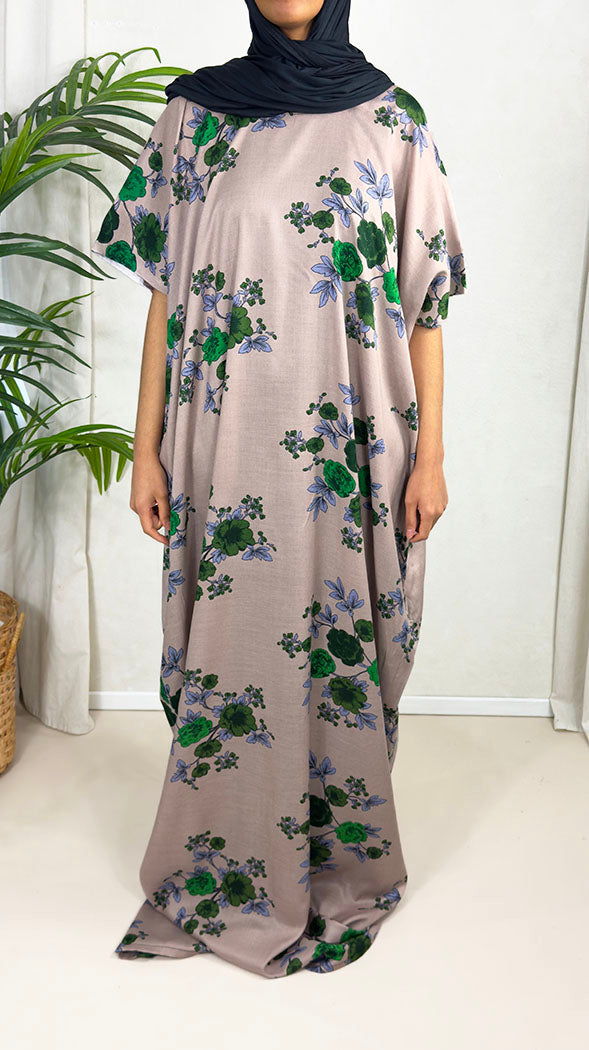
Modest Maxi Dress: Can One Dress Help You Feel Covered Without Overthinking?
Bismillah. Let us talk about the kind of dress that can make a sister breathe a little easier.
A modest maxi dress sounds simple. Long dress, loose fit, easy to wear. But for many sisters, the decision is not simple at all. She may be asking: Will it cover enough? Will it cling when I walk? Will the sleeves be right? Can I pray in it? Can I wear it at home when guests arrive? Can I wear it outside with a hijab or khimar? Will it feel too casual, too bright, too plain, too fitted, too thin, too long or too hard to style?
That is why one dress can become more than one dress. A good modest maxi dress can be the piece you reach for on slow mornings, Ramadan evenings, family visits, errands, home days, masjid classes, summer gatherings, travel days and moments when you want to feel covered without building a whole outfit from scratch. It can give the body room. It can reduce decision fatigue. It can make modest dressing feel softer and less complicated.
But a modest maxi dress needs to be chosen with care. A dress can be long and still not feel modest enough for you. It can be loose in one area and cling in another. It can look comfortable online but become awkward in daylight. It can feel perfect at home but need extra layers outside. It can be beautiful, but not practical for prayer. The goal is not to buy any long dress and hope for the best. The goal is to choose a dress that supports your real life, your body, your worship and your confidence.
This guide is written for the sister who wants ease without carelessness. Maybe you are a revert building your wardrobe slowly. Maybe you are a busy mother who needs something quick and presentable. Maybe you love abayas but want a softer dress option for home and gatherings. Maybe you are tired of overthinking every outfit and want one piece that can help. You are welcome here.
We will look at coverage, fabric, fit, sleeves, length, prayer comfort, styling with hijab, layering, colour, home wear, outdoor wear, budget, body confidence and the emotional comfort of having one reliable dress ready. We will keep the conversation gentle, because modest dressing should not become another burden on a sister’s heart.
Why a modest maxi dress can feel like relief
There is a certain kind of relief that comes from a one-piece outfit. You do not need to match a skirt and top. You do not need to check whether a tunic is long enough. You do not need to think too hard about proportions. You put the dress on, add your hijab or khimar, choose the right underlayer if needed, and the outfit begins to make sense. For a sister whose days are already full, that simplicity can feel like mercy.
A modest maxi dress can also be emotionally softer than some structured pieces. An abaya may feel more formal. A jilbab may feel like a bigger step. A layered outfit may require more planning. A loose maxi dress can sit in the middle: covered, feminine, easy and familiar. This can be especially helpful for new Muslim sisters or sisters easing into modest clothing. It may feel less intimidating while still helping them dress with more intention.
Relief also comes from repeatability. A good dress can be worn again and again in different ways. At home, it can feel comfortable and presentable. For errands, it can be styled with a long cardigan, abaya layer or khimar. For family gatherings, it can be paired with a softer hijab and neat shoes. For prayer, it may become one of the easiest pieces to reach for if the coverage is right.
The best modest wardrobes are not always the biggest wardrobes. They are the wardrobes where key pieces do a lot of work. A reliable maxi dress can become one of those key pieces. It can reduce the number of decisions you make. It can help you avoid panic shopping. It can make you feel prepared on days when you did not have time to plan.
But relief only comes when the dress truly works. If you are constantly pulling the fabric, worrying about the neckline, adjusting the sleeves or checking whether the lower half is clinging, the dress will not feel easy. That is why choosing well matters from the beginning.
Long does not always mean modest enough for your needs
One of the first mistakes sisters make is assuming that any maxi dress is automatically modest. Length helps, but it is not the whole story. A dress can be floor length and still feel too fitted. It can cover the legs but expose the arms. It can have a neckline that needs extra coverage. It can be made from fabric that becomes too light in daylight. It can have side slits, waist shaping or cling that makes you uncomfortable.
When shopping, look at the full garment. Does the dress have sleeves? If yes, are they long enough for your comfort? Are they loose, cuffed, wide or fitted? Does the neckline sit high enough, or will you need a scarf or khimar to cover it? Does the fabric fall away from the body, or does it trace the shape? Does the lower half allow walking without pulling? Is there a slit? Is the dress lined? These questions protect you from disappointment.
For some sisters, a maxi dress is modest only with an abaya, cardigan, kimono or khimar layered over it. That is fine. Modest dressing often happens through layers. The important thing is to know that before you buy. If you want one dress that works alone, choose more coverage. If you are happy to layer, you can choose a dress that works as a base.

A loose cotton baati or farasha style dress can feel modest because the shape gives room and the length provides ease. But even then, check the sleeve length, fabric feel and how the dress moves. The word maxi tells you the dress is long. It does not tell you everything about coverage.
Modesty is personal in the sense that sisters may have different comfort levels, but the practical checks remain important. A dress should help you feel secure, not leave you negotiating with the mirror every time you wear it.
Fabric decides comfort and confidence
Fabric can make a modest maxi dress feel like a favourite or a frustration. A dress might have the right length and shape, but if the fabric is wrong for your needs, it may not serve you. Fabric affects opacity, movement, breathability, washing, creasing, cling and how confident you feel outside.
Cotton can feel comfortable, breathable and easy for home or warm weather. It can be lovely for baati dresses, relaxed maxi shapes and everyday modest wear. But cotton can vary. Some cotton fabrics are thick and structured, while others are very light. Some crease easily, which may be fine for casual wear but less ideal if you want a polished look. Some prints hide creases better than plain colours.
Jersey can feel soft and practical, especially for busy days, but it must be cut generously if modesty is your aim. A narrow jersey maxi may cling around the hips, legs or stomach. A loose jersey dress can be comfortable, but you still need to check fabric weight. Very thin jersey may show lines underneath.
Chiffon and lighter floaty fabrics can look beautiful, but they usually need lining or an underdress. Satin-touch fabrics can feel elegant, but they may show pulls, cling or shine depending on quality. Crepe can provide a nice balance of drape and coverage. No fabric is perfect for every sister. The best fabric depends on where you will wear the dress and how much care you can give it.
For real life, ask: will this fabric make me too warm? Will it need ironing every time? Will it be comfortable for prayer? Will it be opaque enough in daylight? Will it wash easily? Will it feel soft on my skin? Will it work if I wear a khimar over it? These questions matter more than a pretty photo.
A modest maxi dress should not make you feel trapped or exposed. The right fabric gives calm. It lets the dress move without clinging, cover without heaviness and repeat without stress.
Fit should give room, not shame
Choosing fit is not about criticising your body. It is about respecting your body. A sister may have a fuller bust, wider hips, a rounder stomach, a petite frame, a tall frame, broad shoulders, pregnancy changes, postpartum softness, weight changes, health changes or sensory needs. None of these make her body wrong. They simply affect how fabric should fall.
A modest maxi dress should give room where your body needs room. If the bust area pulls, the whole dress may feel uncomfortable. If the hips cling, you may avoid wearing it outside. If the sleeves are too tight, movement becomes annoying. If the shoulders are too narrow, the dress may pull when you raise your arms. If the waist is too shaped, you may not feel as covered as you hoped.
Look for ease in the cut. A farasha style, A-line shape, relaxed baati cut, empire style with enough fabric, or loose straight cut may all work depending on your body. Avoid choosing only by size label. Measurements matter. Compare bust, hip, sleeve and length with a garment you already like. If the dress is one size, ask whether the width genuinely suits your body.

A relaxed farasha or baati shape can be helpful because the cut is designed to fall loosely. It can feel forgiving, especially for home wear, warm weather, family visits or sisters who dislike fitted dresses. But even loose styles need the right length and sleeve comfort. Too much fabric can overwhelm petite sisters, while too little length can frustrate taller sisters.
Fit should not make you feel ashamed. If a dress does not work, it means that dress is not right for your body or routine. It does not mean modest clothing is not for you. Try another cut, another fabric, another length or another layering method. The goal is not to squeeze into a style. The goal is to find what helps you feel covered with peace.
Sleeves, neckline and the areas we forget
When sisters buy maxi dresses, they often focus on length and forget sleeves and neckline. But those two areas can decide whether the dress feels modest enough. A full length dress with short sleeves may still need a cardigan. A beautiful loose dress with a low neckline may need a khimar or high-neck underlayer. A dress with sleeves that ride up may make you uncomfortable during daily tasks.
Sleeves should match your purpose. If you want the dress for home, short or loose sleeves may be fine depending on who is around. If you want it for errands, masjid or guests, you may prefer long sleeves. If the sleeves are wide, check whether they expose the arms when you raise your hands. If they are cuffed, check whether they feel comfortable. If they are fitted, check whether they reveal more shape than you prefer.
Neckline also matters. A high neckline can make the dress easier to wear with a simple hijab. A lower neckline may still work if you wear a khimar, long scarf or inner top. The issue is not that one neckline is always wrong. The issue is whether you know what styling it requires. If a neckline needs extra coverage and you do not plan that coverage, the dress may sit unworn.
For prayer, neckline and sleeves become even more important. When you move into ruku and sujood, fabric shifts. Your hijab may move. Sleeves may slide. A dress that feels fine while standing might need testing in prayer positions. If you want a dress to be prayer friendly, test it at home before relying on it outside.
The forgotten areas become stress points when ignored. A good modest maxi dress should make these areas simple. It should either cover them well or layer easily with pieces you already own.
Length and height can change everything
Maxi dress length is not one-size-for-all. A dress that sits perfectly on one sister may drag on another or sit too short on a taller sister. Height matters. Footwear matters. Whether you wear the dress indoors, outside, for prayer or travel matters. A modest maxi dress should give enough length for coverage without making movement unsafe.
If you are petite, pay close attention to measurements. A dress that looks elegant on a tall model may become too long and heavy on you. Dragging hems can collect dirt, catch on stairs and make you feel clumsy. You may need a petite-friendly length, a style that can be hemmed, or shoes that lift the dress slightly. Do not feel bad about needing alterations. Clothing is made to standard sizes, but bodies are not standard.
If you are tall, check whether the dress will remain maxi length on you. Some dresses labelled maxi may sit above the ankle on taller sisters. That may be fine if you plan to wear trousers or boots underneath, but if you want full length coverage, confirm before buying. Sleeve length matters too. Tall sisters often find sleeves are shorter than expected.
If you want to pray in the dress, length should allow movement without tripping. The dress should not pull too tightly when kneeling. If the hem is very wide, make sure you can manage it. If the dress is narrow, make sure sujood feels comfortable. Testing at home is the safest way to know.
One practical habit is to measure a dress you already love. Note the shoulder-to-hem length, sleeve length and width. Keep those numbers on your phone. When shopping, compare. This removes guesswork and helps you choose with confidence.
A dress that respects your height will be worn more often. A dress that constantly needs adjusting will not feel easy, no matter how pretty it is.
A modest maxi dress can make home feel more presentable
Many sisters think about modest clothing only for outside, but home matters too. A modest maxi dress can be a beautiful home piece because it is comfortable, easy and presentable. It can help you feel dressed without feeling restricted. It can be useful when guests come, when family visits, when you are cooking, resting, caring for children or moving through the house.
Home clothing affects mood more than people realise. When you spend the whole day in something uncomfortable or messy, you may feel more tired. When you wear something soft, loose and presentable, you may feel calmer. This does not mean every home day needs to look polished. It simply means comfort and dignity can exist together.
Baati dresses, cotton maxi dresses and relaxed farasha styles can work well at home because they give ease. They are not necessarily formal like occasion abayas, but they still offer coverage and softness. For sisters who host family or live in busy households, having a few presentable home dresses can be very helpful.

A relaxed blue tie dye or printed dress may feel cheerful at home while still loose and covered. Colour can lift the mood, especially if your outside wardrobe is mostly black or neutrals. Home can be a place where modest clothing feels playful, soft and personal.
When choosing home maxi dresses, think about washing, breathability and movement. Can you cook in it? Can you sit comfortably? Can you answer the door with a cardigan or khimar nearby? Can you pray in it if needed? A good home dress should not be so delicate that you are afraid to live in it.
Home modesty is not about perfection. It is about feeling comfortable, covered and quietly cared for in the space where much of your life happens.
Wearing a modest maxi dress outside with confidence
Wearing a modest maxi dress outside may require different styling than wearing it at home. The dress may need a longer hijab, khimar, cardigan, abaya layer, coat, underdress or suitable footwear. The goal is not to complicate the outfit. The goal is to make sure you feel secure in public movement, daylight and weather.
For a simple outside look, pair a loose maxi dress with a long hijab or khimar and practical shoes. If the dress has short sleeves, add a cardigan, kimono, open abaya or inner sleeve layer. If the fabric is light, add a slip dress. If the neckline is low, choose a scarf style that covers the chest. The right layer depends on what the dress needs.
For errands, keep it practical. Shoes should work with the length. A bag should not pull fabric awkwardly. The hijab should stay secure. If it is windy, consider an outer layer that keeps the dress from moving too much. If you will be walking a lot, check that the dress does not restrict your stride.
For family gatherings, a modest maxi dress can feel soft and feminine. Add a nicer hijab, neat flats and a simple bag. You do not need heavy jewellery or complicated styling. A loose printed dress can feel warm and approachable. A plain dress can feel elegant with the right scarf.
For the masjid, choose fuller coverage. A khimar over a maxi dress can be very practical. Make sure the dress allows sitting on the floor and prayer movement. Avoid fabrics that make noise, cling or distract you. The aim is to focus on worship and learning, not constant adjusting.
Outside confidence grows through testing. Wear the outfit at home first. Stand in daylight. Walk, sit and pray. Once you know the dress behaves well, you will feel calmer outside.
Colour and print without overthinking
Modest maxi dresses often come in prints, florals, tie dye, neutrals, dark tones and soft colours. This can be joyful, but it can also make shopping confusing. A sister may wonder whether a print is too bright, whether a floral feels too feminine, whether a light colour is practical, or whether a bold dress will be hard to style. The answer depends on your routine and confidence.
If you are new to modest dressing or prefer quiet outfits, start with calm colours. Taupe, cocoa, grey, navy, black, olive and soft neutrals are easier to style. They work with many hijabs and outer layers. They also feel less visually loud, which can help if you are nervous about being noticed.
If you enjoy prints, choose prints that still feel wearable. A floral maxi dress can be beautiful for home, summer days, family gatherings and casual modest styling. Tie dye can feel relaxed and comfortable. Bold prints may need simple hijabs and shoes so the outfit does not feel busy. Let the dress be the main feature.

A cocoa floral dress is a good example of a print that still feels grounded. The floral detail adds softness, while the deeper base colour keeps it wearable. Pair it with a cream, brown, black or taupe hijab and the outfit becomes easier.
Before buying a printed dress, ask whether you own a hijab that matches without fighting the pattern. If you need to buy several new pieces to make it work, the dress may become harder to wear. A print should make the outfit easier or more joyful, not create stress.
Colour and print are allowed to bring happiness. Modesty does not have to be colourless. The key is choosing shades and patterns that support your comfort, your environment and your sense of self.
Prayer comfort in a modest maxi dress
A modest maxi dress can be wonderful for salah if the coverage and movement are right. But again, length alone is not enough. You need to check sleeves, neckline, fabric, lower width and how the dress behaves during prayer positions.
Raise your hands. Do the sleeves slide back? Bow into ruku. Does the neckline stay covered with your hijab? Move into sujood. Does the back remain covered? Sit between prostrations. Does the dress pull across the knees or hips? If the dress is narrow, it may restrict movement. If it is very wide, it may need managing. Both can work if you know what to expect.
If the dress has short sleeves, keep a prayer khimar, cardigan or prayer layer nearby. If the neckline is open, use a longer hijab or khimar. If the fabric is light, wear a slip. If the dress is comfortable but not fully prayer ready by itself, it can still be useful when paired with the right layer.
For sisters who pray at work, school or outside the home, one prayer-friendly maxi dress can reduce stress. You may already be thinking about wudu, timing and prayer space. Clothing should not add unnecessary anxiety. A reliable dress helps you answer salah with more ease.
For revert sisters, this can be especially important. When prayer is still new, having clothing that feels ready can make the routine less overwhelming. You do not need a huge wardrobe. One dress that helps you pray calmly can be a beautiful beginning.
Test before trusting. That simple rule prevents many stressful moments.
A gentle note for revert sisters choosing a modest maxi dress
If you are a revert sister, a modest maxi dress may feel like a gentle first step. It may look familiar enough not to feel frightening, but covered enough to help you move toward modest dressing. That balance can be comforting. You do not have to begin with the most formal abaya or the fullest jilbab if that feels overwhelming. You can begin with what helps you pray, feel covered and grow steadily.
Start with one dress. Choose a colour you will actually wear. Choose fabric that feels comfortable. Choose a cut with room. Add a hijab or khimar that gives the coverage you want. Wear it at home first. Pray in it. Notice how you feel. Then try it for a short errand, a visit to a trusted sister or a masjid class if you feel ready.
Do not compare your beginning to someone else’s years of experience. Some sisters grew up around abayas, jilbabs and hijabs. You may be learning every piece from scratch. That is not shameful. Every journey has a beginning. Allah knows the sincerity behind the small steps.
If your family does not understand, a maxi dress may feel easier than a sudden wardrobe change. It can help you dress more modestly while you build confidence. Over time, you may add abayas, khimars, jilbabs or prayer dresses. There is no need to buy everything in one season.
You are allowed to ask simple questions. What do I wear underneath? Is this too fitted? Can I pray in this? Which hijab matches? Do I need a slip? These questions are normal. A gentle wardrobe is built through learning, not perfection.
Buying less but wearing more
A modest maxi dress can help you buy less if you choose it wisely. One reliable dress can serve home wear, errands, prayer, casual visits and relaxed gatherings. But if you buy randomly, maxi dresses can also create clutter. A wardrobe full of dresses that do not quite cover, do not quite fit and do not quite match will not make dressing easier.
Before buying, give the dress a role. Is it a home dress? A prayer dress? A summer errands dress? A family visit dress? A masjid class dress? A travel dress? When a dress has a clear role, you can judge it properly. If it has no role, it may only be an impulse purchase.
Use the three outfit test. Can you style the dress three ways with items you already own? For example, with a khimar for masjid, with a cardigan for home guests, and with trainers for errands. If yes, it may be useful. If you need to buy a new hijab, new underlayer and new shoes before it works, pause.
Cost per wear matters. A dress you wear weekly gives better value than one you only admire. This does not mean every piece must be plain. It means beauty should be wearable. A printed dress can still be practical if you love wearing it and can style it easily.
There is also barakah in using what you own. Clothing should not become a constant chase. A small modest wardrobe can feel abundant when the pieces truly serve you.
Mistakes to avoid when buying a modest maxi dress
The first mistake is buying only because the dress is long. Length matters, but modesty also needs fit, fabric, sleeves, neckline and movement. Always check the whole design.
The second mistake is ignoring fabric. A dress may look beautiful but feel too thin, too clingy, too hot or too delicate for your routine. Fabric should match how you plan to wear it.
The third mistake is choosing a print that does not work with your wardrobe. If you have no hijab, khimar or shoes that match, the dress may stay unworn. Choose colours and prints that connect with what you own.
The fourth mistake is forgetting prayer movement. If you want to pray in the dress, test ruku and sujood at home. Do not wait until you are outside to discover the sleeves or neckline shift.
The fifth mistake is buying several dresses before testing one. Wear the first dress properly. Wash it. Pray in it. Style it. Learn from it. Then decide whether another colour or print makes sense.
The sixth mistake is criticising your body when a dress does not fit. The dress is the issue. Try another cut, size, fabric or length. Your body deserves kindness.
| Mistake | Why it causes stress | Better choice |
|---|---|---|
| Only checking length | The dress may still cling or expose arms | Check sleeves, neckline, fabric and fit |
| Ignoring fabric | Comfort and opacity may disappoint | Read fabric details and test in daylight |
| Choosing random prints | Harder to style with hijabs | Stay within your colour family |
| No prayer test | Problems appear during salah | Test movement at home first |
| Buying too many quickly | Creates clutter and regret | Start with one useful dress |
Care, repeat wear and keeping the dress useful
A modest maxi dress becomes valuable when it is cared for and repeated. If the dress is cotton, check washing guidance so it does not shrink or fade. If it is delicate, avoid harsh washing. If it creases, decide whether you are willing to steam or iron it. If it has colour or print, wash with care to protect it.
Store your dress in a way that makes it easy to wear. If it creases badly when folded, hang it. If it is a casual cotton dress, folding may be fine. Keep matching hijabs nearby if possible. The easier the outfit is to access, the more likely you are to repeat it.
Do not be embarrassed to repeat a dress. A reliable modest dress is meant to be worn. You can change the hijab, khimar, cardigan, shoes or bag to make it feel different. At home, wear it simply. Outside, add layers. For gatherings, choose a softer scarf. One dress can carry many moments.
Repeat wear teaches you what you truly like. You may discover you prefer cotton. Or darker prints. Or wider sleeves. Or neutral colours. This knowledge makes future shopping wiser. It also helps you avoid buying pieces just because they look nice online.
There is dignity in caring for clothing. It reduces waste, saves money and helps your wardrobe feel intentional. Modest fashion does not need constant newness. It can be built through thoughtful pieces that serve again and again.
Frequently asked questions about modest maxi dresses
Is a maxi dress automatically modest?
No. A maxi dress is long, but modesty also depends on fabric, fit, sleeves, neckline, opacity and movement. A dress may need a hijab, khimar, cardigan, slip dress or abaya layer to feel modest enough for your needs.
What should I wear under a modest maxi dress?
This depends on the fabric and cut. You may need a slip dress, leggings, long sleeve base, inner sleeves or comfortable underlayer. If the dress is light or clingy, an underlayer can help you feel more secure.
Can I pray in a modest maxi dress?
Yes, if it gives enough coverage and movement for salah. Test ruku, sujood and sitting at home. Check the sleeves, neckline, lower width and fabric before relying on it outside.
Which fabric is best for a modest maxi dress?
Cotton can be comfortable and breathable, jersey can be soft if cut loosely, crepe can offer good drape, and lined chiffon can feel elegant. The best fabric depends on your routine, climate and how much care you can give the dress.
Can I wear a printed maxi dress with hijab?
Yes. Pair printed dresses with simple hijabs or khimars in colours that connect to the print. Let the dress be the main feature and keep the rest calm. This helps the outfit feel modest and balanced.
Are baati dresses modest?
Baati dresses can be modest when the cut is loose, length is comfortable and fabric gives the coverage you want. Some may be better for home or casual wear, while others can be styled outside with a hijab, khimar or outer layer.
What colour modest maxi dress should I buy first?
Choose a colour that matches hijabs and layers you already own. Taupe, cocoa, navy, grey, black and soft neutrals are easy starting points. Prints can also work if you have simple matching hijabs.
How do I stop a maxi dress from clinging?
Choose a looser cut, better fabric weight or a slip underneath. Avoid very thin or narrow fabrics if cling makes you uncomfortable. A long cardigan, open abaya or khimar can also help with coverage.
Can a modest maxi dress replace an abaya?
For some sisters, a loose maxi dress can work in similar everyday situations, especially with a hijab or khimar. For others, an abaya gives more outer coverage. It depends on the dress, styling and your comfort level.
People also ask
How do you style a modest maxi dress?
Style it with a hijab or khimar, suitable underlayers, comfortable shoes and a layer if needed. For casual wear, keep accessories simple. For gatherings, choose a softer scarf and neat shoes. The styling should support coverage and comfort.
Can I wear a maxi dress to the masjid?
Yes, if it is loose, opaque, prayer friendly and styled with proper hijab or khimar coverage. Test the dress in prayer positions first. If needed, add a cardigan, abaya layer or slip dress.
Are floral maxi dresses modest?
They can be modest if the fit, fabric and coverage are right. Floral prints can feel soft and feminine without being revealing. Pair them with simple hijabs so the outfit stays balanced.
What shoes go with modest maxi dresses?
Flats, trainers, sandals, boots or low heels can work depending on the length and occasion. Choose shoes that keep the hem safe and comfortable. The dress should not drag or restrict walking.
How do I choose a maxi dress for my height?
Check measurements and compare them with a dress you already own. Petite sisters should watch for dragging hems, while taller sisters should check length and sleeve coverage. Footwear also affects how the dress sits.
Can a modest maxi dress be worn at home and outside?
Yes. Many maxi dresses work at home and can be styled outside with hijab, khimar or outer layers. Choose fabric that is comfortable enough for home but presentable enough for the situations you want to wear it in.
Sisterhood reflections for sisters who want ease
Sometimes a sister is not asking for a dramatic outfit. She is asking for something that lets her breathe. Something she can wear when the day is full, when guests arrive, when prayer time comes, when she wants to feel covered without standing in front of the wardrobe for too long.
“The dress that helped me most was not the fanciest one. It was the loose one I could pray in, sit in and wear without overthinking.”
“As a revert, a modest maxi dress felt like a gentle first step before I understood abayas and jilbabs properly.”
“I started wearing my printed baati dresses at home and realised modest clothing could feel comfortable, colourful and still dignified.”
If that sounds familiar, you are not alone. Many sisters want modesty to feel easier in ordinary life. You are allowed to choose pieces that bring calm. You are allowed to repeat what works. You are allowed to build your wardrobe around real use, not pressure.
About Amani's
At Amani's, modest fashion is not treated as just clothing. It is part of a sister's journey, her worship, her confidence and her everyday dignity. We create and curate abayas, hijabs, jilbabs, khimars, prayer wear, baati dresses and modest pieces for women who want coverage without losing softness, beauty or ease.
Our experience in modest fashion comes from listening to real sisters. We think about how clothing moves, how it feels during salah, how it supports reverts, how it works for busy routines and how it can help a woman feel gently put together without pressure.
If you are choosing your first modest maxi dress, looking for something easy at home, or building a wardrobe that supports both comfort and coverage, you are welcome here.
With love and du'a,
Amani's
More than clothing, a community intention
Amani's was built with a purpose beyond fashion. Modest clothing can help a sister feel covered and confident, but the work is also connected to sisterhood, sadaqah jariyah and caring for women who may be at the beginning of their modest dressing journey.
In Ramadan, Amani's donates abayas to reverts as part of our wider intention to support sisters who are beginning or strengthening their journey with modest dress. For us, this is not only about giving fabric. It is about dignity, welcome and reminding a sister that she is not alone.
When you choose Amani's, we want you to feel part of something gentle, sincere and rooted in care. Modest fashion should not make a sister feel pressured. It should help her feel supported.
Where to begin with your modest maxi dress
Begin with the purpose. Do you need the dress for home, prayer, errands, family gatherings, masjid classes or travel? Then check the fabric, sleeves, neckline, length, fit and whether you already own hijabs or layers that work with it. A modest maxi dress should make your life easier, not create another styling problem.
If you want relaxed, comfortable full length dresses, explore Amani's modest dresses and abayas. If you want fuller coverage, browse jilbabs and khimars. If salah ease is your main need, begin with prayer dresses. If your dress needs a finishing touch, choose hijabs that support your colour family and coverage needs.
You do not need to overthink every outfit. One good modest maxi dress can help you feel covered, comfortable and ready for real life. Let it be chosen with care, worn with gratitude and repeated with confidence.