When Abayas Look Too Cheap: What Should You Watch Out For?
When abayas look too cheap, the feeling can be confusing. Part of you may feel relieved because you have found something affordable. Another part of you may feel cautious because modest clothing is not just a quick outfit. It has to cover properly, feel comfortable, last through real life and help you feel dignified outside the home. A low price is not automatically wrong. Many sisters shop carefully because budgets are real, Eid can become expensive, children grow quickly and a modest wardrobe often has to be built slowly.
This guide is for the sister who has seen an abaya online and thought, that looks beautiful, but why is it so cheap? It is also for the sister who has already bought something before and felt disappointed when it arrived. Maybe the fabric was thin. Maybe the colour looked different. Maybe the stitching felt rushed. Maybe the sleeves were awkward. Maybe the abaya looked modest in the photo but became clingy in real life. Those experiences can make a woman feel embarrassed, but they are not a reflection of her.
Amani's wants sisters to feel protected, not pressured. There is nothing shameful about wanting an affordable abaya. A budget-conscious sister is not less stylish, less serious or less deserving of beauty. The question is whether the abaya gives value or simply gives a low number on the screen. A good price should still come with decent fabric, honest photos, useful sizing, proper opacity, wearable length, respectful customer service and a clear return process.
In this article, we will look at what to check before buying abayas that look too cheap, how to spot quality problems, how to read photos with a wiser eye, how to protect modesty when fabric is light, and how to decide whether a budget abaya is genuinely good value. We will speak gently because many sisters are building wardrobes slowly. We will also speak honestly because your money, your modesty and your confidence deserve care.
Cheap does not always mean bad, but it should make you look closer
The first thing to understand is that a low price does not automatically mean an abaya is bad. Sometimes a store has a sale. Sometimes a style is older stock. Sometimes a brand is clearing space for new arrivals. Sometimes a simple everyday abaya has fewer design details and can be priced more affordably. A plain closed abaya in a modest fabric does not need to cost the same as a detailed satin occasion set. So the price alone is not enough to judge the garment.
However, a very low price should make you slow down. It should make you ask what is being reduced. Is the price lower because the design is simple, or because the fabric is poor? Is it lower because the store is running a genuine promotion, or because the photos are hiding flaws? Is it lower because the abaya is lightweight and everyday, or because it may become transparent in daylight? Good shopping is not suspicious in a harsh way. It is careful in a protective way.
Many sisters learn this after one painful purchase. The abaya arrives and looks nothing like the photo. The colour is duller, the fabric feels rough, the stitching has loose threads, or the garment has no shape at all. At that point the low price no longer feels like a saving. It becomes another item sitting unworn in the wardrobe. A cheap abaya that you cannot wear is more expensive than a slightly higher priced abaya that you reach for again and again.
This is especially true for modest clothing because function matters as much as appearance. An abaya must protect coverage. It needs to behave while walking, sitting, praying, travelling and moving around family or public spaces. If the fabric clings, lifts, opens or shows too much, the garment fails one of its most important purposes. So do not immediately reject a low priced abaya, but do not trust it blindly either.
Think of price as an invitation to investigate. A fair price should make sense when placed beside fabric, cut, care, photos, customer support and delivery. If the page gives clear information, realistic images and a proper return policy, the low price may simply be good value. If the page gives only one perfect photo, vague words and no real details, the low price may be asking you to take all the risk.

Look at the fabric before you fall in love with the photo
Fabric is one of the first places where a very cheap abaya may reveal its true cost. In a photo, almost any fabric can look smooth if the lighting is flattering, the model is still and the camera angle is carefully chosen. Real life is less forgiving. Fabric has to move, breathe, fall, survive washing, resist transparency and feel comfortable against the skin. If the fabric is poor, even a beautiful cut can disappoint you.
Thin fabric is one of the most common issues. Some lightweight abayas look fine indoors but become see-through in daylight. A sister may only realise this when she stands near a window, steps outside or sees the garment under stronger light. This can be very upsetting, especially for a woman who bought the abaya to feel more covered. If a product description does not mention opacity, lining or fabric weight, be careful. Light fabric is not always bad, but it needs honesty.
Cling is another issue. Some cheaper fabrics look loose on a model but cling to the body when worn by a real customer. Static, low quality blends and very thin materials can catch around the hips, thighs or legs. This can make a loose abaya feel less modest than expected. When choosing online, look for fabric that appears to fall away from the body rather than stick to it. If every photo shows the model standing perfectly still with no movement shots, you may not be seeing the full truth.
Roughness matters too. An abaya may look elegant but feel scratchy, stiff or uncomfortable. If you are wearing it for hours, visiting family, travelling or praying, comfort matters. Modest clothing should not make your skin feel irritated or make you desperate to change. A low price is not helpful if the garment feels unpleasant every time you wear it.
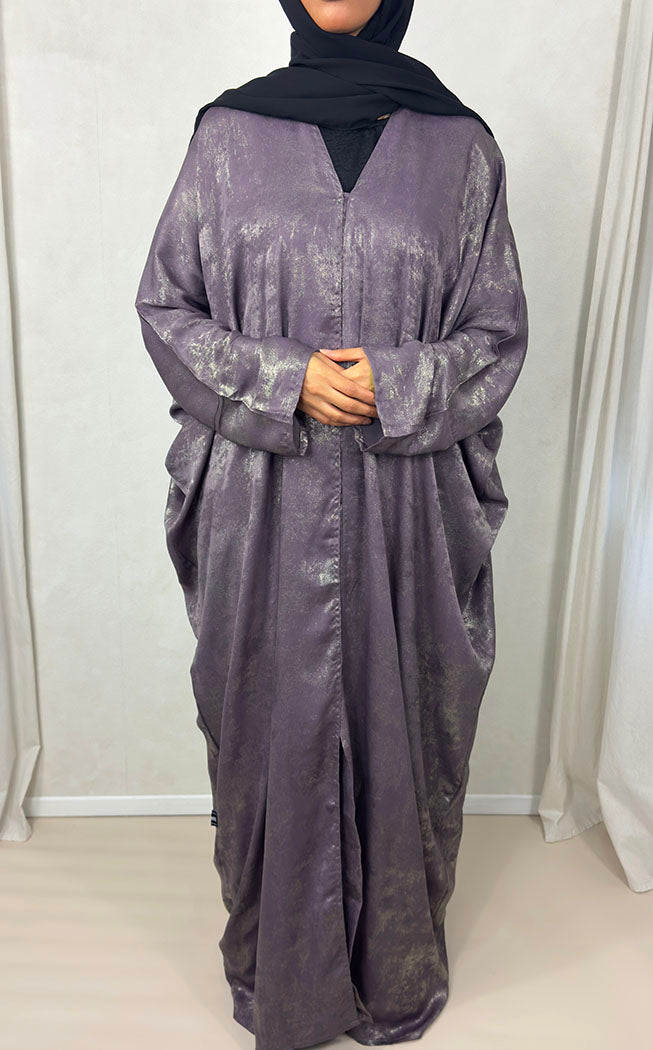
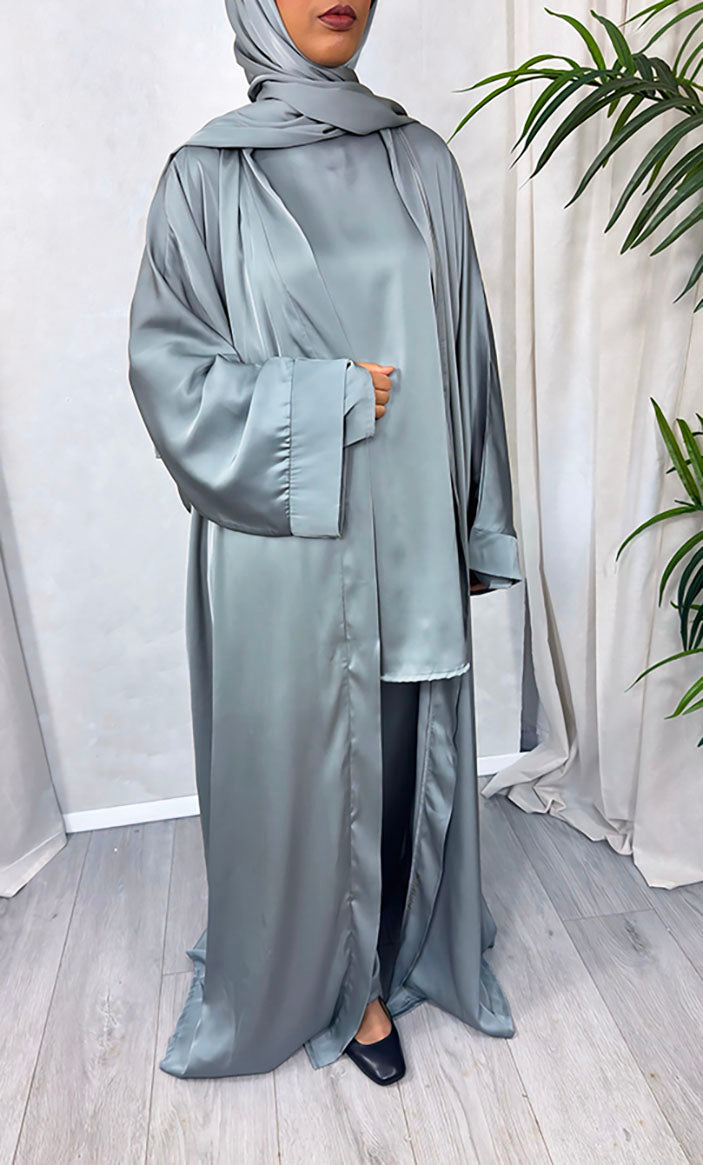
For satin abayas, check the shine. A soft satin can look luxurious, while a poor satin can look overly shiny, thin or costume-like. For chiffon abayas, check whether there is a lining or inner dress. For crepe or neda styles, check whether the material has enough body. The fabric name alone is not enough because quality varies widely. A satin abaya from one store may feel elegant, while another may feel flimsy.
Fabric is also connected to washing. Some cheap fabrics lose shape after one wash, become rough, shrink badly, fade quickly or hold creases in a way that makes the abaya look tired. A garment that cannot survive normal gentle care may not be true value. Always check whether the store gives care instructions. If there is no care information at all, you are being asked to guess.
Check opacity because modesty should not depend on perfect lighting
Opacity is one of the most important parts of an abaya. An abaya may have a loose shape, a beautiful colour and a flattering photo, but if the fabric is too see-through, it may not give the coverage you need. This is where some very cheap abayas can become risky. The garment may be priced low because the fabric is light, thin or unlined, and that can create problems once it is worn outside.
Good opacity means the abaya protects you in normal real-life conditions. You should not have to rely on dim lighting, careful angles or standing still. The garment should feel secure when you walk in daylight, stand near a window, attend a gathering, pray, sit or move. If an abaya only looks modest in one perfect product photo, it may not be modest enough in reality.
Light colours need extra care. Cream, white, beige, pale pink, lilac, soft grey and light sage can be beautiful, but they often need stronger fabric or lining. A darker abaya can sometimes hide thinness better, although even black fabric can become transparent if it is too poor. If you are buying a pale abaya at a surprisingly low price, look carefully for lining, thickness and customer photos if available.
Open abayas need even more thought. An open abaya can be modest and elegant when paired with a proper inner dress, slip, jilbab, maxi dress or full outfit underneath. But if a cheap open abaya is thin and the inner layer is not included, you may need to spend more money to make it wearable. The true cost is not only the abaya. It is the abaya plus everything needed to make it feel modest and complete.
Sleeves also affect opacity and coverage. Some flowing sleeves expose the arm when lifted unless there is an inner sleeve or cuff. Some cheap abayas use wide openings without enough thought for prayer or movement. Check sleeve photos carefully. If the model's arms are always held down, you may not know how the sleeve behaves when raised. This matters for wudu, eating, holding a child, carrying bags and salah.
One simple test at home is to stand in natural light while wearing the abaya with the underlayers you would normally choose. If you can see outlines or colour through the fabric, decide whether a slip solves the issue or whether the garment simply does not meet your modesty needs. Do not blame yourself for needing this test. Good modest clothing should be tested in real light, not only admired in perfect photos.
Read the stitching, seams and finishing like a quiet quality report
Stitching may not be the first thing a sister notices in a product photo, but it is one of the clearest signs of quality. A cheap abaya may look fine at first glance, but rushed stitching can affect how it hangs, how long it lasts and how confident you feel wearing it. Loose threads, uneven hems, twisted seams and poorly finished cuffs can make a garment feel careless.
Look at the hem first. A long abaya needs a neat hem because the lower part is visible and moves when you walk. If the hem is uneven, the abaya may look messy. If it is poorly stitched, it may start coming undone. This is especially frustrating when you bought the abaya for an occasion. A low price becomes less attractive when you have to repair it before wearing it properly.
Side seams matter too. If the seams twist, the abaya can hang strangely. You may feel like the garment is turning around your body or pulling in one direction. This often happens when fabric is cut quickly or sewn without care. In a photo, it may not be obvious, especially if the model is standing in a controlled pose. In real life, you feel it immediately.
Sleeves are another place to check. A sleeve seam carries movement all day. You lift your arms, make wudu, hold bags, reach for shelves and pray. If the sleeve seam is weak, it may split or fray. If the cuff is poorly finished, it may twist or feel uncomfortable. For a sister who wants modest clothing to feel reliable, sleeves are not a small detail.
Buttons, press studs, zips, belts and embellishments should also feel secure. A very cheap abaya may use weak closures that loosen quickly. If the abaya includes rhinestones, pearls, embroidery or appliques, check whether they appear properly attached. Occasion beauty should not fall apart after one wear. If the decoration is delicate, the product page should explain care clearly.
When you receive an abaya, inspect it before removing tags or washing. Check the inside as well as the outside. Good finishing does not need to look couture, but it should look neat and respectful. If you see a fault, take photos straight away and contact the store. Do not feel guilty for expecting a garment to be wearable. Paying less does not mean accepting damage.
Be careful when the photos look too perfect but tell you too little
Product photos can be beautiful and still not be helpful enough. A photo can show colour and mood, but it may hide thickness, movement, sleeve openings, length, transparency and construction. When abayas look too cheap, the photos become even more important because they may be the only evidence you have before spending money.
Look for multiple angles. A good product page should ideally show the front, side and back. If it is an open abaya, it should show how it looks open and closed if that applies. If it is a set, it should show the inner piece clearly. If the sleeves are wide, it should show how they fall. If the fabric has shine, it should show the texture in more than one type of light.
Be cautious when every image looks heavily edited, over-filtered or taken from far away. Some product photos make colours look richer than they are. Others smooth out fabric texture. A blurry or distant image may hide poor stitching. A model standing in one pose may hide how the abaya moves. This does not mean every polished photo is dishonest. It means you should look for photos that answer real customer worries, not only photos that create desire.
Customer photos can help, but read them carefully too. One sister's height, body shape, styling and lighting may not match yours. A photo on a tall model may not show how the length works for a petite sister. A photo on a slim model may not show whether the fabric clings on a curvier body. Use photos as clues, not promises.
Pay attention to repeated images across different sellers. Sometimes the same supplier photo appears on many marketplace listings. The garment you receive may vary depending on the seller, batch or quality level. If a page uses a stunning image but gives almost no details, be careful. The photo may sell the dream, while the description avoids responsibility.
A trustworthy product page should make you feel informed. It should not leave you guessing about basic things. If the price is low and the photos are limited, ask yourself whether you are buying an abaya or buying hope. Hope is not a size guide. Hope is not fabric weight. Hope is not a return policy. Let the page earn your trust.

Size guides protect you from hidden costs
An abaya that looks cheap can become expensive if the sizing is unclear. Wrong size means returns, exchanges, postage costs, wasted time and disappointment. Some sisters keep unsuitable abayas because returning feels stressful, and then the item sits unworn. A clear size guide is not a luxury. It is part of respectful selling.
Length is especially important. Abayas are often sold in lengths such as 52, 54, 56, 58, 60 or 62 inches. A sister may choose based on her usual size without checking height, shoe choice and preferred hem. If the abaya is too long, it drags and becomes unsafe or dirty. If it is too short, she may feel less covered than expected. When buying online, compare the listed length to an abaya you already own and love.
Width also matters. A cheap abaya may be described as loose or modest, but if there are no measurements for bust, hips, sleeve width or garment width, you are guessing. A garment can be long enough but too narrow. It can be wide enough but too short. It can fit standing still but pull when sitting. Measurements help you understand real movement.
For open abayas and sets, check every piece. Does the inner dress come with it? Is the inner sleeveless or long sleeved? Are trousers included? Is the hijab included? Does the cape, belt or outer layer come as shown? Sometimes a low price looks amazing because the photo shows a complete outfit, but the listing only includes one part. Always check what is included before comparing prices.
Children's abayas need even more care because children grow quickly and move constantly. A low priced girls' abaya may still be good value, but check length, sleeve comfort, fabric softness and whether the child can walk and sit easily. A pretty outfit that irritates a child or restricts her movement may not be worn again. Budget should still respect comfort.
If the size guide is missing, ask before buying. A good store should be able to help. If no one responds, that tells you something too. Customer service is part of value. A low price with poor communication may not feel like a bargain when you need help.
Returns and delivery matter more when the price looks too good
When an abaya is very affordable, it is easy to focus only on the product price and forget the rest of the buying experience. But delivery, returns, exchanges and customer service can decide whether the purchase feels safe. A low price loses its comfort if you cannot return a poor fit, if delivery takes too long for your event, or if customer service disappears when there is a problem.
Before buying, check the return policy. Can you return if it does not fit? Are sale items returnable? Who pays return postage? How many days do you have? Is the item final sale? If the policy is unclear, pause. A sister buying modest clothing should not be trapped with a garment that does not cover properly or match the description.
Delivery times are also important. If you are buying for Eid, a wedding, Ramadan, a trip or a family event, cheap but slow shipping may not serve you. Some listings show beautiful abayas at low prices but take weeks to arrive. That might be acceptable for a non-urgent purchase, but risky for a deadline. Always read delivery information before emotional excitement takes over.
Customer service matters when something goes wrong. Does the store reply clearly? Is there a real contact method? Are policies written in understandable language? A low price may feel tempting, but if the store gives no support, you are carrying the risk alone. Good modest fashion retail should not leave sisters feeling helpless.
Also consider the cost of returns. If an abaya costs little but return postage is high, the risk changes. Some sisters keep unsuitable garments because sending them back feels like too much effort. This is how cheap purchases gather in wardrobes. The true cost includes money, time, stress and space.
A trustworthy store does not need to be perfect, but it should be clear. Clear policies show respect. They tell the customer what to expect. When the price looks too good, clarity becomes even more important because it helps you know whether the deal is genuine or risky.
The true cost is cost per wear, not checkout price
One of the wisest ways to judge an abaya is cost per wear. This means thinking about how often you will actually wear it. A £20 abaya worn once and then abandoned costs £20 per wear. A £50 abaya worn fifty times costs £1 per wear. This does not mean you must always buy more expensive pieces. It means value depends on use, not just price.
Ask yourself whether the abaya has a clear role. Is it for everyday errands, work, prayer, Eid, family visits, university, travel or a special event? If you cannot name when you will wear it, the low price may be pulling you into buying something that does not serve your life. A bargain without a purpose can become clutter.
Everyday abayas should be judged differently from occasion abayas. A daily abaya needs comfort, washability, practical sleeves, good opacity and easy styling. An occasion abaya may allow more delicate fabric, shine or special details because it is worn less often. Problems happen when you buy an occasion-looking piece for daily life or a very casual piece expecting it to feel special enough for an event.
Think about what else you need to buy to make the abaya wearable. Does it need a slip, inner dress, sleeve covers, matching hijab, belt, special shoes or alterations? Those extra costs may be worth it, but they should be counted. A low price on the main garment may not be the full price of the outfit.
There is also emotional cost. If an abaya makes you feel anxious, exposed, uncomfortable or disappointed, it takes more from you than money. Modest clothing should help you step outside with peace. A garment that constantly makes you check yourself may not be worth the saving.
Cost per wear protects budget-conscious sisters from shame and from waste. It says you deserve clothing that actually serves you. It encourages you to buy fewer, better chosen pieces rather than many almost-right pieces. That is not luxury thinking. That is wise stewardship.
Budget shopping can still be dignified
There is a quiet shame some sisters feel when shopping on a budget, and it should not be there. Islam does not require extravagance. A woman may have rent, children, family responsibilities, debt, charity commitments or simply a limited income. Wanting affordable abayas is normal. The goal is not to make budget shopping feel inferior. The goal is to make it safer and more thoughtful.
A dignified budget wardrobe begins with priorities. First, choose coverage. Then comfort. Then versatility. Then beauty. Beauty still matters, but if a garment does not cover or feel wearable, the beauty will not carry it. A simple black or taupe abaya that works every week may serve you better than a dramatic piece that sits untouched.
Choose colours that work hard. Black, navy, brown, dark taupe, charcoal, olive and deep green can often be repeated without feeling too obvious. They match many hijabs and shoes. If your budget is limited, avoid buying too many difficult colours at the beginning. A wardrobe built on calm colours stretches further.
Buy slowly where you can. A sister may feel pressure to complete her modest wardrobe quickly, especially after becoming more practising or reverting to Islam. But slow buying can be healthier. One reliable abaya teaches you what you like. Another fills the next gap. Over time, your wardrobe becomes stronger. Rushing often leads to mistakes.
Use sales wisely. A sale is helpful when the item already fits your needs. It is not helpful when the discount convinces you to ignore fabric, fit or modesty. Before buying, ask whether you would still consider the abaya if it were not reduced. If the answer is no, the sale may be creating desire rather than meeting a need.
Budget shopping with dignity means refusing both shame and carelessness. You do not need to overspend to be respectable. You also do not need to accept poor quality because your budget is limited. Your money deserves respect, whatever the amount.

Red flags that deserve a pause
Some signs do not automatically mean an abaya is bad, but they should make you pause. The first is a missing fabric description. If the page says beautiful modest abaya but does not explain fabric, lining or feel, you are being asked to buy on emotion. Fabric is too important to hide.
The second red flag is no size information. If a store gives only small, medium and large without measurements, the risk is higher. Modest clothing needs more fit detail than many other garments because length, width and sleeve coverage matter. A sister should not have to guess whether she can pray comfortably.
The third red flag is only one image. One image cannot show enough. It may hide the back, side, sleeve opening, fabric thickness or true colour. If the price is low and the image is limited, be cautious. A proper product page should help answer practical questions.
The fourth red flag is unclear returns. If you cannot easily understand whether you can return the abaya, do not rush. This is especially important for sale items, international orders or marketplaces. A low price with no return protection can become a trap.
The fifth red flag is copied or inconsistent photos. If the same image appears on many websites with different prices, or if images show different garments in one listing, slow down. You may not know which version you will receive. Supplier photos can be useful, but the seller should still give accurate information.
The sixth red flag is a price that makes no sense for what is shown. If a heavily embellished, fully lined, multi-piece luxury-looking abaya is being sold for an extremely low price, ask how that is possible. It may be a genuine sale, but it may also be poor quality, incomplete, delayed or not as pictured. Let wisdom balance excitement.
How to test an abaya at home before deciding to keep it
When an abaya arrives, try not to remove tags immediately or wear it outside before checking it properly. Give yourself a quiet moment at home to test it. Put on the inner layers and hijab you would normally wear with it. Stand in natural light if possible. Walk across the room. Sit down. Lift your arms. Check the sleeves. Check whether the fabric clings. Check whether the length works with your shoes. This simple test can reveal things that a mirror pose does not show.
Then test prayer movement. You do not need to make it complicated. Check whether you feel covered in rukoo and sujood. Check whether the sleeves expose your arms. Check whether the neckline feels secure. Check whether the fabric becomes tight or transparent when you move. If the abaya is for masjid, Eid prayer or daily salah outside the home, this matters deeply. A garment may look lovely standing still but feel unsuitable in worship movement.
Check the stitching before washing. Look at the hem, cuffs, side seams, buttons, zip, poppers, belt loops and any embellishment. If you see loose threads, weak closures or damage, take photos immediately and contact the store if needed. Do this before wearing or washing because it is easier to explain the issue clearly. A good store should want to know if a garment arrives with a fault.
Finally, ask whether you can imagine wearing it at least several times. If you only like it in theory, pause. If you keep adjusting it, feel unsure about coverage or need to buy several extra items to make it work, it may not be the right piece. Returning an unsuitable abaya is not failure. It is wisdom. Keeping something that makes you uncomfortable simply because it was cheap often creates more regret later.
One more gentle test is whether the abaya makes getting dressed easier. A good modest wardrobe should reduce stress over time. If a piece needs constant fixing, special underlayers you do not own, shoes you never wear and confidence you do not yet have, it may not be the kindest choice right now. Choose the abaya that supports the sister you are today while giving room for the sister you are becoming.
Amani's checklist before buying a very low priced abaya
A checklist helps you slow down without losing the joy of shopping. It turns a quick emotional decision into a thoughtful one. Before buying, ask whether the abaya gives enough information for you to feel confident. If the answer is no, either ask the store or wait. A good purchase should feel peaceful, not rushed.
| What to check | Why it matters | Gentle question to ask |
|---|---|---|
| Fabric | Controls comfort, drape and durability | Is the material clearly described? |
| Opacity | Protects modest coverage | Will it stay modest in daylight? |
| Stitching | Shows whether the garment may last | Do seams, cuffs and hems look neat? |
| Sizing | Prevents returns and wasted money | Are length and width measurements clear? |
| Photos | Help you judge real shape | Can I see front, side, back and details? |
| Returns | Protects you if it does not work | Can I return it if it is unsuitable? |
| Purpose | Stops random buying | Where will I actually wear this? |
If several answers are unclear, the low price may not be worth the uncertainty. You are not being difficult by wanting details. You are being careful with your money and your modesty. A sister should not have to gamble to dress decently.
Use the checklist with kindness. Sometimes you will still choose a budget abaya because it meets enough of your needs. Sometimes you will walk away. Both can be wise. The aim is not to make shopping fearful. The aim is to help you buy with calm.
Affordable abayas for reverts and sisters starting again
Reverts and sisters returning to modesty often need affordable options, especially at the beginning. A new modest wardrobe can feel overwhelming. You may need abayas, hijabs, undercaps, prayer clothes, layering pieces and perhaps clothes for different seasons. It is understandable to look for cheaper pieces first. The key is to choose carefully so the first steps feel encouraging rather than disappointing.
A beginner wardrobe does not need to be large. One or two reliable everyday abayas, a prayer outfit, a few comfortable hijabs and one smarter piece can be enough to begin. A simple black or navy abaya can serve many settings. A taupe or brown abaya can soften the wardrobe. A practical prayer dress can make salah easier. Build from need, not panic.
For a new sister, comfort is especially important. If the first abaya is see-through, itchy, too long, hard to wash or difficult to style, she may feel discouraged. A slightly better chosen simple piece can do more for confidence than several low quality pieces. The goal is not to look perfect. The goal is to make modesty feel possible.
If you are buying for a revert as a gift, do not only choose what looks impressive. Choose something wearable, soft, modest, easy to style and not too intimidating. Include a hijab if needed. Consider colour carefully. Many new sisters feel safer in black, navy, taupe or muted shades before trying brighter pieces. A thoughtful gift can feel like welcome.
At Amani's, this is close to our heart because modest clothing can be part of a sister's journey. In Ramadan, Amani's donates abayas to reverts as part of our intention to support women beginning or strengthening their modest dress. This reminds us that abayas are not only products. They can be part of belonging.
When a higher price may actually save money
Sometimes spending a little more can save money, not because expensive always means better, but because reliability has value. A well made abaya that you wear again and again may be cheaper over time than several low priced pieces that fail. This is especially true for everyday abayas, workwear and prayer garments that need frequent use.
A higher price may reflect better fabric, lining, more careful stitching, complete sets, secure embellishment, more accurate sizing, better photography, faster delivery or clearer customer service. Not every higher price is justified, but quality often has real costs behind it. The point is not to buy the most expensive item. The point is to understand what you are paying for.
Ask whether the abaya solves a repeated problem. Does it remove the need for extra layers? Does it wash better? Does it fit more reliably? Does it work for work and family visits? Does it include pieces you would otherwise buy separately? Does it make getting ready easier? If yes, a higher price may be value, not indulgence.
There is also the peace factor. A sister who has one dependable abaya can dress faster, pray more comfortably and leave the house with less worry. That peace has value. It may not appear on a receipt, but it changes daily life. If a garment supports modesty with less stress, it may be worth choosing carefully.
Still, do not let anyone shame you into overspending. Buy according to your means. Choose slowly. Make du'a for barakah. A modest wardrobe built with patience often becomes more useful than one built in a rush.
How Amani's thinks about value, not just price
At Amani's, value is not only about making something cheap. Value is about helping a sister feel that her purchase was worth trusting. That means the garment should match its purpose. An everyday abaya should feel wearable. An occasion abaya should feel special. A prayer dress should make salah easier. A hijab should sit comfortably and work with real outfits. Price matters, but it is not the whole story.
We think about the woman who will receive the parcel. She may be excited, nervous, tired, newly modest, shopping for her daughter, preparing for Eid or simply needing something that helps her feel covered. She should not open the package and feel tricked. She should feel that the product was described with care and chosen with her life in mind.
This is why good product information matters. Sisters need to understand fabric, size, length, styling and care. They need images that help them imagine the garment honestly. They need categories that make sense. They need collections that guide them rather than confuse them. Good ecommerce is not only selling. It is helping.
Affordable options can be beautiful when they are honest. Premium options can be worthwhile when they are genuinely better. The danger is not low price or high price by itself. The danger is unclear value. A sister deserves to know what she is buying and why it may suit her.
That is the heart of this guide. Do not be ashamed of looking for a good price. Just do not let a low price silence your questions. Ask better questions and your wardrobe will become better, even if your budget stays the same.

Frequently asked questions
Are cheap abayas always bad quality?
No, cheap abayas are not always bad quality. Some are simple, reduced in a sale, older stock or made with fewer design details. The key is to check fabric, opacity, stitching, sizing, photos and returns before buying. Low price alone does not prove poor quality, but it should make you look closer.
How can I tell if an abaya is see-through online?
Look for fabric descriptions, lining information, close-up photos and customer images if available. Be extra cautious with pale colours and very lightweight fabrics. If the product page does not mention opacity and the price is very low, you may need to ask the store before buying.
What is the biggest red flag when an abaya looks too cheap?
The biggest red flag is missing information. If there is no fabric detail, no size guide, no clear return policy, no close-up photos and no explanation of what is included, the low price may be hiding risk. A trustworthy product page should help you make a confident choice.
Is it better to buy one expensive abaya or several cheap ones?
It depends on your needs, but one reliable abaya that you wear often can be better value than several cheap ones that disappoint you. Think about cost per wear. A modest wardrobe should be built with useful pieces, not just more pieces.
Can a budget abaya still look elegant?
Yes. A budget abaya can look elegant when the cut is clean, the fabric drapes well, the colour is wearable and the styling is simple. Elegance does not always need heavy embellishment. Often, modest elegance comes from neatness, proportion and calm colours.
Should I buy abayas from marketplaces?
You can, but check carefully. Look at reviews, photos, sizing, fabric details, delivery times and return policies. Marketplace images can sometimes be reused by different sellers, so the garment you receive may not always match the dream photo. Buy only when the information feels trustworthy.
Why do cheap abayas sometimes look different when they arrive?
Photos may use strong lighting, filters, careful posing or supplier images. Fabric quality, colour and finishing may look better online than in real life. This is why multiple angles, close-ups and clear descriptions matter so much.
What should I check first before buying an affordable abaya?
Check fabric and opacity first. If the abaya does not cover properly or feels uncomfortable, the rest of the design matters less. After that, check sizing, stitching, included pieces, delivery time and returns.
People also ask
What fabric should I avoid in very cheap abayas?
Be cautious with fabrics that look extremely thin, overly shiny, clingy or poorly described. The name alone is not enough. Satin, chiffon, crepe and neda can all be good or poor depending on quality. Look for clear descriptions and realistic photos.
How many abayas does a beginner modest wardrobe need?
A beginner does not need many. Two or three reliable everyday abayas, one prayer outfit and one smarter occasion piece can be enough to start. Build slowly according to your routine, budget and comfort.
Can I make a cheap abaya more modest?
Sometimes, yes. You can add an inner slip, wear a fuller hijab, use inner sleeves or layer with a closed dress. But if the abaya needs too many extra pieces, it may not be good value anymore. Calculate the full cost before deciding.
Are sale abayas safe to buy?
Sale abayas can be great value if the store is trustworthy and the product information is clear. Check whether sale items can be returned, whether sizes are limited and whether the fabric and measurements suit you.
Why do some abayas cost more?
Some abayas cost more because of better fabric, lining, design work, stitching, embellishment, complete sets, stock handling, customer service or faster delivery. A higher price is not always proof of quality, but quality usually has real costs behind it.
What colour is safest for a budget abaya?
Darker and mid-tone colours are often safer because they are more forgiving. Black, navy, brown, charcoal, deep green and taupe can hide minor fabric weakness better than pale colours. Still, opacity should always be checked.
About Amani's
Amani's is here for sisters who want modest fashion to feel beautiful, practical and sincere. We know that many women are not just buying clothes. They are building confidence, returning to modesty, preparing for worship, dressing daughters, attending family events and trying to feel at peace in public. Every abaya carries more than fabric.
Our aim is to help sisters choose with calm rather than pressure. Whether you are looking for abayas, open abayas, closed abayas, abaya sets, hijabs or prayer dresses, the goal is not to make you buy quickly. The goal is to help you choose something that serves your life.
With love and du'a,
Amani's
Sisterhood reflections
A sister shopping on a budget does not need shame. She needs clear information, honest fabric and an abaya that helps her feel dignified.
The best abaya is not always the most expensive one. It is the one that covers well, feels comfortable and becomes easy to reach for again.
Sometimes the wise choice is not buying more. It is choosing one piece slowly, carefully and with peace.
More than clothing
At Amani's, modest clothing is connected to care. In Ramadan, Amani's donates abayas to reverts as part of our wider intention to support sisters who are beginning or strengthening their modest clothing journey. This reminds us that an abaya can be more than a product. For some sisters, it is part of feeling welcomed into modesty with kindness.
That is also why honest buying guidance matters. A sister should not be pushed into poor quality because she has a budget. She should be helped to understand value, choose well and feel respected. Modest fashion should not exploit uncertainty. It should support dignity.
Choose value, not pressure
If an abaya looks too cheap, do not panic and do not rush. Pause. Check the fabric. Check the opacity. Check the photos. Check the sizing. Check what is included. Check the returns. Then ask whether the piece will truly serve your life.
A low price can be a blessing when the abaya is honestly made, clearly described and genuinely wearable. But a low price can become a burden when it leads to wasted money, poor coverage and disappointment. You deserve better than guessing. Your modesty deserves better than unclear photos and vague descriptions.
Explore Amani's abaya collection with a careful eye and a calm heart. Choose the piece that gives you confidence, not pressure. Choose the abaya that feels modest in real life, not just beautiful in a photo. And remember, the most valuable abaya is the one that helps you walk outside feeling covered, comfortable and at peace.