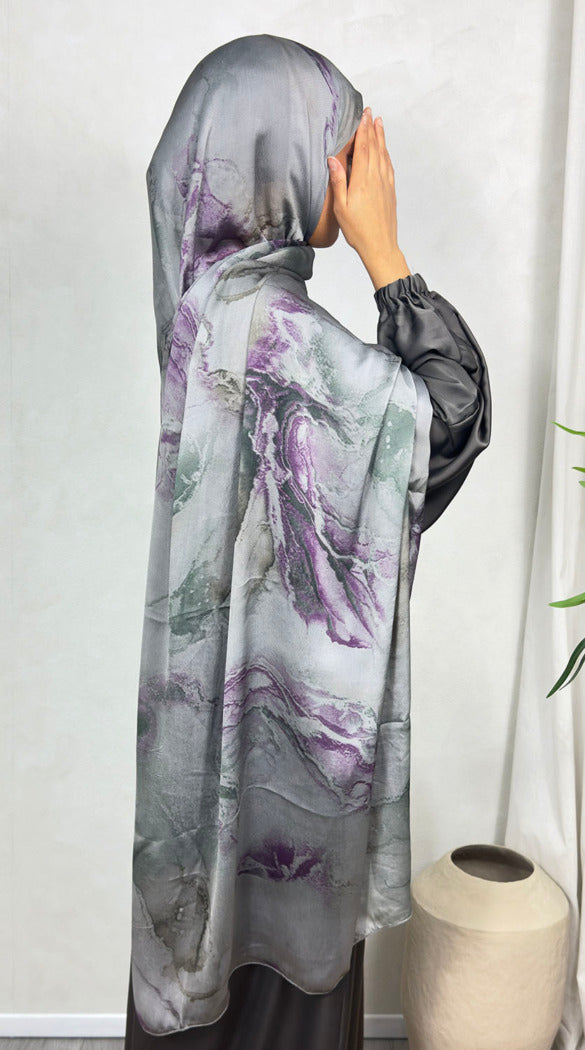
Casual Simple Abaya Designs Should Feel Easy in Real Life, Not Just Look Easy Online
The abaya that earns the most wear is rarely the one that demands ten minutes of decisions before you can leave the house. It is the one you can reach for when the school run is already late, when you need milk on the way home, when a parcel has arrived at the collection point, or when you have a normal working day and simply want to feel covered, comfortable and put together without turning getting dressed into a project.
That is why I think “simple” deserves more credit than it usually gets. A simple casual abaya is not a design with nothing happening. Good simplicity is deliberate. The sleeve stays out of your coffee. The hem clears the ground with the shoes you actually wear. The neckline sits properly without being watched. The fabric has enough presence to fall well but not so much ceremony that the garment feels wrong at 9.15 on a Tuesday morning. A pocket appears where your hand naturally reaches. A small line of stitching or a carefully chosen colour gives the outfit character without making every hijab in the drawer suddenly feel incompatible.
There is also a difference between easy and bland. Blandness often comes from a garment having no point of view: the proportions are anonymous, the colour is difficult rather than subtle, or the detail has been removed without anything thoughtful replacing it. Ease is different. Ease comes from design decisions that make ordinary life smoother. A clean shoulder line, a cuff you can control, a useful amount of skirt width and one beautiful detail can create far more personality than five decorative ideas competing on the same garment.
This guide is about that everyday middle ground. Not occasion abayas dressed down, not a catalogue of whatever has been labelled “latest”, and not an argument that every woman should own the same basic black shape. It is about recognising the simple abaya designs that make repeat dressing genuinely easier while still letting you feel like yourself.
If you want the broader foundations of abaya silhouettes, fabrics, sizing and modest styling, the complete abaya guide covers those in depth. Here, the question is narrower and more practical: what makes a simple casual design work when it has to survive real days rather than one good photograph?
The casual test happens five minutes before you leave
I can admire a garment for months and still discover its real character in the final five minutes before leaving home. That is when I notice whether the sleeve catches on my coat, whether the hem needs different shoes, whether the scarf colour I thought would work actually makes the whole outfit feel dull, or whether a front tie has to be retied after I pick up a bag.
An everyday abaya should reduce those small negotiations. It does not have to be completely thoughtless, but the number of decisions should be reasonable. If a design only looks balanced with one particular heel, one narrow scarf drape and one bag shape, it may be a lovely outfit piece without being an easy casual abaya. That distinction saves disappointment.
I like to test a casual design against three kinds of mornings. First is the rushed morning, when I have little patience for styling. Second is the ordinary morning, when I want to look intentional but not dressed for an event. Third is the changing-plan day, when I may go from work or errands to visiting family, collecting children, travelling across town or stopping somewhere unexpectedly. The strongest everyday pieces cope with all three.
That does not mean every casual abaya must be plain, dark or loose in exactly the same way. It means the design has enough internal logic that I can understand it quickly. I know where the volume is. I know what the cuff will do. I know whether it needs a full inner layer. I know which two or three hijabs work. I know whether trainers, flats or boots will make sense. Familiarity is part of ease.
A useful question before buying is therefore not “Can I style this?” Almost anything can be styled once. Ask, “Can I style this quickly, repeatedly and in more than one ordinary situation?” That is a much harder test, and it is exactly the test a casual abaya should pass.
Simple is a design discipline, not an absence of design
Removing decoration is easy. Designing a simple garment well is harder because proportion becomes visible. On an embroidered abaya, the eye may go straight to the cuff or front motif. On a very simple one, you notice the shoulder, sleeve width, fall through the body, hem shape and how the fabric meets light. Nothing is hidden.
This is why two apparently plain abayas can feel completely different. One may have a slightly dropped shoulder that creates relaxed softness; another may have a cleaner shoulder seam that looks more polished. One may have a straight body with controlled width; another may open gently through the lower half so walking feels freer. One may use a soft matte fabric that makes the colour look deep; another may use a surface that catches light and feels dressier even in the same shade.
A good simple design usually has a hierarchy. Something quietly leads. It might be the silhouette, the colour, the sleeve, the texture or a narrow line of detail. Everything else supports it. That hierarchy is what stops simplicity becoming blankness.
For example, a deep olive abaya with an uncomplicated cut may need no embroidery because the colour carries the personality. A black abaya with a very clean body might use a subtle contrast cuff or tonal texture to stop it feeling anonymous. A soft stone or taupe style can rely on drape and proportion rather than adding a decorative border simply because the designer worries it looks too plain.
I would rather see one decision made properly than several made timidly. A sleeve that is intentionally neat is better than a sleeve with a little lace, a little piping and a little gathering simply to prove something has been added. Everyday clothing benefits from confidence.
Start with the silhouette that lets you forget what you are wearing
The best everyday silhouette is not necessarily the one that photographs with the most movement. It is the one that gives enough room for your day while staying predictable. You should be able to sit, walk, carry a tote, get in and out of a car and climb stairs without constantly rearranging fabric.
A straight or gently A-line shape often works well for casual use because the volume is easy to read. That does not make it universally better. Some women prefer more flare because it gives a longer stride and softer movement; others dislike managing extra fabric around chairs, train seats or windy pavements. The point is to know where your own friction appears.
Pay attention to where fullness begins. Volume that starts at the shoulder behaves differently from volume added through side panels lower down. A very wide upper body can feel beautifully free but may bunch under a fitted coat. Lower flare can preserve a cleaner shoulder while giving more walking room. A softly gathered back may change how a backpack or cross-body strap sits. These are ordinary details, but ordinary details decide repeat wear.
I also think the word “oversized” can be unhelpful if it replaces actual fit information. A garment can look roomy and still pull when you raise your arms. It can be wide through the body and strangely restrictive at the cuff. It can be loose everywhere but too short for the wearer’s preferred coverage. Test the points that control movement rather than assuming a large-looking silhouette solves every fit issue.
The goal is not to stop noticing your clothing completely. It is to stop managing it. If the abaya moves with you and settles back naturally, you have far more mental space to enjoy the colour, texture and way the outfit makes you feel.
A casual abaya needs enough room, not uncontrolled fabric
There is a point where “more flowing” stops making everyday dressing easier. Extra width can be beautiful, but it also has to go somewhere. It gathers beside you on a narrow seat, blows in wind, catches under a bag and sometimes makes a simple coat feel suddenly too small.
I like to separate useful room from surplus room. Useful room lets the garment fall without clinging and gives you a comfortable stride. It allows sitting without the skirt pulling sharply across the knees or hips. It gives the upper body enough ease that reaching for a shelf does not drag the whole garment upwards. Surplus room is fabric you spend the day gathering, moving or protecting.
The balance changes by lifestyle. Someone who drives most places may tolerate more lower volume than someone stepping on and off buses all day. Someone working at a desk may care more about sleeve management than skirt width. A mother carrying a toddler may notice shoulder and armhole movement before anything else. A university student with a backpack has another set of contact points. “Everyday” is not one universal environment.
This is one reason I prefer product measurements and construction information to poetic descriptions such as “luxuriously flowing”. Flow is a visual quality; usability is physical. If lower width, length or fit information is available, compare it with an abaya you already wear comfortably. If it is not available, treat the unknown as an unknown rather than assuming the photograph proves easy movement.
A casual design feels calm because you are not fighting its proportions. Enough room is generous. Too much room can be work.
Sleeves decide whether an abaya survives an ordinary Tuesday
Sleeves are often where a simple design tries to show personality, and they are also where practicality can unravel fastest. A beautiful wide sleeve may look effortless until you wash your hands. A long split cuff may be elegant until it meets a keyboard. A heavily gathered wrist may feel charming for twenty minutes and irritating under a coat for six hours.
For everyday wear, I test reach first. Can I lift my arms without the entire abaya rising dramatically? Can I reach forward to drive, type, hold a child or pick something from a shelf? Then I test control. If the sleeve is wide, is there a cuff, button or elastic that keeps fabric away from water and food when needed? If it is narrow, does it still allow movement and layering?
There is no single “most practical” sleeve because different routines create different needs. A soft straight sleeve can be excellent for work. A modest bell shape with a controllable inner cuff can give more character without becoming chaotic. A gathered sleeve can feel relaxed if the elastic is comfortable. A layered cuff may be lovely for visiting or weekends but annoying beneath certain outerwear.
The hidden issue is often sleeve length. A cuff that covers the hand beautifully in a photograph may interfere with daily tasks if there is no easy way to secure it. Conversely, a sleeve that looks neat while the arms are down may ride too far back when you reach. Test both stillness and movement.
Simple abaya sleeves do not have to be boring. They just need to earn their design. If the sleeve is the personality of the garment, let it be a personality you can live with all day.
Closures and necklines remove more morning friction than decoration ever will
A neckline can be almost invisible in the finished outfit and still be one of the most important parts of an everyday abaya. If it sits securely, works with the hijab drape you usually wear and opens enough to dress comfortably, you barely think about it. If it shifts, gaps or needs a hidden pin every time, it becomes a recurring problem.
Closed round necklines are straightforward when the opening is comfortable and secure. A short concealed zip can make dressing easier without changing the front visually. A small button or press stud can give a clean finish. Open-front designs can work casually too, but then the closure—or the intentional absence of one—changes how much the inner outfit needs to do.
I pay attention to the back as well. A front can look completely simple while the back uses a keyhole, tie or opening that changes coverage and how the garment sits. Product photography should show this clearly; if it does not, do not mentally fill the missing information with the version you hope exists.
Necklines also interact with scarf volume. A high structured collar and a thick folded hijab can crowd the same area. A very simple neckline may be ideal if you like broad chest coverage because you are not paying for detail that the scarf will always hide. A small amount of tonal stitching can work well if it remains visible without demanding a different drape.
These are not glamorous design questions, which is precisely why they matter. Casual clothing becomes dependable through the parts nobody praises when they work.
Pockets belong in the design conversation
A pocket changes my relationship with an everyday garment faster than almost any decorative feature. It gives the phone somewhere to go while I carry shopping. It holds a key during the school run. It gives my hands a natural place for a moment when I do not want to carry a bag around the house or workplace.
But a pocket is only useful if it is designed properly. Very shallow pockets create false security. Low pockets can pull the garment down when filled. Pockets placed too far towards the back feel awkward to reach. A phone in a very light fabric can distort the side seam and make the whole silhouette lean.
I therefore look at pocket construction as part of the cut. Side-seam pockets preserve a clean front but need enough depth and reinforcement. Patch pockets are visible, which can suit a more casual, utility-led style, but their placement becomes part of the design. Hidden zip pockets can be practical for travel but may add stiffness or bulk.
Not every abaya needs pockets. An occasional garment can reasonably prioritise a different line. A very light open layer may not carry weight well. But if a product is being considered specifically for everyday wear, the presence or absence of useful storage deserves to affect the decision.
Simple dressing is often made easier by very unromantic things. A good pocket is one of them.
Black is useful, but casual does not have to mean black
A simple black abaya has obvious strengths. It coordinates quickly, works with many hijab colours, usually feels appropriate across a wide range of ordinary settings and lets small differences in texture or shape carry the design. For many wardrobes, black is genuinely one of the easiest colours to repeat.
That does not make it the only sensible casual choice. Sometimes the colour that is easiest is the one already connected to the rest of your wardrobe. If most of your scarves sit in cream, cocoa, olive, navy and muted rose, a deep brown or khaki abaya may create just as many combinations. If your outerwear is mostly black, a charcoal, taupe or muted blue abaya can stop every winter outfit collapsing into one dark block.
I think in colour families rather than isolated shades. Warm neutrals tend to coordinate with one another differently from cool greys and blue-based colours. A beige that looks beautiful alone can become difficult if every scarf you own makes it appear yellow. A grey can feel sophisticated with cool taupe and navy but flat beside warm camel. The “simple” colour should simplify your actual wardrobe.
Also consider how the colour behaves in daily conditions. Very pale hems show road splash quickly. Extremely saturated colours may be wonderful but require more deliberate scarf coordination. Mid-depth shades often strike a useful balance between personality and forgiving wear.
The most useful simple colour is not a rule. It is the shade that gives you more easy combinations than difficult ones.
Quiet colour is often easier to repeat than a so-called statement neutral
Some colours are described as neutral because they are not bright, yet they can be surprisingly demanding. A grey-beige with an unusual undertone, a very pale mushroom, a dusty green with a strong yellow cast or a mauve-taupe can be subtle without being easy. The problem appears only when you start putting scarves beside it.
For an everyday abaya, I would rather own a colour I can repeat confidently than a “special neutral” that needs perfect matching. Exact matching is not necessary; in fact, outfits often look richer when the scarf is deliberately lighter, deeper or warmer. What matters is whether the relationship looks intentional.
One useful approach is to test four scarf directions: tonal, dark contrast, light contrast and a nearby colour. A cocoa abaya might work tonally with mocha, darker with espresso, lighter with cream and adjacent with olive. A navy abaya might work with blue-grey, charcoal, ivory and muted burgundy. If only one category works, the garment may be less casual than it first appeared.
Texture can rescue simple colour too. A matte abaya beside a lightly textured hijab creates separation even when the shades are close. Two very shiny surfaces in similar colours can look more formal. Two flat surfaces in exactly the same mid-tone can sometimes feel lifeless. Small differences do useful work.
Casual colour should give you room to improvise. If getting the shade “right” becomes the hardest part of the outfit, simplicity has been lost.
Embroidery, lace, frills and handwork need one clear job
A simple casual abaya can absolutely include detail. The question is not whether decoration is allowed into the design; it is whether the detail helps the garment feel considered without making it harder to wear repeatedly.
I find placement more important than quantity. A narrow line of tonal embroidery at the cuff can give black or navy depth without controlling the whole outfit. Fine stitching near a shoulder seam can make a plain silhouette feel finished. A small lace insert can soften a sleeve. A restrained frill can change movement at the cuff or panel without turning the garment into an occasion piece.
Problems begin when several small details compete because none is strong enough to lead. Lace plus piping plus contrast buttons plus scattered embroidery can make a “simple” design visually restless. It can also increase snagging, care and matching decisions. If the aim is everyday ease, choose a feature that has a clear purpose.
Handwork deserves practical attention as well. Raised beads, stones or dense threadwork can rub under a coat, catch on bags or make a cuff harder to manage. Embroidery at the hem can complicate shortening. Lace can be more delicate around Velcro, zips or rough outerwear. A beautiful feature may still be worth those trade-offs, but casual wear exposes them more often.
I like detail that rewards a second look rather than demanding the first one. It gives a simple abaya personality without making the wearer organise the entire day around protecting it.
Print can be casual when scale and contrast stay wearable
Print is sometimes treated as the opposite of simplicity, but a printed abaya can be easy if the pattern behaves like texture rather than a constant styling instruction. Low-contrast motifs, narrow stripes, small repeated shapes or a restrained border can create interest while leaving plenty of scarf options.
Scale matters. A very large motif can turn every repeat of the garment into a recognisable “look”, which may be exactly what you want but feels less anonymous in a small wardrobe. Smaller or softer patterns can be repeated more easily because the eye reads the overall effect before the individual motif.
Contrast matters too. Black and cream geometric print will usually command more attention than charcoal-on-black patterning. A soft botanical in closely related shades can feel relaxed; a bright multi-colour print may require the hijab, bag and shoes to become quieter. Neither is better. They simply create different levels of outfit work.
If the print contains several colours, I do not try to match all of them. I pick one quiet shade from the pattern or use a neutral that lets the abaya lead. Matching every small colour often makes the outfit feel over-coordinated.
For everyday use, also look at placement. A border near the hem behaves differently from an all-over print. A strong cuff pattern can interfere with a patterned scarf more than a motif placed lower down. Print can make a simple cut feel alive, but the easiest versions still have a clear visual hierarchy.
Velvet, sheen and rich texture can make a simple cut feel less casual
A garment can have the simplest possible pattern and still feel formal because fabric carries its own mood. Velvet is the clearest example. A plain velvet abaya has no need for heavy embroidery to feel rich; the pile changes with light and movement. That can be beautiful, but it may not be the first piece I choose for a warm commute, a messy errand day or a heavily layered morning.
Satin-like finishes have a similar effect. Light travels across folds and makes movement more visible, so a straight uncomplicated silhouette can still feel polished or occasion-led. Textured jacquards, raised weaves and dense crepes each bring their own visual weight.
This is why “simple design” and “casual design” are related but not identical. Simple describes how much is happening in the construction or decoration. Casual describes how naturally the garment fits ordinary settings and routines. Fabric can move a simple piece towards evening, celebration or formal visiting without changing a seam.
For daily wear, I usually think about touch, temperature, friction and care alongside appearance. Does the fabric catch on the coat lining? Does it crease in a way that bothers me? Does it need delicate handling I will resent after the third wear? Does a cross-body strap disturb the surface?
A rich fabric can still be an everyday favourite for the right person and season. The useful point is to recognise that simplicity on paper does not guarantee low-maintenance wear.
Hijab coordination should take seconds, not rebuild the outfit
A simple abaya becomes genuinely useful when several hijabs work without negotiation. I do not mean a wardrobe of exact colour matches. I mean having a few reliable relationships: one scarf that blends softly, one that creates contrast and perhaps one colour that changes the mood.
With black, the possibilities are obvious, but even then I consider texture and face area. A black abaya with a black hijab can look beautifully continuous, yet a slightly different black may be more visible under strong light than expected. A cream, taupe, olive, burgundy or dusty blue scarf can break the line without turning the outfit complicated.
With coloured abayas, I often use tonal distance. A deep green with a lighter sage or muted stone can feel more deliberate than trying to find the exact green. Navy works comfortably with soft grey, cream, muted rose or deeper blue. Brown opens into oatmeal, tan, olive and some dusty pinks. These are examples, not fixed rules; undertone and personal colouring change the result.
The scarf shape also matters. If the abaya has sleeve or shoulder detail, a very bulky hijab can crowd the upper silhouette. If the abaya is extremely plain, a softly textured scarf can add enough interest. If the neckline needs more coverage for your preferences, choose the drape first and let the garment detail take a secondary role.
The casual goal is repeatability. When you already know three hijabs that work, the abaya has become easier before you even put it on.
Dupatta-led looks need the same everyday logic
Some women are more likely to reach for a dupatta-style scarf or a larger draped shawl than a compact hijab shape, and that changes how a simple abaya works. More fabric around the upper body can add beautiful softness, but it also means shoulder detail, collars and large sleeves may compete for space.
If the scarf is broad and fluid, I tend to prefer cleaner upper construction. The interest can move lower: a fine cuff, a side panel, subtle embroidery near the hem or simply a strong colour. That keeps the chest and shoulder area from becoming too busy.
Security is also part of casual ease. A long loose scarf may need pinning or a familiar wrap if you are travelling, carrying bags or moving in wind. The abaya should not add another set of loose pieces that need simultaneous attention. An open front, detached belt and flowing dupatta can be lovely, but together they may create more management than a rushed weekday allows.
Colour coordination works the same way as with any hijab: exact matching is optional. A patterned dupatta can be the main visual feature over a plain abaya. A one-colour scarf can calm a lightly printed garment. The important part is deciding which piece leads.
A simple abaya with a dupatta should still feel like an outfit you can repeat. If the styling only works when every fold sits perfectly, it belongs to a different kind of day.
Shoes and bags can make a simple abaya look intentional
One reason simple abayas sometimes get called bland is that people expect the garment to provide all the visual interest. In everyday dressing, shoes and bags often do more useful work. They tell the eye whether the outfit is sporty, polished, relaxed, practical or slightly dressier without forcing the abaya itself to become complicated.
Clean trainers can make a straight matte abaya feel modern and mobile. Loafers or simple flats can shift the same shape towards work. Boots in colder weather add visual weight and help a longer garment make sense under a coat. A structured bag can sharpen a relaxed silhouette; a soft tote keeps it casual.
I pay attention to strap behaviour. A cross-body bag over a very fluid or embellished abaya can pull the fabric diagonally and disturb the front. A shoulder bag can catch wide sleeves or rub raised detail. If the abaya is meant for daily use, try it with the bag you actually carry rather than a tiny handbag used only for a photograph.
Colour does not need to match exactly. Repeating one tone somewhere is often enough. Brown shoes with a brown bag can ground a green abaya; black shoes can connect to a black coat; cream trainers can lighten a deep navy outfit. The garment can stay simple while accessories establish the finish.
Intentional does not mean accessorised heavily. It often means that the few practical items you were carrying anyway look as though they belong together.
Everyday means different things at work, on errands and with family
I do not think a useful casual abaya needs one fixed setting. Its strength is often that small styling changes let it move through several ordinary parts of life. The same garment might be worn to an office with loafers and a structured tote, then at the weekend with trainers and a softer scarf. That is versatility rooted in real use rather than the promise that one abaya can somehow become every outfit.
For errands, I care about movement and hands-free practicality. A pocket, secure cuff and manageable hem matter more than decorative impact. If I am carrying shopping, opening car doors or walking quickly between stops, loose ties and very long sleeves become obvious. The most successful outfit is one I stop adjusting.
For work or study, sitting changes the test. I want enough lower width that the fabric settles comfortably around a chair, sleeves that do not sweep across a desk, and a neckline that stays where it belongs when I lean forward. A simple abaya can look very polished here because clean lines often sit well beside laptops, coats and practical bags.
For visiting family, I might enjoy a little more colour, texture or embroidery without needing a full occasion piece. A tonal cuff, subtle handwork or a richer scarf can make the same casual shape feel considered. That is where simple design earns its flexibility: the base is calm enough to receive a small change.
For travel, I care about all of these things plus temperature. Airport seats, train platforms, luggage handles and layers expose awkward volume quickly. A garment that survives travel comfortably has usually passed a very serious everyday test.
British weather exposes whether a simple design is genuinely easy
There are abayas that make perfect sense indoors and become difficult the moment a coat enters the picture. In Britain, that is a major limitation for a garment described as casual. For a large part of the year, the abaya is not the outermost layer, so sleeve width, shoulder volume, fabric weight and hem length need to cooperate with outerwear.
I try the actual coat rather than imagining that “layering” will somehow work. A dropped shoulder or gathered sleeve may bunch under a fitted coat. A cape-like upper section may require a roomier outer layer. A thick textured fabric can feel comfortable alone and surprisingly bulky once a knit and coat are added.
Rain changes the hem calculation too. Floor-skimming length can look graceful on a dry surface and become an immediate nuisance on wet pavements. If an abaya is going to be worn for commuting or school runs, I want the hem to work with the shoes I reach for in rain, not only with the pair used in product photography.
Wind is another honest test. Open fronts move. Very wide skirts lift and wrap around the legs. Long loose scarf ends need control. None of this means those designs are wrong, but the garment should fit the route. A woman who mainly drives has a different practical threshold from someone walking fifteen minutes to the station.
Seasonal ease also includes colour and cleaning. Pale hems can show splash sooner, while very dark fabrics may show rain marks or lint differently. I prefer to know what maintenance a garment asks from me before calling it an everyday solution.
Movement is more revealing than the front-facing photograph
A standing photograph gives a useful first impression, but casual clothes live between poses. I want to know what happens when I take a long step, sit down, lift both arms, bend to pick something up and turn quickly. Those movements tell me whether the design has enough room and whether its details stay controlled.
Watch the neckline when the arms rise. If it shifts dramatically, the upper construction may be pulling. Watch the hem when you sit. If the whole garment drags backwards or climbs much higher than expected, that affects comfort and coverage. Watch side seams while walking. If a pocket full of essentials pulls one side down, the fabric may not carry weight well.
Stairs are especially useful because they combine stride and hem management. A garment that needs to be lifted is not automatically unsuitable; many long garments do. The question is how much attention it needs and whether that level of attention fits your normal day.
I also test ordinary objects. Carry a tote. Put on the cross-body bag. Hold a coffee. Push a buggy if that is part of life. Sit in the car. Reach into a cupboard. Clothing that feels effortless in an empty room can behave differently once hands and shoulders are occupied.
This is not about finding a garment that never moves. An abaya should move. It is about whether the movement feels predictable enough that you can focus on where you are going rather than on restoring the outfit every few minutes.
The wudu sink is an excellent sleeve test
Daily life sometimes includes making wudu while away from home, and that makes sleeve control a practical consideration. A very wide cuff that cannot be secured can fall towards water repeatedly. A sleeve that is too tight to move comfortably can create another problem. The useful design is the one you can manage without a struggle.
Buttons, elasticated inner cuffs, adjustable tabs or a sleeve shape that pushes back securely can all help, depending on the garment. What matters is how the construction behaves on the wearer. Elastic that feels fine for five minutes may become uncomfortable over a long day. Tiny buttons may look elegant but take patience when you are in a hurry.
I would not turn this into a claim that one sleeve shape is religiously superior. This is simply about function. If you regularly need access to the forearms during the day, it makes sense to test whether the garment accommodates that routine.
The same principle applies if you expect to pray while wearing the abaya. Check how the garment moves through standing, bowing, kneeling and sitting according to your own clothing practice and requirements. A fashion abaya is not automatically purpose-designed prayer wear, and some women use a separate prayer layer. The point here is only that an everyday garment should not surprise you when ordinary movement becomes more demanding.
Practical modest clothing respects the fact that life is active. Design earns trust when it supports that activity quietly.
Care and laundry friction belong in the definition of everyday
A garment can be comfortable, beautiful and easy to style, yet still fail as an everyday piece if caring for it becomes a recurring burden. If every wear creates a delicate cleaning decision, special pressing routine or fear of snagging, you may naturally stop reaching for it.
I read the actual care information for the garment rather than guessing from appearance. Two fabrics that look similar can have different requirements because of fibre content, finish, lining or embellishment. A simple-looking abaya with glued stones, delicate lace or a structured surface may need more care than an embroidered piece with robust construction.
Creasing matters according to personality and routine. Some fabrics develop soft creases that disappear once worn for a while; others show every fold. If you hate ironing, a fabric that needs constant pressing will not become easy merely because the cut is simple. If steaming is already part of your routine, the same fabric may be no problem at all.
Lint and pet hair are another real-life issue, especially on very dark matte surfaces. Pale fabrics reveal different marks. Textured fabrics can trap fibres. These are not reasons to reject a colour or fabric, but they affect the amount of maintenance between wears.
I also think about drying and storage. Very heavy or voluminous abayas take more space. Embellished cuffs may need protection. Detachable belts can disappear. Everyday design should fit the household systems around the garment, not just the body inside it.
Online photographs should be read for usability, not aspiration
Shopping online becomes easier when I stop asking photographs to tell me things they cannot prove. A product image can show broad shape, colour direction, visible detail and how the fabric behaves in one controlled situation. It cannot guarantee stride, opacity in every light, pocket depth, cuff comfort or the way a garment fits another body.
I look for repeated evidence. Is there a front view where the model is not holding the garment? A side and back view? Close-ups of the cuff, neckline and fabric? A video with ordinary walking? If the abaya is open, is there an image showing how the panels fall naturally rather than being spread dramatically?
Model pose can create shape that the garment does not contain. A hand at the waist makes a straight cut look more fitted. A lifted skirt creates extra visible movement. A bag can hide a seam. A scarf can cover the neckline completely. I do not assume hidden areas match my preferred construction.
Measurements are more useful when I compare them with an abaya I already own. Length needs a consistent measuring point. Width needs context about cut. Sleeve length can behave differently with dropped shoulders. If the product supplies a size chart, use its method rather than translating everything into the size label you usually buy elsewhere.
Online simplicity is especially easy to romanticise because clean designs photograph beautifully. The real question is not how little is visible. It is how much useful information the garment gives you before you decide.
“Latest” and year-labelled designs are weak shortcuts for everyday value
Searches for the latest simple abaya designs, new models or a particular year make sense when someone wants fresh inspiration. The problem begins when the date is treated as evidence that a garment will work better. A sleeve introduced this season can be awkward. A shape worn for years can remain excellent because its proportions solve ordinary problems.
I use “new” as a reason to inspect what actually changed. Did the designer improve the cuff? Add a useful closure? Introduce a fabric that drapes differently? Create a quieter colour? Change the panel construction to give more stride? Those are meaningful updates. A new trim on an otherwise identical garment may still be attractive, but it should be valued as an aesthetic change rather than a functional revolution.
Old year labels are also not automatically outdated. A simple abaya design from a few years ago can look entirely current if the silhouette is balanced and the details are restrained. Casual wardrobes benefit from designs that do not loudly announce one moment in the trend cycle.
If a trend feature genuinely suits your life, keep it. Balloon sleeves, contrast piping, textured panels or unusual cuffs do not expire by calendar. The better question is whether you still enjoy the feature after it stops feeling novel.
Everyday clothing gains value through repetition. A design that feels fresh on the twentieth wear has achieved more than one that was exciting only because it was labelled new.
Simple sewing and construction choices are visible in how the garment behaves
You do not need to be able to draft an abaya pattern or sew one from scratch to benefit from understanding a few construction ideas. Seams, panels, hems, cuffs and openings explain a lot about why one simple design moves beautifully while another feels awkward.
Side panels or inserted sections can add lower-body room without making the shoulders enormous. A back pleat can give stride while preserving a clean front. A dropped shoulder changes where sleeve length begins. A deep hem can give weight to light fabric, while a heavily decorated hem can make later shortening more difficult.
Look at where the garment pulls. If the body is wide but reaching forward feels restricted, the issue may be armhole or shoulder construction rather than overall size. If walking is tight, lower width or a closed hem may be the controlling point. If the front twists, a bag or pocket may be putting uneven weight on a light seam.
People looking for simple abaya cutting, stitching or sewing ideas are often trying to understand the same thing from another angle: how do you create ease without overcomplicating the garment? The answer is usually not more pieces for their own sake. It is placing room and structure where the body actually needs them.
That is useful even when you buy rather than sew. Construction turns “this feels good” into something you can recognise again next time.
A casual outfit should not need make-up or jewellery to feel finished
Sometimes a very simple abaya is styled in a way that makes the garment seem dependent on everything around it: polished make-up, statement jewellery, a sculpted scarf and a carefully staged bag. Remove those things and the viewer worries the outfit will disappear. A good everyday design should not need that support.
The silhouette, colour and fabric should be enough to create a complete base. If you enjoy make-up, jewellery or accessories, they can add another layer of personality. If you do not wear them, the garment should still look intentional. That is one of the clearest differences between simplicity and blandness.
Small construction details help. A neat cuff creates an ending point at the wrist. A well-shaped shoulder gives the upper body clarity. A slightly textured fabric stops a single colour looking flat. A balanced hem makes trainers or flats feel like a choice rather than an afterthought.
I also like outfits where the face area is calm. A hijab that suits the abaya and is wrapped in a familiar way can do more for everyday coherence than adding several accessories. The goal is not minimalism as a rule; it is freedom from the idea that a woman must decorate herself to rescue simple clothing.
An easy abaya should let a bare, ordinary, tired or rushed day still feel dressed.
Workday simplicity is about polish without fragility
For work, a simple casual abaya often succeeds because it can look professional without becoming formal. Clean lines, controlled sleeves and a colour that works with outerwear create a strong base. The outfit then needs very little: a reliable hijab, practical shoes and a bag that carries what the day requires.
I would pay attention to chair behaviour. Very wide lower fabric can gather around chair legs or wheels. A narrow lower cut can pull when sitting. Long split sleeves can drag across a desk. Raised embellishment at the back can become uncomfortable against a chair. These are small details that matter after several hours.
Fabric sound can even matter in quiet environments. Some crisp materials rustle more than soft crepes or fluid weaves. That may be irrelevant to one person and distracting to another. Casual suitability is personal because sensory comfort is personal.
For meetings or customer-facing work, a quiet colour and simple silhouette can feel polished precisely because they are not fighting for attention. A deeper scarf, structured tote or clean loafer can sharpen the look without making the abaya itself more elaborate.
I would also think about temperature. Offices can be hot, cold or both in the same day. A garment that only works with a thick underlayer may become uncomfortable indoors. A simple cut with sensible layering room is often more adaptable than a highly structured design.
Errand-day simplicity is about keeping hands and attention free
Errands are where I notice every loose piece. Shopping bags pull at shoulders. Car keys disappear. A phone needs somewhere safe. Doors catch wide fabric. Rain starts at the wrong moment. The best casual abaya for this kind of day is often the one with the least to monitor.
Pockets are valuable here, but so is a stable neckline and a sleeve that can be controlled quickly. An attached belt may be easier than a detached one if you like waist adjustment. A closed front may reduce movement in wind. An open layer can still work if the inner outfit is complete and you are comfortable with the panels shifting.
Footwear changes hem behaviour. Trainers and flat boots usually sit lower than occasion shoes, so an abaya chosen at the exact floor length with heels can become too long on an errand day. Measure with the shoes you repeat most often.
I also prefer designs that do not punish contact. Delicate cuff beading near a trolley handle or snag-prone lace beside Velcro can turn a simple task into garment protection. Save fragile detail for a role where you can actually enjoy it.
There is something satisfying about an outfit that allows you to move quickly while still feeling composed. That is not a lesser kind of style. It is style that understands the day.
Travel makes a convincing case for controlled simplicity
Travel compresses several clothing problems into one stretch of time. You sit for hours, stand in queues, lift bags, move between temperatures and sometimes pray away from home. A garment that seems easy for an hour may reveal every weakness by the end of a journey.
I would favour a hem that clears the ground comfortably, sleeves that can be managed, a fabric that does not make every seat crease feel catastrophic and enough room to sit without pulling. Pockets can be useful, although valuables are often safer in a zipped bag. A very heavy garment may feel luxurious at departure and tiring later.
Layering matters because transport environments change. A simple abaya under a cardigan, coat or light outer layer gives more control than a very bulky design that can only be worn one way. If the abaya itself has a cape, giant sleeve or thick surface, test the travel jacket over it before assuming the combination works.
Colour can influence how relaxed you feel about marks, but there is no perfect travel shade. Dark colours hide some stains and show lint; pale shades reveal other marks. Mid-depth tones can be forgiving. Choose the one you can maintain without becoming anxious about every surface.
The best travel outfit is not necessarily the most photogenic airport look. It is the one you still like when you reach the other end.
A small casual abaya wardrobe works better when each piece has a different job
It is easy to collect near-duplicates because simple abayas often look sufficiently different online: a slightly different cuff, another black fabric, a new seam, a warmer beige. Once they are hanging together, you may realise they all solve the same day.
I prefer role variety. One abaya might be the extremely easy closed daily piece. Another could be an open layer that changes with the inner outfit. A third might bring colour or quiet embroidery for visiting and weekends. A fourth, if needed, could be a more weather-friendly or travel-friendly option. The exact number is personal; the principle is not to confuse variation with usefulness.
Before buying, name the job. “I need something simple” is vague. “I need a dark casual abaya with manageable sleeves that works under my winter coat and with flat shoes” is much more useful. So is “I want a lighter-coloured everyday piece that can move between work and family visits without feeling formal.”
Once the job is named, decorative temptation becomes easier to judge. A feature either supports that role, remains harmless, or works against it. You can still choose the beautiful impractical thing if you love it; you are simply making the choice with clear expectations.
A small wardrobe feels larger when the pieces genuinely do different work.
Do not buy a duplicate just because the new one photographs better
Online styling can make a familiar design feel dramatically new. Different lighting, a more sculptural hijab, a model holding the skirt, or a new colour name can create the impression that the garment fills a gap. Before buying, compare it with what is already in the wardrobe by function rather than by image.
Ask about the cut, sleeve, closure, fabric behaviour, colour family and role. If all five are effectively the same as an abaya you already reach for, the new purchase may be a replacement or an aesthetic indulgence rather than a new solution. Both can be valid, but they are different reasons.
Replacement deserves its own logic. If an old favourite is worn out, finding a similar simple shape can be sensible because you already know the role works. You do not need to force novelty into every purchase. Sometimes the best “new” abaya is one that preserves the ease you have already proved.
If you are looking for variety, make it meaningful. Change the seasonal weight, silhouette, colour family or layerability rather than only the trim. A useful wardrobe does not need every simple design that exists; it needs enough distinction to cover your real routines.
Photographs sell a moment. Wardrobes have to support repetition.
Price matters most when it is connected to repeat wear
I would never assume an abaya is better because it costs more or worse because the design is simple. Price can reflect fabric, construction, production scale, embellishment, brand positioning and many other factors that are not visible in one photograph. The useful question is what value the specific garment creates for you.
For a casual abaya, repeat wear matters. A garment worn twice a week can justify attention to fabric, seam finish, cuff construction, pockets and care because those details are repeatedly tested. An elaborate detail you rarely see beneath a coat may add cost without adding much value to your routine.
That does not mean every everyday garment should be cheap or every occasion garment expensive. It means price should be considered alongside role. If the abaya fills a real gap, coordinates with what you own and is comfortable enough to repeat, it has a stronger chance of earning its place.
I also avoid using price as a shortcut for fabric claims. A high price does not prove a fibre, and words such as premium or luxury should not replace actual composition and construction information. Check the live product facts.
Simple design is particularly revealing here because there are fewer decorative distractions. You can focus on whether the garment actually fits, moves and lasts in the way you need.
A sixty-second everyday abaya check is more useful than a long trend list
Before I decide that a simple abaya belongs in the everyday part of the wardrobe, I run through a short practical check. It is deliberately about use rather than fashion labels.
- Movement: Can I walk, sit, reach and climb stairs without managing the garment constantly?
- Sleeves: Can I control them for work, washing hands and ordinary tasks?
- Length: Does the hem work with the flat shoes or boots I actually repeat?
- Neckline: Does it sit securely with my usual hijab drape?
- Layers: Does it fit beneath the coat or cardigan I will genuinely wear?
- Colour: Can I name at least three scarves I already own that work with it?
- Detail: Does any lace, embroidery, frill, print or handwork add interest without creating disproportionate care?
- Storage: Are the pockets, closures or bag contact points practical for my routine?
- Care: Am I willing to wash, dry, press and store it as the garment requires?
- Role: Does it solve a day that is not already covered by something I own?
A garment does not need a perfect score on every line. You may happily accept delicate embroidery because the colour and fit are exactly right, or choose an open style even though wind requires more attention. The value of the check is that the trade-offs become visible before they become irritating.
What to verify before buying a simple casual abaya online
Evergreen advice should not pretend that stock, sizes, colours or fabrics stay fixed. If you are looking at Amani’s current range, use the live Abayas collection and the individual product page for the present measurements, composition, included pieces, colours, price and availability.
On any product page, separate what is shown from what is assumed. Verify whether the abaya is open or closed, whether any inner piece is included, whether a belt is attached or separate, whether the sleeves are lined, where the pockets sit and how length is measured. If a detail is not stated or shown clearly, it is better to treat it as unknown than to build the purchase around a guess.
Read the fabric composition rather than inferring it from shine or drape. “Satin” can describe a weave or finish rather than one fibre. “Crepe” covers many different constructions. “Velvet” can vary in fibre and weight. The exact product information should settle the factual question.
Check care instructions before checkout, especially if the garment uses embroidery, handwork, lace, print, textured fabric or a delicate surface. Everyday value drops quickly if the care routine does not fit your life.
Finally, compare measurements with a garment you already own and like. That reference is usually more useful than trying to guess from a model photograph or relying on a size label across brands.
Frequently asked questions about simple casual abayas
What makes an abaya suitable for everyday casual wear?
An everyday casual abaya works with the movements, layers and practical demands that repeat in your week. Look for a manageable hem, comfortable room through the body, sleeves you can control, a secure neckline and fabric you are willing to care for regularly. It should also coordinate easily with several hijabs and the shoes, coat and bag you already use. “Casual” is less about looking plain and more about reducing the amount of attention the garment needs once you are dressed.
Does a simple casual abaya have to be plain?
No. Simplicity can include embroidery, lace, a small frill, print, contrast stitching, interesting cuffs or a strong colour. The design feels simple when those elements have a clear hierarchy instead of competing. One thoughtful detail can give a casual abaya much more personality than several decorative ideas added without purpose. The practical test is whether the detail still feels easy to repeat, layer, wash and style on ordinary days.
Is black the easiest colour for an everyday abaya?
Black is often easy because it coordinates with many scarves and works across different settings, but it is not automatically the easiest colour for every wardrobe. Deep brown, navy, charcoal, olive, taupe or another muted shade may connect better with the hijabs and outerwear you already own. The most useful colour is the one that gives you several effortless combinations and suits the maintenance you are comfortable with.
Which sleeve styles are most practical for daily wear?
The most practical sleeve is one that fits your routine. Straight sleeves are often easy for work and layering. Wider sleeves can be comfortable if a cuff, elastic or fastening lets you control them around water, food and desks. Gathered or bell sleeves can still work casually when they do not interfere with coats or tasks. Test reaching, washing hands, carrying a bag and wearing your normal outerwear rather than choosing by appearance alone.
Can embroidery or lace still work on a casual abaya?
Yes. Tonal embroidery, a narrow lace insert or small handworked detail can make a simple abaya feel considered without turning it into an occasion garment. Placement matters. Cuff embellishment meets desks, bags and coats more often than detail placed elsewhere, while hem embroidery can complicate alterations. Choose decoration that suits the frequency of wear and the care you are genuinely willing to give the garment.
How should I coordinate a hijab with a simple abaya?
Start with relationships rather than exact matches. Try a tonal scarf, a lighter contrast, a darker contrast and one nearby colour. Texture can create separation when the shades are close. If the abaya has strong sleeve or shoulder detail, a calmer hijab often keeps the upper outfit balanced. If the abaya is very plain, a textured or gently patterned scarf can bring personality. The best everyday combinations are the ones you can repeat without searching the whole wardrobe.
What should I check when buying a casual abaya online?
Check the exact garment length, relevant width measurements, sleeve construction, neckline, closure, pockets, lining, included pieces, fabric composition and care instructions. Use several product images and video where available, but do not treat a posed photograph as proof of stride, opacity or fit. Compare the measurements with an abaya you already wear comfortably. If a fact is missing, keep it as an unknown rather than assuming the most convenient answer.
Can I wear the same casual abaya for work and errands?
Often, yes. A simple shape can move between settings when it is comfortable enough for errands and clean enough in line for work. Shoes, bag and hijab can shift the mood without changing the garment. For work, pay extra attention to sitting, sleeve behaviour and desk practicality. For errands, consider pockets, hands-free bags, wind and hem length. The strongest crossover pieces cope with both sets of demands without needing a complicated restyle.
How do I know whether a trendy abaya will still be useful later?
Ignore the date label for a moment and name what the trend feature physically changes. If the sleeve, panel, colour or texture suits your movement, wardrobe and taste, it can stay useful long after it stops being described as new. If the appeal depends mainly on novelty or one highly specific styling combination, it may have a narrower role. Imagine wearing it on ten ordinary days rather than only in the first photograph.
Where can I see Amani’s current abayas?
Use Amani’s live Abayas collection and the individual product pages for current designs, colours, sizes, measurements, fabrics, prices and availability. Those details can change, so the live product information should always be treated as the source for what is available now. The practical checks in this guide are designed to remain useful even when the collection changes.
The best simple abaya still feels like you after the hundredth ordinary day
I do not want a casual abaya to disappear into sameness. I want it to disappear from the list of problems I have to solve before leaving home. Those are very different things.
A strong simple design can have character in its colour, its sleeve, its texture, a line of embroidery or the way the fabric falls. It just does not make that character expensive in attention. I can put it on, choose a familiar scarf, add the shoes and bag the day requires, and move.
That is why I would judge simple casual abaya designs by repetition rather than by first impression. The first wear can be exciting because anything new feels fresh. The twentieth wear tells you whether the cuff still makes sense, whether the colour keeps finding partners, whether the hem works in rain and whether the garment still feels like something you chose rather than something you have to manage.
Ease is not the absence of style. Done properly, ease is the result of style becoming intelligent enough to support real life.