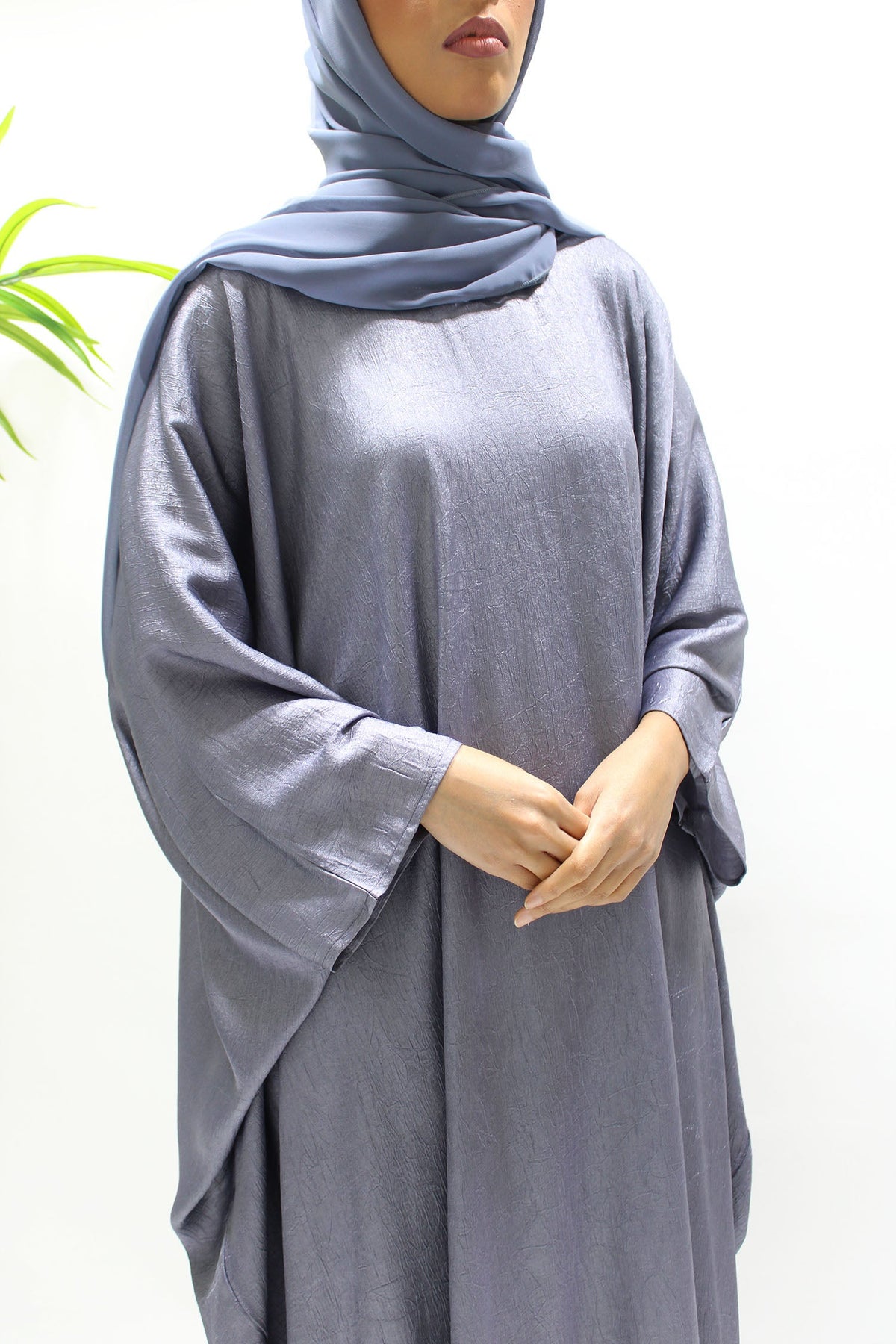
Bringing a little more colour into your abaya wardrobe
You do not have to give up black abayas to enjoy a coloured one. Nor does choosing a bright garment mean every future outfit needs to be bold. A wardrobe can make room for a familiar dark base, a quiet neutral and a colour you wear simply because you love it.
The useful question is where a new shade fits into your life. Can you picture it with the scarves, shoes and outer layers you already own? Does it suit the occasions you actually attend? A colour becomes easier to wear when it belongs to a complete outfit rather than remaining a beautiful idea on a screen.
Begin with a colour you already reach for
Look at the pieces you use most often. A favourite scarf, bag or cardigan may reveal a colour you enjoy more clearly than a seasonal trend list. You might repeatedly choose dusty pink, deep blue, warm brown or a particular green without thinking of it as a wardrobe theme.
Try that colour over a larger area by holding a suitable garment or fabric near you. An accent you enjoy in a scarf may feel different as a full-length abaya. That does not make the colour wrong; it helps you decide how much of it you want in the outfit.
You can also begin with a neighbouring shade. Someone comfortable in navy may enjoy a deeper teal; someone who often wears beige may prefer a warm taupe or muted olive before trying a brighter colour. Treat these as experiments, not a sequence everyone must follow.
Distinguish depth from brightness
A coloured abaya does not have to be vivid. Burgundy, forest green, plum and navy introduce colour while keeping a darker overall appearance. Pastels offer a lighter effect, while stronger yellow, orange or pink shades create a clearer focal point.
Compare the options beside your usual scarf rather than judging them alone. A pale scarf can make a deep-coloured abaya feel more contrasted; a dark scarf may keep the whole arrangement quieter. The relationship between the pieces often matters more than the name of the main colour.
There is no need to assign a personality to each shade. Blue does not make every wearer calm, and yellow does not guarantee a happier day. You may have your own associations with those colours, but an outfit should not be expected to provide a psychological result.
Try three levels of colour
A small accent: keep a familiar abaya and introduce colour through the scarf, bag or a modest amount of trim. This lets you test a combination without purchasing a completely different garment. A little contrast can be enough when you prefer a restrained outfit.
A coloured main garment: choose the abaya as the focal point, then use quieter supporting pieces. A muted green abaya with a cream scarf and brown shoes is one possible arrangement. The accessories have a clear relationship without trying to repeat the green exactly.
A deliberate colour combination: pair two distinct colours, such as navy with burgundy or plum with a softer pink. Start with a small number of pieces and assess the whole outfit. Adding a third strong colour is an option, not an automatic next step.
Move between these approaches according to your mood and plans. Enjoying one bright outfit does not create an obligation to dress brightly every day.
Use what is already in your wardrobe
Before buying a coloured abaya, assemble two or three possible combinations from existing pieces. Include the shoes and coat, not only the scarf. A colour that requires a new bag, new footwear and a different outer layer may be less practical than it first appears.
Do not insist on exact matching. A nearby shade in a different texture can look deliberate, while a clear contrast may be easier to repeat. Two garments from different ranges described by the same colour name are not guaranteed to match in person.
Take a simple photograph of combinations you like, then keep a note of the actual pieces. This can be useful on busy mornings when you would rather repeat a good outfit than invent another one. The aim is a wardrobe that becomes easier to use, not a growing collection of isolated purchases.
Let the fabric change your decision
Colour appears differently across a matte surface, a reflective finish and a textured weave. A shade that feels understated in one fabric may look much more noticeable in another. Inspect the garment in ordinary light and move it gently to see how the surface behaves.
For pale colours, assess opacity with the intended underlayers. For a darker shade, make the same check where the fabric stretches. Colour alone does not establish coverage, and a lining may cover only part of the garment.
Consider the care routine as part of the choice. A beautifully coloured garment that is difficult to maintain may not be the best daily option for you. Read its label and description before deciding that the colour makes it worth overlooking construction or practical fit.
Build around a scarf, or let the abaya lead
If you have a patterned scarf you love, use one of its colours as a starting point for the abaya. Choose a shade that is actually visible when the scarf is folded and worn. A colour prominent in the unfolded fabric may almost disappear in your usual arrangement.
If the abaya itself is printed or strongly coloured, try a plain scarf first. You can add more pattern later, but a simple starting point makes it easier to judge the garment’s shape and colour. The printed-abaya styling guide explores that balance in more detail.
Do not make scarf colour the only criterion. Its size, opacity, grip and feel at the neck still matter. A slightly less exact colour relationship may be preferable to an uncomfortable scarf that needs constant attention.
Keep the inner layer part of the palette
With an open abaya, the inner outfit contributes a large area of colour. A neutral inner dress can allow a bright outer layer to lead. A tonal inner dress creates a more continuous arrangement. A strong contrast makes the open shape more obvious.
Try the outfit with the fronts moving apart, because that is how it may appear during an ordinary day. Assess neckline and sleeve coverage as well as colour. The inner clothing should work on its own wherever the outer garment opens.
For a closed abaya, an underlayer may be less visible but still affect the appearance through the fabric or at the neckline. Check those edges rather than assuming hidden layers have no influence on the finished outfit.
Choose colour for the occasion without inventing rules
A family gathering may feel like a comfortable place to try a new shade, but there is no universal colour suitable for every family or celebration. Follow any stated dress guidance and consider the nature of the event. Personal and cultural expectations can differ.
For work or study, colour can still have a place where it fits the setting. A muted shade with practical shoes and a straightforward scarf may be easier to use than a heavily decorated neutral garment. The actual cut, finish and workplace requirements matter alongside the palette.
For an ordinary outing, let comfort carry as much weight as appearance. Choose a bag that works with the sleeves and a hem that suits the shoes. You do not need to turn a coffee visit or errand into a performance because the abaya has a noticeable colour.
Respect different preferences, including your own
Women in the same family or community may enjoy very different palettes. One may prefer a familiar dark wardrobe; another may enjoy soft colours or vivid prints. Neither preference needs to be described as more modern, more confident or more authentic.
Colour can connect to memories and personal experiences, but those meanings belong to the wearer. It is better to say that a particular green reminds you of something important than to claim it represents the same tradition for everyone.
Allow your preferences to change without making older choices seem wrong. A coloured abaya can join a wardrobe rather than replace its identity. There is no need to discard useful garments simply because you are exploring another direction.
Make small adjustments before buying more
If a combination feels unsettled, change one element at a time. Try a quieter scarf, a smaller bag or a different shoe colour. This makes it easier to identify the cause than replacing several pieces at once.
Sometimes the issue is proportion rather than colour. A bulky scarf, expansive sleeves and a large bag can compete even within a neutral palette. Conversely, a clear silhouette can accommodate a strong colour without feeling complicated.
Use a full-length mirror and move normally. Look at the outfit while seated and with a coat on, not only in the pose you prefer. The colours should remain enjoyable in the situations where you will actually wear them.
Check the garment before committing to the colour
Read measurements carefully, including length and width. Amani’s numbered abaya lengths describe shoulder-to-feet length in inches, not total standing height. Make sure the shoulders and sleeves allow the movement you need.
Look at stitching, fastenings, lining and any decoration. A strong colour should not distract from a neckline that shifts or a seam that pulls. The complete abaya guide can help you organise those checks before making the final decision.
A useful test is to ask whether you would still value the garment if it were a less exciting shade. If the answer is no because its fit or construction is wrong, the colour is doing too much of the selling.
Check each new garment's care instructions before washing it with other pieces. Do not assume that two similar colours have the same care needs. Keep any relevant product information with your wardrobe notes, particularly for a fabric or decorative finish you have not owned before.
Make a colour trial without buying a whole outfit
Before committing to a colour outside your usual choices, bring a similar shade into an existing outfit through a scarf or another piece you already own. This does not perfectly predict how a full-length abaya will look, but it can help you notice which accompanying colours you enjoy and whether the new shade feels familiar enough to wear repeatedly.
For a clearer assessment of the abaya itself, try it with the same dependable shoes and bag you use for other outfits. Then change only the scarf. A pale neutral, a deeper tone and a print can each give the colour a different setting. Avoid judging the dress while several unfamiliar accessories are competing for your attention.
Give yourself permission to prefer one shade in a small detail and another over a larger area. Enjoying a bright scarf does not oblige you to enjoy a bright abaya. Equally, a bold dress does not need to be reduced to a tiny accent simply because it is new to your wardrobe.
After the comparison, identify a complete outfit you would genuinely choose for an ordinary occasion. If you can name only an imagined future event, keep that distinction clear in the purchase decision. The aim is not to collect every appealing colour. It is to choose colours that become part of the way you actually dress.
Repeat the combinations that feel right
You do not need endless variety for a wardrobe to feel personal. Repeating a coloured abaya with two dependable scarves may be more satisfying than continually buying shades you cannot combine.
Keep the choices that make dressing straightforward, and let experiments remain optional. Colour can be expressive, quiet, playful or simply pleasant to look at. Its place in modest clothing is not defined by exaggerated promises about attention or confidence. It is defined by the way you choose to wear it.