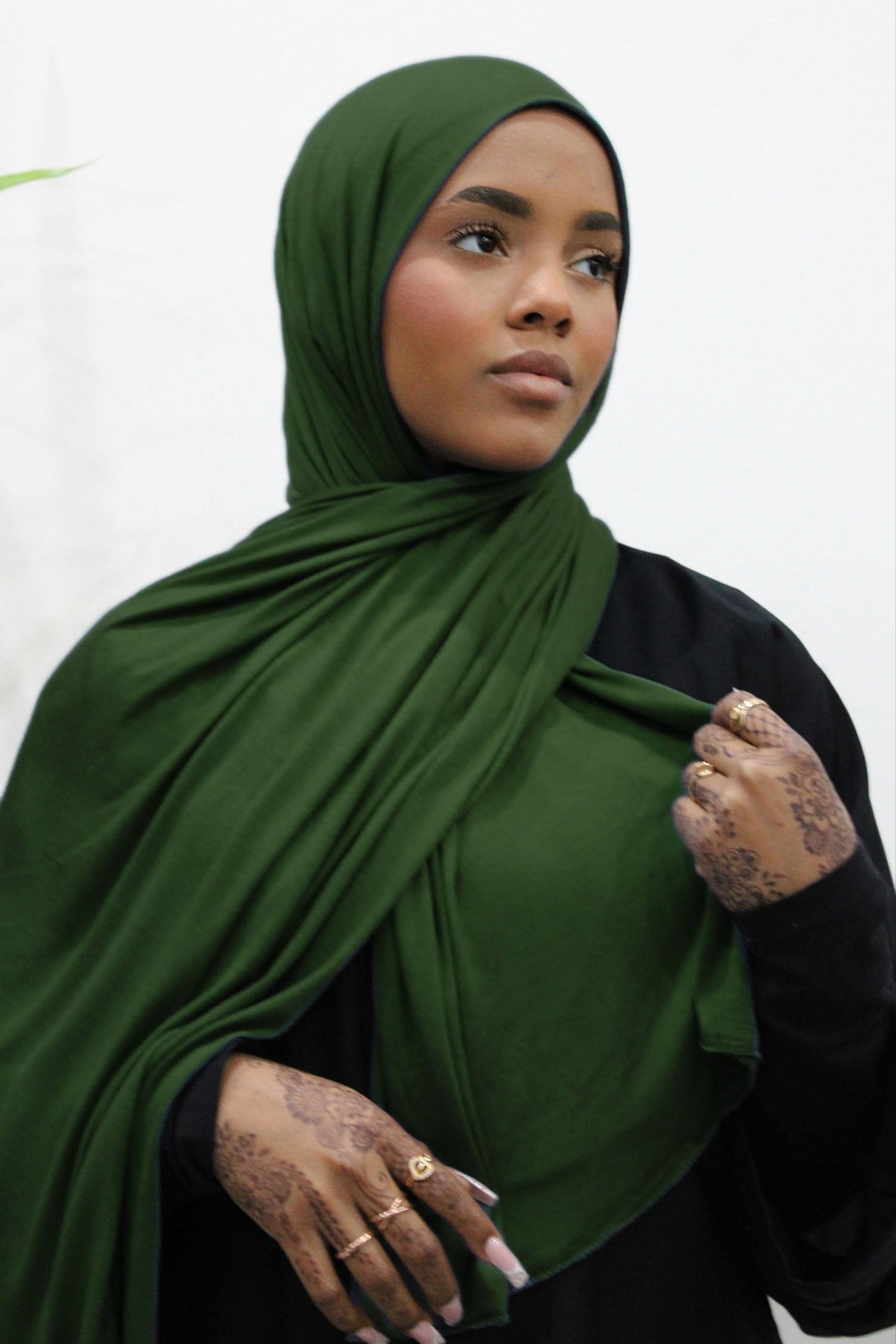
Hijab Style with Shawl: Complete Modest Styling Guide
Bismillah. A shawl can look simple in your hand and still create real problems once the day begins. One side becomes too short. The fold under the chin gathers too much fabric. The shoulder drape slips the moment you lift a bag. The neck looked covered in the mirror, then opened when you turned your head. A sister should not have to choose between looking calm and feeling constantly on guard.
A good hijab style with shawl starts before the first wrap. You need to decide what job the shawl is doing. Is the shawl itself becoming the hijab, covering the hair, neck and chest? Or are you already wearing a separate hijab and adding the shawl as an outer layer around the shoulders or body? Both can be modest. Both can be beautiful. But they are not the same method.
This guide treats the shawl as a long rectangular fabric used for modest head covering, extra drape or outfit layering. It does not pretend every shawl has the same fibre, grip, warmth, width or opacity. The safest way to style it is to understand the cloth, test the coverage and keep the method honest for the day you are actually living.
For wider hijab foundations such as undercaps, fabric families and outfit planning, Amani's complete hijab guide can sit beside this page. Here, the focus stays on shawl styling itself: secure coverage, chest and shoulder drape, coats, glasses, weather, prayer practicality and the small adjustments that make the style feel wearable in real life.
First decide what the shawl is meant to do
One cloth or two separate layers
The first decision is whether the shawl is acting as the hijab or supporting a hijab you are already wearing. If the shawl is the head covering, it must handle hair coverage, neck coverage, chest drape and security. The starting length on each side matters because every centimetre used around the head is no longer available at the front.
If you are wearing a separate hijab and adding a shawl over the shoulders, the challenge changes. You are not trying to wrap the head again. You are trying to avoid crowding the neckline, competing colours, slipping shoulders and fabric caught under coat collars. The same rectangular cloth can support both approaches, but the styling should be honest about which approach you are using.
Why this decision saves time
Many failed wraps happen because a sister begins as though the shawl is the hijab, then expects the same fabric to sit like a separate shoulder layer. That can work only if there is enough length and width left after securing the head. If the fabric has already been used around the crown and neck, the shoulder fall may become narrow or heavy. Once you name the purpose early, the rest becomes calmer.
Ask one question before pinning: do I need this shawl to cover my hair, or do I need it to add shape, coverage and comfort around an existing hijab? That answer decides the next step.
What makes a shawl different from a narrow scarf
Shape affects coverage
A shawl is often understood as a longer or wider rectangular cloth, but the word alone does not prove measurements. A larger rectangle can give more options across the chest and shoulders. It can also create more bulk around the neck if wrapped without planning. More fabric is helpful only when it is placed with intention.
Length helps when one side needs to cross the chest and the other needs to return over the shoulder. Width helps when the front layer should spread rather than twist into a rope. But if the fabric is very slippery, stiff or heavy, the same method will behave differently. A real guide must teach how the cloth behaves instead of pretending the name solves everything.
Names should not replace evidence
A shawl may be sold as a scarf, wrap, pashmina style or hijab. Those names can overlap in everyday shopping, but they are not proof of fibre, quality or coverage. A pashmina label may refer to a look, a rectangle style or a material claim. A khimar is a different garment category. A prayer dress is not a fashion accessory to style outside.
Look at full product images, dimensions, edge finish, fabric detail and care instructions. The name helps you begin, but the evidence helps you decide.
Build the base before thinking about drape
Place the fabric calmly
Lay the shawl open first. Find the long edges and check whether one side sits better near the face. If the fabric has a finished edge, a textured edge or a decorative end, decide where that part should appear before it touches your head. A few seconds here prevents a lot of pulling later.
For a shawl used as hijab, start with one shorter side and one longer side. The shorter side should still have enough length to protect the neckline or chest according to your preference. If it is too short, the style may look neat from the front but fail from the side. The longer side gives the wrap, the shoulder fall or the extra front layer.
Secure without tightening harshly
Bring the fabric beneath the chin and secure it gently if your method uses a pin or magnet. Tightness is not security. If you pull too hard, the scarf may press around the jaw, climb at the back and make glasses uncomfortable. A calm under chin point should let you speak, smile and turn your head.
Before wrapping further, move. Look down, turn left and right, lift your chin slightly and check the side of the neck. If the base moves now, the finished style will not become stable by adding more fabric on top. Fix the base first, then add the drape.
When the shawl itself becomes the hijab
Use the long side with purpose
If the shawl is the hijab, the long side must do several jobs. It may need to cross the chest, travel around the head, protect the neck and fall over the shoulder. Do not rush the first crossing. Spread the fabric across the upper chest before lifting it around the head. A wide layer gives calmer coverage than a twisted strip.
After the long side comes around, let it fall where it naturally wants to sit. If it pulls backward, the wrap may be too tight at the crown or the first side may be too short. If chest coverage disappears, too much fabric may have been used around the head. The method should leave cloth where you actually wanted coverage.
Keep the head comfortable
A shawl can create more volume than a smaller scarf. That does not mean you need a high bun or extra padding. Keep the hair low and secure, then let the fabric lie smoothly over it. If the crown feels heavy, reduce the number of turns. If the face frame collapses, use a small fold at the front or choose a fabric with more structure next time.
The aim is not a dramatic shape. The aim is steady, comfortable and dignified coverage. A style that lets you forget about your scarf for hours is often more successful than one that only photographs well for a minute.
When the shawl is a separate layer over hijab
Do not wrap the head twice by accident
If you already have a hijab on, the shawl should not automatically become another tight layer around the face. That can create pressure at the ears, heat at the neck and too much fabric under the chin. Instead, place the shawl around the shoulders or upper body with a clear reason: added coverage, visual structure, comfort from layering or a more formal finish.
Keep one element simpler. If the hijab is textured, printed or voluminous, let the shawl sit quieter. If the hijab is plain and close fitting, the shawl can carry more drape. This prevents the two pieces from fighting for attention or making the neckline heavy.
Test the shoulder drape
A separate shawl often fails at the shoulder. It may slip backward, twist under a bag strap or bunch beneath a coat. Place it, then walk a little. Sit down. Pick up your bag. Remove and replace your coat. These small tests show whether the layer belongs over the coat, under the coat or partly tucked.
A shawl that looks graceful while standing still should also survive everyday movement. The more often you need to lift it back into place, the more the styling needs adjusting.
Chest coverage depends on distribution, not only size
Leave enough fabric at the front
Many sisters choose a shawl because they want extra front coverage. That is a reasonable need, but the fabric has to be distributed for it. If almost everything goes around the head, the chest may be left with a narrow strip. Begin with the shorter side long enough to fall across one side of the chest, then use the longer side to complete the opposite side.
Spread the cloth with your hands as it crosses the front. A flat layer covers more calmly than a twisted one. If the shawl is sheer, check it in daylight and over the colour you plan to wear. A single layer may look covered indoors and appear lighter outdoors.
Watch what happens after movement
Chest coverage can shift when you sit, bend, reach or carry a bag. After finishing the wrap, move as you would during the day. If the front layer rises toward the throat, it may be too tightly anchored at the shoulder. If it falls open, the secure point may be too low or the fabric too narrow.
Do not fix every problem with extra pins. Sometimes the better solution is a wider starting placement, a different undercap, a calmer side split or a garment underneath with a higher neckline.
Pinless shawl styling without pretending every fabric grips
Choose a realistic base
Pinless styling can be comfortable, but it depends on fabric behaviour. Some shawls grip well against an undercap or textured garment. Others slide immediately. A pinless look works best when the fabric has friction, the neckline supports the tuck and the final drape is not left floating loose in wind.
If you want a pinless method, start with a high neckline and a shawl that has enough width. Tuck the shorter side securely inside the neckline or under the opposite layer. Bring the longer side around and place the end where fabric pressure holds it naturally. Then move your head and shoulders before trusting it outside.
Magnets can still be gentle
Some sisters hear pinless and feel they have failed if they use one hidden magnet. That is unnecessary pressure. A magnet can protect delicate fabric from holes while giving a soft style more reliability. The goal is not to prove you used no support. The goal is to cover with ease and stop worrying.
If the shawl is smooth, windy weather or a long commute may need a small secure point. Use what serves your day without making the wrap feel heavy.
Pins, magnets and brooches need thoughtful placement
Match the tool to the job
An under chin pin should be small, smooth and placed carefully. A shoulder magnet should hold two layers without dragging delicate fabric. A decorative brooch belongs where its weight can be supported by the garment beneath the shawl. One tool rarely performs every job well.
Repeated pinning in the same point can weaken fine fabrics. Alternate the position slightly and inspect pins for rough edges. Magnets avoid holes, but dragging them apart can pull the surface, so separate them gently. Comfort is part of security. A wrap is not truly secure if it scratches the neck or presses painfully after an hour.
Keep hardware away from pressure points
Move any hard component away from the jaw, ear, temple and collarbone. If you wear glasses, put them on before final tightening so the scarf does not trap the arms. If you wear headphones, test the wrap with them before leaving. Small practical details are what make a style wearable outside a careful mirror moment.
The most elegant shawl style is often the one that lets your shoulders relax. When the fabric is secure and the hardware is quiet, your posture changes.
Fabric choice changes every shawl style
Grip, drape and weight matter
Fabric decides how the wrap behaves. A grippy fabric may hold with fewer pins. A very soft fabric may drape beautifully but need a firmer base. A stiff fabric may create clean structure yet refuse to fall softly over the chest. A heavy fabric can feel comforting in cold weather, but it may become tiring indoors.
Do not judge your skill by one difficult fabric. Some shawls are simply not suited to the method you are trying. If a wrap fails repeatedly, change the fold, support or garment underneath before blaming yourself. The cloth has a voice in the process.
Opacity should be checked in real light
Hold the shawl against daylight and over the colour you plan to wear. Pale shades, loose weaves and fine fabrics can change once stretched across hair or shoulders. A shawl may be acceptable as a decorative layer over a full hijab but not enough as the only head covering. That difference matters.
Opacity is not just a technical detail. It affects how calm you feel outside, in photographs and under bright shop lighting. Test it early.
Texture can help, but it can also add bulk
Crinkle and pleated finishes
Textured shawls can make a simple wrap look intentional. Crinkle, pleated and bubbled surfaces may also add grip, which helps when you want fewer pins. The challenge is bulk. If the texture is folded too many times under the chin, the style can feel thick and uncomfortable.
Spread textured fabric rather than compressing it. Let the surface show across the shoulder or chest instead of trapping all the detail near the face. If the texture has ridges, place pins or magnets where they do not crush the pattern too harshly.
Plain shawls still need structure
A plain shawl is not boring when the edges are clean, the colour suits the outfit and the wrap is balanced. Plain fabric often makes it easier to see whether your chest coverage and shoulder placement are working. It also pairs more easily with printed dresses, embroidered abayas and layered outerwear.
Texture is a tool, not a requirement. Choose it because it helps your comfort and outfit, not because a simple scarf feels less worthy.
Face framing should stay gentle and personal
Frame the face without harsh rules
It is easy to turn hijab styling into a list of strict face rules, but a sister is not a shape to correct. The better question is whether the frame feels comfortable, secure and natural on you. A soft curve can feel gentle. A slightly straighter line can feel neat. A lower front edge can reduce height. A lighter fold can remove bulk.
Look at the style from the front and side. Notice whether the scarf presses, exposes the undercap, makes glasses awkward or hides too much of your expression. The face frame should support you, not make you feel like you are editing yourself.
Small adjustments are enough
Change one thing at a time. Move the front fold a little lower. Widen the fabric near the cheek. Loosen the under chin point. Try the same style with a different undercap. When too many changes happen together, you cannot tell what helped.
A good shawl method gives room for your features, your comfort and your modesty. It does not demand that every sister wear the same angle.
Undercaps and hair preparation matter more than people admit
Start with a calm base
A shawl cannot sit well if the base is fighting it. Hair gathered too high can push fabric backward. A tight bun can create pressure. Loose hair can shift beneath smooth cloth. An undercap may help with grip and containment, but it should not hurt or slide on its own.
Choose the base for the fabric and the day. A slippery shawl may need an undercap with more grip. A textured shawl may need less. Sisters with sensitive scalps may prefer softer caps, lower hair placement or fewer pins. Comfort is not a small matter when the scarf stays on for hours.
Keep the crown natural
Extra height can make the shawl unstable and uncomfortable. A lower, flatter base usually lets the fabric fall more naturally. If the crown collapses, try a lighter fold or a fabric with more body instead of building the hair higher. The goal is balance, not artificial volume.
When the base is calm, the rest of the wrap becomes easier to trust.
Working with coats, bags and everyday movement
Dress in the order you will leave home
Do not judge the shawl before adding the coat, bag and shoes you will actually wear. A style that sits beautifully with no outerwear may bunch beneath a collar. A shoulder drape may be dragged open by a bag strap. A long loose end may catch in a zip or car door.
Put on the shawl, then the coat, then the bag. Turn, bend, sit and reach. If the fabric shifts, adjust the secure point or decide whether the shawl should sit under or over the outer layer. Everyday clothing changes the wrap, so everyday testing matters.
Commuting needs reliability
Public transport, school runs, shopping trips and workdays rarely allow constant mirror checks. A practical style should be simple enough to restore with your hands if needed. One known under chin point and one known shoulder point are easier to fix than a complicated layered finish with hidden folds everywhere.
The best daily shawl style may look quiet, but quiet can be powerful. It lets you live your day.
Weather can change how the shawl behaves
Wind tests the shoulder first
Wind usually finds the loose end before it finds the secure base. If you are going out on a windy day, secure the shoulder drape separately. A hidden magnet, a tuck beneath an abaya or a fold under the coat can stop the shawl from lifting. Avoid leaving a long tail behind you.
Wind also tests confidence. If a style only works indoors, save it for indoor days. There is no shame in choosing the more reliable wrap when the weather is difficult.
Rain and indoor heat matter too
Rain can make some fabrics cling, darken or become heavier. Pale or fine fabrics may reveal more when wet. Indoor heating can make thick layers uncomfortable after a cold walk. Plan the whole day, not just the temperature outside the door.
A breathable, stable shawl often serves better than a dramatic one when the weather keeps changing.
Glasses, earrings and headphones need space
Put glasses on before final tightening
If you wear glasses, place them before you secure the final face frame. The arms need space at the temples. Fabric that is too tight can push glasses forward, press the ears or create headaches. A slightly softer frame can still cover well while making room for real life.
Check whether the pin or magnet sits where the glasses rest. If it does, move the secure point. The style should not punish you for needing clear sight.
Keep accessories secondary
Jewellery and headphones can work with shawl styling, but they should not weaken coverage or comfort. Large earrings may pull fabric or create uneven sides. Headphones may lift the crown. Test these items before leaving, especially if the shawl is smooth or loosely draped.
A modest outfit is lived in with phones, bags, glasses and errands. The wrap should make room for that ordinary reality.
Prayer practicality needs a separate check
A shawl is not automatically a complete prayer garment
A long shawl can help cover the hair, neck and upper body, but it may not complete the whole prayer outfit. Salah includes standing, bowing, sitting and sujood, and each movement tests different gaps. If the garment underneath is not suitable, the shawl alone may not solve the issue.
For home prayer, a proper prayer dress, khimar or appropriate prayer garment may feel calmer. A prayer dress is for prayer at home or in a private suitable setting, not an accessory for styling outside. Treat prayer clothing with respect and choose what gives reliable coverage.
Move through the prayer positions
Do not test prayer coverage while standing still only. Move naturally through the positions and check the neck, arms, back and lower body with the full outfit. If the shawl shifts or opens, choose a more secure garment. Ease in worship matters more than forcing a fashion method to do a spiritual job it was not built to carry.
When the choice is clear, your heart can settle more easily.
Occasion styling without losing the secure base
Keep the foundation familiar
For a wedding, dinner or family gathering, it is tempting to change everything at once. New fabric, new pins, new fold, new undercap and new outfit can make the day stressful. Keep the base familiar and change the finish. A wider shoulder fall, softer colour or refined fabric can make the style feel special without making it fragile.
Secure the hairline, neck and chest first. Then add polish. A beautiful occasion wrap should survive greeting relatives, eating, sitting, prayer and travel home.
Let the outfit and shawl share attention
If the outfit has embroidery, shine or print, let the shawl frame it rather than compete with it. If the outfit is plain, the shawl can carry texture or colour. Balance does not mean dullness. It means each part knows its role.
The strongest occasion looks often feel peaceful because nothing is fighting.
Colour near the face changes the mood
Use daylight when possible
A shawl colour can look different in bedroom light, shop light and daylight. Cream may brighten but needs an opacity check. Grey may lean cool. Taupe may lean pink or brown. Navy can soften black outfits. Chocolate can bring warmth. Choose colours beside the garments you actually wear.
If a strong shade feels too much near the face, let more of it fall at the shoulder or chest and keep the frame narrower. If a dark outfit feels heavy, use a softer shawl to lift the face without losing modesty.
Build around real outfits
Do not buy colours for a life you do not dress for. Look at your abayas, dresses, coats and shoes. A shawl that works with three real outfits is more useful than one that looks impressive only in an isolated photograph.
Colour should make dressing easier, not create another puzzle every morning.
Printed shawls need careful placement
Find the part that belongs near the face
Before wrapping a printed shawl, lay it out and study the pattern. Some prints have borders. Some have one heavy corner. Some place the strongest colour near the ends. Decide which part should frame the face before placing it over your head. Otherwise the print may end up unbalanced or hidden.
If the print is bold, keep the outfit calmer. If the outfit is patterned, choose a quieter shawl. Let one element speak clearly so the whole look can breathe.
Do not twist the pattern into confusion
A printed shawl often looks better when spread wide instead of wrapped into a narrow rope. Let the design show across the shoulder or chest. If the fabric is sheer, check whether the print still gives coverage when stretched. A beautiful print should still serve the purpose of the garment.
Pattern can bring personality, but placement brings dignity.
How to avoid bulk under the chin
Spread before you wrap
Bulk forms when fabric is twisted, doubled and tightened in the same small area. As the long side crosses the chest, keep it flat. When it reaches the crown, smooth it with the whole hand. A wide calm layer often feels lighter than two narrow loops.
If the shawl is thick, use fewer turns. If the front edge already has structure, avoid a deep fold. If you are wearing a high neckline, let the garment help rather than forcing all coverage into the scarf.
Check the fold depth
Some fabrics need a small front fold for neatness. Others become bulky when folded at all. Try the style with a shallow fold, then no fold, before changing the entire method. The easiest correction is sometimes the smallest one.
Comfort under the chin is important because discomfort shows in your posture. A relaxed jaw and neck make the whole style look softer.
How to stop the shawl sliding backward
Look at the base first
When a shawl slides backward, the problem may be the hair placement, the undercap, the tension or the fabric. Lower the bun, reduce pulling at the crown and bring the under chin point slightly forward. A scarf dragged backward at the beginning rarely becomes stable at the end.
Smooth fabrics may need a different base layer. Textured undercaps, gentle pins or hidden magnets can help. Pulling tighter is often the worst answer because it creates pressure without solving the direction of movement.
Secure the shoulder separately
Sometimes the head wrap is stable but the shoulder drape pulls everything back. This is common with bags, coats and wind. Anchor the shoulder fold separately or tuck it beneath the outer garment. One quiet secure point can protect the whole style.
Sliding is information, not failure. It tells you where the fabric needs support.
A simple everyday shawl method
Start with uneven sides
Place the shawl with one side shorter and one side longer. The shorter side should still cover what you need at the front. Secure gently under the chin if required. Bring the long side across the chest, around the head and down over the opposite shoulder. Spread the final end rather than twisting it.
This method works because it is easy to understand. One side gives the base. One side gives the wrap. The final fall can be adjusted for chest coverage, shoulder coverage or a cleaner side line.
Repeat until your hands remember
The first attempt may feel slow. The fifth attempt should feel calmer. Practise with the same shawl for several days before judging the method. Changing fabric every morning makes learning harder because every cloth asks for something slightly different.
A dependable everyday wrap is not boring. It is the style that lets you leave the house on time.
A looser shoulder drape that still covers
Secure the face before loosening the outer layer
A loose look should mean softness at the shoulder, not an open neck or unstable hairline. Build the base first. Secure the under chin point or tuck well. Then let the final end fall with more ease over the shoulder. If needed, hide one magnet beneath the fold.
Loose fabric moves more, so it needs better planning. Spread it widely and keep the weight balanced. Avoid leaving the end so long that it pulls the wrap backward.
Use the outfit to help
A closed abaya, high neck dress or longline cardigan can support a loose drape. The garment beneath can hold a tuck, protect the neckline and stop the shawl from shifting. Styling is not only about the scarf. It is about the whole outfit working together.
Softness feels most beautiful when you are not afraid of it slipping.
A polished shawl style for guests and gatherings
Refine one familiar method
For a gathering, use the everyday method as the foundation and refine the finish. Smooth the front edge, keep the crown flat, spread the chest layer and place the final end more intentionally across the shoulder. A brooch or magnet can sit beneath the fold rather than becoming the main feature.
Choose fabric that you can control. A difficult new shawl on an important day can steal your peace. If you want to use a lighter fabric, practise before the event.
Think about sitting and greeting
Events involve movement. You sit, stand, hug, eat, pray and travel. Test the wrap with those actions. If the style depends on one perfect still pose, it is not the right style for a long gathering. Modesty and beauty should be able to breathe in real life.
A polished shawl style should let you be present with people, not trapped in checking yourself.
Travelling with shawls without packing too many
Choose roles, not random colours
For travel, choose one dependable everyday shawl, one lighter option and one more polished colour or texture if needed. Think about climate, indoor temperature, prayer plans and washing. A shawl that works at home may feel different after a flight, train journey or long car ride.
Pack pins or magnets in a small pouch. Keep one spare undercap if you use them. Fold the face edge inward so it stays cleaner. Do not trap delicate fabric beside zips or rough embellishment.
Use methods you already trust
Travel is not the easiest time to depend on a brand new technique. Use a wrap your hands already understand. If you want to try something new, test it before the trip. Familiarity saves time and reduces stress when mirrors, lighting and weather are unpredictable.
A travel shawl should support the journey, not become another item to manage anxiously.
Washing and storing shawls with care
Follow the label first
Different fabrics respond differently to water, heat and friction. Follow the care label. If the information is limited, choose gentle handling, cool water and mild detergent. Wash delicate scarves in a bag and keep them away from zips, hooks and rough decoration.
A wet shawl can stretch if hung from one narrow corner. Support more of the width while drying or lay it flat if the fabric is prone to distortion. Reshape textured pieces gently while damp.
Store by fabric behaviour
Fold stable cotton and jersey neatly. Roll easily creased fabric around a soft core. Give pleated and textured shawls enough space so the surface is not crushed. Remove pins before storage because hidden metal can rust, snag or leave marks.
Care is part of styling. A damaged edge or stretched rectangle changes every wrap you try later.
Shopping for a shawl online
Look for full information
Before buying, check the length, width, fabric composition, opacity clues, edge finish, care guidance and full item photographs. A close photograph around the model's face may not show whether the scarf is wide enough for chest coverage. Compare measurements with a shawl you already own and enjoy.
Be careful with vague labels such as premium or luxury when no fabric detail appears. Beautiful copy cannot replace practical information. A good shawl should match your method, not just your mood.
Buy for a real purpose
Decide whether you need everyday grip, occasion drape, extra chest coverage, travel ease or a colour gap in your wardrobe. When the purpose is clear, comparison becomes easier. When you are ready to look at current scarf options, you can shop related styles with your measurements and fabric needs in mind.
Buying slowly often leads to better styling because every scarf has a job.
Building a small shawl wardrobe
Start with one reliable neutral
A dependable neutral can do more than several difficult colours. Black, navy, charcoal, chocolate, taupe or cream may work depending on your wardrobe and opacity needs. The best first shawl is one you can wear with several outfits without thinking too much.
Once that neutral works, add one softer colour and one more expressive option if you truly need them. Texture, print or a richer shade can bring variety without filling the drawer with scarves that repeat the same problem.
Do not duplicate discomfort
If a slippery fabric never feels secure, do not buy the same fabric again only because the colour is pretty. If a very thick shawl always feels heavy, choose a different weight. Your wardrobe should learn from your experience.
A smaller collection of useful shawls often gives more confidence than a large collection that keeps making mornings harder.
Common styling problems and calm fixes
The short side disappears
Begin again with more fabric on the short side. Do not pull the under chin point sideways to rescue it because that usually distorts the frame. Give the first side enough length before the wrap begins.
The shoulder keeps falling
Spread the drape wider, move the secure point closer to the shoulder seam or tuck it beneath the garment. Check whether a bag strap is pulling it open. A small hidden magnet may solve the issue without changing the style.
The face frame collapses
Use a lighter fold, change the undercap or choose fabric with more body. Do not keep adding layers under the chin if the problem is really the front edge. The frame should feel supported, not stiff.
A seven day practice plan for beginners
Day one to day three
On the first day, wear one simple shawl method at home for half an hour and notice what moves. On the second day, adjust the starting side lengths and repeat the method twice. On the third day, test the face frame and take one photograph in daylight so you can see the side view clearly.
Practise gently. Do not judge yourself by one attempt. Your hands need repetition before the wrap feels natural.
Day four to day seven
On the fourth day, test a pin, magnet and tuck separately. On the fifth day, move through a real day test: coat, bag, sitting, bending and reaching. On the sixth day, pair the shawl with an outfit you actually wear. On the seventh day, repeat the method that felt easiest and leave the mirror sooner.
The goal is not to learn endless styles. The goal is to trust one method enough that it becomes part of your day.
Shawl styling for work, study and errands
Keep it repeatable
Work, study and errands need a style that can be repeated under time pressure. Choose a method with a clear starting point, one reliable base and one easy shoulder finish. Avoid complicated folds that collapse when you put on a coat or answer the phone.
If your day includes public transport, children, carrying stock, sitting at a desk or walking in wind, build the wrap for that reality. A beautiful style that needs constant repair may not be beautiful for that day.
Let comfort support concentration
A scarf that presses the ears or throat can distract you all day. A slipping shoulder can make you keep checking yourself. Comfort is not vanity. It helps you focus on your work, studies, worship and responsibilities.
The best everyday shawl almost disappears from your mind because it is doing its job quietly.
Boundaries with pashmina, khimar and prayer wear
Respect each garment category
A shawl can overlap with a pashmina style in shape, but the material claim should not be assumed. A shawl can be styled generously, but it is not automatically a khimar. A shawl can help during prayer, but it is not automatically a complete prayer garment. Clear boundaries protect the sister buying and wearing the item.
When garments are described carefully, the advice becomes more useful. You know what to expect, what to test and when to choose a different item.
Use the right piece for the right need
If you need a sewn prayer garment, use one. If you need a full khimar shape, choose a khimar. If you need a long rectangular cloth for wrapping and drape, a shawl may be perfect. Modest dressing becomes easier when each piece is allowed to be what it is.
Honesty in naming is part of good service and good styling.
How to keep the style modest without making it heavy
Coverage can be calm
Modest coverage does not have to mean piling fabric around the face. It can mean a careful base, enough front width, an opaque layer and a shoulder fall that stays where it should. Sometimes the simplest wrap gives the best modest result because there is less to shift.
Look at the hairline, neck, side view, back and chest. These checks are more useful than counting how many times the scarf goes around the head. More turns do not automatically mean better coverage.
Ease is allowed
A sister may want coverage and softness at the same time. She may want her shawl to feel gentle, not severe. She may want to look put together without feeling watched by her own mirror. That is allowed. Modesty is not supposed to make every morning feel like a battle.
Let the shawl serve your intention with steadiness, not fear.
Frequently asked questions about shawl hijab styling
Can I use a shawl as the hijab itself?
Yes, if the shawl gives the coverage, opacity and security you need. Build a gentle base, keep enough fabric for the front, and test the hairline, neck, chest and back through movement before relying on it outside.
Can I wear a separate hijab and add a shawl over it?
Yes. Keep the shawl as a clear outer layer unless you truly need to wrap the head again. Watch the neckline, shoulders, coat collar and bag straps so the layers do not become heavy or visually crowded.
How do I avoid too much fabric under the chin?
Use fewer turns, spread each layer flat and keep the front fold only as deep as the fabric needs. If the style still feels bulky, check whether the shawl is too thick, too long for the method or being wrapped too tightly around the neck.
Do I need an undercap with a shawl?
No, not always. An undercap can help with hair containment, grip and hairline coverage, but some sisters prefer not to wear one. Match the base to the fabric. A slippery shawl may need support, while a textured one may sit well with careful tucking.
Are pins or magnets required?
Not always. Some shawls can be styled with tucks and a secure neckline. Pins or magnets become useful when the fabric slides, the day is windy or the shoulder drape needs help. Use the least support that gives comfort and stability.
How can I keep chest coverage with a long shawl?
Start with enough fabric on the shorter side, spread the long side across the front before lifting it, and avoid using all the length around the head. After styling, sit, bend and turn to check that the front layer still stays where you intended.
What should I check before buying a shawl online?
Check length, width, fabric composition, opacity clues, edge finish, care information and full item photos. Do not rely only on a styled close up. Compare the measurements with a scarf you already own so you can predict whether it will suit your method.
Is a shawl the same as a pashmina?
Not automatically. Shawl usually describes a shape or way of wearing a long cloth. Pashmina may describe a style of wrap or a material claim, depending on the product. Read the product details before treating the two as the same.
Is a shawl the same as a khimar?
No. A khimar is a distinct garment category with its own construction and coverage expectations. A shawl can sometimes be styled for generous coverage, but it should not be renamed as khimar unless the product is actually made and described that way.
Can I wear a shawl style for prayer?
A shawl can help cover the hair, neck and upper body if it is secure and opaque, but it may not complete the whole prayer outfit. For home prayer, a proper prayer dress or appropriate prayer garment is often simpler. Test the full outfit through the prayer movements.
How do I stop the shawl sliding backward?
Lower the bun, reduce crown tension, change the undercap, bring the base slightly forward and secure the shoulder drape separately if needed. If the fabric is very smooth, one hidden magnet may work better than pulling the scarf tighter.
How many shawl styles should I learn?
Learn one dependable everyday method first. Then add one looser shoulder drape and one more polished occasion version if you need them. A few understood methods are better than many styles you can only copy while watching a video.
Let the shawl support the woman wearing it
A shawl is useful when it gives you more ease, not more anxiety. It should help you cover the parts you want covered, move through your day, put on your coat, carry your bag, pray when needed and return to your work or family without constantly checking the mirror.
The best method may be simple. One measured starting point. One calm under chin secure point. One thoughtful shoulder fall. Enough front coverage. Enough room for your face, glasses and movement. No pressure to copy someone else's exact folds. No pressure to make every side identical. No pressure to buy a new scarf before understanding the one already in your hands.
Choose the shawl by evidence. Style it with patience. Test it with honesty. Then let it become part of your modest wardrobe quietly, beautifully and practically.
May Allah place ease in what you wear, sincerity in why you wear it and barakah in every small act done for His sake.