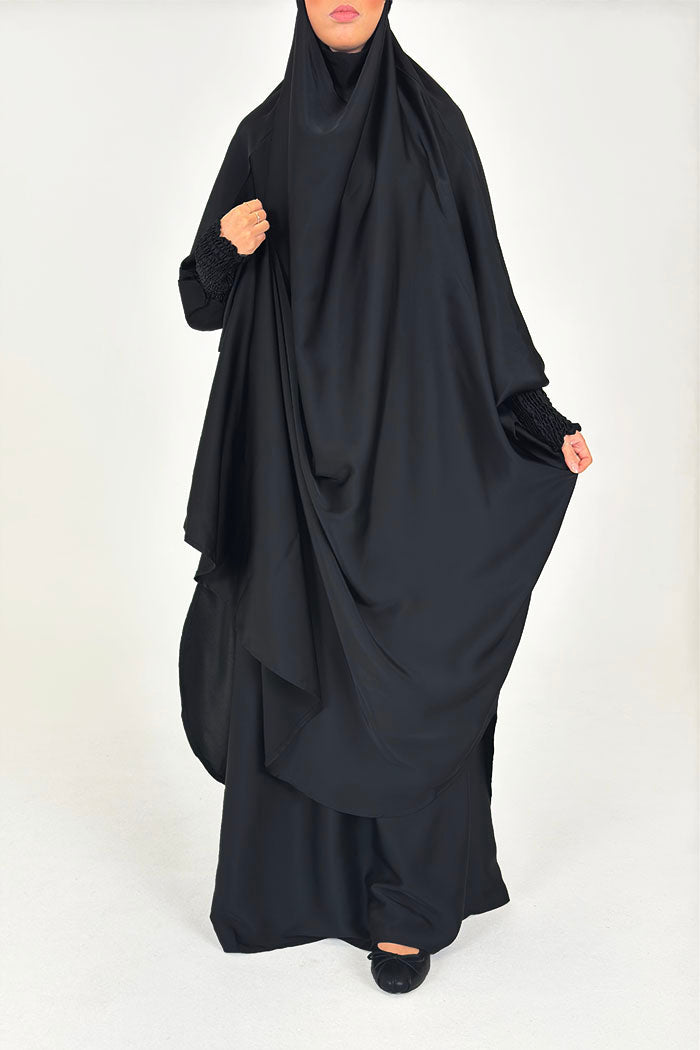
What Should You Know About Jilbab Maizura Before Deciding Whether Its Shape, Fabric and Coverage Actually Suit Your Routine?
Bismillah, let’s begin with honesty.
Some modest fashion searches look simple from the outside. A sister types a phrase into her phone, scrolls through photos, compares colours, checks the price, and it seems like she is only deciding what to buy. But sometimes the search is much deeper. Sometimes she is not only asking which jilbab looks nice. She is asking whether she will feel safe outside, whether she will still feel like herself, whether people will stare, whether she can pray comfortably, whether the fabric will cover properly, and whether this one outfit can help her take a step she has been delaying for months.
That is why Jilbab Maizura deserves a more honest conversation. It should not be treated as only another fashion keyword or trend phrase. For many sisters, jilbab is connected to worship, coverage, identity, confidence, family conversations, community expectations and the private courage it takes to dress with more intention. A sister may search this phrase because she saw a style online. Another may be trying to understand whether a softer jilbab shape will suit her. Another may be new to modest fashion and quietly hoping for guidance that does not make her feel judged.
This guide is written for the sister who wants clarity without pressure. Maybe you are a new Muslim trying to understand modest clothing terms. Maybe you grew up Muslim but are only now building a wardrobe that feels closer to your faith. Maybe you already wear abayas and hijabs but feel unsure about jilbab because it looks like a bigger step. Maybe you are simply tired of product pages that show beautiful photos but do not explain fit, fabric, movement, opacity or real daily wear.
We will talk gently and practically. We will not pretend that every jilbab fits every body, every height, every routine or every heart. We will not act as if online photos always tell the truth. We will look at what to check before buying, how to understand coverage, how to choose colour with purpose, how to style without buying too much, and how to take your first public step without panic. Modesty should not make you feel small. It should help you feel grounded, dignified and able to move through the world with more peace.
What does Jilbab Maizura mean when sisters search for it?
The first honest thing to say is that modest fashion words do not always have one neat meaning everywhere. Across Muslim communities, words travel through languages, cultures and family habits. In many UK modest fashion conversations, a jilbab is understood as a loose outer garment or fuller coverage outfit. In other communities, especially across parts of Southeast Asia, similar wording may be used more broadly for hijab or covering. A revert sister may hear several words at once, such as abaya, jilbab, khimar, hijab, niqab and burqa, and feel unsure where one ends and the next begins.
So when a sister searches for Jilbab Maizura, she may be searching for a specific named style, a modest outfit she saw online, a softer jilbab look, or simply a garment that promises graceful coverage. The phrase matters because it reveals intention. She may want something feminine but not revealing, covered but not heavy, practical but not plain, beautiful but not attention seeking. A good answer should not only define the words. It should help her decide whether the piece supports her real life.
At Amani’s, we prefer to guide from that place. A jilbab is not only fabric on a hanger. It can be the outfit a sister wears when she first walks into the masjid. It can be the set she reaches for when she wants to pray without adjusting her scarf every few seconds. It can be the piece that helps her feel less exposed on a day when the world feels loud. It can also be the item she buys too quickly and later realises the fabric is thin, the skirt is too narrow, the overhead top slips, or the colour is difficult to wear every day.
That is why we will treat Jilbab Maizura as a style and shopping conversation, not as a strict religious ruling. For matters of Islamic obligation, it is always better to ask a qualified scholar you trust. For fit, fabric, photos, coverage, styling and online shopping confidence, we can speak honestly and gently. The real question is not only what the style is called. The better question is whether the garment helps you dress with coverage, comfort and sincerity in your actual life.
Why honesty matters more than another perfect photo
Photos can be beautiful, but they can also be incomplete. A model may be taller than you. The garment may be pinned at the back. The lighting may make the fabric look thicker than it is. A pose can hide whether the skirt pulls when walking. A hand placed gently across the chest can make coverage look more secure than it feels in motion. A jilbab that looks calm in a still image may feel very different when you are carrying shopping bags, getting into a car, walking in wind, sitting on public transport or rushing to pray at work.
That is why sisters need honest guidance. Not harshness. Not fear. Not pressure. Just honesty. If a jilbab is meant to support modesty, then it should be discussed in real terms. Does it cover well when you move? Does the fabric have enough weight? Does it need layering? Is the face opening comfortable? Will it suit your height? Can you sit, walk, bend and pray without constantly fixing it? Does it serve your routine, or does it only serve the photo?
Many sisters have experienced the disappointment of opening a parcel with hope and then feeling deflated. The colour is different from the screen. The material clings more than expected. The sleeves are shorter than promised. The skirt feels restrictive. The chest coverage disappears when the fabric shifts. These moments can feel small to someone else, but for a sister trying to dress more modestly, they can feel discouraging. She may start wondering whether modest clothing is simply not made for her body, budget or daily life.
It is not your fault if a product was not described clearly. It is not your fault if photos did not show the real drape. It is not your fault if you are still learning what coverage means for you. A more honest conversation protects sisters from blaming themselves for poor product information. It also reminds businesses that modest fashion is not only about making a garment look attractive online. It is about helping women choose properly.

If you are drawn to a black jilbab because it feels safe, classic and grounding, that is understandable. Black can give a sister a feeling of calm because it is easy to style, easy to repeat and less likely to feel loud in public. But even with black, the honest checks still matter. The fabric should not become transparent in bright light. The shape should not cling tightly around the hips or chest. The sleeves should allow movement without exposing the arm when you reach forward. A beautiful photo is not enough if the garment does not support your real day.
Coverage, comfort and confidence should work together
One common mistake is treating coverage, comfort and confidence as separate things. People ask whether the jilbab covers, but forget to ask whether it can be worn comfortably. They ask whether it looks elegant, but forget whether the sister will spend the whole day adjusting it. They ask whether it is modest, but forget that modest clothing should not make a woman feel trapped, overheated or unable to move. The best modest clothing brings these needs closer together.
Coverage matters because many sisters choose jilbab to feel more protected and less exposed. Comfort matters because clothing that irritates, slips or restricts can make modest dressing feel like a battle. Confidence matters because a sister should not feel ashamed of wanting to look neat, dignified and put together. Beauty and modesty do not have to be enemies when the intention is sincere and the design is thoughtful.
Think about your own routine. Do you drive often? Do you take public transport? Do you carry children? Do you work in a busy environment? Do you walk a lot? Do you need something you can pray in straight away? Do you prefer a two piece style because it gives flexibility, or a one piece style because it feels easier? These questions are not small. They decide whether a jilbab becomes something you actually wear or something you keep in the wardrobe because it felt too difficult.
For a sister taking her first steps into more covered clothing, the best jilbab is not always the most dramatic one. Sometimes it is the one that makes getting dressed less frightening. A simple colour, reliable cut, comfortable head opening, easy skirt and non-clingy fabric can be more valuable than embroidery or trend details. When you are building confidence, ease is not laziness. Ease can be mercy.
There is also emotional comfort. Some sisters feel nervous because they fear looking too religious to family members. Some worry they are not good enough to wear jilbab. Some fear that wearing a more covered outfit will make people expect perfection from them. If that is you, be gentle with yourself. Clothing is part of a journey, not proof that you have no struggles. A sincere step does not mean you suddenly know everything or never make mistakes.
How to check the fit before buying a jilbab online
Online shopping asks you to make decisions without touching the fabric or trying the garment on. That means you need a calm fit checklist. Start with length. If the jilbab is too short, you may feel exposed at the ankles or constantly worried about footwear. If it is too long, it may drag, gather dirt or become unsafe on stairs. Height guidance matters. If a product page gives model height, garment length or size recommendations, read them carefully rather than guessing from photos alone.
Next, check width and drape. A jilbab should feel generous without becoming unmanageable. Look at how the fabric falls from the shoulders, chest and hips. If the model is standing still, imagine movement. Would the fabric still fall loosely when walking? Is the skirt wide enough for your stride? Are the sleeves long enough? Does the overhead top cover the chest properly, or does it rely on the model’s posture?
Then check the head and face opening. Some sisters prefer a closer opening because it feels secure. Others need more room because tightness around the face can feel uncomfortable. If you wear glasses, have sensory sensitivity, or get headaches from tight undercaps, this detail matters. A jilbab that feels too tight around the face may stop you wearing it often, even if everything else is beautiful.
Fabric is another key part of fit. Thin fabric can cling and reveal shape, especially in wind or bright light. Heavy fabric may feel more secure but can become warm or tiring. Crepe, chiffon, jersey and satin-touch materials all behave differently. Crepe often gives structure and modest drape. Chiffon can be beautiful but may need layering. Jersey can feel comfortable but may cling if not cut generously. Satin-touch fabrics can look elegant, but you need to know whether they slip or crease easily.
| What to check | Why it matters | What to look for |
|---|---|---|
| Length | Affects coverage, safety and comfort | Garment length, model height, size guidance |
| Chest coverage | Helps the outfit feel secure | Front view, side view and natural drape |
| Skirt width | Controls ease of walking and sitting | A flowing shape that does not cling |
| Sleeves | Prevents exposure when reaching | Full wrist coverage and comfortable cuffs |
| Fabric weight | Changes opacity and movement | Close-ups, fabric notes and care details |
You do not need to become a fashion expert. You only need to slow down enough to ask better questions before you buy. The more carefully you check the fit, the less likely you are to blame yourself for a garment that was never suited to your height, routine or needs.
Choosing colour without being pushed into someone else’s taste
Colour can feel emotional. A sister may choose black because it feels safe and serious. She may choose navy because it feels softer than black but still calm. She may choose grey because it is neutral and easy. She may choose dark green because it gives depth without shouting for attention. Another sister may love beige, brown, cream, dusty pink or mauve because those shades help her feel gentle and feminine. None of these choices automatically makes a sister more or less sincere.
When choosing a Jilbab Maizura inspired style, ask what colour will support your real life. If you are nervous about wearing jilbab publicly, a quieter shade may help you take the first step. If you already wear modest clothing confidently, a richer tone may feel natural. If you want to build a capsule wardrobe, start with colours that match your existing hijabs, coats, shoes and bags. If you need something for salah, errands, school runs and masjid visits, practical shades can make daily dressing much easier.

Navy is a good example of a colour that can feel peaceful. It gives depth without feeling as stark as black. It can work with cream, grey, taupe, white trainers, simple sandals, neutral bags and soft khimars. For a sister who wants modest clothing to feel calm and wearable, navy can be a beautiful middle place between classic and gentle.
But colour should never be chosen only because it is trending. A trend can inspire you, but it should not pressure you. If a colour makes you feel uncomfortable every time you leave the house, it may not be the right first choice even if it looks beautiful online. If a colour is hard to match with what you already own, you may end up buying more just to make it work. That is how modest wardrobes become expensive and overwhelming.
Think in outfits, not isolated pieces. Ask yourself which hijabs or khimars you already own that would match this jilbab. Ask whether you can wear it with shoes you already have. Ask whether you would feel comfortable wearing this colour to the masjid. Ask whether you would wear it on an ordinary weekday, not only for a picture. Ask whether the colour feels like you, or only like someone you follow online.
How a jilbab fits into a real modest wardrobe
A jilbab should not force you to rebuild your whole wardrobe overnight. One of the kindest ways to shop is to ask how the piece will work with what you already own. This protects your budget, reduces waste and makes modest dressing feel more sustainable. If you already have simple hijabs, choose a jilbab colour that can sit comfortably with them. If you own khimars, think about whether they layer well with the jilbab shape. If you have abayas, ask whether a jilbab gives you something different enough to justify the purchase.
For example, an abaya collection may give you elegant one piece outfits for gatherings, while a jilbab collection may support days when you want fuller coverage and easier prayer readiness. Both can belong in a modest wardrobe, but they should not fight each other. The best wardrobe has roles, not random pieces. It includes clothing for ordinary errands, prayer at home, masjid visits, family gatherings, work, study and the weather you actually live in.
| Wardrobe role | Useful item | Why it helps |
|---|---|---|
| Daily errands | Simple jilbab or everyday abaya | Easy to repeat and care for |
| Prayer at home | Prayer dress or loose two piece set | Quick coverage for salah |
| Masjid visits | Fuller jilbab, khimar or modest abaya | Secure coverage and calm presentation |
| Family gatherings | Soft coloured abaya or jilbab | Modest but still special |
| Work or study | Neutral modest outfit | Balanced, practical and neat |
If the Jilbab Maizura style you are considering does not fill a real role, pause. It may still be beautiful, but beauty alone is not always enough. Ask whether it will be worn. Ask whether it will make your mornings easier. Ask whether it supports the sister you are becoming. This is especially important if you are a new Muslim sister. It can feel tempting to buy everything at once because you want to catch up, but faith is not a shopping race. Start with pieces that help you pray, feel covered and attend the masjid with more ease.
Common mistakes sisters should avoid when shopping for jilbab
The first mistake is buying only because the photo looks beautiful. A photo can inspire you, but it cannot answer every practical question. If there are no clear details about length, fabric, opacity or fit, be careful. A modest garment should not leave you guessing about basic coverage. Beauty should invite you to look closer, not make you ignore the important checks.
The second mistake is ignoring your height. A jilbab on a tall model may sit differently on a petite sister. A style that looks floor length on one person may drag on another. If you are shorter, check whether the skirt can be adjusted at the waist or whether the garment comes in different lengths. If you are taller, check whether the sleeves and skirt will still give enough coverage. Height is not a flaw. It is information.
The third mistake is choosing fabric that does not suit your climate or routine. A sister who walks a lot in summer may struggle with heavy layers. A sister who wants winter coverage may find very light chiffon too airy without layering. A mother with young children may prefer easy care fabric over delicate fabric. A student may need something that handles repeated wear and quick washing. Your life should be part of the decision.
The fourth mistake is buying too many colours too quickly. When you find a style you like, it is tempting to order several shades. But until you have worn one in real life, you do not truly know how it behaves. Try one reliable colour first. Wear it. Pray in it. Walk in it. Wash it according to care instructions. See whether it becomes part of your routine. Then decide whether another colour makes sense.
The fifth mistake is confusing pressure with sincerity. Some sisters feel that if they are serious about modesty, they must immediately choose the most covered, darkest or strictest option, even if they are emotionally overwhelmed. Other sisters feel pressure from fashion trends and think they must make modest clothing look exciting every day. Both pressures can become heavy. Sincerity is not proven by panic. Choose steps that help you grow with steadiness.
What photos should show before you trust a jilbab online
A strong product photo set should answer questions rather than create more confusion. When shopping for a jilbab, look for photos that show the garment honestly from different angles. A single front-facing photo is rarely enough. You need to understand how the piece falls from the side, how much fabric sits around the chest, how long the back is, and whether the skirt shape allows easy movement.

A neutral colour like slate grey can look very different depending on lighting. Indoors, it may appear deeper. In daylight, it may look softer. That is why multiple images matter. If a product only shows one edited image, you may not know whether the colour shown is realistic. When possible, look for photos that show fabric texture and natural folds. These details help you imagine the jilbab in your own wardrobe.
Pay attention to hands and posture. If the model is holding the garment in place, ask why. If every image is posed in a way that hides the sides, ask whether the cut is being shown fully. If the sleeves are always bent, ask whether the wrist length is clear. If the garment is photographed only from high angles, it may be harder to judge length. None of these signs automatically means the product is poor, but they should make you look more carefully.
Good photos should ideally show a front view with natural posture, a side view showing drape over chest and hips, a back view or enough angle to understand coverage, a fabric close-up if texture or opacity matters, sleeve or cuff detail, lower garment width, and colour in realistic lighting where possible. If there is a video, even better. Movement reveals what still photos hide. A garment that flows well in motion usually gives more confidence than one that only looks good in a fixed pose.
The emotional side of wearing jilbab for the first time
There is a moment many sisters remember. Standing in front of the mirror. The jilbab is on. The coverage is there. The outfit looks modest. But the heart is racing. You may wonder whether people will stare, whether family will comment, whether colleagues will ask questions, whether you look too different, whether you are ready. This is why the conversation must be honest. Wearing a jilbab for the first time can feel beautiful and frightening at the same time.
For revert sisters, this can be even more emotional. Maybe your family does not understand Islamic clothing yet. Maybe you are still learning how to pray. Maybe you are worried that other Muslims will judge your knowledge. Maybe you love Islam deeply but still feel nervous about being visibly Muslim in public. A jilbab may feel like a garment, but it can also feel like a public announcement of a private journey.
Please know this: you do not have to become fearless overnight. Courage often comes after the step, not before it. Sometimes you put the jilbab on with shaking hands, leave the house, realise you are okay, and then the next time feels a little easier. Sometimes you only wear it to the masjid first. Sometimes you start with a more familiar abaya, then move toward fuller coverage. Sometimes you choose a quiet colour because your heart needs softness. These steps still matter.
It may help to prepare emotionally as well as practically. Wear the jilbab at home first. Pray in it. Walk around. Sit down. Check how it feels when you move. Try it with shoes and a bag. Ask a trusted sister for gentle feedback. Do not wait until the morning of an important event to discover whether the face opening feels comfortable or the skirt needs adjusting.
If someone comments, you do not need a perfect speech. You can say, “I’m trying to dress more modestly.” You can say, “This feels comfortable for me.” You can say, “It’s part of my faith journey.” You can keep it simple. Your clothing does not have to become a debate every time someone is curious.
Styling Jilbab Maizura without losing the purpose
Styling a jilbab should not mean taking away from its purpose. The goal is not to turn a modest garment into a fashion performance. The goal is to help it feel complete, comfortable and appropriate for your day. A well styled jilbab can still be simple. It can still be dignified. It can still protect the heart from constantly needing attention.
Start with shoes that work with the length. If the jilbab is slightly longer, avoid footwear that makes tripping more likely. If it is shorter, choose socks or shoes that help you feel covered. A clean pair of trainers can make a jilbab feel practical for errands. Simple flats can make it feel softer. Boots can work well in winter if the length sits properly.
Then think about bags. Crossbody bags can sometimes pull fabric across the chest and disturb the drape. A shoulder bag may be easier for some outfits, while a backpack can be practical but may shift the back fabric. If chest coverage is important to you, test your bag with the jilbab before leaving. Small details like this affect how secure you feel outside.
For layering, keep it intentional. If the jilbab already gives full coverage, you may not need many extras. If the fabric is light, add a slip or base layer. If the headpiece needs support, use a soft undercap. If the weather is cold, choose a coat that does not crush the garment or make it difficult to walk. Avoid piling on layers just because you feel anxious. Layer for coverage and comfort, not panic.

A deeper colour like dark green can be styled with neutrals such as black, cream, brown or taupe. It can feel elegant without becoming loud. If you already own neutral hijabs, dark green may give your wardrobe depth without requiring many new purchases. This is the kind of styling that supports modesty practically. You buy less, repeat more and still feel put together.
Fabric care and making your jilbab last
A jilbab that supports your modest wardrobe should be cared for properly. Good care protects the fabric, saves money and helps you build a wardrobe that lasts. It also teaches a more intentional relationship with clothing. Instead of buying quickly and replacing often, you choose carefully and look after what you own.
Always check the care label first. If the product page gives washing guidance, follow it. Many modest garments benefit from gentle washing, cool temperatures and air drying. Heat can damage fibres, shrink fabric, weaken elastic or affect the drape. Harsh spinning can crease delicate materials. Strong detergents may dull colours over time. If you love a garment, do not treat it like a towel.
For daily jilbabs, it helps to rotate wears if possible. Wearing the same piece every day without rest can lead to faster wear, especially around cuffs, hems and waistbands. If you have one main jilbab, let it air between wears. Use a steamer or gentle iron if the fabric allows it. Store it hanging if creases bother you, or folded carefully if you are short on space.
Dark colours need special care. Black and navy can fade if washed harshly or dried in strong direct sunlight. Turn garments inside out before washing where appropriate. Use a gentle cycle. Avoid mixing with lint-heavy items. If a black jilbab picks up lint, a fabric brush can help keep it looking neat.
Lighter colours need a different kind of care. Beige, cream, pale mauve and soft grey may show marks more easily. Be careful with makeup transfer around the face opening. Let perfume dry before putting the garment on. Avoid storing light garments next to dark colours that may transfer dye. These small habits help preserve the modest beauty of the piece.
How to choose with purpose, not pressure
Choosing with purpose means you slow down enough to understand why you are buying. Are you buying because you genuinely need a jilbab? Because you want fuller coverage? Because you are preparing for Ramadan? Because you need something practical for prayer and errands? Because your current clothing no longer reflects the direction your heart is moving? These are meaningful reasons.
Buying from pressure feels different. Pressure says everyone else has this. Purpose says this will help my daily life. Pressure says I need to look like that sister. Purpose says I need something that suits my body, my routine and my intention. Pressure says I am behind. Purpose says I can take one sincere step at a time.
Before buying a Jilbab Maizura inspired style, define the role. Is it for daily wear, prayer, masjid, work, travel or occasions? Choose the colour based on your wardrobe, not only the trend. Check length, width, sleeve coverage and fabric. Look at all available photos and read the description carefully. Imagine wearing it on a normal day, not only in a perfect photo. Check whether you already own matching hijabs, shoes or layers. Ask whether it will make modest dressing easier or more complicated.
If you feel rushed, pause. A good purchase can wait for a clear heart. Modesty is not meant to be built on panic. There is barakah in thoughtful choices, especially when your budget is limited. Buying less but wearing more is often wiser than buying many pieces that do not serve you.
Purpose also means accepting that your first jilbab choice may not be perfect. You may learn that you prefer a different fabric, a longer top, a wider skirt or a calmer colour. That learning is not failure. It is part of understanding your body and your life. Every sister who dresses modestly has learnt through experience. No one begins with perfect knowledge.
Frequently asked questions about Jilbab Maizura
Is Jilbab Maizura a specific product or a style search?
It may be used as a style search rather than one universal product name. Sisters may use the phrase when looking for a particular modest look, a jilbab inspired outfit, or a garment that gives graceful coverage. Because naming can differ across stores and communities, focus on the actual features: coverage, fabric, length, fit and comfort.
What should I check before buying a jilbab online?
Check garment length, model height, fabric type, opacity, sleeve coverage, chest coverage, skirt width and return information. Look for photos from more than one angle. If you cannot understand how the jilbab moves or fits from the listing, it may be worth asking questions before buying.
Is a two piece jilbab better than a one piece jilbab?
Neither is automatically better. A two piece jilbab can give flexibility because the top and skirt work together but can be adjusted separately. A one piece jilbab can feel simpler because there are fewer parts to manage. The best option depends on your comfort, routine, height and how much adjustment you prefer.
Can a new Muslim sister wear a jilbab straight away?
Yes, if she feels ready and the garment helps her feel covered and comfortable. But she should not feel shamed if she takes gradual steps. Many revert sisters grow into modest clothing slowly as they learn, gain confidence and understand what works for their life. Support is better than pressure.
Which colour jilbab is easiest to start with?
Black, navy, grey and brown are often easy first choices because they match many wardrobes and feel calm in public. A sister who loves softer colours may prefer beige, mauve or dusty pink. The easiest colour is the one you will actually wear with confidence and repeat without stress.
How do I know if the jilbab gives enough chest coverage?
Look at the front and side photos carefully. The fabric should fall naturally over the bust area without needing constant pulling or pinning. If the listing shows only posed photos where the hands cover the chest, be cautious. A khimar or longer overhead top can help if chest coverage is a priority.
What fabric is best for daily jilbab wear?
For daily wear, many sisters prefer fabrics that are opaque, breathable, easy to wash and not too clingy. Crepe and similar modest drape fabrics can work well. Chiffon may be beautiful but often needs layering. Jersey is comfortable but should be cut generously to avoid clinging.
Can I wear a jilbab for prayer and outside wear?
Many sisters do. A jilbab with secure coverage can be useful for salah and daily errands, especially if it is comfortable and easy to move in. Make sure the sleeves, length and head coverage feel secure when bowing and prostrating.
How many jilbabs do I need?
You do not need many to begin. One reliable jilbab that suits your daily life is better than several that do not feel right. Once you know your preferred fabric, length and shape, you can add another colour or style if it genuinely supports your routine.
People also ask
What is the difference between a jilbab and an abaya?
A jilbab is often understood as a loose outer garment or fuller coverage outfit, while an abaya is commonly a long robe style garment. In real life, the terms can overlap depending on community and country. When shopping, pay more attention to coverage, cut, fabric and how the garment is worn than to the label alone.
Is jilbab only for very religious women?
No. Many women wear jilbab as part of their personal modesty journey, and every sister’s circumstances are different. Clothing can be a sincere step without meaning the wearer is claiming perfection. A sister can wear jilbab while still learning, growing and asking questions.
How do I stop feeling nervous wearing jilbab outside?
Start gently. Wear it at home first, then to a familiar place, then for a short errand or masjid visit. Choose a colour that feels calm. Practise walking, sitting and praying in it before leaving. Confidence often grows through repetition, not by waiting until fear disappears completely.
Can jilbab still feel feminine?
Yes, modest clothing can feel feminine without becoming revealing or attention seeking. Soft colours, graceful drape, clean fabric and thoughtful styling can help a jilbab feel beautiful while still respecting coverage. Femininity does not have to mean tightness or exposure.
What should I wear under a jilbab?
Depending on the fabric and cut, you may wear a comfortable base layer, leggings, a slip skirt, an undercap or a simple long sleeve top. The goal is to feel secure and covered in different lighting and movement. Underlayers are especially helpful with lighter fabrics.
Is it okay to wear jilbab even if my family does not understand?
This can be sensitive, especially for revert sisters. It is okay to want to dress modestly, but it is also wise to move with patience, safety and gentleness. You may choose simple explanations, gradual steps and support from trusted sisters. If the situation is difficult, seek advice from someone knowledgeable and compassionate.
About Amani’s
At Amani’s, modest fashion is not treated as just clothing. It is part of a sister’s journey, her confidence, her worship, her identity and the way she moves through the world with dignity. We create and curate abayas, hijabs, jilbabs, khimars and prayer wear with Muslim women, reverts and growing families in mind.
Our hope is simple: to make modest dressing feel easier, more beautiful and less overwhelming for every sister who visits us. Whether you are buying your first prayer dress, choosing a jilbab for the masjid, or slowly building a wardrobe that feels closer to your faith, we are honoured to be part of that journey.
With love and du’a,
Amani’s
What sisters often need to hear
Every sister’s modest fashion journey is personal. Some sisters are taking their first public step. Some are rebuilding confidence after years of feeling unsure. Some are mothers, students, workers, carers, reverts, returners, daughters and women quietly trying to dress with more purpose while still carrying ordinary life.
So this space is a gentle reminder. You are allowed to start with one reliable jilbab. You are allowed to choose a calmer colour while your confidence grows. You are allowed to ask practical questions about fabric, length and coverage. You are allowed to want beauty without losing the purpose. And you are allowed to take your next step without turning your whole life into a performance.
If a jilbab helps you pray with more ease, leave the house with more dignity, or feel less exposed in a world that often asks women to reveal more than they want to, then that matters. Small steps taken with sincerity can become very meaningful over time.
More than clothing
Amani’s was built with a purpose beyond fashion. Modest clothing can give a sister confidence, ease and dignity, but our work is also connected to giving, sisterhood and sadaqah jariyah.
In Ramadan, Amani’s donates abayas to reverts as part of our wider intention to support sisters who are beginning or strengthening their journey with modest dress. For us, this is about more than an outfit. It is about dignity, ummah, care and helping a sister feel welcomed rather than overwhelmed.
When a sister chooses Amani’s, we want her to feel part of something gentle, meaningful and rooted in togetherness.
Find your modest wardrobe with calm and intention
If Jilbab Maizura brought you here, maybe what you were really looking for was more than a name. Maybe you wanted a style that feels covered but not heavy. Maybe you wanted reassurance that it is normal to be unsure. Maybe you wanted someone to tell you that modest dressing does not have to be rushed, confusing or lonely.
Start with what helps you worship, move and breathe. Start with fabric that feels kind to your body. Start with a colour you will actually wear. Start with one piece that supports your real life. If that is a jilbab, explore the Amani’s jilbab collection. If you want fuller chest coverage, look through hijabs and khimars. If your first need is salah, begin with prayer dresses. If an abaya feels like the gentlest step, browse the abaya collection.
Wherever you begin, begin with mercy towards yourself. You are allowed to learn. You are allowed to choose carefully. You are allowed to grow slowly. And you are allowed to want clothing that helps you feel modest, beautiful, sincere and at ease.