What to wear with a dusky pink pashmina
Dusky pink is useful when you want colour in an outfit without a bright, high-contrast accent. A muted rose scarf can sit quietly beside charcoal, soften an all-navy combination or pick up a small pink detail in a print. It does not need to become the centre of every look, and it is not reserved for weddings or special dinners.
Before choosing a dusky pink pashmina, separate three decisions: the shade, the cloth and the way you intend to wear it. Two scarves with the same colour name may differ considerably in warmth of tone, thickness and drape. A wrap that feels lovely around the shoulders might be too bulky for the hijab style you normally use. The best choice is the one that works in the role you actually need.
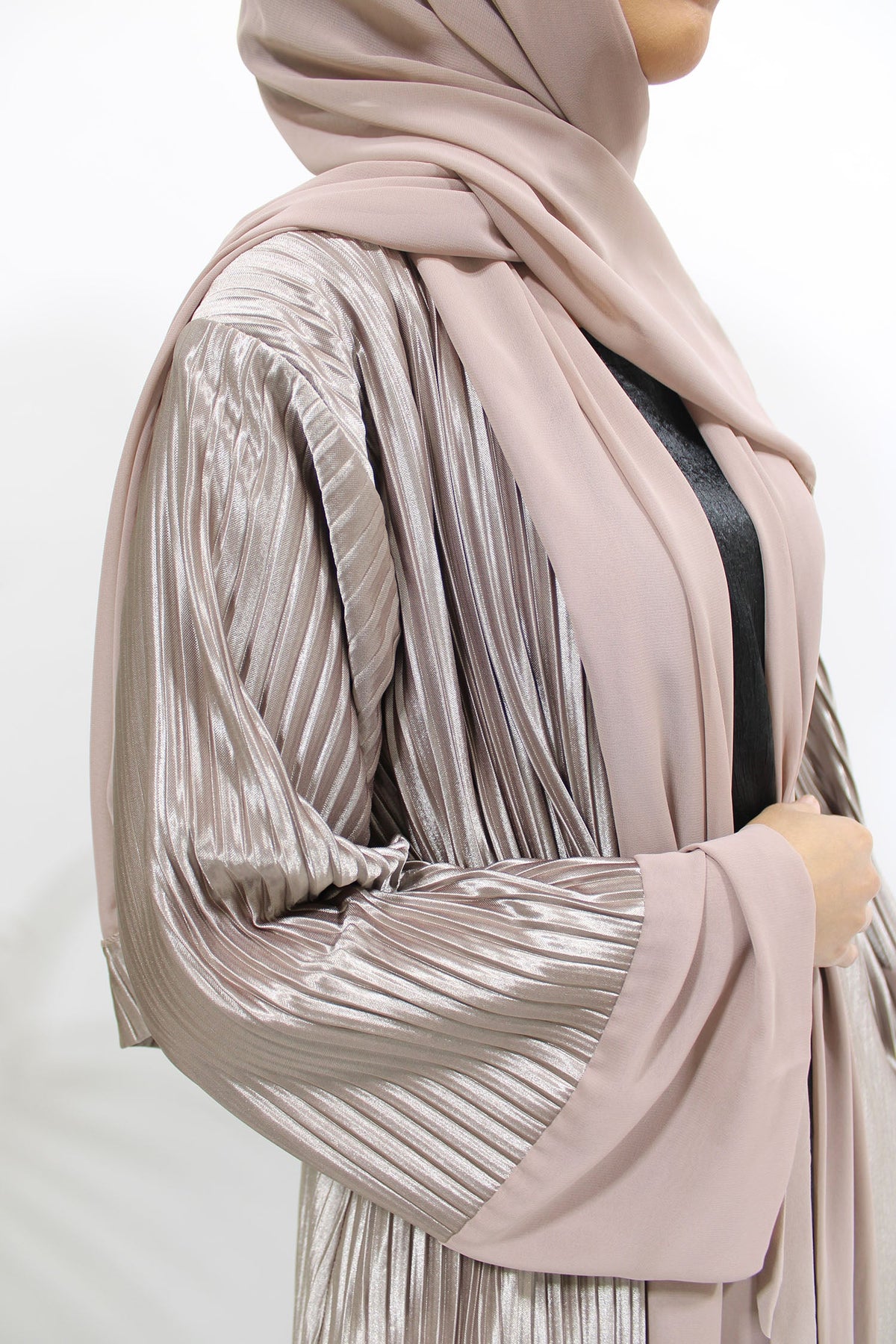
The photograph illustrates a muted pink outfit. It does not identify the scarf’s fibre composition; use the product label and any verifiable certification for that.
Start with what the label tells you about the fabric
Do not use “pashmina” as a substitute for a fibre-composition statement. The US Federal Trade Commission notes that sellers use the term for different descriptions, including fine cashmere and cashmere–silk blends. Its guidance is a useful reminder to check the actual composition rather than assuming every scarf sold under the name is identical. This is not a reason to dismiss a clearly labelled blend; it is a reason to know what you are buying.
Where a seller specifically claims Kashmir Pashmina certification, ask for the relevant product information. The Craft Development Institute in Srinagar describes testing, certification and QR-based authentication for the craft. The GI specification published by the Indian Institute of Carpet Technology includes requirements for the fibre, hand-spun yarn and hand weaving. Ask for evidence relating to the particular scarf rather than inferring those qualities from a soft handle, a high price or a photograph of a shawl.
For a practical wardrobe purchase, write down the composition, dimensions, care instructions and intended use. Perhaps you want a substantial shoulder wrap for an indoor event, or a lighter scarf that can be arranged around the head without several thick folds. That brief helps you compare pieces on their own merits.
Ask about the finished scarf rather than making assumptions from a fibre name alone. The weave, thickness, edge finish and any embroidery affect how it sits. Our guide to hijab fabrics and their different behaviours can help you identify the questions worth asking.
Choose your version of dusky pink
Dusky pink is a colour description, not a precise standard shared by every seller. One scarf may lean towards muted peach, another towards mauve and another towards a brownish rose. All might be photographed under the same name. The difference becomes particularly noticeable when you place the scarf beside an outfit you already own.
Use the intended garment as the reference. If your dress is a cool grey, a mauve-leaning pink may create the relationship you prefer. Beside warm camel, you might enjoy a pink with a slightly earthy quality. These are starting points for comparison rather than rules about what colours are allowed together.
Look at the scarf next to your face in daylight and in ordinary indoor lighting. The relevant question is whether you enjoy the effect and whether it works with the rest of the outfit. There is no need to assign yourself a skin-tone category or accept a claim that one shade flatters everyone.
When buying online, ask for an unfiltered image beside a neutral reference or compare a physical sample where that is available. Screens, lighting and photography can alter the impression of colour. A seller cannot make your screen reproduce a shade exactly simply by using a more poetic colour name.
If you need a close match for an event, avoid relying on two separate listings that both say “dusty rose”. Compare the actual pieces together. An intentional contrast can be easier to wear than an almost-match that looks accidental, particularly when a dress and scarf have different levels of shine.
Five colour combinations to try with clothes you already own
Dusky pink with charcoal
A charcoal dress or long tunic provides a restrained background for pink. Try the scarf without introducing another accent first. The contrast is already doing useful work, so a simple bag and shoes may be all the outfit needs.
Pay attention to texture. A soft-looking scarf beside a sharply tailored jacket creates a different impression from the same scarf beside a relaxed knit. Neither is inherently more elegant; choose the relationship that suits the setting. At a desk, keep the scarf ends out of the way rather than arranging a large decorative fold that needs constant attention.
Dusky pink with navy
Navy can make the pink more visible without the very sharp contrast of black. This is a useful combination for a long dress, an abaya outfit or a blouse with wide-leg trousers. Start with the navy pieces already in your wardrobe and see whether the scarf brings them together.
If the navy garments differ, look at the whole outfit rather than requiring them to match exactly. A matte navy trouser and a slightly textured navy top can work as deliberate variations. Keep the scarf colour clear and consistent, then decide whether any jewellery or bag detail adds something you actually want.
Dusky pink with cream and soft brown
For a quieter palette, try a cream top or dress with a brown outer layer and the pink scarf. Check the cream garment for opacity independently; the softness of the colour scheme does not resolve a sheer fabric or an open neckline.
This combination can become visually muddy if every piece is a very similar mid-tone and you wanted more definition. Rather than adding several accessories, change one larger element: a deeper brown bag, a darker coat or a more clearly pink scarf. The aim is not to follow a fixed colour formula but to make the outfit read as you intended.
Dusky pink with black
A pink scarf can be the only coloured element in a black outfit. Try it with a black abaya or a long black dress and assess the amount of pink visible. A broad chest drape creates a larger colour area than a narrow wrap around the neckline.
Use that difference deliberately. If the pink feels stronger than expected, you may not need a different scarf; a different arrangement could be enough. Conversely, a generous shoulder wrap can make the same colour feel like a substantial part of the outfit rather than a small finishing detail.
Dusky pink with a print
Find one muted pink or rose detail in the print and use it as a reference, without insisting on an exact match. Lay the scarf beside the garment before putting it on. This lets you judge the colour relationship without being distracted by how the scarf has been tied.
Then check scale. A large floral dress and an embroidered scarf may create more detail than you want near the face and shoulders. A plain scarf can leave the print room to be seen. For more ways to balance those elements, see our guide to styling a printed abaya without competing details.
Decide whether this is a hijab, a shoulder wrap or an extra scarf
A rectangular pashmina may be used in different ways, but that does not mean every piece performs equally well in every role. Before buying, decide which role matters most. A wide, substantial wrap might cover the shoulders comfortably yet create too much thickness when folded around the head.
For hijab use, check the usable width after any fold you normally make. Consider the coverage you want at the neck, chest and back, and how much length remains for securing the scarf. Fringes add to the listed overall length but may not provide the same usable coverage as the woven section.
For a shoulder wrap, consider whether it stays in place while you sit, stand and use your hands. An arrangement that depends on holding both ends together may suit a brief photograph but not a meal or a long conversation. The garment underneath should still be an outfit you are comfortable wearing if the wrap shifts.
If it is an additional scarf over a separate hijab, test the combined thickness. Two comfortable scarves can become cumbersome when layered around the neck. You may prefer to keep the pashmina across the shoulders or choose a different outer layer rather than wrapping both tightly in the same area.
A simple hijab arrangement: begin with fewer folds
Start with the scarf open and identify the edges you want near the face. If a fold is needed, make only enough to create the finish and width you prefer. Folding a large section automatically may use up coverage and create a thick band without improving the result.
Place the scarf with one side longer than the other, then adjust the face opening before moving the long end. Keep the initial arrangement comfortable rather than pulling it tight to force the cloth into place. Where you use an undercap, check that it sits smoothly and does not create pressure beneath the scarf.
Bring the longer side across in the direction you normally wrap, allowing enough room for turning your head. Arrange the remaining fabric across the chest or shoulder according to the coverage you want. Secure it using a method suitable for the actual cloth and your own needs; do not assume a delicate weave will tolerate a heavy brooch or repeated pinning.
Now look at the back and sides, not just the front. Turn your head, reach forward and put on the coat or jacket you will wear. If the scarf moves when the collar touches it, adjust the relationship between scarf and outerwear rather than simply tightening the face opening.
A successful arrangement may look quite plain. That is not a fault. A muted pink scarf can provide enough interest through colour and texture without elaborate knots, multiple layers or accessories positioned close together.
Wearing it as a wrap without managing it all evening
For a shoulder wrap, place the centre across the upper back and bring the ends forward. Check where the top edge sits when your arms are relaxed. If it slides immediately, try a slightly different position or a wrap with a shape and texture better suited to the task.
Before adding a fastening, sit in a chair and move your arms as you would while eating. A wrap can feel generous when standing yet become restrictive when its ends are secured too closely together. Leave enough freedom for the activities of the occasion.
A belted arrangement is an optional styling choice, not a universal solution. It can change the outline of the outfit and may pull the shawl towards the waist. Try it only where you like that effect and where the cloth can sit without being strained or trapped awkwardly. Keep the outfit beneath complete rather than relying on the belt to maintain essential coverage.
If you need your hands free for most of the event, a fitted outer garment may be more practical than a loose wrap. You can still use the pink scarf elsewhere in the outfit. Choosing the right garment for the task is more useful than insisting that one accessory must solve every situation.
Make it work for an ordinary weekday
Begin with a familiar outfit: perhaps a long shirt with trousers, a simple dress or an abaya you already find comfortable. Add the pink scarf without changing everything else. This makes it easier to see whether the colour is genuinely useful in your wardrobe.
Keep the arrangement compatible with your routine. If you spend time typing, carrying bags or moving between indoors and outdoors, avoid long loose ends that interfere with those activities. Check the scarf against the straps and collars you actually use, rather than styling it in isolation.
A denim jacket can create a relaxed contrast, but test its collar and fastening against the scarf. A rough edge or prominent hardware may be unsuitable beside delicate cloth. A smooth cardigan or another jacket might produce the same casual effect with fewer practical concerns.
For repeated wear, choose an arrangement you can recreate without studying a photograph every morning. Note the fold, the side you leave longer and the position of any fastening. A useful everyday scarf becomes easier to wear because the method suits it, not because you have learnt to tolerate constant adjustment.
Office and occasion outfits need different checks
For work, look at the outfit while seated and with the outer layer you expect to remove. A pashmina worn across the shoulders may look polished when entering a room but become inconvenient at a desk. A secure hijab arrangement or a shorter shoulder drape may be the more practical use.
Try the scarf with the jacket fastened and open. Lapels can lift a large fold or push fabric towards the chin. If that happens, reduce the amount of scarf beneath the jacket or select a neckline that leaves more room. Do not sacrifice comfortable head movement to preserve a particular photograph-inspired drape.
For an evening event, decide whether the scarf is meant to provide warmth, colour, coverage or decoration. It can serve more than one purpose, but those purposes may require different dimensions and arrangements. A narrow decorative scarf should not be expected to perform like a generous shoulder wrap.
Match the level of detail rather than automatically adding shine. An embellished dress may need a plain scarf; a simple dress may leave space for a woven border or discreet embroidery. Try the complete outfit under ordinary indoor lighting so you can see how the textures interact.
There is no need to describe dusky pink as inherently feminine, romantic or sophisticated for everyone. Those associations are personal. Wear it in the way that suits your taste and the occasion, whether that is restrained tailoring, a flowing dress or a relaxed everyday combination.
Think about temperature without assuming the name guarantees comfort
Choose for the conditions in which you will actually wear the scarf. A substantial wrap may be welcome in a cool room but unnecessary during a warm journey. Consider the other layers, the amount of walking and whether you can remove the extra wrap without affecting the coverage you want.
For hijab use in warmer conditions, assess the complete arrangement, including the undercap and the number of folds around the neck. A scarf that feels light when held open may feel quite different when doubled several times. Try a simpler arrangement before deciding that the colour or style itself is unsuitable.
Do not treat a sheer scarf as a substitute for any coverage you require, and do not assume a pashmina provides a particular level of sun protection. Choose suitable clothing and protection for the setting independently. The pink scarf is one component of that decision, not a guarantee of performance.
During colder weather, check it with your coat rather than judging it indoors alone. A thick collar and a thick scarf can compete for the same space. Sometimes a scarf worn with fewer folds works better than an elaborate wrap that prevents the coat from closing comfortably.
Plain, bordered or embroidered: choose the detail you will use
A plain dusky pink scarf is straightforward to combine with prints and textured clothing. Its usefulness comes from the combinations it supports, not from a claim that plain is always more tasteful. If most of your clothing is simple, you may prefer a scarf with a border or visible woven pattern.
Check both sides of a decorated scarf. The reverse may look different, and a border may appear in an unexpected position once the scarf is folded. Lay it in your intended arrangement before deciding whether the detail is where you want it.
Embroidery and added trim can alter how an edge hangs. Ask for close photographs of the stitching and the reverse, especially when the decoration is concentrated at one end. Consider whether that area will sit near the face, at the shoulder or across the chest in your usual style.
For personalisation, discuss the actual scarf with an experienced maker before adding a monogram, tassels or other decoration. Ask about placement, support and whether the proposed work is suitable for the weave. A small sample or drawing can be more useful than a vague request for something “delicate”.
Do not assume that customisation is reversible. It may affect the cloth, care requirements or the seller’s arrangements for returning the item. Clarify those practical details before proceeding, and keep the original fibre and care information with the finished piece.
Care for the scarf you have, not an imagined universal pashmina
Follow the care instructions for the actual item. A blanket instruction to dry-clean every pashmina overlooks differences in composition, dyes, weave and decoration. Equally, a method that worked for a previous scarf is not proof that it is suitable for this one.
Before cleaning, inspect the edges and any loose decoration. Remove detachable accessories where the product instructions allow, and avoid catching the cloth on jewellery while handling it. If the label is unclear, ask the maker or a suitable cleaner rather than experimenting with a valuable piece.
For a spill, avoid treating the whole scarf according to a generic stain-removal tip. The appropriate response depends on the substance and the cloth. Keep a note of what happened and seek garment-specific advice when needed. Promising that a particular household remedy will restore every pink scarf would be misleading.
Store the scarf clean and fully dry, using a method suitable for its construction. Avoid leaving it compressed beneath heavy bags or with a brooch attached to a fine area of fabric. Give fringes and decorated edges enough space that they are not repeatedly pulled while you retrieve other clothes.
Our fabric-care guide for modest clothing and scarves is a useful place to begin, but the item’s own instructions remain important. Good care is specific, not simply more cautious or more expensive.
Compare two pink scarves without buying the same job twice
Suppose you already own a light blush scarf and are considering a dusky rose pashmina. Put the existing scarf beside the three outfits you identified, then describe what the new one would change. Is it a deeper colour that makes a pale outfit easier to read? Is it wide enough to work as a shoulder wrap? Or is it simply another pink scarf that would be worn in exactly the same way?
There is nothing wrong with enjoying similar colours, but the comparison helps you make a deliberate choice. A different shade may add more variety than a second scarf with decorative edging. Conversely, the same colour in a genuinely different construction might serve a separate purpose, such as a substantial wrap rather than a lightweight headscarf.
Keep the test specific. Lay both proposed colours beside navy, then cream, then a printed garment. Notice which relationship you prefer in each case rather than declaring one scarf universally more versatile. A shade that looks less interesting on its own may be the one that brings together the clothes you wear most often.
Consider the care and storage implications as well. A scarf reserved for occasional use may need a different place in your wardrobe from an everyday piece that is cleaned more frequently. Buying something beautiful is easier to enjoy when you have a realistic plan for wearing and caring for it.
When the scarf looks right but the outfit still feels unfinished
Look first at the largest areas of the outfit. Perhaps the scarf and dress work together, but a strongly contrasting coat changes the balance. Try the outfit without the coat to identify the relationship, then test an alternative outer layer rather than adding more pink accessories.
Next, check where the scarf ends fall. An end stopping directly over a prominent pocket, waist seam or decorative panel may create a crowded area. A small change to the drape can leave the garment detail visible and make the combination feel more intentional.
Finally, remove one accessory. If the scarf already provides colour and texture, an additional necklace, brooch or contrasting bag may not be necessary. This is not an argument for minimalism in every outfit. It is a way to work out which details you genuinely enjoy, so the finished look reflects your choices rather than a collection of automatic additions.
A buying decision that starts in your wardrobe
Choose three outfits you would realistically wear with the scarf. Put them together before purchasing, and identify what the scarf needs to do in each one. If every proposed outfit requires buying several additional pieces, the shade may be appealing without being the most useful next addition.
Compare dimensions with a scarf you already own. Measure the usable woven area and note how much is taken up by folds. This gives you a clearer reference than choosing between labels such as “large” and “oversized”, which may mean different things to different sellers.
Check the total information available: composition, size, close photographs, care and any claimed certification. A premium description does not replace those details. Nor does a lower price automatically make a clearly described blend a poor choice for your needs.
Finally, try the intended scarf with the complete outfit before an important day. Assess colour, movement and comfort together. A dusky pink pashmina earns its place when it makes your existing clothes easier or more enjoyable to wear—not when it satisfies a list of supposed rules about luxury, femininity or what everyone should own.